Dryers & Boot Care
Best boot dryer for work boots
A hunting boot gets wet on weekends. A work boot gets wet every single day, and has to be dry by 5 a.m. tomorrow - which is a different machine.
Bog & Briar earns a commission when you buy through our links, at no extra cost to you. Prices come from Amazon and change; the date beside every price is when we last verified it. Full disclosure.
Best for daily use
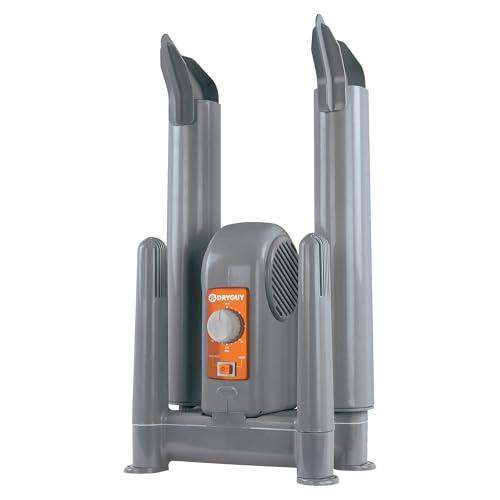
DryGuy Force Dry DX
Two pairs of anything, fast
Forced air with boot and glove ports: two pairs of boots, or boots and gloves together, dried in about the time it takes to eat dinner.
#ad How we are funded · Price as of November 19, 2026
Quick picks
| # | Product | Stated dry time | Score | Price |
|---|---|---|---|---|
| Rank 1 | DryGuy Force Dry DX Two pairs of anything, fast | 1 to 2 hours (manufacturer) | 9.4/10 | $89.99Amazon |
| Rank 2 | 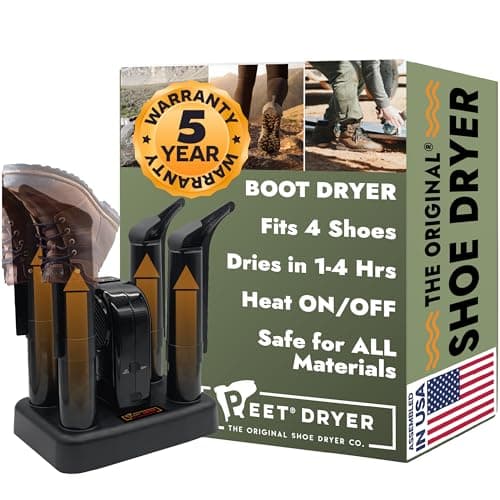 PEET Advantage Plus 2-pair Two pairs, faster | 1 to 3 hours (manufacturer) | 9.3/10 | $119.99Amazon |
| Rank 3 | 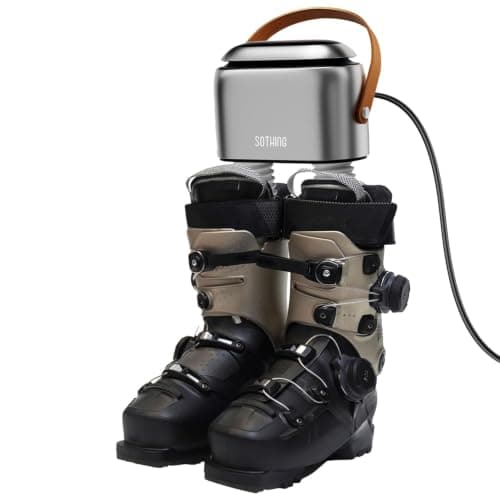 SOTHING boot dryer with extendable hoses Tall boots on a budget | Not published (95W forced air) | 8.8/10 | $49.99Amazon |
| Rank 4 | 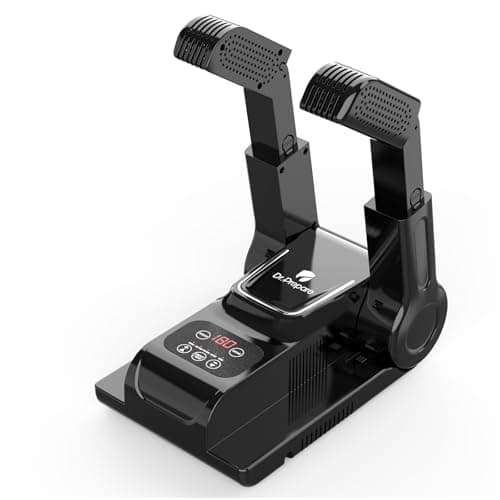 DR.PREPARE boot dryer with blower The cheapest forced-air option | Varies by boot (manufacturer) | 8.9/10 | $27.99Amazon |
| Rank 5 | 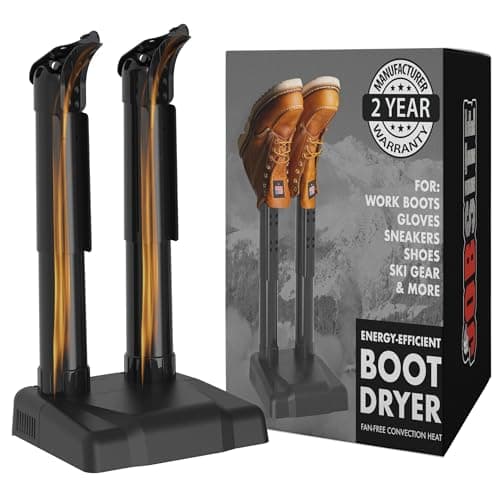 JobSite boot dryer A silent dryer on a budget | Overnight (manufacturer) | 9.2/10 | $41.99Amazon |
| Rank 6 | 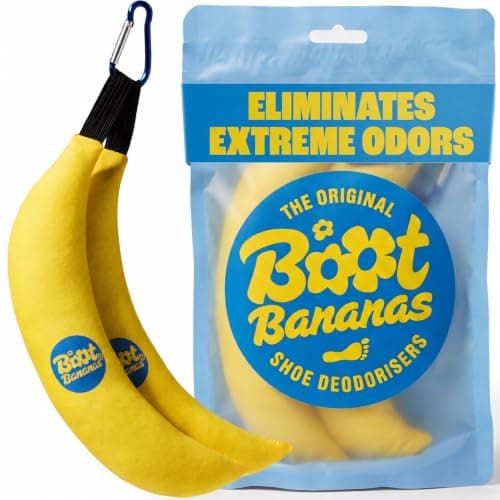 Boot Bananas odor absorbers Odor between hunts | Not published | 9.5/10 | $19.99Amazon |
#ad Prices come from Amazon and change. How this site is funded. Scores are our published editorial rubric — see our methodology.
For work boots, buy a forced-air dryer with a timer - the DryGuy Force Dry DX is the one we would buy. Its published dry time is 1 to 2 hours with a 105F warm-air setting and a 3-hour timer, and that combination is what a daily-driver boot needs: fast enough to turn a soaked pair around between shifts, and warm rather than hot, so you are not cooking the adhesives that hold a work boot together.
The distinction that matters here is forced air against convection. A silent convection dryer moves warm air by rising alone and typically needs overnight. That is fine for a hunting boot you wear on Saturdays. It is not fine for a boot that comes off wet at 6 p.m. and has to be dry at 5 a.m., every weekday, through a wet winter - particularly a steel-toe boot, where a cold metal cap sits right where the moisture collects.
How we picked
- Published dry times only. Every figure below is the manufacturer's stated time, labeled as such and cited to the maker - see our methodology.
- Daily-cycle capable. A dryer used 250 times a year has to survive 250 cycles. Fan units with timers are built for that; the cheapest ones are not.
- Reach into a tall shaft. A 10-inch logger or a tall pull-on needs air delivered up the shaft, not just blown at the opening.
- Warm, not hot. Heat damages adhesives, leather and waterproof membranes. Published temperatures in the 100F range are the target.
- Capacity for two pairs, because a working pair and a drying pair is the only system that actually works.
The picks
Two forced-air units with timers, the tall-shaft specialist, a budget blower, the silent convection option, and the no-power fallback.
#1 · Two pairs of anything, fast
$111.99 20% off
#ad How we are funded · Price as of November 19, 2026
DryGuy Force Dry DX
DryGuyForced air with boot and glove ports: two pairs of boots, or boots and gloves together, dried in about the time it takes to eat dinner.
| Type | Forced air with heat |
|---|---|
| Capacity | 2 pair (boots plus gloves) |
| Stated dry time | 1 to 2 hours (manufacturer) |
| Timer | 3-hour timer (manufacturer) |
| Temperature | 105F warm-air setting (manufacturer) |
Specifications per DryGuy published specifications.
What it does well
- The best capacity-per-dollar here - boots and gloves at the same time
- 105F is warm enough to be fast and cool enough not to damage membranes
- The timer is a real safety feature on a heated appliance
Good to know
- The fan is clearly audible
Our rubric — each criterion 0-10
- Drying power
- 9.2
- Capacity
- 9.0
- Quiet
- 5.6
- Build
- 8.4
- Value
- 9.0
#2 · Two pairs, faster
#ad How we are funded · Price as of November 19, 2026
PEET Advantage Plus 2-pair
PEETPEET with a fan and a heater, trading the Original's silence for roughly a third of the drying time and double the capacity.
| Type | Forced air with heat |
|---|---|
| Capacity | 2 pair |
| Stated dry time | 1 to 3 hours (manufacturer) |
| Timer | Yes (manufacturer) |
| Noise | Audible fan |
Specifications per PEET Dryer published specifications.
What it does well
- Fast enough to turn boots around between an evening and a morning hunt
- Two pairs at once covers a hunting partner or a second pair of boots
- A timer, so you cannot cook a boot by forgetting it
Good to know
- You can hear it, which rules out a bedroom closet
Our rubric — each criterion 0-10
- Drying power
- 9.0
- Capacity
- 8.4
- Quiet
- 6.0
- Build
- 9.0
- Value
- 7.8
#3 · Tall boots on a budget
#ad How we are funded · Price as of November 19, 2026
SOTHING boot dryer with extendable hoses
SOTHINGTwo retractable hoses that extend 11.8 inches up a boot shaft, with a fan, three heat levels and a timer, at well under the PEET wader setup.
| Type | Forced air with heat |
|---|---|
| Capacity | 1 pair (two hoses) |
| Hose reach | Extends to 11.8 in (manufacturer) |
| Stated dry time | Not published (95W forced air) |
| Heat levels | 113F to 149F, three settings (manufacturer) |
| Timer | 1 to 9 hours with auto shut-off (manufacturer) |
What it does well
- The hoses reach into the shaft of a knee boot, which nothing else at this price does
- A 1 to 9 hour timer with auto shut-off, which the cheap blowers mostly lack
- Dries gloves on the same hoses
Good to know
- The top heat setting is published at 149F, well above the 120F where leather and membranes suffer - use the lowest setting on hunting boots
Our rubric — each criterion 0-10
- Drying power
- 8.6
- Capacity
- 6.0
- Quiet
- 5.4
- Build
- 6.4
- Value
- 8.8
#4 · The cheapest forced-air option
#ad How we are funded · Price as of November 19, 2026
DR.PREPARE boot dryer with blower
DR.PREPAREA portable heat blower with boot adapters at the bottom of the market. It works, and it is the least likely item here to still be working in five years.
| Type | Forced air with heat |
|---|---|
| Capacity | 1 pair |
| Stated dry time | Varies by boot (manufacturer) |
| Timer | Yes (manufacturer) |
| Extras | Glove and helmet adapters |
What it does well
- Forced air and a timer at convection-dryer money
- Adapters make it useful for gloves and helmets too
Good to know
- Buyer feedback flags inconsistent longevity
Our rubric — each criterion 0-10
- Drying power
- 8.2
- Capacity
- 6.8
- Quiet
- 5.4
- Build
- 6.0
- Value
- 9.2
#5 · A silent dryer on a budget
#ad How we are funded · Price as of November 19, 2026
JobSite boot dryer
JobSiteA convection dryer at roughly half PEET's price. Silent, slow, and doing the same physics with a less-refined build.
| Type | Convection, fanless |
|---|---|
| Capacity | 1 pair |
| Stated dry time | Overnight (manufacturer) |
| Extras | Deodorizing function claimed (manufacturer) |
| Noise | Silent |
What it does well
- The cheapest silent dryer that is not simply a bare fan
- Handles gloves as well as boots
Good to know
- Build quality is visibly below PEET, and buyers report heater failures
Our rubric — each criterion 0-10
- Drying power
- 7.0
- Capacity
- 6.0
- Quiet
- 9.6
- Build
- 6.8
- Value
- 9.0
#6 · Odor between hunts
#ad How we are funded · Price as of November 19, 2026
Boot Bananas odor absorbers
Boot BananasFabric sachets of absorbent mineral and oils that sit in the boot between uses. They manage odor rather than masking it, and they are quiet about it.
| Type | Passive absorbent sachet |
|---|---|
| Active | Mineral absorbents plus essential oils (manufacturer) |
| Stated life | Up to 12 months (manufacturer) |
| Reusable | Yes |
| Power | None |
What it does well
- No power, no noise, no mechanism - it just sits in the boot
- Absorbs moisture as well as odor, which is the actual cause
Good to know
- Scented, which deer hunters will reasonably object to
Our rubric — each criterion 0-10
- Effectiveness
- 7.8
- Ease of use
- 9.4
- Durability
- 7.8
- Value
- 8.0
Why work boots are harder to dry than hunting boots
Four reasons, and they compound:
- Sweat, not weather. A work boot is usually wet from the inside out. Perspiration soaks the footbed and the lining rather than the upper, and the footbed is the slowest part of the boot to dry.
- A safety toe is a cold spot. A steel or composite cap conducts heat away from the air you are blowing in, so moisture condenses there. This is why fan-driven air beats still warm air in a safety boot.
- Daily use means no recovery time. A hunting boot gets five days to dry out. A work boot gets eleven hours.
- Taller shafts and thicker linings. More material, less airflow, slower drying.
Left wet, the consequences are not just comfort. A permanently damp lining breeds the bacteria that cause boot odor, accelerates stitching rot, and - in an insulated boot - keeps the insulation compressed and useless. The full drying method applies to work boots unchanged.
Forced air or convection, for a boot you wear every day
| Forced air | Convection (fanless) | |
|---|---|---|
| Typical published dry time | 1 to 3 hours | Overnight, 8 hours and up |
| Noise | Audible fan | Silent |
| Daily turnaround | Yes | Only just - and nothing to spare |
| Tall shafts | Good, air is pushed up the tube | Fair, relies on rising air |
| Running cost | Low - a small fan and element | Lowest - element only |
| Best for | Work boots, consecutive days, safety toes | A bedroom, a quiet office, weekend boots |
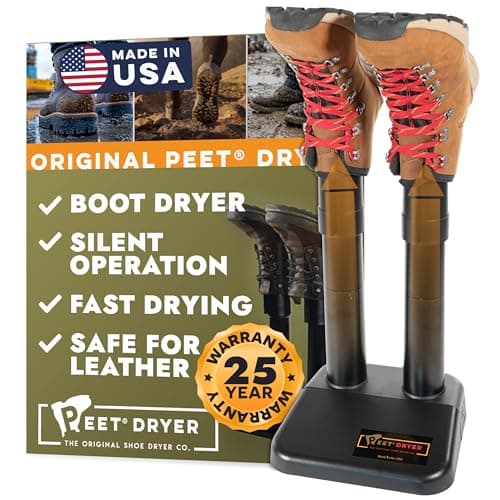
The one case for convection in a work context is a dryer that lives where the noise would be a problem - a bedroom, a shared office, a bunkhouse. The JobSite unit is silent and claims a deodorizing function, and if your boots come off at 4 p.m. rather than 8 p.m. it has the hours it needs. Our PEET versus DryGuy comparison goes deeper on the two main brands.
What to do about the smell, separately
Drying stops odor getting worse; it does not remove what is already there. Odor is bacterial, and the bacteria live in the footbed. Pull the insoles out every night - this alone roughly halves drying time and is the single most effective thing on this page - and treat the boot itself with an absorber or an ozone-equipped dryer. The deodorizing dryer picks cover the units that combine both jobs.
A two-pair rotation beats any dryer
If your boots are wet every day, the real fix is two pairs alternated, with the dryer handling whichever pair is off duty. A boot given 36 hours instead of 11 dries completely rather than nearly, and leather that is allowed to dry fully between wearings lasts materially longer. Combined with proper storage and conditioning, that rotation will outlast two pairs bought one at a time.
What we would buy
- Daily driver, two pairs, timer: DryGuy Force Dry DX.
- Same job, different brand: PEET Advantage Plus, published at 1 to 3 hours.
- Tall loggers or pull-ons: SOTHING, for hoses that extend 11.8 inches up the shaft.
- Cheapest forced air: DR.PREPARE, with glove and helmet adapters thrown in.
- Silence required: JobSite convection, if your boots come off early enough.
- No outlet at all: Boot Bananas, which absorb rather than dry - a supplement, not a dryer.
A dryer solves the boot. The sock is the other half of an all-day work-boot problem, and cotton is the usual culprit - best socks for work boots has the picks.
Our recommendation
If you only take one thing from this page, take this one.
Our pick
DryGuy Force Dry DX
Two pairs of anything, fast
#ad How we are funded · Price as of November 19, 2026
Runner-up
PEET Advantage Plus 2-pair
Two pairs, faster
#ad How we are funded · Price as of November 19, 2026
Frequently asked questions
What is the best boot dryer for work boots?
How long does it take to dry work boots?
Can you use a boot dryer on steel toe boots?
Will a boot dryer ruin my work boots?
Does a boot dryer get rid of the smell?
Sources
Read next
Dryers & Boot Care
The best boot dryers
Six dryers on drying power, capacity and noise - and the case that this is the best value purchase in hunting footwear.
Dryers & Boot Care
Forced air or convection boot dryers
One uses a fan, one uses rising air - and that single difference drives speed, noise, power and reliability.
Dryers & Boot Care
PEET or DryGuy boot dryers
Silent and slow with nothing to break, against fast and loud with more capacity. Two different physics.
Dryers & Boot Care
How to get the smell out of hunting boots
Odor is bacteria metabolizing sweat, so it is a moisture problem. Remove the water, and skip the fragrance entirely.
Brands: want your product tested? For Brands.