Rubber Boots
How to waterproof hunting boots
Most waterproofing failures are the wrong product used confidently. Match the treatment to the upper, clean first, and never wax a breathable boot.
Belt & Bike earns a commission when you buy through our links, at no extra cost to you. Prices come from Amazon and change; the date beside every price is when we last verified it. Full disclosure.
Quick picks
| # | Product | For | Score | Price |
|---|---|---|---|---|
| Rank 1 | Nikwax Footwear Cleaning Gel The step everyone skips | All footwear materials (manufacturer) | 8.4 | $10.50Amazon |
| Rank 2 | 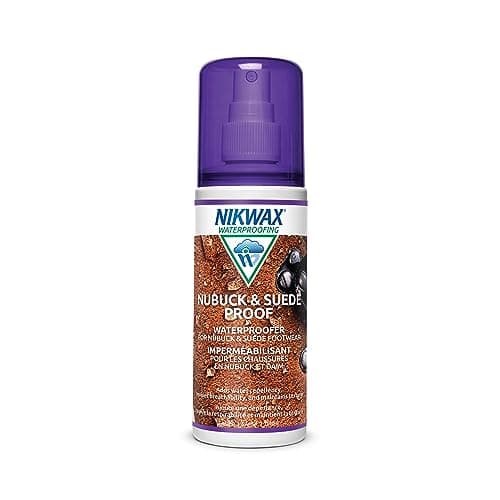 Nikwax Nubuck and Suede Proof Re-proofing nubuck and suede boots | Nubuck and suede leather | 8.4 | $10.92Amazon |
| Rank 3 | 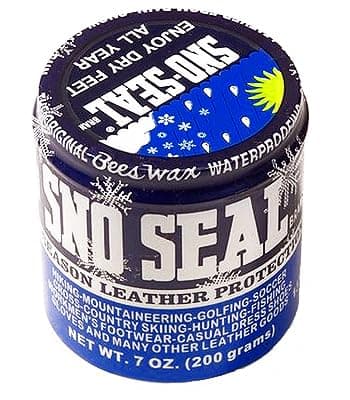 Atsko Sno-Seal beeswax, 7 oz Full-grain leather in hard conditions | Full-grain and oiled leather | 8.6 | $14.99Amazon |
| Rank 4 | 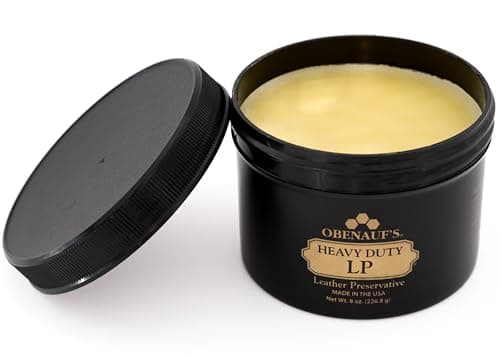 Obenauf's Heavy Duty LP Leather that lives in mud and water | Full-grain and oiled leather | 8.6 | $17.99Amazon |
| Rank 5 | 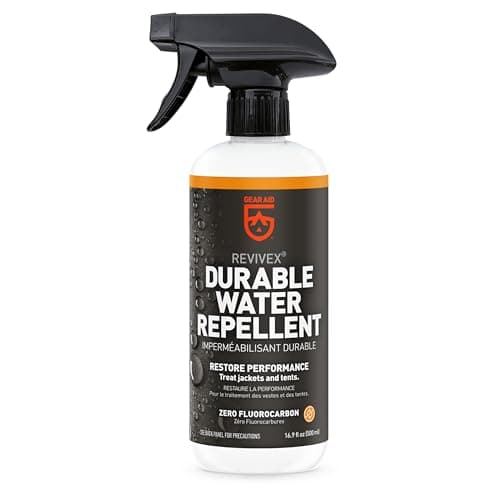 Gear Aid Revivex DWR spray Re-proofing synthetic uppers and gaiters | Synthetic fabrics and shells | 8.2 | $17.95Amazon |
#ad Prices come from Amazon and change. How this site is funded. Scores are our published editorial rubric — see our methodology.
There are four waterproofing products in common use and they are not interchangeable. Using beeswax on a Gore-Tex boot is the single most common mistake in boot care - it works, in the sense that water beads, and it also reduces the breathability you paid for. Here is the matching table, and then the method.
| Your boot's upper | Use | Do not use |
|---|---|---|
| Full-grain or oiled leather | Beeswax paste (Sno-Seal, Obenauf's) | Nothing needed beyond that |
| Nubuck or suede | Water-based spray proofer | Wax - it mats the nap permanently |
| Leather with a Gore-Tex membrane | Water-based spray proofer | Wax or silicone, which block breathability |
| Nylon or synthetic panels | A DWR spray | Wax, which does nothing on nylon |
| Gaiters and fabric | A DWR spray | Wax |
| Rubber or neoprene | Nothing | Any of it - there is nothing to feed |
The products, priced
A cleaner, a spray proofer for nubuck and membranes, two waxes for full-grain, and a DWR for synthetics.
#1 · The step everyone skips
#ad How we are funded · Price as of October 6, 2026
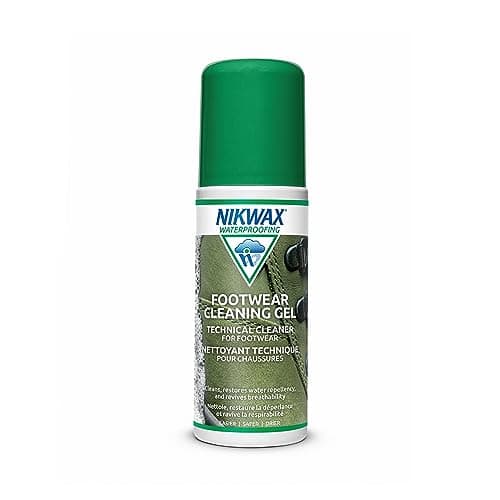
Nikwax Footwear Cleaning Gel
NikwaxCleaner, not proofer. Proofing over caked mud seals the mud in - this is the step that makes the proofer actually work.
| Type | Water-based cleaning gel |
|---|---|
| For | All footwear materials (manufacturer) |
| Membrane safe | Yes (manufacturer) |
| Volume | 125ml |
| Application | Sponge on wet boots (manufacturer) |
What it does well
- Removes the dirt that blocks both breathability and re-proofing
- Safe on leather, nubuck, synthetic and membrane boots alike
Where it falls short
- Does nothing for waterproofing on its own
- Easy to skip, which is exactly why boots stop repelling water
Our rubric
- Effectiveness
- 8.4
- Ease of use
- 9.2
- Durability
- 7.0
- Value
- 9.0
#2 · Re-proofing nubuck and suede boots
Nikwax Nubuck and Suede Proof
NikwaxA water-based proofer for nubuck and suede that does not clog a membrane the way a silicone spray can. The correct product for most leather hunting boots.
| Type | Water-based spray-on proofer |
|---|---|
| For | Nubuck and suede leather |
| Membrane safe | Yes, maintains breathability (manufacturer) |
| Volume | 125ml |
| Application | Apply to clean, wet boots (manufacturer) |
What it does well
- Water-based, so it does not seal a Gore-Tex boot shut
- Applies to wet boots, so you can treat them the evening you get home
Where it falls short
- Wrong product for full-grain leather or rubber - match the treatment to the upper
- Needs reapplying every few outings in hard conditions
Our rubric
- Effectiveness
- 8.6
- Ease of use
- 9.0
- Durability
- 7.0
- Value
- 9.0
#3 · Full-grain leather in hard conditions
#ad How we are funded · Price as of October 6, 2026
Atsko Sno-Seal beeswax, 7 oz
AtskoBeeswax worked into warm leather. The traditional treatment, the most durable water protection for full-grain, and the wrong choice for a breathable membrane boot.
| Type | Beeswax paste |
|---|---|
| For | Full-grain and oiled leather |
| Membrane safe | Reduces breathability (treat as non-membrane) |
| Volume | 7 oz |
| Application | Apply to warm, dry leather (manufacturer) |
What it does well
- The most durable water repellency here - weeks rather than outings
- Conditions the leather as well as sealing it
Where it falls short
- Reduces breathability, so do not use it on a Gore-Tex boot you walk hard in
- Darkens leather permanently
- Must go on warm leather, which means a hair dryer and some patience
Our rubric
- Effectiveness
- 9.2
- Ease of use
- 7.0
- Durability
- 9.0
- Value
- 9.0
#4 · Leather that lives in mud and water
#ad How we are funded · Price as of October 6, 2026
Obenauf's Heavy Duty LP
Obenauf'sA beeswax-and-propolis paste developed for wildland firefighters' boots. Heavier than Sno-Seal, and the longest-lasting leather treatment here.
| Type | Beeswax and propolis paste |
|---|---|
| For | Full-grain and oiled leather |
| Membrane safe | Reduces breathability (treat as non-membrane) |
| Volume | 8 oz |
| Application | Work into clean, dry leather by hand |
What it does well
- Penetrates deeper than a surface wax, so it conditions as well as seals
- Developed for boots that live in water and heat, and it shows
Where it falls short
- Darkens leather heavily and permanently
- Not for membrane boots or suede
Our rubric
- Effectiveness
- 9.4
- Ease of use
- 7.0
- Durability
- 9.2
- Value
- 8.8
#5 · Re-proofing synthetic uppers and gaiters
Gear Aid Revivex DWR spray
Gear AidA durable water repellent for synthetics rather than leather - the right product for nylon boot panels, gaiters and the shell of a pac boot.
| Type | Spray-on durable water repellent |
|---|---|
| For | Synthetic fabrics and shells |
| Membrane safe | Yes (manufacturer) |
| Volume | 10 oz |
| Heat setting | Heat activation improves durability (manufacturer) |
What it does well
- Restores water beading on nylon panels that wax cannot treat
- Also works on gaiters, which otherwise wet out and stay wet
Where it falls short
- Not a leather treatment - using it on full-grain wastes it
- Needs heat to set properly for best durability
Our rubric
- Effectiveness
- 8.2
- Ease of use
- 8.6
- Durability
- 7.2
- Value
- 8.8
Clean first. This is not optional
Proofing over caked mud seals the mud in, blocks whatever breathability the boot had, and wastes the product. Yet it is the step almost everyone skips.
- Knock the loose mud off and pull the laces and footbed out.
- Rinse with cool water and scrub with a soft brush. Hot water is hard on adhesives and leather.
- Use a footwear cleaning gel for anything stubborn, not dish soap - detergents strip the oils in leather and can leave residues that attract water.
- Rinse thoroughly. Residue left in the upper undermines the proofer.
Then proof, in the right state
Water-based spray proofer (nubuck, suede, membrane boots)
Apply to a clean, damp boot - that is counterintuitive and it is what the directions say, because the water carries the proofer into the material. Spray evenly, wipe off excess, and let it dry at room temperature, away from heat.
Beeswax paste (full-grain leather, non-membrane)
Apply to a clean, dry, warm boot. Warm the leather gently with a hair dryer on low until it is just warm to the touch, work the wax in with your fingers, then warm it again so it absorbs rather than sitting on the surface. Buff off the excess. Expect the leather to darken permanently.
DWR spray (nylon panels, gaiters)
Clean, dry, spray, and heat-set if the directions call for it - heat is what makes DWR durable. Reapply more often than you would wax; nylon loses its treatment faster.
How often
| Conditions | Re-proof |
|---|---|
| Hard use in wet brush and mud | Every three or four outings |
| Normal season use | Monthly during the season |
| Light use, dry ground | Start and end of season |
| Rubber boots | Never - rinse and dry instead |
When waterproofing cannot help
- Water came over the top. No treatment addresses depth. That is a knee-high rubber boot problem.
- A seam or the membrane has failed. A proofer treats the outer material, not a torn membrane. A boot that leaks in one specific spot is usually finished.
- The boot is wet inside from sweat. That is a drying and sock problem, and a proofer makes it slightly worse by reducing breathability.
- The leather is cracked. Conditioning may help it survive; it will not make it waterproof again.
Frequently asked questions
How do I waterproof my hunting boots?
Can you use Sno-Seal on Gore-Tex boots?
How often should I waterproof hunting boots?
Do you need to waterproof rubber boots?
Should boots be wet or dry when you waterproof them?
Sources
Read next
Dryers & Boot Care
Hunting boot care and off-season storage
Most boots die in storage, not in the field. UV, fuel fumes and damp do more damage than a season of hunting.
Rubber Boots
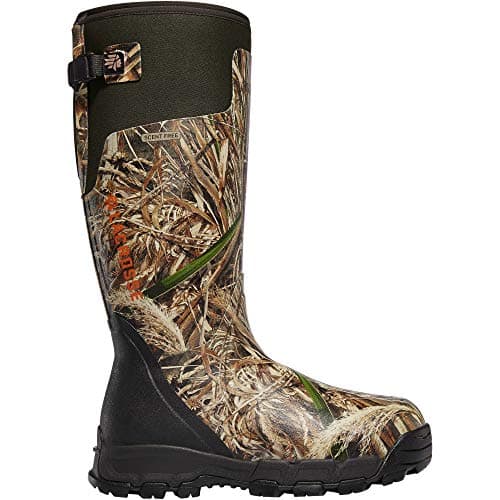
Rubber or leather hunting boots
Water and scent against walking and lifespan - the decision that cuts the market in half in one step.
Dryers & Boot Care
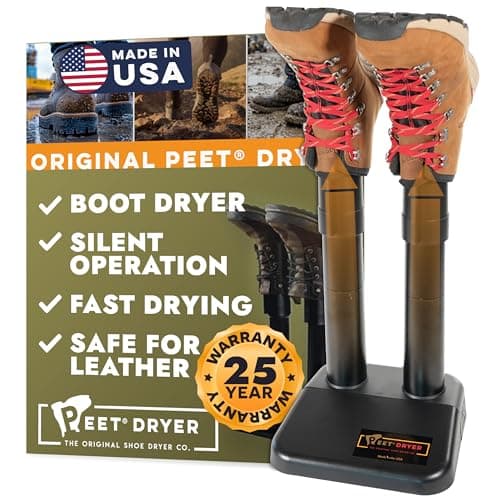
How to dry hunting boots
The method, the safe fast version, and the five heat sources that ruin boots. Water does not kill footwear - heat does.
Rubber Boots
The best rubber hunting boots
Six rubber boots ranked on height, calf fit, insulation and how each one eventually fails.
Boot Fit & Sizing
How to break in hunting boots
Four stages over two to four weeks, in order - plus the five break-in shortcuts that damage boots.