Best rubber boots
The best rubber hunting boots
Six rubber boots ranked on height, calf fit, insulation and how each one eventually fails.
Knee-high rubber, neoprene and the honest limits of a waterproof membrane. Sorted by how deep you actually walk, with live prices.
Belt & Bike earns a commission when you buy through our links, at no extra cost to you. Prices come from Amazon and change; the date beside every price is when we last verified it. Full disclosure.
Ranked on the specifications below. Prices are live and dated; where no live price resolves, the cell reads Check price.
| # | Product | Insulation | Score | Price |
|---|---|---|---|---|
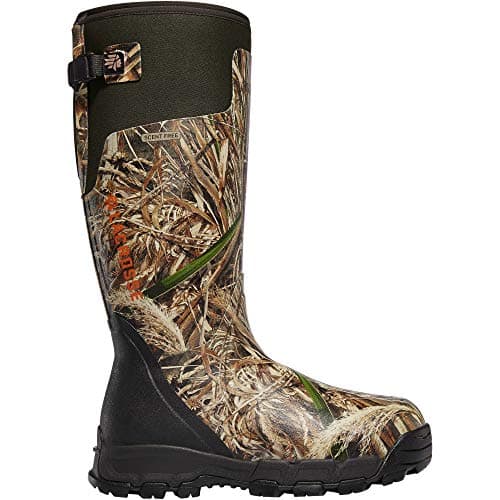
| Rank 1 | LaCrosse Alphaburly Pro 18-inch, 800g One boot for most of the season | 800g | 8.8 | $199.98Amazon |
| Rank 2 | 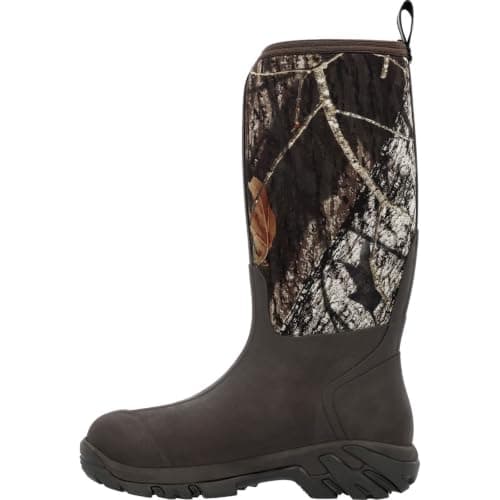 Muck Woody Sport Tall Mid-season walking and sitting | 5mm neoprene | 8.4 | $146.25Amazon |
| Rank 3 | 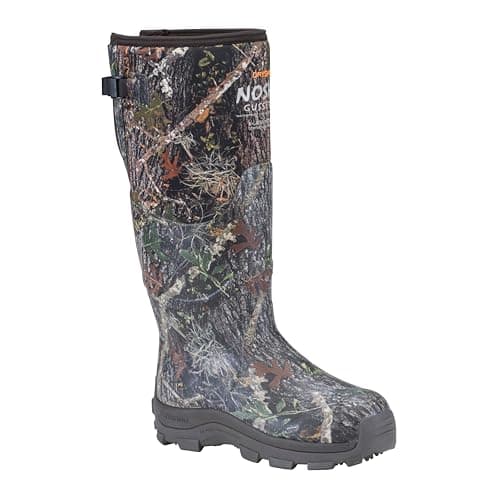 Dryshod NoSho Gusset XT Extreme cold in a gusseted pull-on | 7mm DENSOPRENE foam | 8.6 | $219.95Amazon |
| Rank 4 | 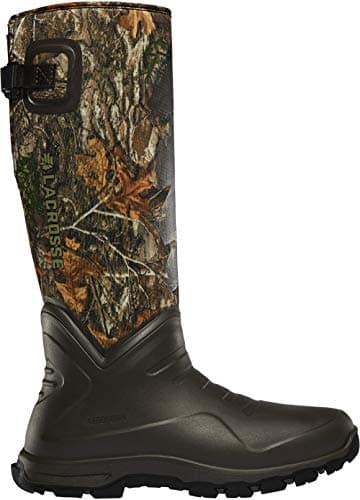 LaCrosse AeroHead Sport 16-inch, 7mm Marsh walking where flex matters | 7.0mm neoprene | 8.4 | $194.99Amazon |
| Rank 5 | 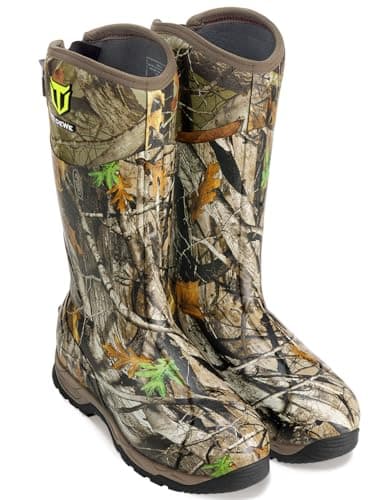 TIDEWE 800g insulated rubber boot Insulated rubber on a tight budget | 800g | 7.8 | $119.99Amazon |
#ad Prices come from Amazon and change. How this site is funded. Scores are our published editorial rubric — see our methodology.
There is exactly one thing a waterproof boot has to do, and a surprising number of them cannot: stay dry when the water is deeper than the boot. Height is the spec that matters most and gets discussed least. A 10-inch leather boot with the best membrane ever made floods at eleven inches of water, and then the membrane works against you, because a membrane that keeps water out also keeps it in.
So this hub starts with depth, not with brand. Measure the deepest regular crossing on your route in - not the deepest you can imagine, the deepest you actually do - and buy for that.
| Water you walk through | Boot you need | Where to look |
|---|---|---|
| Wet grass, dew, light mud | Any waterproof leather boot, 8-10 in | A leather boot is fine |
| Ankle to mid-calf mud | A 16-inch rubber pull-on | Best rubber hunting boots |
| Knee-deep flooded timber | An 18-inch knee boot, nothing shorter | Knee-high rubber |
| Above the knee | Waders, not boots | A boot cannot solve this |
These are three genuinely different constructions and they fail in three different ways, which is worth understanding before you spend money.
| Vulcanized rubber | Neoprene with rubber shell | Leather with membrane | |
|---|---|---|---|
| Waterproof life | Effectively permanent | Permanent until the shell splits | Until the membrane or treatment fails |
| Breathability | None | None | Real, and it matters on a walk-in |
| Warmth source | Insulation layer inside | The neoprene itself | Insulation layer inside |
| Fits your foot | Poorly - it is a tube | Poorly, but it stretches | Properly, because it laces |
| Scent | Inherently scent-free | Inherently scent-free | Absorbs what you walk through |
| Usual failure | Cracking at the flex point after years | Shell splitting at the ankle crease | Membrane wetting out, or a seam |
The detail nobody mentions: neoprene thickness is not comparable to a gram rating, so you cannot cross-shop a 5mm Muck against an 800g LaCrosse on a spec sheet. Neoprene against rubber works through it properly, and rubber against leather is the decision most buyers are actually trying to make.
A knee-high pull-on is a tube, and the tube is sized for an average calf. If your calf is heavier than average, most 18-inch boots simply will not go on over a wool sock; if it is lighter, the boot rotates around your leg and rubs. The fix is an adjustable back gusset, which LaCrosse's Alphaburly and Dryshod's NoSho both have and most boots do not. If you have measured over 17 inches at the widest point, start at rubber boots for wide calves rather than browsing by brand.
Rubber does not absorb odor the way leather does, which is why deer hunters have used knee boots for decades for reasons that have nothing to do with water. It is not magic - you still track scent on the outsole - but a rubber boot stored away from gasoline and kept out of the truck cab is the lowest-scent footwear you can hunt in. Scent-free rubber boots covers what actually helps and what is marketing.
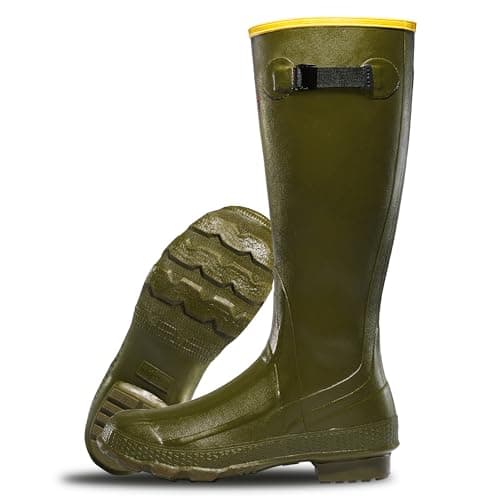
Most rubber boots sold are insulated, and in September that is the wrong boot. Walking into a swamp at 70F in an 800g knee boot produces a liner full of sweat within a mile. The answer is an uninsulated knee boot - the LaCrosse Grange has been in the catalog for decades for exactly this reason - plus a wool sock you can change. Early-season rubber boots has the picks.
12 pages in this section. Roundup tiles carry the live price and a buy link for their top pick.
Best rubber boots
Six rubber boots ranked on height, calf fit, insulation and how each one eventually fails.
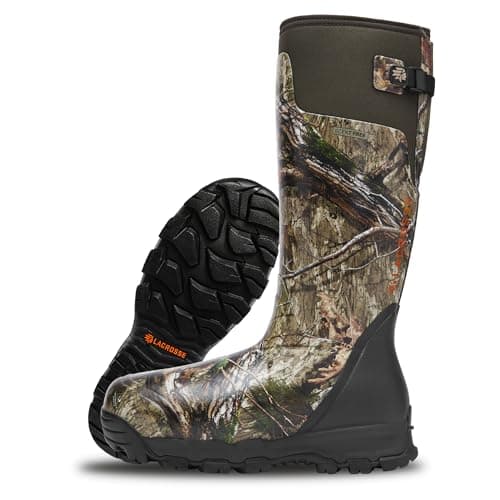
Best insulated rubber
Gram-rated and neoprene-rated boots side by side, and how to compare two spec systems nobody bridges.
Best for deer hunting
Scent control, silence and a long motionless sit - what deer hunting asks of a rubber boot, and which ones deliver.
Best for duck hunting
Standing in near-freezing water is the hardest ask in footwear. Height first, insulation second, drying third.
Best knee-high
Sixteen to eighteen inches of coverage, and the calf measurement that decides which of them you can get on.
Comparison
Water and scent against walking and lifespan - the decision that cuts the market in half in one step.
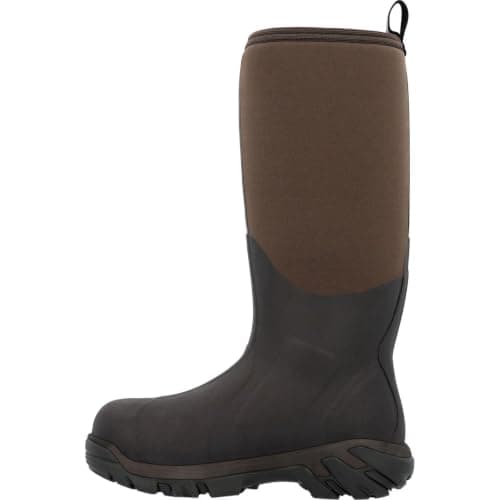
Comparison
Every tall boot is both materials. What differs is the ratio, the rating system, and how it eventually fails.
Comparison
Calf fit, rating systems, outsoles and abrasion - four real differences between the two rubber specialists.
Guide
Rubber absorbs less odor than leather - and the rest of scent control is storage and handling, which is free.
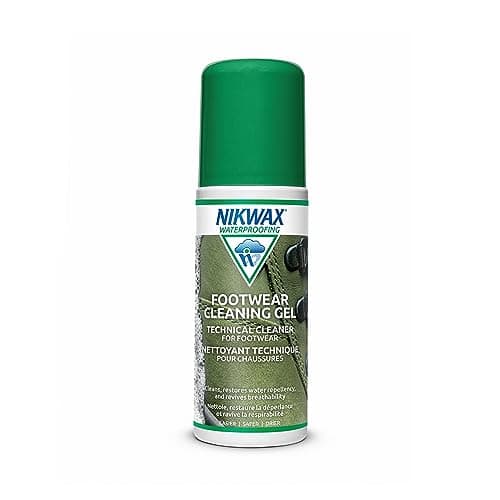
Guide
Wax, spray or nothing - matched to full-grain, nubuck, synthetic and rubber, in the right order.
Best for wide calves
Shoe size barely changes a knee boot's calf opening. Measure, then buy one of the few boots that genuinely adjusts.
Best for early season
Most rubber boots sold are insulated, and in September that is the wrong boot. What to buy instead.