Rubber Boots
Early-season rubber boots: buy uninsulated
Most rubber hunting boots sold are insulated, and in September that is the wrong boot. Here is what to buy instead and how to manage the heat.
Belt & Bike earns a commission when you buy through our links, at no extra cost to you. Prices come from Amazon and change; the date beside every price is when we last verified it. Full disclosure.
Quick picks
| # | Product | Insulation | Score | Price |
|---|---|---|---|---|
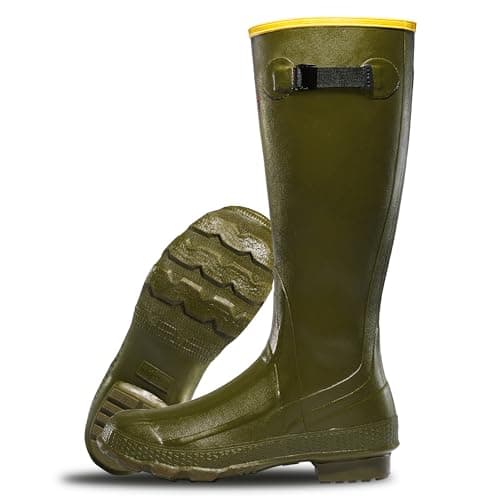
| Rank 1 | LaCrosse Grange 18-inch Uninsulated knee-high water work | None (uninsulated) | 8.0 | $99.95Amazon |
| Rank 2 | 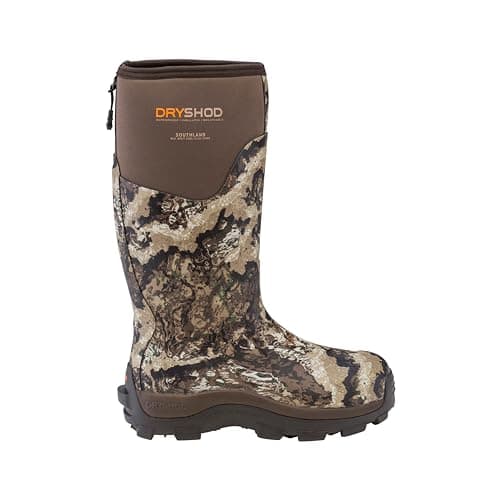 Dryshod Southland Warm-weather water in the South | Minimal (3-season design) | 7.8 | $189.95Amazon |
| Rank 3 | 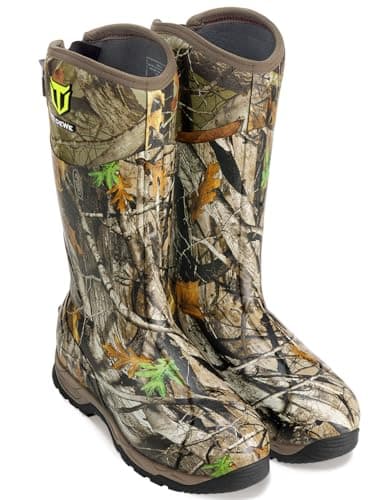 TIDEWE rubber hunting boot A first pair of rubber boots | Not published | 7.3 | $112.99Amazon |
| Rank 4 | 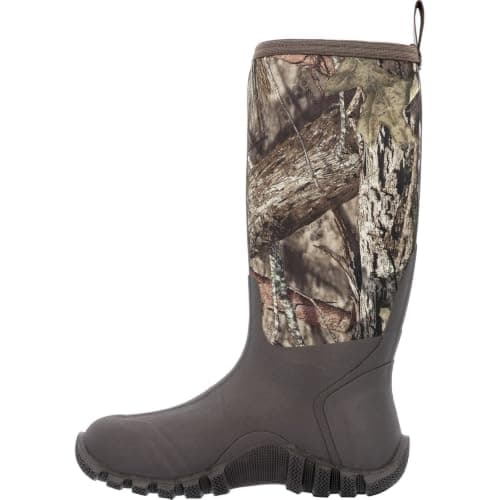 Muck Fieldblazer Classic A cheap tall neoprene boot | 4mm neoprene | 8.0 | $104.99Amazon |
| Rank 5 | 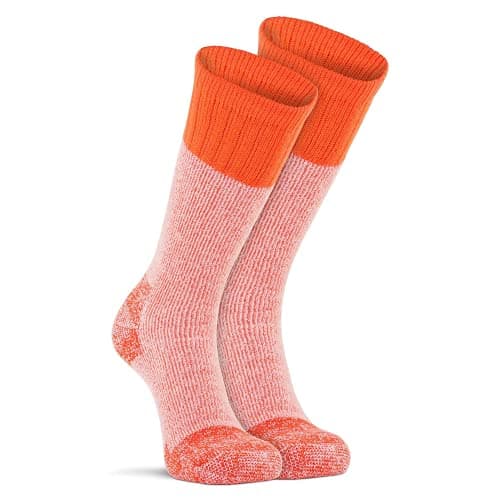 Fox River Wick Dry Outlander Sweaty feet in mild weather | Not published | 8.4 | $15.00Amazon |
#ad Prices come from Amazon and change. How this site is funded. Scores are our published editorial rubric — see our methodology.
Walk into a swamp at 70F wearing an 800g knee boot and you will have a liner full of sweat within a mile. The early-season problem is heat, not cold, and almost the entire rubber-boot aisle is built for the opposite problem.
The answer is an uninsulated knee boot plus a wicking sock, and it costs less than the insulated version.
What to buy for warm-weather water
Uninsulated knee boots, the warm-weather three-season option, and the sock that makes it work.
#1 · Uninsulated knee-high water work
#ad How we are funded · Price as of October 6, 2026
LaCrosse Grange 18-inch
LaCrosseAn uninsulated ZXT rubber knee boot that has been in the catalog for decades. Buy it for water, not for warmth, and put the warmth in your sock.
| Insulation | None (uninsulated) |
|---|---|
| Shaft height | 18 in |
| Upper | ZXT rubber |
| Liner | Unlined |
| Fit | Pull-on |
Specifications per LaCrosse Footwear published specifications.
What it does well
- Cheap, nearly indestructible, and the pattern has barely changed because it did not need to
- Uninsulated means you control warmth with socks instead of being locked into one temperature
- A sane early-season and chore boot that happens to be scent-free
Where it falls short
- Cold on its own below about 45F - this is a feature, not a flaw, but buyers get it wrong
- Plain rubber is stiffer across the instep than a neoprene boot
Our rubric
- Warmth
- 4.0
- Waterproofing
- 9.4
- Fit
- 7.8
- Durability
- 9.4
- Value
- 9.4
#2 · Warm-weather water in the South
Dryshod Southland
DryshodA three-season boot built for the problem nobody specs for: water with no cold. Minimal insulation, maximum breathability for a rubber boot.
| Insulation | Minimal (3-season design) |
|---|---|
| Temperature rating | 15F to 90F (manufacturer) |
| Shaft height | Not published by manufacturer |
| Upper | Natural rubber over foam |
| Liner | Moisture-wicking |
What it does well
- The published range goes to 90F, and that is unusual and useful
- Light enough to walk in for a tall rubber boot
Where it falls short
- Cold below the published floor, and you will find out quickly
- Less abrasion resistance than a reinforced chore boot
Our rubric
- Warmth
- 5.0
- Waterproofing
- 9.0
- Fit
- 8.6
- Durability
- 8.0
- Value
- 8.2
#3 · A first pair of rubber boots
#ad How we are funded · Price as of October 6, 2026
TIDEWE rubber hunting boot
TIDEWEThe entry point: a knee-high waterproof rubber boot at a price where buying the wrong thing does not hurt much.
| Insulation | Not published by manufacturer |
|---|---|
| Shaft height | Not published by manufacturer |
| Upper | Rubber over neoprene |
| Fit | Pull-on |
| Outsole | Multi-directional lug |
What it does well
- Cheap enough to own alongside a better boot for specific conditions
- Full knee-high water coverage, which is the one thing you cannot fake
Where it falls short
- Insulation varies between listings under similar names - read carefully
- Durability is the obvious compromise
Our rubric
- Warmth
- 5.6
- Waterproofing
- 8.4
- Fit
- 7.0
- Durability
- 6.2
- Value
- 9.2
#4 · A cheap tall neoprene boot
Muck Fieldblazer Classic
MuckThe entry point to tall Muck boots. Thinner neoprene and a simpler build, which is fine if your problem is water and mild cold rather than a static December sit.
| Insulation | 4mm neoprene |
|---|---|
| Shaft height | Not published by manufacturer |
| Upper | Rubber over 4mm neoprene |
| Fit | Pull-on, stretch-fit topline |
| Liner | Jersey |
Specifications per Muck Boot Company published specifications.
What it does well
- Tall waterproof coverage at a price that competes with uninsulated rubber
- Light enough to walk in for a tall boot
Where it falls short
- 4mm is a cool-weather spec, not a cold-weather one
- Thinner neoprene is the first thing to split with hard use
Our rubric
- Warmth
- 6.4
- Waterproofing
- 8.8
- Fit
- 8.2
- Durability
- 7.6
- Value
- 9.0
#5 · Sweaty feet in mild weather
#ad How we are funded · Price as of October 6, 2026
Fox River Wick Dry Outlander
Fox RiverA wicking-first sock rather than a warmth-first one. The right answer when your problem is a damp boot after the walk in, not the temperature.
| Material | Wool and synthetic blend with wicking liner |
|---|---|
| Weight | Heavyweight mid-calf |
| Height | Mid calf |
| Construction | Two-layer wicking system (manufacturer) |
| Made in | USA (manufacturer) |
What it does well
- Moves sweat better than pure merino, which is what a hard walk-in actually needs
- Cheap enough to carry a spare pair in the pack
Where it falls short
- Less warm than a full merino sock of the same thickness
- Synthetic content holds odor longer than wool
Our rubric
- Warmth
- 7.4
- Moisture handling
- 9.2
- Durability
- 7.8
- Fit
- 8.2
- Value
- 9.2
Why uninsulated is the right call
- Nothing holding water. No insulation layer means nothing to absorb sweat, so the boot dries overnight rather than over two days.
- You set the temperature. A midweight wool sock in September, a heavyweight in November. One boot, a wide range. Insulated against uninsulated.
- Cheaper. The LaCrosse Grange costs a fraction of an insulated Alphaburly and has been in the catalog for decades on merit.
- Lighter. Insulation is bulk, and bulk is weight at the end of your leg.
Managing heat in a non-breathing boot
A rubber boot does not breathe at all, so sweat management is entirely about what is inside it and how fast you walk.
- Wear a wicking sock, not a thick wool one. A two-layer wicking construction moves moisture off your skin; a heavy merino sock saturates. Socks for sweaty feet.
- Walk slower than feels natural. The same advice as cold weather, for the same reason.
- Carry a spare pair of socks and change when you are set up. A dry sock in a warm boot is comfortable; a wet one blisters.
- Pull the footbed out when you get home, every time. Warm-weather sweat is what produces boot odor fastest: the boot odor guide.
The three-season option
Dryshod's Southland is one of the few rubber boots designed specifically for warm weather, with a published range up to 90F. It is a genuinely different design brief from a cold-weather boot - minimal insulation, maximum breathability for a material that does not breathe - and it costs more than a plain uninsulated boot. Worth it if your season starts hot and stays warm.
What about snakes?
Early season in the South overlaps exactly with peak snake activity, and a plain rubber boot is not snake protection and is not sold as such. If you hunt early season where there are venomous snakes, that changes the boot you need: snake boots for hot weather and snake boots against rubber boots.
When insulated is still right in warm weather
One case: standing in water for hours, even warm water. Water pulls heat out of a boot far faster than air, so an early-season duck hunt where you stand still in a flooded field can justify light insulation even at 60F air temperature. Walking, no - sitting or standing in water, maybe.
Frequently asked questions
What boots should I wear for early season hunting?
Are uninsulated rubber boots good?
How do I stop my feet sweating in rubber boots?
Can you wear insulated boots in warm weather?
Sources
Read next
Cold Weather Boots
Insulated or uninsulated hunting boots: pick by activity, not temperature
An uninsulated boot plus the right sock beats an insulated boot you sweat into. Where the line actually falls.
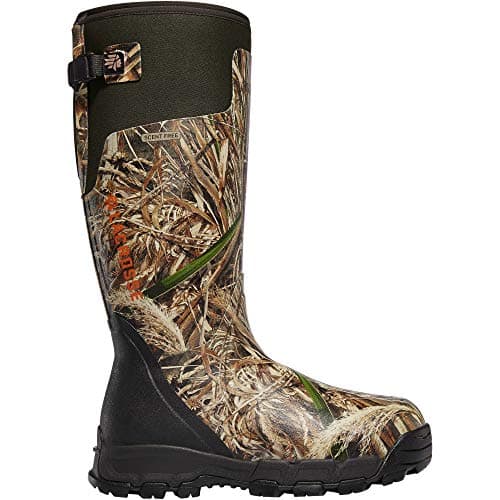
Rubber Boots
The best rubber hunting boots
Six rubber boots ranked on height, calf fit, insulation and how each one eventually fails.
Hunting Socks
Best hunting socks for sweaty feet
For heavy sweaters, more merino just saturates. Wicking constructions, a second pair, and a boot that breathes.
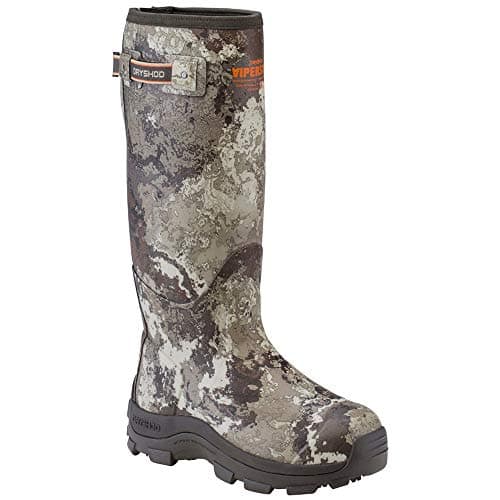
Snake Boots
Best snake boots for hot weather
You need snake protection most in July, when a 17-inch laminated boot is punishment. Three honest ways out.
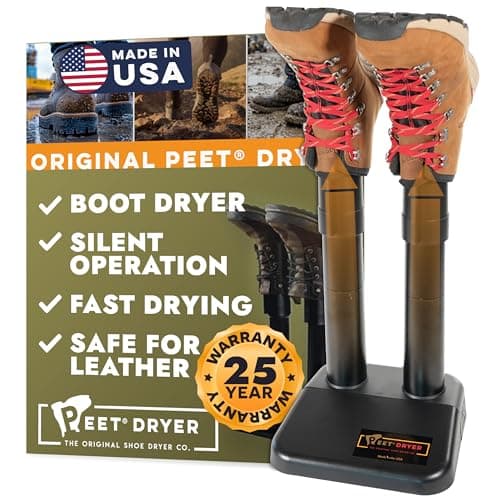
Dryers & Boot Care
How to get the smell out of hunting boots
Odor is bacteria metabolizing sweat, so it is a moisture problem. Remove the water, and skip the fragrance entirely.