Boot Fit & Sizing
How to break in hunting boots
Four stages over two to four weeks, in this order. Not one of the eleven competitor sites we reviewed covers this at all, and it is how people lose the first day of a hunt.
Belt & Bike earns a commission when you buy through our links, at no extra cost to you. Prices come from Amazon and change; the date beside every price is when we last verified it. Full disclosure.
Quick picks
| # | Product | Type | Score | Price |
|---|---|---|---|---|
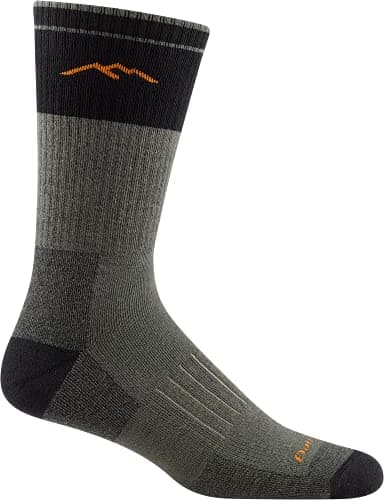
| Rank 1 | Darn Tough Hunter Boot Sock, heavyweight The default serious hunting sock | Not published | 9.0 | $31.95Amazon |
| Rank 2 | 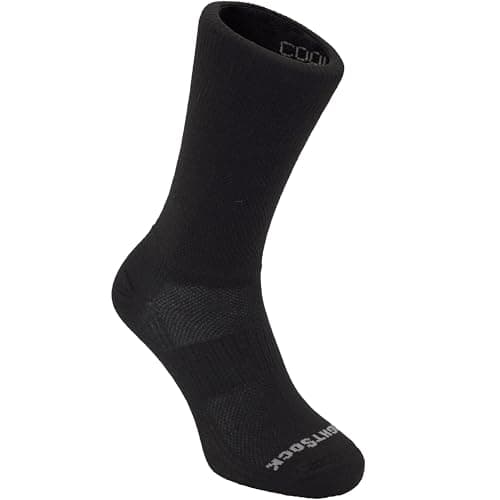 Wrightsock CoolMesh II double-layer People who blister no matter what | Not published | 8.1 | $21.00Amazon |
| Rank 3 | 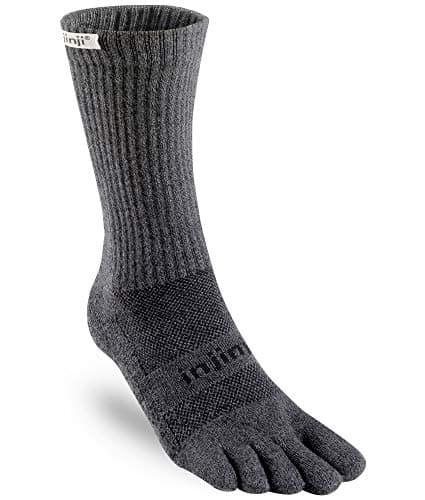 Injinji Trail Midweight Crew Blisters between the toes | Not published | 7.8 | $35.00Amazon |
| Rank 4 | 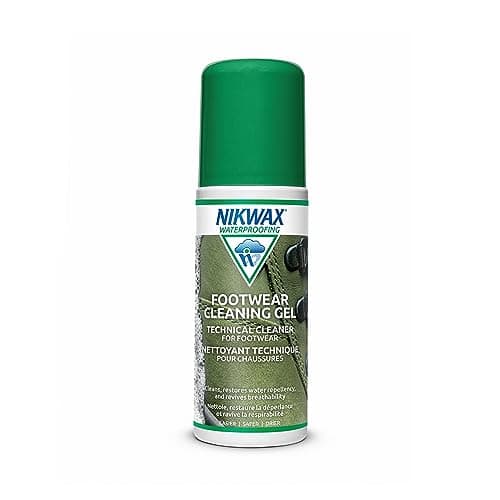 Nikwax Footwear Cleaning Gel The step everyone skips | Water-based cleaning gel | 8.4 | $10.50Amazon |
#ad Prices come from Amazon and change. How this site is funded. Scores are our published editorial rubric — see our methodology.
A new leather hunting boot is stiff where your foot wants to flex, and the fix is not a waiting period - it is a sequence. Done properly it takes two to four weeks and costs you nothing. Skipped, it costs you the first day of the hunt you bought the boots for.
Stage 1: indoors, with your hunting socks
- Wear them in the house for one hour at a time, laced properly, in the socks you will hunt in.
- Do three or four of these sessions over several days.
- This is also your size check. Heel lift, instep pressure and toe room all show up here, while the boots are still returnable and clean.
- If something hurts in hour one, it will hurt in hour eight. Deal with it now rather than hoping.
Stage 2: short walks on pavement
Pavement flexes a boot harder than trail does, and it is close to home. Twenty to thirty minutes, several times. Watch for hot spots - a warm patch is a blister that has not happened yet, and it is the signal to act.
Stage 3: loaded walks on uneven ground
Carry the pack you will actually hunt with. Load changes how your foot sits in the boot and how the midsole flexes, and a boot that is fine empty can be wrong loaded. An hour, a few times.
Stage 4: hills, both directions
Uphill reveals heel lift; downhill reveals whether the boot is long enough. Downhill is where people discover their boots are half a size too small, because the foot slides forward and the toes hit the end. Do this before the season, not on day one of an elk hunt.
The three things that help a break-in
A proper sock, a double-layer anti-blister sock, a toe-sock liner, and the cleaner for after.
#1 · The default serious hunting sock
#ad How we are funded · Price as of October 6, 2026
Darn Tough Hunter Boot Sock, heavyweight
Darn ToughMerino with a full cushion, knit in Vermont, guaranteed for life. The sock we would buy first, and the cheapest real upgrade to a cold boot.
| Material | Merino wool blend |
|---|---|
| Weight | Heavyweight, full cushion |
| Height | Boot height |
| Warranty | Unconditional lifetime guarantee (manufacturer) |
| Made in | Vermont, USA (manufacturer) |
Specifications per Darn Tough Vermont published specifications.
What it does well
- The lifetime guarantee is honored, which changes the cost-per-season arithmetic completely
- Fine-gauge merino cushions without the bulk that makes a boot tight
- Wool keeps insulating when damp, which is the whole reason not to wear cotton
Where it falls short
- Three times the price of a drugstore wool-blend sock
- Full cushion needs boot room. If you are already snug, size the boot up before buying the sock
Our rubric
- Warmth
- 9.0
- Moisture handling
- 9.0
- Durability
- 9.8
- Fit
- 9.0
- Value
- 8.0
#2 · People who blister no matter what
#ad How we are funded · Price as of October 6, 2026
Wrightsock CoolMesh II double-layer
WrightsockTwo layers that slide against each other, so friction happens between the sock layers instead of against your skin. The most effective anti-blister item here.
| Material | Synthetic, double layer |
|---|---|
| Weight | Light |
| Height | Crew |
| Construction | Two bonded layers (manufacturer) |
| Warranty | Blister-free guarantee (manufacturer) |
What it does well
- The double-layer mechanism genuinely works, and it is different from simply adding padding
- Can be worn as a liner under a wool sock in cold weather
Where it falls short
- Synthetic, so it is cold when damp compared with wool
- Two layers take up boot volume - account for it when sizing
Our rubric
- Warmth
- 5.6
- Moisture handling
- 9.2
- Durability
- 8.4
- Fit
- 9.0
- Value
- 8.4
#3 · Blisters between the toes
#ad How we are funded · Price as of October 6, 2026
Injinji Trail Midweight Crew
InjinjiA toe sock worn as a liner. Strange-looking, and the only thing that reliably stops blisters between the toes, which no amount of cushioning addresses.
| Material | Coolmax synthetic blend |
|---|---|
| Weight | Midweight |
| Height | Crew |
| Construction | Five individual toe sleeves |
| Warranty | Not published by manufacturer |
What it does well
- The only design that separates the toes, which is where a lot of hunters actually blister
- Works as a liner under a wool sock
Where it falls short
- Takes a minute to put on and feels odd for the first few wears
- Synthetic, so pair it with wool rather than relying on it for warmth
Our rubric
- Warmth
- 5.8
- Moisture handling
- 8.8
- Durability
- 7.8
- Fit
- 8.6
- Value
- 8.2
#4 · The step everyone skips
#ad How we are funded · Price as of October 6, 2026
Nikwax Footwear Cleaning Gel
NikwaxCleaner, not proofer. Proofing over caked mud seals the mud in - this is the step that makes the proofer actually work.
| Type | Water-based cleaning gel |
|---|---|
| For | All footwear materials (manufacturer) |
| Membrane safe | Yes (manufacturer) |
| Volume | 125ml |
| Application | Sponge on wet boots (manufacturer) |
What it does well
- Removes the dirt that blocks both breathability and re-proofing
- Safe on leather, nubuck, synthetic and membrane boots alike
Where it falls short
- Does nothing for waterproofing on its own
- Easy to skip, which is exactly why boots stop repelling water
Our rubric
- Effectiveness
- 8.4
- Ease of use
- 9.2
- Durability
- 7.0
- Value
- 9.0
Managing hot spots, properly
- Tape before it blisters, not after. Kinesiology tape or a strip of athletic tape over the hot spot, applied to clean dry skin.
- Change the lacing. Skip an eyelet over a pressure point; use a heel-lock pattern through the ankle eyelets to stop heel lift.
- Switch the sock. A double-layer sock puts the friction between two fabrics rather than against your skin, and a thin liner does the same job.
- Stop early. The difference between a hot spot and a blister is usually one more mile.
- If a blister forms, follow standard care - keep it clean, do not peel the skin, cover it. The American Academy of Dermatology guidance is linked below.
What not to do
| The shortcut | Why not |
|---|---|
| Soaking the boots and wearing them dry | Degrades leather, can delaminate adhesives, and ruins a membrane |
| Heat - a stove, a hair dryer on high, a radiator | Above roughly 120F leather shrinks and cracks permanently |
| Mink oil or heavy grease to soften leather | Over-softens the structure you paid for; some products rot stitching |
| A boot stretcher on a snake-boot shaft | The protective panel is not meant to be deformed |
| Doing it all in one eight-hour walk | This is how people end up unable to hunt the next day |
How long by boot type
Realistic timelines
- Rubber pull-onEssentially none. Wear it. See the picks
- Light leather and nylonA few outings. See the picks
- Full leather hunting bootTwo to four weeks of progressive wear. See the picks
- Stiff mountain boot with a full shankFour to eight weeks. Start early. See the picks
- 17-inch snake bootTwo to four weeks, and expect instep rub. See the picks
The detail on timelines, including why mountain boots take longest, is in how long to break in boots.
Frequently asked questions
How do you break in hunting boots?
How long does it take to break in leather hunting boots?
Should I wet my boots to break them in?
How do I stop blisters when breaking in boots?
Can you break in boots that are too small?
Sources
Read next
Boot Fit & Sizing
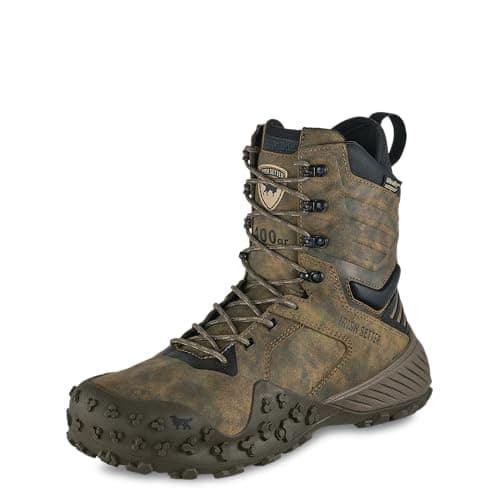
How long does it take to break in hunting boots?
Honest ranges by construction, why shanked boots take six weeks, and how to tell break-in from a bad fit.
Boot Fit & Sizing
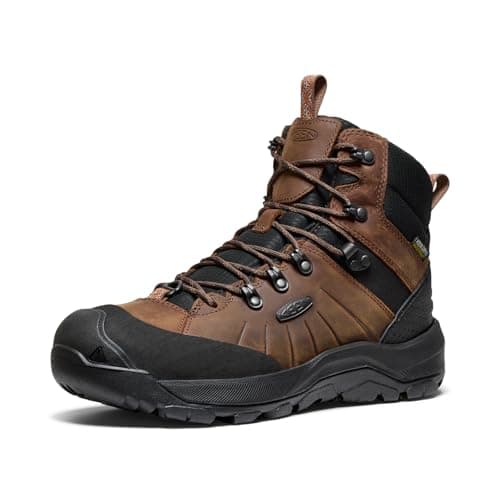
Hunting boot sizing guide
The sizing adjustment table, the five fit checks, and the two measurements shoe size tells you nothing about.
Boot Fit & Sizing
How to stop hunting boots from squeaking
Four sources, one diagnosis routine, and fixes that are mostly free - plus the remedies to keep away from a hunting boot.
Hunting Socks
Best sock liners for hunting
Warmth with almost no bulk, and the most effective anti-blister measure there is. Two designs, two problems.
Boot Fit & Sizing
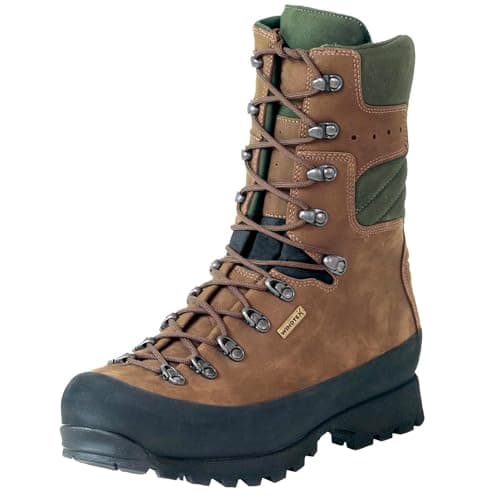
Best mountain hunting boots
The one category where price tracks capability. What a $500 boot does structurally that a $200 boot cannot.