Boot Fit & Sizing
How to stop hunting boots from squeaking
A squeak carries further than you think in still timber. Diagnose which of the four sources it is, then fix that one - the fixes are specific and mostly free.
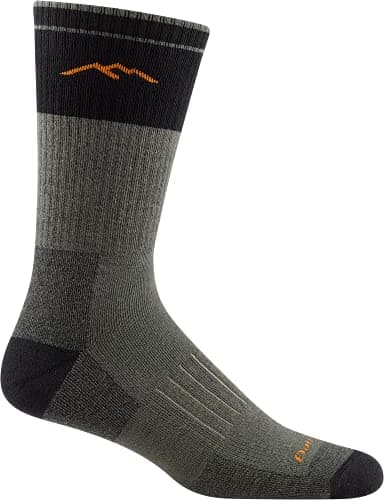
On a still morning in hardwoods a squeaking boot is audible at thirty yards, and it squeaks at exactly your walking rhythm, which is the least natural sound in the woods. The good news: there are only four sources, and three of them cost nothing to fix.
Find the source first
- Stand still and flex your ankle without lifting the boot. If it squeaks, it is the tongue or the upper creasing.
- Lift your heel in place, keeping the toe down. A squeak here is the insole or footbed moving against the midsole.
- Press down and twist on a hard floor. A squeak now is the sole unit or a loose shank.
- Pull the laces taut and release. Lace squeak is distinct, higher pitched, and comes from the eyelets.
Source 1: the insole, which is most of them
By far the commonest cause. The footbed moves a fraction of a millimeter against the midsole, and trapped moisture turns that into a squeak. Three fixes, in order:
- Take the insole out and dry both it and the boot completely. A damp interior is the usual culprit, and this alone fixes most squeaks: how to dry hunting boots.
- Dust the inside of the boot with talc or cornstarch before putting the insole back. It reduces the friction that produces the noise.
- Replace a worn insole. A compressed, curled footbed will not sit flat and will keep squeaking: the insole guide.
Source 2: the tongue and upper
Leather creasing against leather, usually where the tongue meets the upper. It is most common on new boots and often disappears with break-in.
- Condition the leather at the crease - a small amount of the appropriate conditioner for your upper, worked in. Do not use oil or grease on a membrane boot: match the product.
- Dust the gusset area with talc if the squeak is dry rather than tight.
- Keep breaking them in. Tongue squeak on a new boot usually goes: break-in.
Source 3: the laces and eyelets
A distinct, higher-pitched creak as the laces move through metal eyelets. Rub a little candle wax or beeswax along the laces where they pass through the hardware. On a snake boot with a side zip, the same treatment on the zip teeth quiets a noisy zip - a paraffin or zip-specific lubricant, not oil.
Source 4: the sole unit
The worst case, and the only one that is not a quick fix. A squeak that comes from pressing and twisting usually means the midsole is separating from the outsole, or a shank has loosened inside the boot.
- If the boot is under warranty, claim it. This is a construction failure, not wear.
- If it is welted, a cobbler can often address it when resoling.
- If it is a cemented budget boot, it is usually the beginning of the end. Plan a replacement.
What not to do
| Common suggestion | Why not |
|---|---|
| Spraying WD-40 or penetrating oil inside | Degrades adhesives and leather, and the smell is a disaster for deer hunting |
| Soaking the boot | Damages leather and membranes; adds the moisture that caused the squeak |
| Baby powder with fragrance | Works mechanically, and you have now scented your hunting boot |
| Silicone spray on the insole | Can make the footbed slide, which causes blisters |
Frequently asked questions
Why do my hunting boots squeak?
How do I stop my boots from squeaking?
Can you use baby powder to stop boots squeaking?
Is a squeaking boot a sign of a problem?
Sources
Read next
Boot Fit & Sizing
How to break in hunting boots
Four stages over two to four weeks, in order - plus the five break-in shortcuts that damage boots.
Dryers & Boot Care
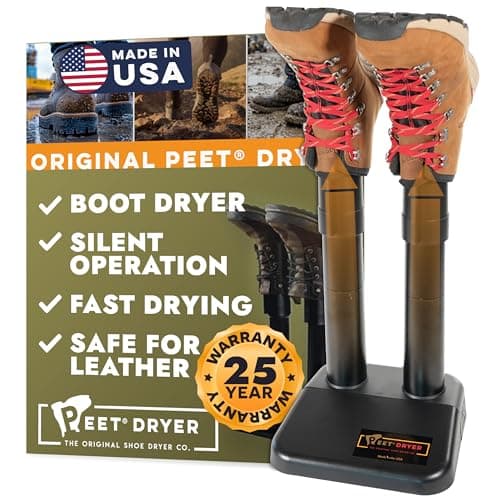
How to dry hunting boots
The method, the safe fast version, and the five heat sources that ruin boots. Water does not kill footwear - heat does.
Boot Fit & Sizing
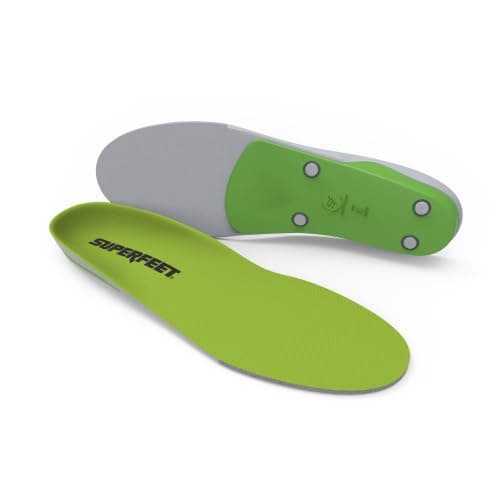
Hunting boot insoles: what they fix and what they do not
Support, volume and warmth are three different jobs - and a support insole adds no warmth at all.
Rubber Boots
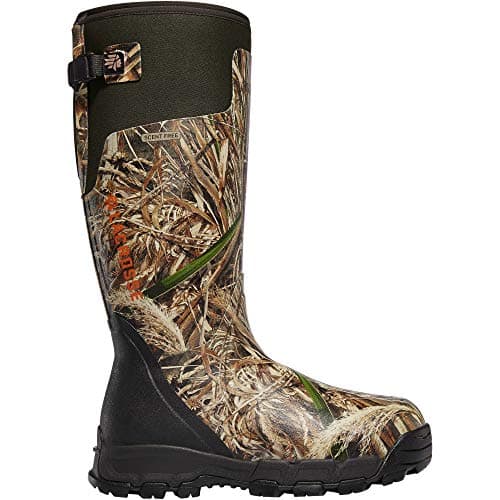
Scent-free rubber boots: what helps and what is marketing
Rubber absorbs less odor than leather - and the rest of scent control is storage and handling, which is free.
Dryers & Boot Care
Hunting boot care and off-season storage
Most boots die in storage, not in the field. UV, fuel fumes and damp do more damage than a season of hunting.