The gram chart
Boot insulation grams by temperature
The full gram-by-gram table with separate temperature ranges for sitting still and walking - the column other charts leave out.
Insulation matched to temperature and how still you sit, not to the biggest number on the box. Live prices, published gram ratings, and the sweat problem nobody warns you about.
Belt & Bike earns a commission when you buy through our links, at no extra cost to you. Prices come from Amazon and change; the date beside every price is when we last verified it. Full disclosure.
Ranked on the specifications below. Prices are live and dated; where no live price resolves, the cell reads Check price.
| # | Product | Insulation | Score | Price |
|---|---|---|---|---|
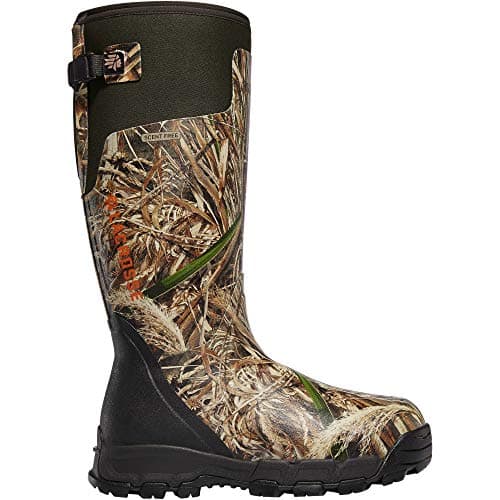
| Rank 1 | 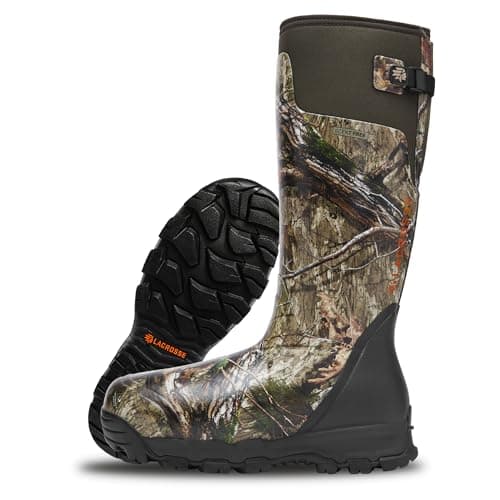 LaCrosse Alphaburly Pro 18-inch, 1,600g Sitting still in genuine cold | 1,600g | 9.0 | $199.98Amazon |
| Rank 2 | 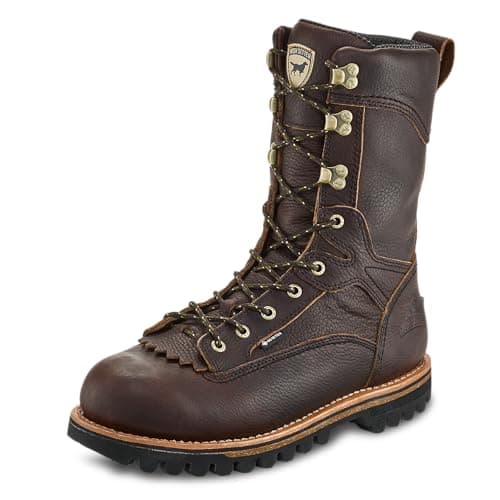 Irish Setter Elk Tracker 12-inch, 1,000g Cold-weather hunts that involve walking | 1,000g | 8.6 | $279.95Amazon |
| Rank 3 | 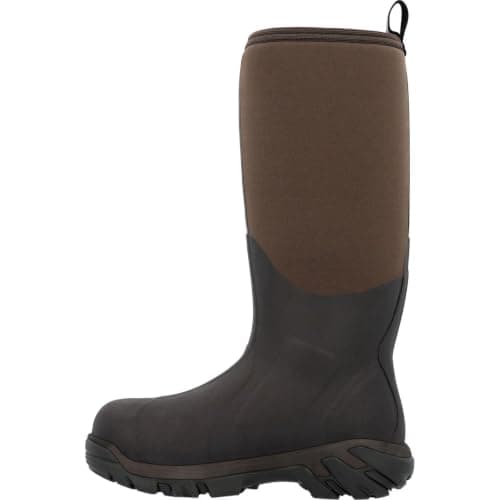 Muck Arctic Pro The coldest static sits | 8mm neoprene plus fleece | 8.6 | $131.25Amazon |
| Rank 4 | LaCrosse Alphaburly Pro 18-inch, 800g One boot for most of the season | 800g | 8.8 | $199.98Amazon |
| Rank 5 | 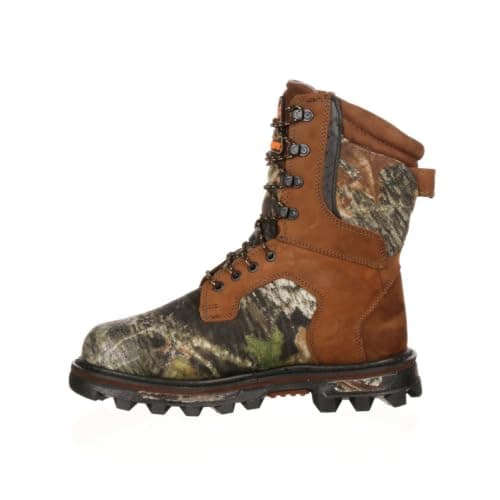 Rocky BearClaw 3D 1,000g Cold-weather value in leather | 1,000g Thinsulate | 8.6 | $179.99Amazon |
#ad Prices come from Amazon and change. How this site is funded. Scores are our published editorial rubric — see our methodology.
You climbed down at nine because you could not feel your toes. Nine times out of ten the boot was not the problem. The problem was the half mile you walked in, the sweat you built up doing it, and the fact that you then sat perfectly still for three hours on an aluminum platform. A wet foot loses heat roughly twenty-five times faster than a dry one, so the warmest boot in this catalog will still leave you cold if you arrive at the stand damp.
That is why this hub is organized around two variables rather than one. Insulation is the obvious one. The other is how much you move - and it matters just as much, because the same boot that is right for sitting still at 15F is wrong for walking in at 45F.
Pick your lane before you pick a gram rating
Most hunters pick one number up from where they belong, because the catalog copy reads like more is better. It is not. An over-insulated boot on a walk-in produces sweat, the sweat soaks the liner, and then you are sitting in a wet boot with no way to dry it. The full gram-to-temperature chart is the most useful page on this site, and it exists because nobody else publishes the activity-level column.
A gram rating is the weight of insulation per square meter of material. 3M publishes Thinsulate's construction, and manufacturers publish how much of it they put in a boot - but no manufacturer publishes a temperature at which their gram rating keeps a given person warm, because it depends on your circulation, your sock, your fit and whether you are moving. Anyone who gives you a hard number is guessing.
| Insulation | Sitting still | Walking | What it is actually for |
|---|---|---|---|
| Uninsulated | Above 50F | Above 40F | Early season, warm-weather water, scouting |
| 400g | 40-50F | 25-45F | Early season, or cold-weather walking hunts |
| 800g | 25-40F | 15-35F | The one-boot answer for most of the country |
| 1,000g | 15-30F | Under 20F only | Cold stand hunting with a short walk in |
| 1,200g | 10-25F | Not recommended | Cold stand hunting in rubber |
| 1,600g | Below 15F | Not recommended | Long static sits in genuine cold |
| Pac boot with liner | Below 0F | Not recommended | Extreme cold where you can dry the liner nightly |
Both can be warm. They fail differently. Rubber is waterproof forever and scent-free, and it cannot be tensioned to your foot, so it walks badly and slides at the heel. Leather breathes, takes a real conditioning treatment, and laces down to your foot, so it walks properly - and it is only waterproof as long as the membrane and the treatment hold. If your cold-feet problem comes with standing water, you are shopping rubber boots. If it comes with miles, you want leather.
The comparison that decides it for most people is insulated against uninsulated, because a surprising number of cold-feet complaints come from a boot that is too warm rather than not warm enough.
16 pages in this section. Roundup tiles carry the live price and a buy link for their top pick.
The gram chart
The full gram-by-gram table with separate temperature ranges for sitting still and walking - the column other charts leave out.
Best insulated overall
Five insulated boots from 400g to 1,600g, each matched to a temperature AND an activity level rather than ranked on warmth alone.
Best for late season
The warmest boots we can justify, plus the removable-liner option that beats another 400g on a multi-day hunt.
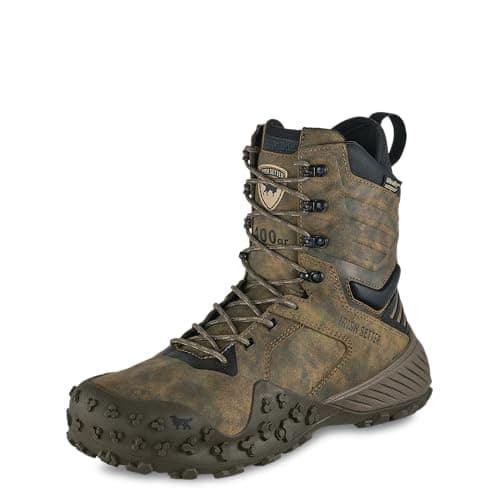
Best for saddle hunting
Lace-up boots that climb, hang and stay warm on a platform the size of a book - plus the $20 insole that fixes the arch pain.
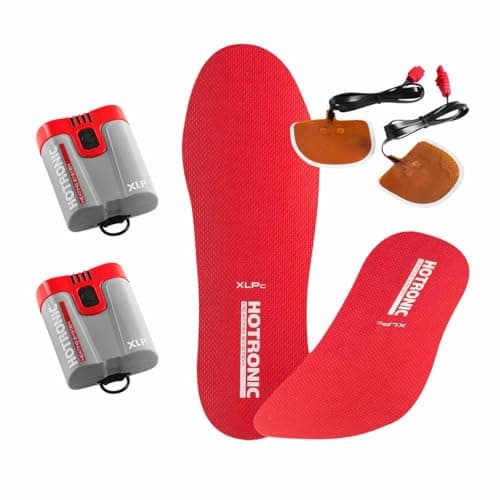
Best heated insoles
Powered footbeds and chemical warmers compared, plus the placement mistake that makes toe warmers underperform.
Best 400g boots
400g is the walking hunter's rating, not the budget option - including in $500 mountain boots. Where it works and where it stops.
Best 800g boots
The widest usable window on the chart, and the right default if you are buying one boot. Rubber and leather picks at 800g.
Best 1,000g boots
The cold-stand rating, and the heaviest insulation you can still walk in. Leather lace-ups at 1,000g plus the rubber options either side.
Best 1,600g boots
The most over-bought rating in hunting footwear - and the only right answer for a motionless sit below 15F.
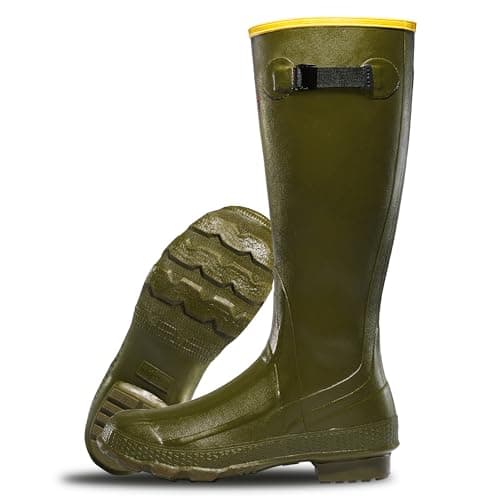
Comparison
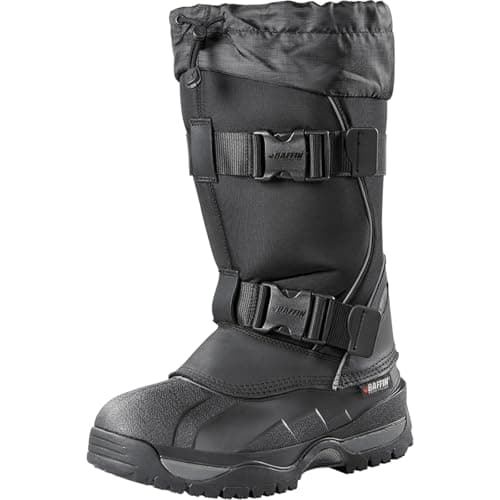
An uninsulated boot plus the right sock beats an insulated boot you sweat into. Where the line actually falls.
Comparison
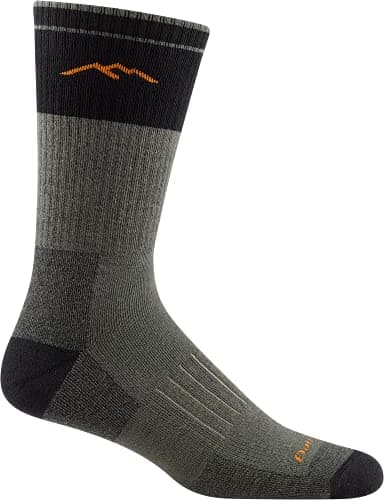
Removable liner or sealed rubber: the real tradeoffs in warmth, drying and water depth, with both options priced.
Guide
Four mechanisms, in the order they actually cause problems - and insufficient insulation is the least common of them.
Guide
Nine steps from the truck to the stand, plus our honest order for spending money - the boot is fourth.
Guide
A stand is colder than the ground under it: more wind, a conducting platform, total stillness. The specific fixes.
Guide
Standing in cold water is a tier harder than sitting in cold air. Insulation levels, wader socks, and drying the shaft.
Guide
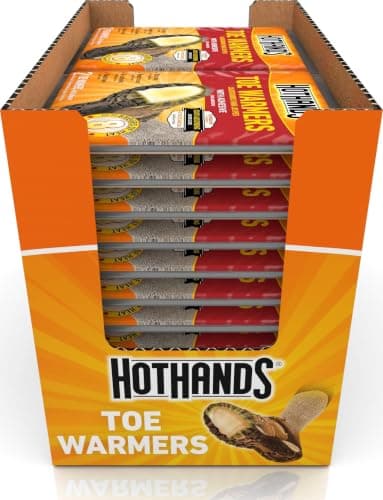
Air-activated warmers need oxygen. On top of the sock, over the toes - and toe warmers, not hand warmers.