Cold Weather Boots
Putting hand warmers in your boots, properly
Air-activated warmers are the cheapest fix for cold feet and the most commonly misused. The placement is the whole trick, and most people get it backwards.
Belt & Bike earns a commission when you buy through our links, at no extra cost to you. Prices come from Amazon and change; the date beside every price is when we last verified it. Full disclosure.
Quick picks
| # | Product | Type | Score | Price |
|---|---|---|---|---|
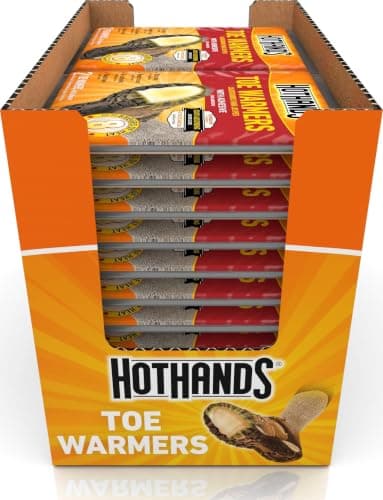
| Rank 1 | HotHands Toe Warmers, 40 pair The cheapest fix for cold toes | Air-activated, single use | 8.4 | $29.99Amazon |
| Rank 2 | 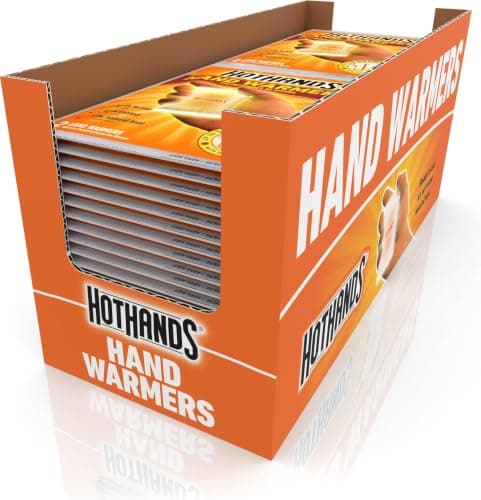 HotHands Hand Warmers, 40 pair Hands, and the boot trick that mostly does not work | Air-activated, single use | 8.0 | $23.86Amazon |
| Rank 3 | 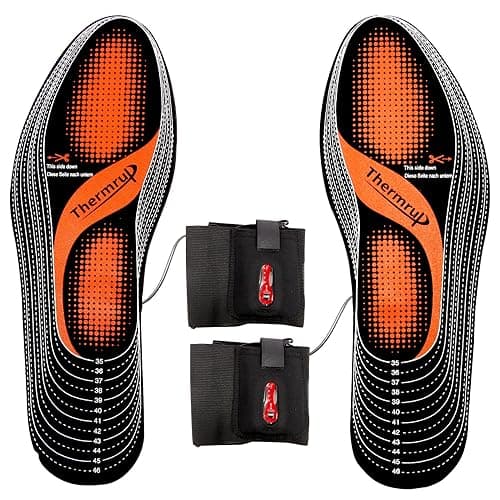 Thermrup electric heated insoles The cheapest powered option | Rechargeable heated insole | 7.3 | $69.95Amazon |
#ad Prices come from Amazon and change. How this site is funded. Scores are our published editorial rubric — see our methodology.
Disposable warmers cost well under a dollar a pair and solve most cold-feet problems. They also fail constantly, and almost always for the same two reasons: the wrong product, in the wrong place.
How they work, which explains everything else
An air-activated warmer contains iron powder, salt, water, activated carbon and vermiculite. Opening the outer pouch lets oxygen in, and the iron oxidizes - rusting, essentially, in a controlled way that releases heat for hours. The reaction needs oxygen, continuously.
Two consequences follow directly:
- Compress it and it stops. Jam a warmer under your arch inside a snug boot and you have cut off its air supply. It will be lukewarm and then dead, and you will conclude the product is rubbish.
- It needs a few minutes of air before it goes in. Open the pouch, shake it, and give it two or three minutes in open air to come up to temperature before you put the boot on.
Where to put it
| Placement | Works? | Why |
|---|---|---|
| On top of the sock, over the toes | Yes - this is correct | Air reaches it, and heat rises into the whole toe box |
| Inside the sock against the skin | No | Too hot in one spot, and a burn risk on numb skin |
| Under the arch, under the footbed | Poorly | Compressed under body weight, no oxygen, heat goes down |
| Between two socks at the toes | Partly | Better than under the foot, worse than on top |
| Taped to the outside of the boot | No | The boot insulation you paid for is in the way |
Toe warmers, not hand warmers
These are different products and the difference matters. Toe warmers are thin, adhesive and shaped for the top of the foot. Hand warmers are thicker, non-adhesive and designed to sit in a pocket where air is plentiful. A hand warmer in a boot is too bulky - it compresses the boot's insulation, which costs you more warmth than the warmer adds, and it migrates under your arch where it suffocates.
Buy toe warmers for boots. Keep hand warmers for hands, where they are excellent.
The right products
Toe warmers for boots, hand warmers for hands, and the rechargeable alternative if you do this every weekend.
#1 · The cheapest fix for cold toes
HotHands Toe Warmers, 40 pair
HotHandsAdhesive air-activated warmers that stick to the top of your sock. The highest-value item in this registry, and the one most hunters try last instead of first.
| Type | Air-activated, single use |
|---|---|
| Stated duration | Up to 8 hours (manufacturer) |
| Placement | Adhesive, on top of the sock over the toes |
| Count | 40 pair |
| Reusable | No |
What it does well
- Costs less per hunt than a cup of coffee and solves the problem for most people
- Goes on top of the sock, where it warms the toes without crushing the air gap underneath
- No battery, nothing to charge, nothing to fail in the cold
Where it falls short
- Needs oxygen. Jammed inside a tight boot it will underperform or go out - the most common complaint, and it is a placement error
- Single use, so you carry a box all season
- Will not rescue a boot that is too tight or already wet
Our rubric
- Effectiveness
- 8.6
- Ease of use
- 9.0
- Durability
- 6.0
- Value
- 9.8
#2 · Hands, and the boot trick that mostly does not work
HotHands Hand Warmers, 40 pair
HotHandsThe larger body warmer. Hunters routinely drop these into boots, which works only if there is genuinely space - and if there is space, you had room for a thicker sock instead.
| Type | Air-activated, single use |
|---|---|
| Stated duration | Up to 10 hours (manufacturer) |
| Intended use | Hands and pockets |
| Count | 40 pair |
| Reusable | No |
What it does well
- Longer-burning than the toe version
- Genuinely useful for hands, which is the job it is designed for
Where it falls short
- Too thick for most boots. Forced in, it compresses insulation and makes feet colder, not warmer
- Not adhesive, so it migrates under your arch where you do not want it
Our rubric
- Effectiveness
- 7.6
- Ease of use
- 8.8
- Durability
- 6.0
- Value
- 9.6
#3 · The cheapest powered option
#ad How we are funded · Price as of October 6, 2026
Thermrup electric heated insoles
ThermrupThe budget entry into heated insoles. Thinner than most, which is the real advantage: a thick heated insole in an already-snug boot makes feet colder.
| Type | Rechargeable heated insole |
|---|---|
| Control | Four heat settings (manufacturer) |
| Stated runtime | Varies by heat level (manufacturer) |
| Thickness | Thin-profile design (manufacturer) |
| Reusable | Yes |
What it does well
- Thin enough not to steal the air gap your sock needs
- The cheapest way to find out whether powered heat solves your problem
Where it falls short
- Buyers report inconsistent battery life between units
- No app or remote - you adjust it by hand
Our rubric
- Effectiveness
- 7.4
- Ease of use
- 7.0
- Durability
- 6.2
- Value
- 8.6
Timing: before you are cold, not after
A warmer maintains heat far better than it restores it. Put it in when you settle at the stand, while your feet are still warm from the walk in - not ninety minutes later when your toes have already gone. The same principle applies to heated insoles: run them low and continuously rather than high and late.
When warmers are the wrong tool
- Your boot is tight. Adding anything inside a snug boot makes it worse. Fix the fit: sizing over thick socks.
- Your socks are damp. The heat goes into evaporating water. Change socks first.
- You hunt cold weather every weekend. The disposables add up; rechargeable insoles pay for themselves over a season.
- You have reduced sensation in your feet. A warmer against skin you cannot feel properly is a burn risk, and that applies especially to anyone with diabetes or neuropathy. Keep them outside the sock, always.
Frequently asked questions
Where do you put hand warmers in boots?
Why did my toe warmers not work?
Can you put hand warmers inside your socks?
How long do toe warmers last in boots?
Are heated insoles better than toe warmers?
Sources
Read next
Cold Weather Boots
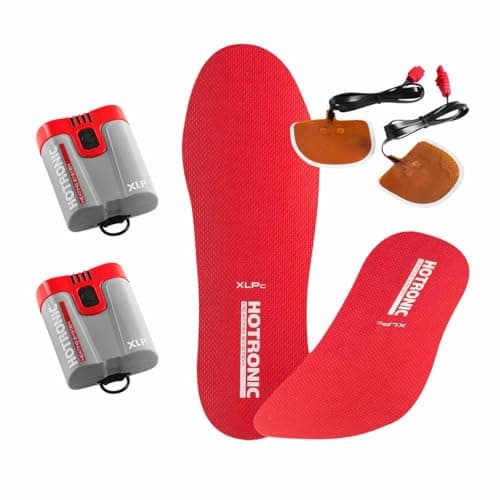
Best heated insoles for hunting boots
Powered footbeds and chemical warmers compared, plus the placement mistake that makes toe warmers underperform.
Cold Weather Boots
How to keep your feet warm hunting
Nine steps from the truck to the stand, plus our honest order for spending money - the boot is fourth.
Cold Weather Boots
How to keep your feet warm in a tree stand
A stand is colder than the ground under it: more wind, a conducting platform, total stillness. The specific fixes.
Boot Fit & Sizing
What size boot to buy over thick socks
Half a size for heavy wool, a full size with a liner - and why a tight boot is a cold boot.
Cold Weather Boots
Why your feet get cold on the stand
Four mechanisms, in the order they actually cause problems - and insufficient insulation is the least common of them.