Cold Weather Boots
How to keep your feet warm in a tree stand
A stand is a colder environment than the ground beneath it: more wind, a metal platform conducting heat out of your soles, and no reason to move for hours.
Belt & Bike earns a commission when you buy through our links, at no extra cost to you. Prices come from Amazon and change; the date beside every price is when we last verified it. Full disclosure.
Quick picks
| # | Product | Type | Score | Price |
|---|---|---|---|---|
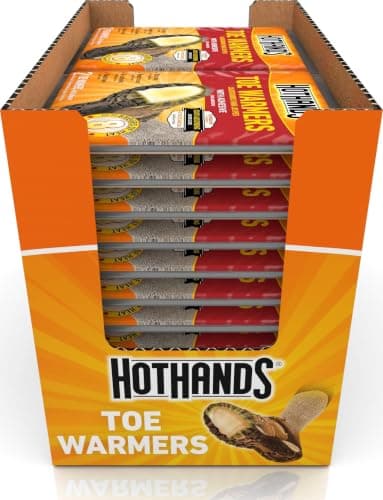
| Rank 1 | HotHands Toe Warmers, 40 pair The cheapest fix for cold toes | Air-activated, single use | 8.4 | $29.99Amazon |
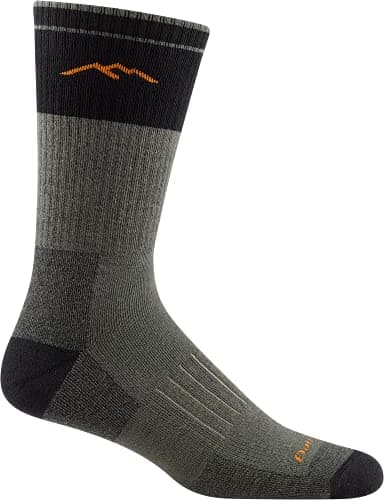
| Rank 2 | 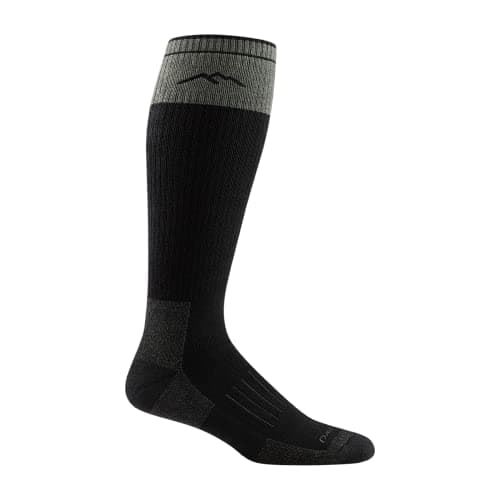 Darn Tough Hunting Hojo Over-the-Calf Knee boots and tall rubber | Not published | 8.9 | $34.47Amazon |
| Rank 3 | 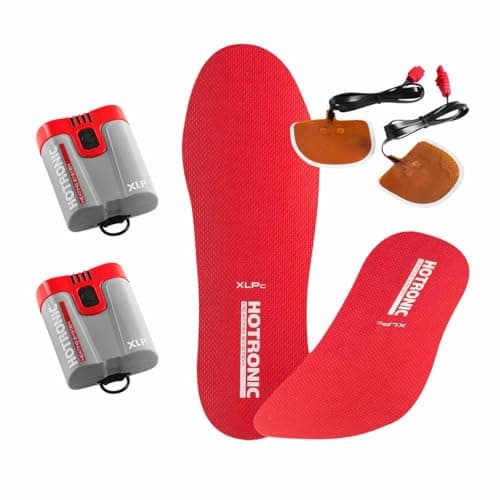 Hotronic FootWarmer XLP 1C Custom Powered warmth that genuinely works | Battery-powered heating element | 7.5 | $298.99Amazon |
| Rank 4 | 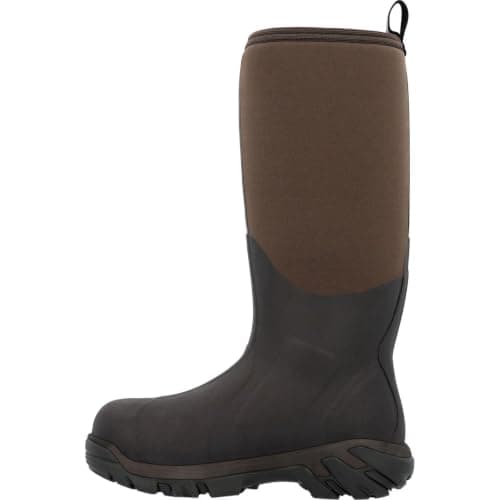 Muck Arctic Pro The coldest static sits | Not published | 8.6 | $131.25Amazon |
#ad Prices come from Amazon and change. How this site is funded. Scores are our published editorial rubric — see our methodology.
Everything in the general cold-feet routine applies up a tree. Three things get specifically worse, and they are worth addressing directly.
The platform is a radiator pointed the wrong way
Your boot soles are in continuous contact with cold metal or expanded-metal mesh, and mesh is worse than solid plate because the open structure lets wind through as well. Boot insulation is concentrated in the upper; the footbed is usually the thinnest part of the whole boot.
Three fixes, cheapest first:
- A square of closed-cell foam cut to the platform, or an offcut of carpet. Costs almost nothing and breaks the conduction path entirely. Secure it so it cannot slide.
- A wool felt insole added inside the boot, which insulates the footbed rather than the upper. Note that a structured support insole does nothing for warmth - see the insole guide.
- Keeping your feet off the mesh where the stand design allows it - resting them on the seat frame or a foot rest rather than flat on the platform.
Wind at height
Twenty feet up you are above the ground clutter that slows wind, and the National Weather Service's wind chill figures make the practical difference clear: moving air strips heat from any surface far faster than still air. For your feet specifically, a boot with a tight topline and no gaps where wind reaches your ankle is worth more than another 200g of insulation on a windy stand.
This is one genuine advantage of a knee-high rubber boot over a mid-height lace-up on a windy stand: there is no gap at the ankle at all.
Total stillness
You are not moving, deliberately, for hours. Your metabolism drops, peripheral circulation reduces, and your body prioritizes your core over your extremities - which is biologically correct and personally miserable. The counters are small and they work:
- Flex your toes and roll your ankles every ten or fifteen minutes. Deliberately, as a habit, before you feel cold. It is almost silent and it keeps blood moving.
- Press your feet firmly against the platform and release, repeatedly. Isometric work generates heat without movement a deer will see.
- Eat and drink. Peripheral circulation drops with dehydration and low blood sugar, which is why hour four is always colder than hour one.
- Add the toe warmer early. Maintaining warmth takes far less than restoring it.
What we would take up the tree
Warmers, an over-the-calf sock that seals the ankle, and the powered option for people who have tried everything.
#1 · The cheapest fix for cold toes
HotHands Toe Warmers, 40 pair
HotHandsAdhesive air-activated warmers that stick to the top of your sock. The highest-value item in this registry, and the one most hunters try last instead of first.
| Type | Air-activated, single use |
|---|---|
| Stated duration | Up to 8 hours (manufacturer) |
| Placement | Adhesive, on top of the sock over the toes |
| Count | 40 pair |
| Reusable | No |
What it does well
- Costs less per hunt than a cup of coffee and solves the problem for most people
- Goes on top of the sock, where it warms the toes without crushing the air gap underneath
- No battery, nothing to charge, nothing to fail in the cold
Where it falls short
- Needs oxygen. Jammed inside a tight boot it will underperform or go out - the most common complaint, and it is a placement error
- Single use, so you carry a box all season
- Will not rescue a boot that is too tight or already wet
Our rubric
- Effectiveness
- 8.6
- Ease of use
- 9.0
- Durability
- 6.0
- Value
- 9.8
#2 · Knee boots and tall rubber
#ad How we are funded · Price as of October 6, 2026
Darn Tough Hunting Hojo Over-the-Calf
Darn ToughThe over-the-calf version. In a knee-high rubber boot this is the difference between a sock that stays up and a bunched heel by mid-morning.
| Material | Merino wool blend |
|---|---|
| Weight | Cushion |
| Height | Over the calf |
| Warranty | Unconditional lifetime guarantee (manufacturer) |
| Made in | Vermont, USA (manufacturer) |
Specifications per Darn Tough Vermont published specifications.
What it does well
- Over-the-calf height is the right pairing for an 18-inch pull-on
- Same lifetime guarantee and merino quality as the boot-height version
Where it falls short
- Over-the-calf socks are warm by design - too warm for an early-season walk
- Premium price
Our rubric
- Warmth
- 9.2
- Moisture handling
- 8.8
- Durability
- 9.8
- Fit
- 9.0
- Value
- 7.8
#3 · Powered warmth that genuinely works
#ad How we are funded · Price as of October 6, 2026
Hotronic FootWarmer XLP 1C Custom
HotronicThe ski industry's standard heated footbed, adopted by stand hunters who have run out of passive options. Expensive, effective, and fiddly.
| Type | Battery-powered heating element |
|---|---|
| Power | Rechargeable pack on the boot cuff |
| Stated runtime | Varies by heat level (manufacturer) |
| Installation | Element fitted under the footbed |
| Reusable | Yes |
What it does well
- Generates heat rather than retaining it, which is the only approach that works on a motionless foot in deep cold
- Multiple heat levels, so you run low on the walk in and high on the sit
- Built to be serviced and kept, unlike disposable warmers
Where it falls short
- The most expensive way to solve cold feet, by a wide margin
- A battery pack on your boot cuff catches brush and snags clothing
- Lithium batteries lose capacity in the cold, so plan for less runtime than the rating
Our rubric
- Effectiveness
- 9.4
- Ease of use
- 6.4
- Durability
- 8.4
- Value
- 5.6
#4 · The coldest static sits
Muck Arctic Pro
Muck8mm neoprene plus a fleece lining, rated by Muck to -60F for static use. If your problem is a long December sit and nothing else, this is the category answer.
| Insulation | 8mm neoprene plus fleece |
|---|---|
| Temperature rating | -60F to 30F (manufacturer, static use) |
| Upper | Rubber over 8mm neoprene |
| Fit | Pull-on, stretch-fit topline |
| Reinforcement | Double rubber at heel and toe |
Specifications per Muck Boot Company published specifications.
What it does well
- The published rating is for static use, which is exactly how a stand hunter uses a boot
- Reinforced heel and toe survive brush and truck beds
Where it falls short
- Hopeless for walking - you will overheat in a quarter mile
- Tall, heavy and slow to dry once the fleece gets damp
Our rubric
- Warmth
- 9.8
- Waterproofing
- 9.0
- Fit
- 7.8
- Durability
- 8.6
- Value
- 8.0
Getting into the stand without sweating
Climbing a stick ladder in heavy boots and insulated clothing is genuine work, and arriving at the platform warm and damp is how a cold sit starts. Climb with your outer layer open and your pack carrying the extra clothing, settle in, then layer up and change socks. Saddle hunters have the same problem with more gear.
Frequently asked questions
How do you keep your feet warm in a tree stand?
Why are my feet colder in a tree stand than on the ground?
What should I put on my tree stand platform?
Do heated insoles work in a tree stand?
Sources
Read next
Cold Weather Boots
How to keep your feet warm hunting
Nine steps from the truck to the stand, plus our honest order for spending money - the boot is fourth.
Cold Weather Boots
Why your feet get cold on the stand
Four mechanisms, in the order they actually cause problems - and insufficient insulation is the least common of them.
Cold Weather Boots
Best late-season hunting boots for sitting still in deep cold
The warmest boots we can justify, plus the removable-liner option that beats another 400g on a multi-day hunt.
Cold Weather Boots
Best heated insoles for hunting boots
Powered footbeds and chemical warmers compared, plus the placement mistake that makes toe warmers underperform.
Hunting Socks
Best hunting socks for cold feet
The warmest socks we would recommend - plus the caveat that makes half of all thick-sock purchases backfire.