Hunting Socks
Why cotton socks fail in hunting boots
Cotton holds water, loses nearly all its insulating value when damp, and dries slowly. That combination is the most common avoidable cause of cold feet in the woods.
Belt & Bike earns a commission when you buy through our links, at no extra cost to you. Prices come from Amazon and change; the date beside every price is when we last verified it. Full disclosure.
Quick picks
| # | Product | Material | Score | Price |
|---|---|---|---|---|
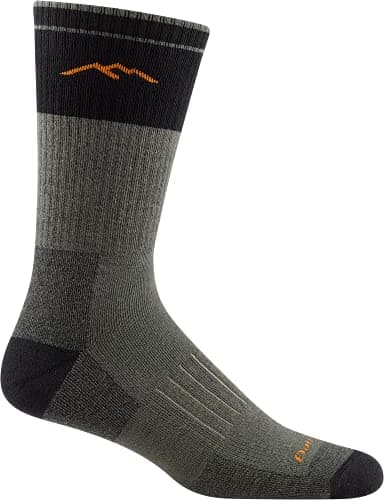
| Rank 1 | Darn Tough Hunter Boot Sock, heavyweight The default serious hunting sock | Merino wool blend | 9.0 | $31.95Amazon |
| Rank 2 | 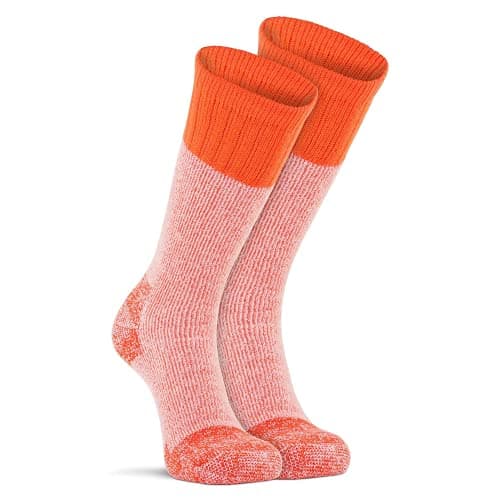 Fox River Wick Dry Outlander Sweaty feet in mild weather | Wool and synthetic blend with wicking liner | 8.4 | $15.00Amazon |
| Rank 3 | 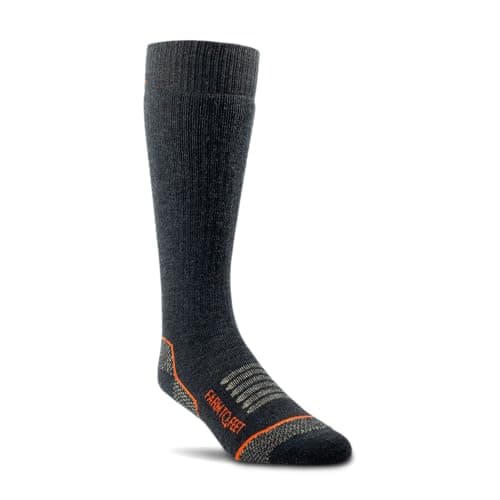 Farm to Feet Ely midweight An all-American midweight | US merino wool | 8.5 | $28.00Amazon |
#ad Prices come from Amazon and change. How this site is funded. Scores are our published editorial rubric — see our methodology.
It is the first thing experienced hunters tell newcomers and it still gets ignored, because a cotton sock feels fine when you put it on. The problem only appears two hours later, by which point it cannot be fixed.
The mechanism, in three steps
- Cotton absorbs water into the fiber itself. The fiber swells and holds moisture rather than moving it along - cotton's absorbency is why it makes good towels and bad socks.
- Wet fiber conducts heat away far faster than trapped air. Insulation works by holding still air; a saturated sock has replaced that air with water, which conducts heat out of your foot many times faster.
- It dries slowly, and inside a waterproof boot it does not dry at all. So the failure is permanent for the duration of the hunt.
Wool, by contrast, holds moisture between its fibers while the fiber structure keeps trapping air - which is why a damp wool sock still insulates. That single property is the whole reason wool has been standard for a century.
| Cotton | Merino wool | Synthetic | |
|---|---|---|---|
| Absorbs into the fiber | Yes | Partly, into the structure | No |
| Insulates when damp | Essentially not at all | Yes | Poorly |
| Drying speed | Slow | Moderate | Fast |
| Odor resistance | Poor | Good | Poor |
| In a waterproof boot | Stays wet all hunt | Keeps working | Cold but dries later |
| Blisters when damp | Worst | Better | Better |
Where cotton sneaks in
- The socks you wore to the truck, which you then never changed out of.
- Cotton-blend work socks, which are often mostly cotton with a little wool and are sold next to the real thing.
- A cotton liner sock, which is the worst possible liner - it holds moisture directly against your skin.
- Spare socks from the house thrown in a pack without checking the label.
The blister angle as well
Damp skin shears more easily than dry skin, so a saturated cotton sock makes blisters more likely as well as making your feet cold. That is why the anti-blister sock category is built on wicking double layers rather than on cushioning: sock liners.
What to wear instead
A heavyweight merino for cold sits, a wicking construction for hard walks, and a midweight for everything in between.
#1 · The default serious hunting sock
#ad How we are funded · Price as of October 6, 2026
Darn Tough Hunter Boot Sock, heavyweight
Darn ToughMerino with a full cushion, knit in Vermont, guaranteed for life. The sock we would buy first, and the cheapest real upgrade to a cold boot.
| Material | Merino wool blend |
|---|---|
| Weight | Heavyweight, full cushion |
| Height | Boot height |
| Warranty | Unconditional lifetime guarantee (manufacturer) |
| Made in | Vermont, USA (manufacturer) |
Specifications per Darn Tough Vermont published specifications.
What it does well
- The lifetime guarantee is honored, which changes the cost-per-season arithmetic completely
- Fine-gauge merino cushions without the bulk that makes a boot tight
- Wool keeps insulating when damp, which is the whole reason not to wear cotton
Where it falls short
- Three times the price of a drugstore wool-blend sock
- Full cushion needs boot room. If you are already snug, size the boot up before buying the sock
Our rubric
- Warmth
- 9.0
- Moisture handling
- 9.0
- Durability
- 9.8
- Fit
- 9.0
- Value
- 8.0
#2 · Sweaty feet in mild weather
#ad How we are funded · Price as of October 6, 2026
Fox River Wick Dry Outlander
Fox RiverA wicking-first sock rather than a warmth-first one. The right answer when your problem is a damp boot after the walk in, not the temperature.
| Material | Wool and synthetic blend with wicking liner |
|---|---|
| Weight | Heavyweight mid-calf |
| Height | Mid calf |
| Construction | Two-layer wicking system (manufacturer) |
| Made in | USA (manufacturer) |
What it does well
- Moves sweat better than pure merino, which is what a hard walk-in actually needs
- Cheap enough to carry a spare pair in the pack
Where it falls short
- Less warm than a full merino sock of the same thickness
- Synthetic content holds odor longer than wool
Our rubric
- Warmth
- 7.4
- Moisture handling
- 9.2
- Durability
- 7.8
- Fit
- 8.2
- Value
- 9.2
#3 · An all-American midweight
#ad How we are funded · Price as of October 6, 2026
Farm to Feet Ely midweight
Farm to FeetEntirely US-sourced and US-made merino in the midweight that suits a boot you actually walk in. The sensible middle of this list.
| Material | US merino wool |
|---|---|
| Weight | Midweight |
| Height | Mid calf |
| Sourcing | US materials and manufacture (manufacturer) |
| Warranty | Lifetime guarantee (manufacturer) |
What it does well
- Midweight is the most useful weight for a boot that gets walked in
- Lifetime guarantee, like Darn Tough
Where it falls short
- Not warm enough for a December sit without a liner
- Fewer hunting-specific colors and heights
Our rubric
- Warmth
- 7.8
- Moisture handling
- 8.8
- Durability
- 9.0
- Fit
- 8.8
- Value
- 8.2
What to do if cotton is all you have
- Carry a spare pair and change the moment they are damp, which at least resets the clock.
- Keep your boot's topline loose on the walk in so some moisture escapes.
- Add a toe warmer on top of the sock, which adds heat the wet sock cannot retain: hand warmers in boots.
- Accept a shorter sit, and buy wool before the next one. A single pair of merino socks costs less than most hunting licenses.
Frequently asked questions
Why should you not wear cotton socks hunting?
Are cotton socks bad for cold weather?
What should I wear instead of cotton socks?
Do cotton socks cause blisters?
Sources
Read next
Hunting Socks
The best merino wool hunting socks
Six merino socks by weight and height, plus the guarantees that make the expensive ones cheaper per season.
Hunting Socks
Merino or synthetic hunting socks
Wool for cold sits, synthetic for hard walks - and the routine that uses each for what it is good at.
Hunting Socks
Sock layering for hunting: the stand swap
The most effective cold-feet technique there is, for the price of one extra pair of socks. The whole routine.
Cold Weather Boots
Why your feet get cold on the stand
Four mechanisms, in the order they actually cause problems - and insufficient insulation is the least common of them.
Hunting Socks
Best sock liners for hunting
Warmth with almost no bulk, and the most effective anti-blister measure there is. Two designs, two problems.