Hunting Socks
Merino or synthetic hunting socks
Wool for cold sits, synthetic for hard walks, and the sensible answer for most hunters is one of each in the pack.
Belt & Bike earns a commission when you buy through our links, at no extra cost to you. Prices come from Amazon and change; the date beside every price is when we last verified it. Full disclosure.
Quick picks
| # | Product | Material | Score | Price |
|---|---|---|---|---|
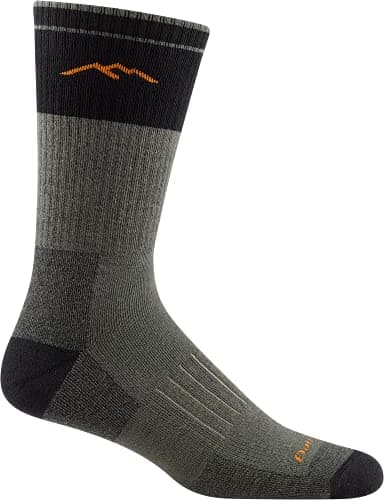
| Rank 1 | Darn Tough Hunter Boot Sock, heavyweight The default serious hunting sock | Merino wool blend | 9.0 | $31.95Amazon |
| Rank 2 | 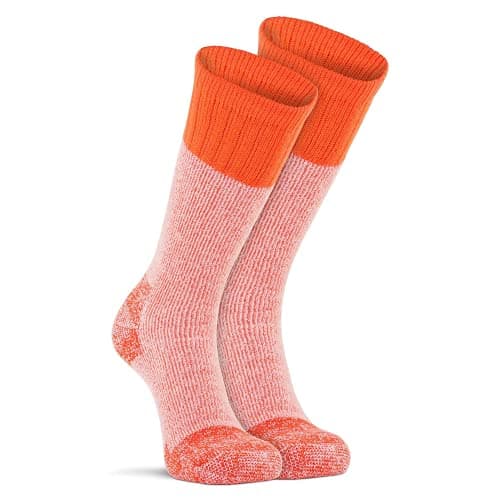 Fox River Wick Dry Outlander Sweaty feet in mild weather | Wool and synthetic blend with wicking liner | 8.4 | $15.00Amazon |
| Rank 3 | 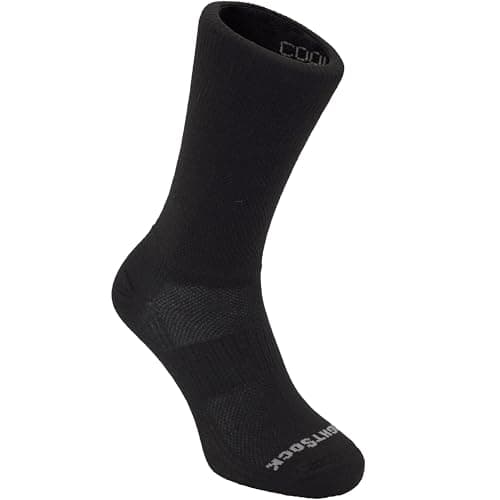 Wrightsock CoolMesh II double-layer People who blister no matter what | Synthetic, double layer | 8.1 | $21.00Amazon |
| Rank 4 | 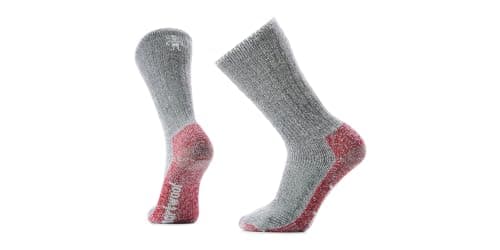 Smartwool Mountaineer Max Cushion Maximum cushion in a tall boot | Merino wool blend | 8.6 | $26.50Amazon |
| Rank 5 | 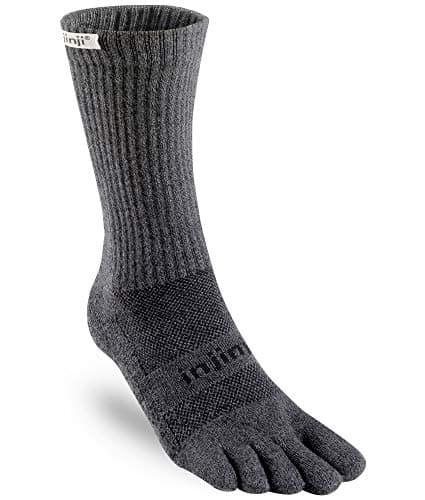 Injinji Trail Midweight Crew Blisters between the toes | Coolmax synthetic blend | 7.8 | $35.00Amazon |
#ad Prices come from Amazon and change. How this site is funded. Scores are our published editorial rubric — see our methodology.
This is not a close call in either direction - it is a genuine split by use case. Merino's defining property is that it keeps insulating when damp. Synthetic's is that it moves moisture faster and dries quicker. Those are different jobs.
| Merino wool | Synthetic | |
|---|---|---|
| Warm when damp | Yes - the whole point | Poorly |
| Wicking speed | Good | Best |
| Drying speed | Slower | Fast |
| Odor | Resists naturally | Holds it - noticeable after a day |
| Durability | Good with nylon reinforcement | Best |
| Temperature range | Wide - regulates | Narrow |
| Blister performance | Moderate | Best in double-layer constructions |
| Price | Higher | Lower |
| Buy for | Cold sits, multi-day hunts | Hard walks, warm weather, blisters |
Buy merino if you sit still in the cold
Because you will get slightly damp - from the walk in, from the boot not breathing - and when that happens a merino sock continues to insulate while a synthetic one goes cold. For a four-hour sit below freezing, this is not a marginal preference, it is the difference between staying out and climbing down: socks for cold feet.
Merino's odor resistance also matters on a multi-day hunt, both for your own comfort and for a deer hunter's scent discipline.
Buy synthetic if you walk hard
A two-layer wicking synthetic moves sweat off your skin faster than wool and dries faster when you stop - which is what a long walk-in or a warm-weather hunt actually needs. Synthetics also dominate the anti-blister category, because the double-layer construction that stops blisters is a synthetic design: sock liners.
The hybrid answer most hunters land on
- A wicking synthetic or two-layer sock for the walk in. Accept it will be damp; that is its job.
- A heavyweight merino pair in a zip bag to change into once you are settled.
- The damp pair inside your jacket, where it dries for the walk out.
This is the sock layering routine, and it uses each fiber for what it is good at rather than compromising on one.
One of each, priced
A heavyweight merino, two wicking synthetics, a max-cushion merino, and a toe-sock liner.
#1 · The default serious hunting sock
#ad How we are funded · Price as of October 6, 2026
Darn Tough Hunter Boot Sock, heavyweight
Darn ToughMerino with a full cushion, knit in Vermont, guaranteed for life. The sock we would buy first, and the cheapest real upgrade to a cold boot.
| Material | Merino wool blend |
|---|---|
| Weight | Heavyweight, full cushion |
| Height | Boot height |
| Warranty | Unconditional lifetime guarantee (manufacturer) |
| Made in | Vermont, USA (manufacturer) |
Specifications per Darn Tough Vermont published specifications.
What it does well
- The lifetime guarantee is honored, which changes the cost-per-season arithmetic completely
- Fine-gauge merino cushions without the bulk that makes a boot tight
- Wool keeps insulating when damp, which is the whole reason not to wear cotton
Where it falls short
- Three times the price of a drugstore wool-blend sock
- Full cushion needs boot room. If you are already snug, size the boot up before buying the sock
Our rubric
- Warmth
- 9.0
- Moisture handling
- 9.0
- Durability
- 9.8
- Fit
- 9.0
- Value
- 8.0
#2 · Sweaty feet in mild weather
#ad How we are funded · Price as of October 6, 2026
Fox River Wick Dry Outlander
Fox RiverA wicking-first sock rather than a warmth-first one. The right answer when your problem is a damp boot after the walk in, not the temperature.
| Material | Wool and synthetic blend with wicking liner |
|---|---|
| Weight | Heavyweight mid-calf |
| Height | Mid calf |
| Construction | Two-layer wicking system (manufacturer) |
| Made in | USA (manufacturer) |
What it does well
- Moves sweat better than pure merino, which is what a hard walk-in actually needs
- Cheap enough to carry a spare pair in the pack
Where it falls short
- Less warm than a full merino sock of the same thickness
- Synthetic content holds odor longer than wool
Our rubric
- Warmth
- 7.4
- Moisture handling
- 9.2
- Durability
- 7.8
- Fit
- 8.2
- Value
- 9.2
#3 · People who blister no matter what
#ad How we are funded · Price as of October 6, 2026
Wrightsock CoolMesh II double-layer
WrightsockTwo layers that slide against each other, so friction happens between the sock layers instead of against your skin. The most effective anti-blister item here.
| Material | Synthetic, double layer |
|---|---|
| Weight | Light |
| Height | Crew |
| Construction | Two bonded layers (manufacturer) |
| Warranty | Blister-free guarantee (manufacturer) |
What it does well
- The double-layer mechanism genuinely works, and it is different from simply adding padding
- Can be worn as a liner under a wool sock in cold weather
Where it falls short
- Synthetic, so it is cold when damp compared with wool
- Two layers take up boot volume - account for it when sizing
Our rubric
- Warmth
- 5.6
- Moisture handling
- 9.2
- Durability
- 8.4
- Fit
- 9.0
- Value
- 8.4
#4 · Maximum cushion in a tall boot
#ad How we are funded · Price as of October 6, 2026
Smartwool Mountaineer Max Cushion
SmartwoolA mountaineering sock pressed into hunting service: maximum cushion, a tall cuff, and the warmest non-powered option here.
| Material | Merino wool blend |
|---|---|
| Weight | Max cushion |
| Height | Crew to over-the-calf depending on cut |
| Intended use | Mountaineering and winter |
| Warranty | Two-year guarantee (manufacturer) |
What it does well
- The thickest wool sock most people will tolerate in a hunting boot
- Mountaineering construction means fewer seams where it matters
Where it falls short
- Will not fit a boot sized for a normal sock - the classic sizing mistake
- Overkill above about 25F
Our rubric
- Warmth
- 9.6
- Moisture handling
- 8.4
- Durability
- 8.6
- Fit
- 8.4
- Value
- 7.8
#5 · Blisters between the toes
#ad How we are funded · Price as of October 6, 2026
Injinji Trail Midweight Crew
InjinjiA toe sock worn as a liner. Strange-looking, and the only thing that reliably stops blisters between the toes, which no amount of cushioning addresses.
| Material | Coolmax synthetic blend |
|---|---|
| Weight | Midweight |
| Height | Crew |
| Construction | Five individual toe sleeves |
| Warranty | Not published by manufacturer |
What it does well
- The only design that separates the toes, which is where a lot of hunters actually blister
- Works as a liner under a wool sock
Where it falls short
- Takes a minute to put on and feels odd for the first few wears
- Synthetic, so pair it with wool rather than relying on it for warmth
Our rubric
- Warmth
- 5.8
- Moisture handling
- 8.8
- Durability
- 7.8
- Fit
- 8.6
- Value
- 8.2
What about blends
Most socks sold as merino are blends - typically merino with nylon for durability and a little elastane for shape. That is a good thing, not a compromise: pure wool socks wear through at the heel quickly. The figure to look at is the wool percentage: higher means warmer when damp, lower means more durable and faster drying.
What neither of them is
Cotton. It is neither warm when damp nor fast to dry, and it is still what a lot of people walk in wearing: why cotton socks fail.
Frequently asked questions
Are merino or synthetic socks better for hunting?
Do synthetic socks keep you warm?
Why do synthetic socks smell?
Are merino blends worse than pure merino?
Sources
Read next
Hunting Socks
The best merino wool hunting socks
Six merino socks by weight and height, plus the guarantees that make the expensive ones cheaper per season.
Hunting Socks
Best hunting socks for sweaty feet
For heavy sweaters, more merino just saturates. Wicking constructions, a second pair, and a boot that breathes.
Hunting Socks
Sock layering for hunting: the stand swap
The most effective cold-feet technique there is, for the price of one extra pair of socks. The whole routine.
Hunting Socks
Why cotton socks fail in hunting boots
Cotton absorbs into the fiber, stops insulating when damp, and never dries inside a waterproof boot. The mechanism.
Hunting Socks
Merino or alpaca hunting socks
Alpaca wins on warmth per bulk and lanolin; merino wins on elasticity, durability and guarantees.