Best merino socks
The best merino wool hunting socks
Six merino socks by weight and height, plus the guarantees that make the expensive ones cheaper per season.
Merino, synthetic and alpaca, by weight and by problem. What to wear over a walk-in, what to change into at the stand, and why cotton is the one real mistake.
Belt & Bike earns a commission when you buy through our links, at no extra cost to you. Prices come from Amazon and change; the date beside every price is when we last verified it. Full disclosure.
Ranked on the specifications below. Prices are live and dated; where no live price resolves, the cell reads Check price.
| # | Product | Weight | Score | Price |
|---|---|---|---|---|
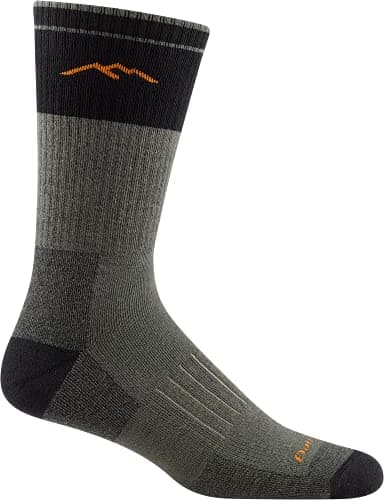
| Rank 1 | Darn Tough Hunter Boot Sock, heavyweight The default serious hunting sock | Heavyweight, full cushion | 9.0 | $31.95Amazon |
| Rank 2 | 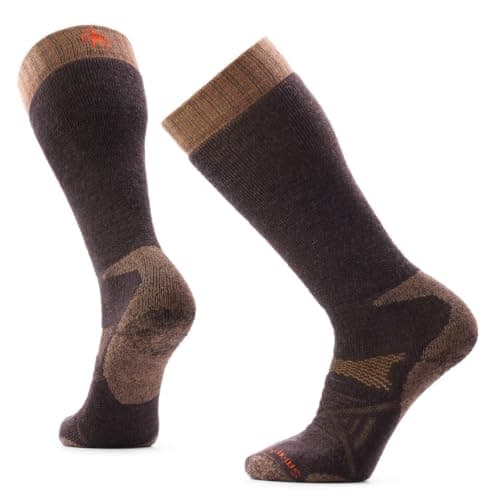 Smartwool Hunt Wader Extra Cushion OTC Waders and the coldest sits | Extra cushion | 8.6 | $33.00Amazon |
| Rank 3 | 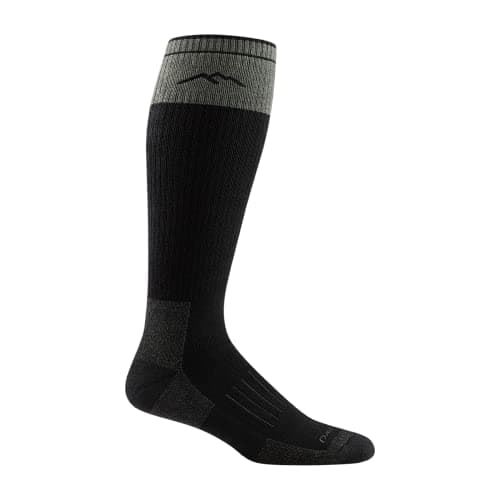 Darn Tough Hunting Hojo Over-the-Calf Knee boots and tall rubber | Cushion | 8.9 | $34.47Amazon |
| Rank 4 | 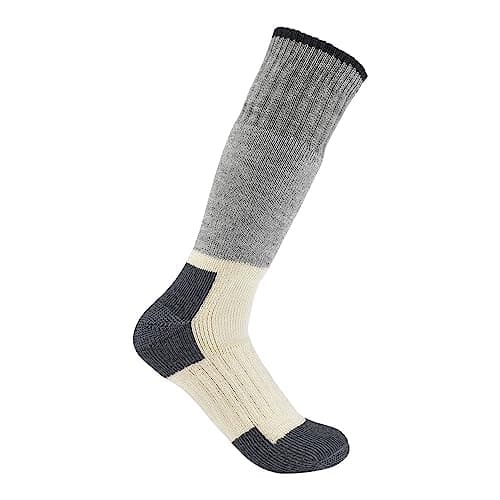 Carhartt Arctic heavyweight merino boot sock Good wool at a fair price | Heavyweight | 8.2 | $24.99Amazon |
| Rank 5 | 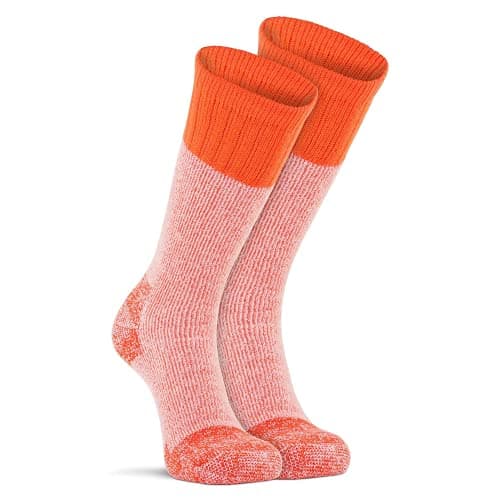 Fox River Wick Dry Outlander Sweaty feet in mild weather | Heavyweight mid-calf | 8.4 | $15.00Amazon |
#ad Prices come from Amazon and change. How this site is funded. Scores are our published editorial rubric — see our methodology.
A $35 pair of socks changes a cold boot more than a $100 jump in boot price does, and almost nobody buys in that order. The reason is simple physics: your boot's insulation can only trap air that is there, and your sock is what keeps your skin away from the cold wall of the boot while moving sweat out of the way. Get the sock wrong and the best boot in this catalog underperforms.
Cotton holds roughly a quarter of its weight in water and loses essentially all of its insulating value when wet. Wool holds more water than that and keeps insulating anyway, which is the entire reason it has been the standard for a century. A cotton tube sock on a cold hunt is the single most reliable way to end up with numb toes, and it is still what a lot of people walk in wearing. Why cotton socks fail has the mechanism.
| Weight | Use | Pair with |
|---|---|---|
| Liner | Under another sock - blister control and wicking | Any boot, any temperature |
| Lightweight | Warm-weather walking hunts | Uninsulated or 400g boots |
| Midweight | The most useful single weight | 400-800g boots you walk in |
| Heavyweight / full cushion | Cold sits and hard footbeds | 800g and up, and rubber boots |
| Max cushion, over the calf | Knee boots, waders, long static sits | 18-inch pull-ons and 1,600g boots |
Height matters more than people expect in a tall boot. In an 18-inch rubber pull-on, a boot-height sock works its way down and bunches under your heel by mid-morning; an over-the-calf sock stays put. The sock weight guide maps weights to boots, and it cross-references boot sizing because a thicker sock changes the size you need.
| Merino wool | Synthetic | Alpaca | |
|---|---|---|---|
| Warm when wet | Yes - the main reason to buy it | Poorly | Yes |
| Wicking speed | Good | Best | Good |
| Odor | Resists it naturally | Holds it | Resists it |
| Durability | Needs nylon reinforcement | Best | Least elastic |
| Itch | Fine-gauge merino rarely itches | None | No lanolin at all |
| Buy it when | Almost always | Your problem is sweat, not cold | Merino genuinely bothers you |
The comparisons worth reading before you spend: merino against synthetic and merino against alpaca.
Doing this properly is the subject of the sock layering guide, and it is also step one on how to keep your feet warm hunting.
Some people have feet that sweat heavily regardless of temperature, and for them more wool is the wrong answer - it saturates. The fix is a wicking construction that moves moisture out of the sock, a boot that can breathe rather than a rubber pull-on, and a second pair. Socks for sweaty feet has the picks, and if you blister as well, sock liners address both at once.
9 pages in this section. Roundup tiles carry the live price and a buy link for their top pick.
Best merino socks
Six merino socks by weight and height, plus the guarantees that make the expensive ones cheaper per season.
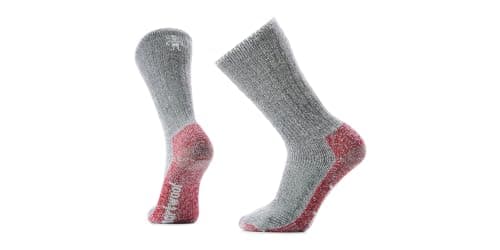
Best for cold feet
The warmest socks we would recommend - plus the caveat that makes half of all thick-sock purchases backfire.
Best for sweaty feet
For heavy sweaters, more merino just saturates. Wicking constructions, a second pair, and a boot that breathes.
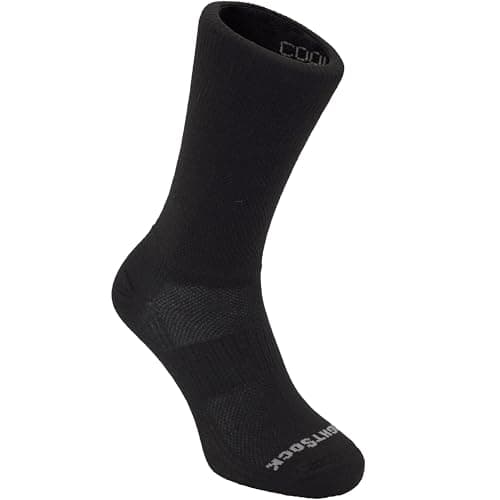
Best sock liners
Warmth with almost no bulk, and the most effective anti-blister measure there is. Two designs, two problems.
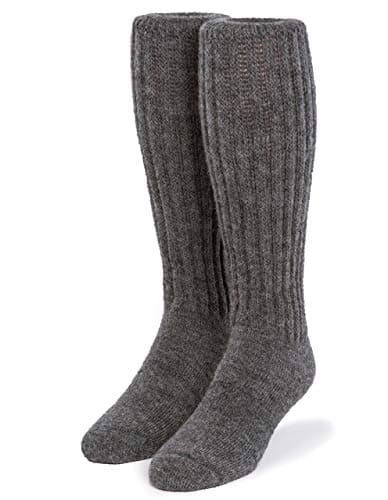
Comparison
Alpaca wins on warmth per bulk and lanolin; merino wins on elasticity, durability and guarantees.
Comparison
Wool for cold sits, synthetic for hard walks - and the routine that uses each for what it is good at.
Guide
The most effective cold-feet technique there is, for the price of one extra pair of socks. The whole routine.
Sock weight reference
Five weights, what each is for, which boot it belongs in, and the sizing adjustment it implies.
Guide
Cotton absorbs into the fiber, stops insulating when damp, and never dries inside a waterproof boot. The mechanism.