Rubber Boots
Best duck hunting boots
Standing in near-freezing water for four hours is the hardest thing you can ask of a boot. Height first, then insulation, then the drying routine that keeps it working.
Belt & Bike earns a commission when you buy through our links, at no extra cost to you. Prices come from Amazon and change; the date beside every price is when we last verified it. Full disclosure.
Quick picks
| # | Product | Insulation | Score | Price |
|---|---|---|---|---|
| Rank 1 | LaCrosse Alphaburly Pro 18-inch, 1,600g Sitting still in genuine cold | 1,600g | 9.0 | $199.98Amazon |
| Rank 2 | 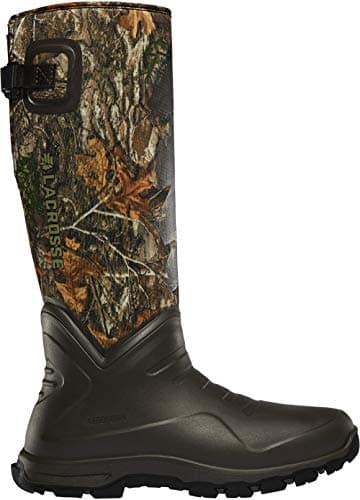 LaCrosse AeroHead Sport 16-inch, 7mm Marsh walking where flex matters | 7.0mm neoprene | 8.4 | $194.99Amazon |
| Rank 3 | 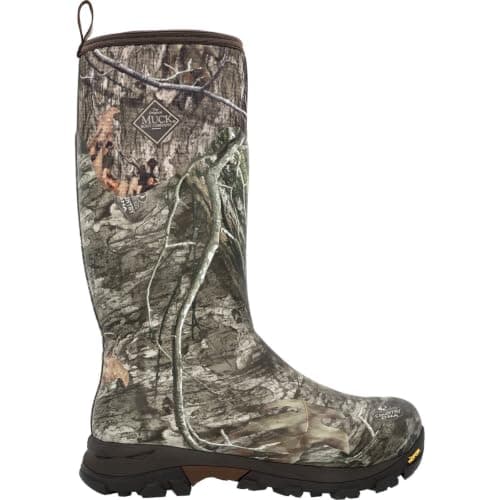 Muck Woody Arctic Ice Tall Standing on frozen ground and ice | 8mm neoprene plus fleece lining | 8.6 | $175.51Amazon |
| Rank 4 | 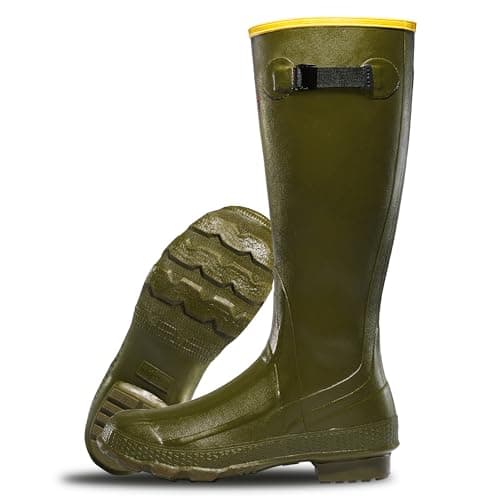 LaCrosse Grange 18-inch Uninsulated knee-high water work | None (uninsulated) | 8.0 | $99.95Amazon |
| Rank 5 | 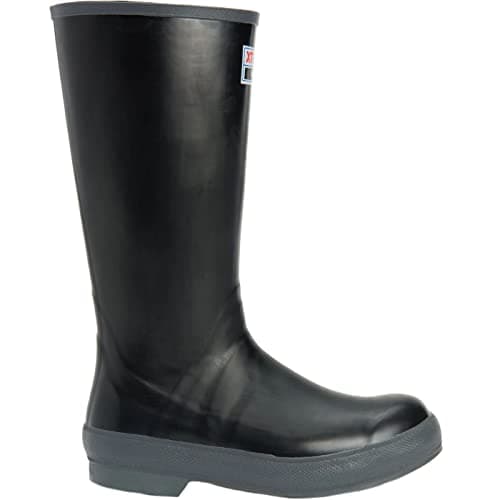 Xtratuf Legacy 15-inch Boats, decks and salt water | None (uninsulated) | 7.7 | $160.00Amazon |
| Rank 6 | 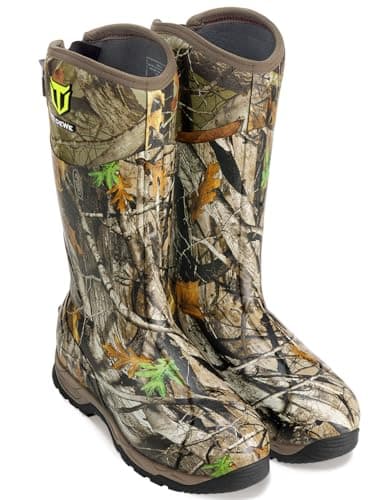 TIDEWE knee-high camo rubber boot Maximum water depth, minimum money | Insulated (grams not published) | 7.5 | $112.99Amazon |
#ad Prices come from Amazon and change. How this site is funded. Scores are our published editorial rubric — see our methodology.
Duck hunting is the hardest case in hunting footwear. You are standing - not sitting - in water that conducts heat out of the boot far faster than air would, often for hours, often before dawn, usually after wading in. No other hunt combines depth, cold and stillness like it.
The picks
Knee-high boots for timber and marsh, plus the deck boot for anyone hunting from a boat.
#1 · Sitting still in genuine cold
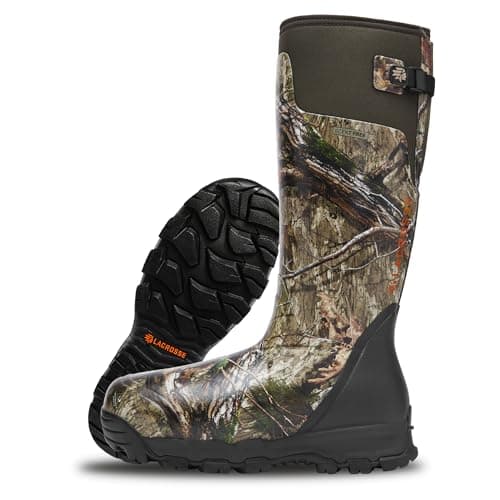
LaCrosse Alphaburly Pro 18-inch, 1,600g
LaCrosseThe default answer for a stand hunter below 20F: 1,600g of insulation in a scent-free rubber boot with an adjustable calf gusset, so it fits over a heavy sock and a thick calf.
| Insulation | 1,600g |
|---|---|
| Shaft height | 18 in |
| Upper | Vulcanized rubber over neoprene |
| Calf fit | Adjustable back gusset |
| Liner | Removable EVA footbed |
Specifications per LaCrosse Footwear published specifications.
What it does well
- The most insulation you can sensibly buy in a rubber boot, and rubber is the one upper that does not wet out
- The adjustable gusset is the reason this boot fits calves that defeat every other 18-inch pull-on
- Rubber is inherently scent-free, which matters more to deer hunters than most boot copy admits
Where it falls short
- Far too much boot for walking in. If you have a half-mile hike you will sweat, and then you will be cold anyway
- Heavy, and the weight is at the end of your leg where you notice it most
- No ankle support worth the name compared with a lace-up leather boot
Our rubric
- Warmth
- 9.6
- Waterproofing
- 9.4
- Fit
- 8.2
- Durability
- 9.0
- Value
- 8.6
#2 · Marsh walking where flex matters
#ad How we are funded · Price as of October 6, 2026
LaCrosse AeroHead Sport 16-inch, 7mm
LaCrossePolyurethane over 7mm neoprene instead of rubber over neoprene: lighter, more flexible, and noticeably easier to walk a long way in than an Alphaburly.
| Insulation | 7.0mm neoprene |
|---|---|
| Shaft height | 16 in |
| Upper | Polyurethane over neoprene |
| Liner | Neoprene |
| Fit | Pull-on, non-adjustable |
Specifications per LaCrosse Footwear published specifications.
What it does well
- The polyurethane shell resists abrasion better than it has any right to at this weight
- 7mm neoprene is warm for its bulk, so the boot is slimmer than an equivalent-warmth rubber boot
- Flexes at the ankle, which is why marsh and flooded-timber hunters pick it over a stiff pull-on
Where it falls short
- No calf adjustment at all - if you have a heavy calf, measure first
- Neoprene warmth is hard to compare with a gram rating, so you cannot cross-shop it on a spec sheet
Our rubric
- Warmth
- 8.0
- Waterproofing
- 9.2
- Fit
- 7.6
- Durability
- 8.6
- Value
- 8.4
#3 · Standing on frozen ground and ice
Muck Woody Arctic Ice Tall
MuckMuck's warmest hunting pull-on, and the one with the Vibram Arctic Grip outsole - the only tread here that is designed specifically for wet ice.
| Insulation | 8mm neoprene plus fleece lining |
|---|---|
| Shaft height | Not published by manufacturer |
| Upper | Rubber over 8mm neoprene |
| Outsole | Vibram Arctic Grip AT |
| Fit | Pull-on, stretch-fit topline |
Specifications per Muck Boot Company published specifications.
What it does well
- Arctic Grip is a real difference on wet ice, not a marketing outsole
- Stretch topline seals around the calf without a buckle
- Warm enough for a static sit in single digits by Muck's own rating
Where it falls short
- Expensive, and the outsole is the reason
- As with every neoprene boot, you cannot compare its warmth to a gram figure
Our rubric
- Warmth
- 9.4
- Waterproofing
- 9.2
- Fit
- 8.4
- Durability
- 8.6
- Value
- 7.6
#4 · Uninsulated knee-high water work
#ad How we are funded · Price as of October 6, 2026
LaCrosse Grange 18-inch
LaCrosseAn uninsulated ZXT rubber knee boot that has been in the catalog for decades. Buy it for water, not for warmth, and put the warmth in your sock.
| Insulation | None (uninsulated) |
|---|---|
| Shaft height | 18 in |
| Upper | ZXT rubber |
| Liner | Unlined |
| Fit | Pull-on |
Specifications per LaCrosse Footwear published specifications.
What it does well
- Cheap, nearly indestructible, and the pattern has barely changed because it did not need to
- Uninsulated means you control warmth with socks instead of being locked into one temperature
- A sane early-season and chore boot that happens to be scent-free
Where it falls short
- Cold on its own below about 45F - this is a feature, not a flaw, but buyers get it wrong
- Plain rubber is stiffer across the instep than a neoprene boot
Our rubric
- Warmth
- 4.0
- Waterproofing
- 9.4
- Fit
- 7.8
- Durability
- 9.4
- Value
- 9.4
#5 · Boats, decks and salt water
Xtratuf Legacy 15-inch
XtratufA commercial fishing boot, not a hunting boot - and the best wet-deck traction here. Worth knowing about if your duck hunting happens in a boat.
| Insulation | None (uninsulated) |
|---|---|
| Shaft height | 15 in |
| Upper | Triple-dipped neoprene rubber |
| Outsole | Chevron, non-marking |
| Fit | Pull-on |
What it does well
- The chevron outsole is the gold standard on a wet boat deck
- Triple-dipped rubber handles salt and fish slime indefinitely
Where it falls short
- Uninsulated, and the traction advantage disappears on mud
- Not camo, and squeaky on a quiet morning
Our rubric
- Warmth
- 3.6
- Waterproofing
- 9.4
- Fit
- 8.0
- Durability
- 9.0
- Value
- 8.4
#6 · Maximum water depth, minimum money
#ad How we are funded · Price as of October 6, 2026
TIDEWE knee-high camo rubber boot
TIDEWEA camo knee-high at a price that makes it the obvious answer for a hunter whose only real requirement is not flooding a boot.
| Insulation | Insulated (grams not published) |
|---|---|
| Shaft height | Not published by manufacturer |
| Upper | Rubber over neoprene |
| Pattern | Camo |
| Fit | Pull-on |
What it does well
- Knee-high coverage for less than most mid-height boots
- Camo pattern if that matters for your setup
Where it falls short
- Insulation grams are not published, so you cannot match it to a temperature
- Same durability caveat as the rest of the line
Our rubric
- Warmth
- 6.6
- Waterproofing
- 8.4
- Fit
- 7.0
- Durability
- 6.2
- Value
- 9.2
Height first, and buy an inch more than you think
A boot that floods is finished for the hunt: a sealed waterproof boot full of water cannot be drained and warmed, and you cannot wring out insulation. The cost of a boot one inch too short is the entire hunt, which is why we would always take 18 inches over 16 for timber. Above the knee, stop shopping for boots and buy waders.
| Where you hunt | Boot | Why |
|---|---|---|
| Flooded timber, knee deep | 18-inch insulated knee boot | The water is the whole problem |
| Marsh and mud, mid-calf | 16 to 18-inch, flexible upper | You walk more than you stand |
| Field hunting, dry blind | A leather or rubber boot sized for cold | Water is not the issue; cold is |
| From a boat | A deck boot with a chevron outsole | Wet fiberglass needs a different outsole |
| Above the knee | Waders, not boots | No boot solves this |
Insulation for standing in cold water
Standing in water runs about one tier heavier than sitting in cold air. Early-season water needs nothing but a wool sock; late-season timber at 35F with ice forming in the decoys is the case 1,600g rubber exists for. The detail is in how to keep feet warm duck hunting.
The flexibility question
Wading through timber is work, and a stiff knee boot fights you at the ankle every step. The LaCrosse AeroHead Sport is the answer here: polyurethane over 7mm neoprene flexes where a vulcanized rubber boot does not. You give up the adjustable calf gusset to get it, so measure your calf before ordering.
Drying, which is not optional in this category
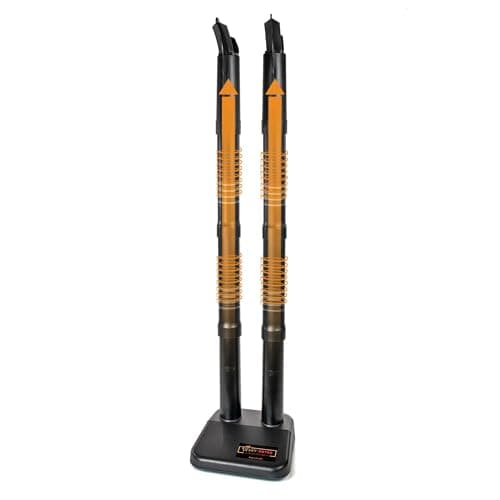
A knee boot has a long shaft that ordinary dryers do not reach, and condensation collects there whether or not you take on water. Over a season that is what produces both the smell and a liner that never starts dry. An extension-tube dryer is the answer, and if you hunt several days a week it is as important as the boot: dryers for waders and knee boots.
- Pull the footbed out after every hunt. It holds more water than the boot does.
- Rinse mud off the outside before it dries, especially around the flex point where grit abrades rubber.
- Never dry a boot on a heater, a stove or in a clothes dryer. How to dry hunting boots.
Frequently asked questions
What are the best boots for duck hunting?
How tall should duck hunting boots be?
What insulation for duck hunting boots?
Can you walk a long way in duck hunting boots?
How do you dry duck hunting boots?
Sources
Read next
Cold Weather Boots
How to keep your feet warm duck hunting
Standing in cold water is a tier harder than sitting in cold air. Insulation levels, wader socks, and drying the shaft.
Rubber Boots
Best knee-high rubber hunting boots
Sixteen to eighteen inches of coverage, and the calf measurement that decides which of them you can get on.
Rubber Boots
Best insulated rubber hunting boots
Gram-rated and neoprene-rated boots side by side, and how to compare two spec systems nobody bridges.
Dryers & Boot Care
Best boot dryers for waders and knee boots
The shaft is the part that never dries, and most dryers stop at the ankle. Extension tubes are the answer.
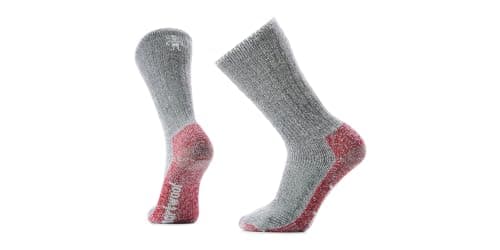
Hunting Socks
Best hunting socks for cold feet
The warmest socks we would recommend - plus the caveat that makes half of all thick-sock purchases backfire.