Cold Weather Boots
How to keep your feet warm duck hunting
Water conducts heat out of a boot far faster than air does, and you are standing in it. The fixes are specific: insulation levels, wader socks, and drying the shaft.
Belt & Bike earns a commission when you buy through our links, at no extra cost to you. Prices come from Amazon and change; the date beside every price is when we last verified it. Full disclosure.
Quick picks
| # | Product | Insulation | Score | Price |
|---|---|---|---|---|
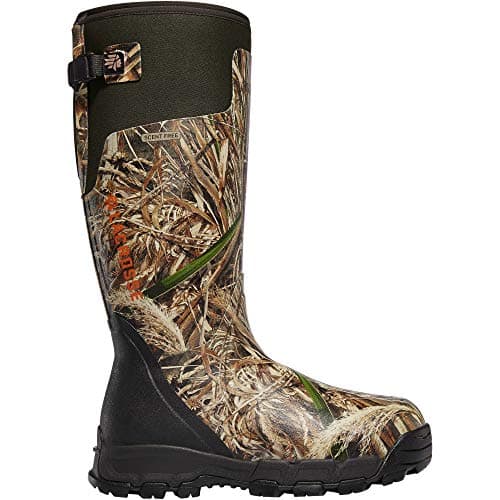
| Rank 1 | LaCrosse Alphaburly Pro 18-inch, 1,600g Sitting still in genuine cold | 1,600g | 9.0 | $199.98Amazon |
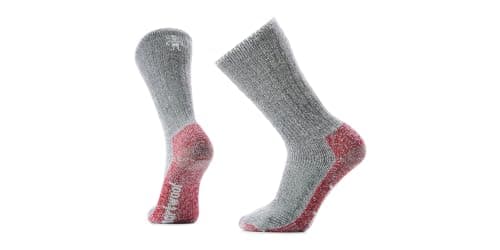
| Rank 2 | 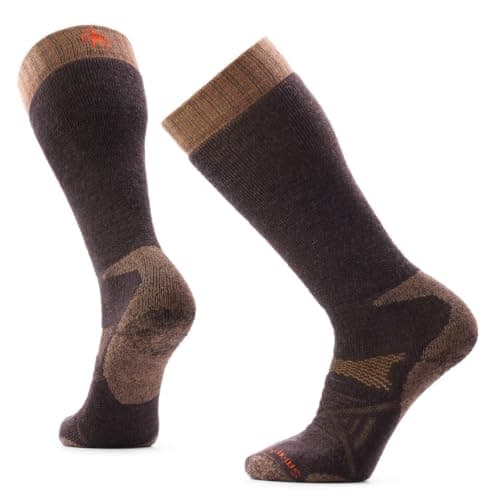 Smartwool Hunt Wader Extra Cushion OTC Waders and the coldest sits | Not published | 8.6 | $33.00Amazon |
| Rank 3 | 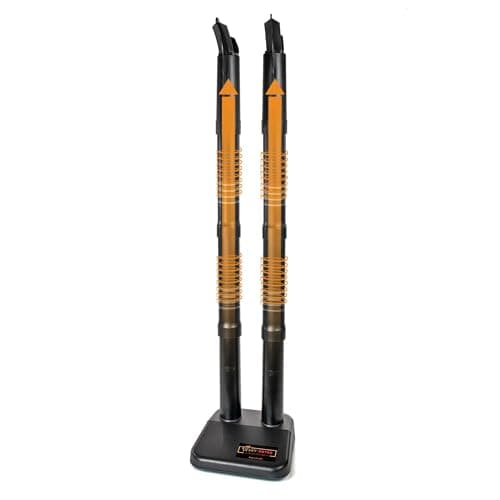 PEET Wader dryer with 12-inch extensions Waders and knee boots | Not published | 8.2 | $79.99Amazon |
| Rank 4 | 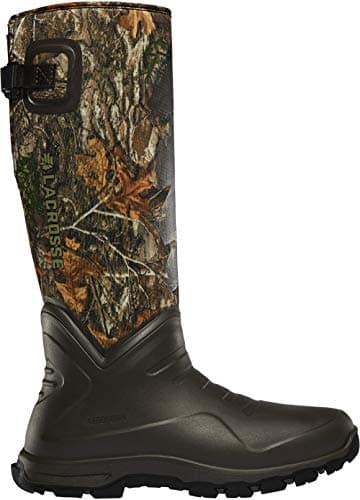 LaCrosse AeroHead Sport 16-inch, 7mm Marsh walking where flex matters | 7.0mm neoprene | 8.4 | $194.99Amazon |
#ad Prices come from Amazon and change. How this site is funded. Scores are our published editorial rubric — see our methodology.
Duck hunting inverts the usual arithmetic. On a stand the enemy is still cold air and your own sweat. In flooded timber you are standing in water near freezing, and water pulls heat out of a boot far faster than air at the same temperature. The upside is that water does not go below 32F; the downside is that it does not have to.
Insulation levels for standing in water
| Water and air | What to wear | Why |
|---|---|---|
| Early season, 60F air, warm water | Uninsulated rubber or neoprene | The water is not the problem; sweat is |
| 45F air, cool water, standing still | 800g rubber or 5mm neoprene | Standing still in water needs real insulation |
| 35F air, cold water, long sits | 1,200g to 1,600g rubber, or waders with a boot foot | This is the case 1,600g rubber exists for |
| Below freezing air, ice in the decoys | 1,600g, plus a dry sock change and warmers | You are at the limit of passive insulation |
Waders change the problem
If you hunt in waders, the boot is attached and you cannot change it - so your variables are the sock and the insole. This is where over-the-calf max-cushion wader socks earn their price: they are shaped not to bunch inside a boot foot, they are thick enough to insulate against the boot's thin footbed, and they stay up. A boot-height sock inside a wader works down to your heel by mid-morning and then bunches, which is both cold and blister-inducing.
Picks are in socks for cold feet; the sizing implications are in sock weight.
What makes a cold-water hunt work
A 1,600g knee boot, the wader sock, and the dryer that reaches up the shaft.
#1 · Sitting still in genuine cold
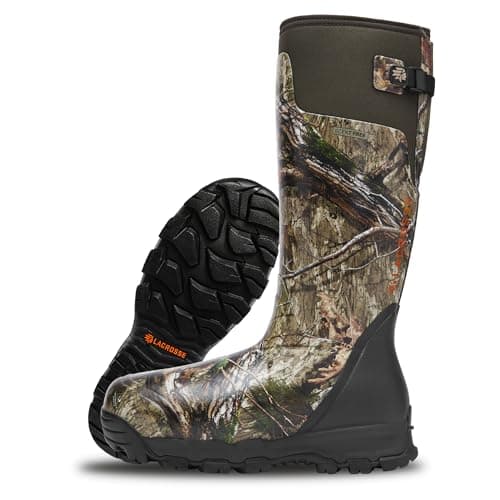
LaCrosse Alphaburly Pro 18-inch, 1,600g
LaCrosseThe default answer for a stand hunter below 20F: 1,600g of insulation in a scent-free rubber boot with an adjustable calf gusset, so it fits over a heavy sock and a thick calf.
| Insulation | 1,600g |
|---|---|
| Shaft height | 18 in |
| Upper | Vulcanized rubber over neoprene |
| Calf fit | Adjustable back gusset |
| Liner | Removable EVA footbed |
Specifications per LaCrosse Footwear published specifications.
What it does well
- The most insulation you can sensibly buy in a rubber boot, and rubber is the one upper that does not wet out
- The adjustable gusset is the reason this boot fits calves that defeat every other 18-inch pull-on
- Rubber is inherently scent-free, which matters more to deer hunters than most boot copy admits
Where it falls short
- Far too much boot for walking in. If you have a half-mile hike you will sweat, and then you will be cold anyway
- Heavy, and the weight is at the end of your leg where you notice it most
- No ankle support worth the name compared with a lace-up leather boot
Our rubric
- Warmth
- 9.6
- Waterproofing
- 9.4
- Fit
- 8.2
- Durability
- 9.0
- Value
- 8.6
#2 · Waders and the coldest sits
#ad How we are funded · Price as of October 6, 2026
Smartwool Hunt Wader Extra Cushion OTC
SmartwoolBuilt for the wader-and-rubber-boot problem: maximum cushion, over the calf, shaped so it does not bunch inside a boot foot.
| Material | Merino wool blend |
|---|---|
| Weight | Extra cushion |
| Height | Over the calf |
| Fit | Shaped for wader and boot-foot use |
| Warranty | Two-year guarantee (manufacturer) |
What it does well
- The most cushion in this list, which is what a hard rubber footbed needs
- Designed for exactly the boot type most duck hunters wear
Where it falls short
- Far too much sock for a leather boot you walk in
- Two-year guarantee rather than Darn Tough's lifetime
Our rubric
- Warmth
- 9.4
- Moisture handling
- 8.6
- Durability
- 8.6
- Fit
- 8.8
- Value
- 7.6
#3 · Waders and knee boots
#ad How we are funded · Price as of October 6, 2026
PEET Wader dryer with 12-inch extensions
PEETThe only purpose-built answer to the wader problem: 12-inch extension tubes that carry air up the leg instead of stopping at the ankle.
| Type | Convection with extension tubes |
|---|---|
| Capacity | 1 pair |
| Extension length | 12 in |
| Stated dry time | Overnight (manufacturer) |
| Noise | Silent |
Specifications per PEET Dryer published specifications.
What it does well
- The extensions reach the part of a wader or 18-inch boot that never dries otherwise
- Silent, so it can run all day without annoying anyone
Where it falls short
- Slow, like every convection dryer
- The extensions make it tall and awkward to store
Our rubric
- Drying power
- 7.6
- Capacity
- 6.4
- Quiet
- 10.0
- Build
- 9.2
- Value
- 8.0
#4 · Marsh walking where flex matters
#ad How we are funded · Price as of October 6, 2026
LaCrosse AeroHead Sport 16-inch, 7mm
LaCrossePolyurethane over 7mm neoprene instead of rubber over neoprene: lighter, more flexible, and noticeably easier to walk a long way in than an Alphaburly.
| Insulation | 7.0mm neoprene |
|---|---|
| Shaft height | 16 in |
| Upper | Polyurethane over neoprene |
| Liner | Neoprene |
| Fit | Pull-on, non-adjustable |
Specifications per LaCrosse Footwear published specifications.
What it does well
- The polyurethane shell resists abrasion better than it has any right to at this weight
- 7mm neoprene is warm for its bulk, so the boot is slimmer than an equivalent-warmth rubber boot
- Flexes at the ankle, which is why marsh and flooded-timber hunters pick it over a stiff pull-on
Where it falls short
- No calf adjustment at all - if you have a heavy calf, measure first
- Neoprene warmth is hard to compare with a gram rating, so you cannot cross-shop it on a spec sheet
Our rubric
- Warmth
- 8.0
- Waterproofing
- 9.2
- Fit
- 7.6
- Durability
- 8.6
- Value
- 8.4
Drying is harder, and matters more
A knee-high boot or a wader boot foot has a long shaft that no ordinary dryer reaches, and condensation collects there whether or not you take on water. Extension-tube dryers exist for exactly this, and if you duck hunt several days a week they are not optional - see dryers for waders. Pull the footbed out as well; it holds more water than the boot does.
The walk through the timber
Wading in to a hole in chest waders at 5am is hard work, and you will arrive warm. The same discipline applies as on a stand: go slower than you want to, carry your heavy socks rather than wearing them, and change once you are set up. The difference is that you cannot easily take a wader boot off in the water - so the sock change happens on dry ground before you wade, which means thinking about it earlier.
- Dress for the hole, not the walk. Carry the top layer rather than wearing it.
- Keep a dry sock pair in a sealed bag in a chest pocket. Waders leak, and a dry sock in a wet wader is still worth having.
- Standing on the bottom is colder than standing on a platform. Mud and water conduct heat well. If you can stand on a log, a stake platform or your boat, do.
Frequently asked questions
How do you keep your feet warm duck hunting?
What insulation do I need for duck hunting boots?
What socks should I wear with waders?
How do you dry wader boots?
Sources
Read next
Rubber Boots
Best duck hunting boots
Standing in near-freezing water is the hardest ask in footwear. Height first, insulation second, drying third.
Cold Weather Boots
1600 gram insulated hunting boots
The most over-bought rating in hunting footwear - and the only right answer for a motionless sit below 15F.
Dryers & Boot Care
Best boot dryers for waders and knee boots
The shaft is the part that never dries, and most dryers stop at the ankle. Extension tubes are the answer.
Hunting Socks
Best hunting socks for cold feet
The warmest socks we would recommend - plus the caveat that makes half of all thick-sock purchases backfire.
Rubber Boots
Best knee-high rubber hunting boots
Sixteen to eighteen inches of coverage, and the calf measurement that decides which of them you can get on.