Boot Fit & Sizing
Best boots for elk hunting
Elk hunting is a mileage problem, not a temperature problem. The boots that work have stiff midsoles, modest insulation and a break-in you need to start in July.
Belt & Bike earns a commission when you buy through our links, at no extra cost to you. Prices come from Amazon and change; the date beside every price is when we last verified it. Full disclosure.
Quick picks
| # | Product | Insulation | Score | Price |
|---|---|---|---|---|
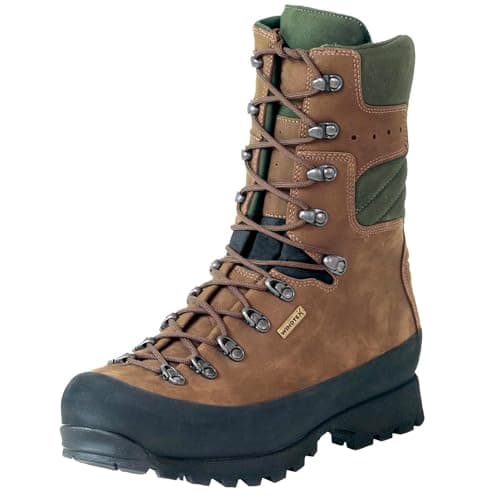
| Rank 1 | Kenetrek Mountain Extreme 400 Steep country with a heavy pack | 400g Thinsulate | 8.2 | $539.95Amazon |
| Rank 2 | 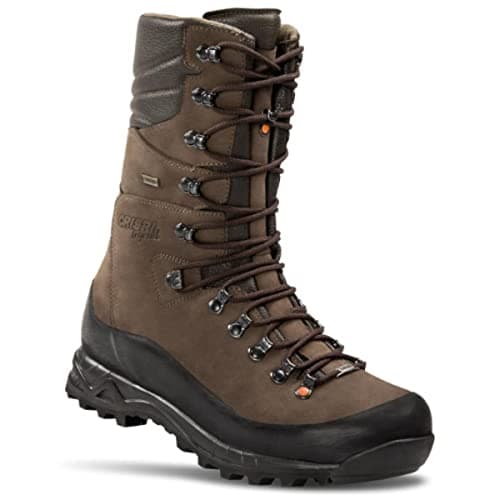 Crispi Hunter GTX Mountain hunters who want a narrower last | Not published | 7.8 | $435.50Amazon |
| Rank 3 | 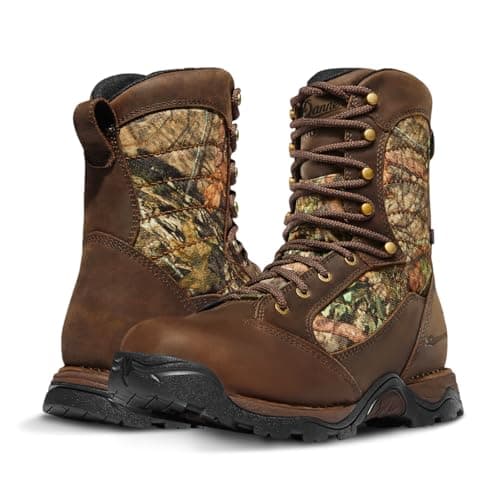 Danner Pronghorn 800g All-day walking in the cold | 800g | 8.7 | $244.67Amazon |
| Rank 4 | 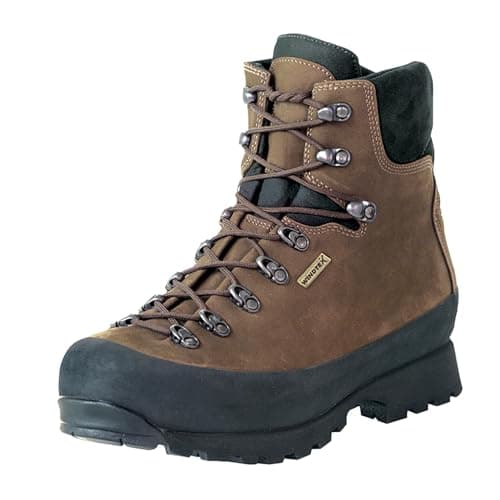 Kenetrek Hardscrabble Hiker Early-season mountain hunts | None (uninsulated) | 7.4 | $469.95Amazon |
| Rank 5 | 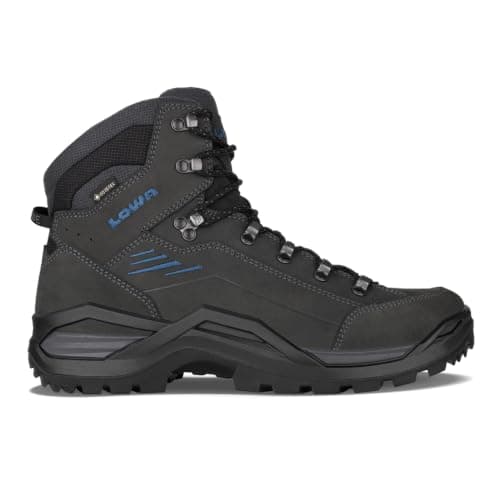 Lowa Renegade EVO GTX Mid Wide-ish feet that need a hiker | None (uninsulated) | 7.6 | $279.95Amazon |
| Rank 6 | 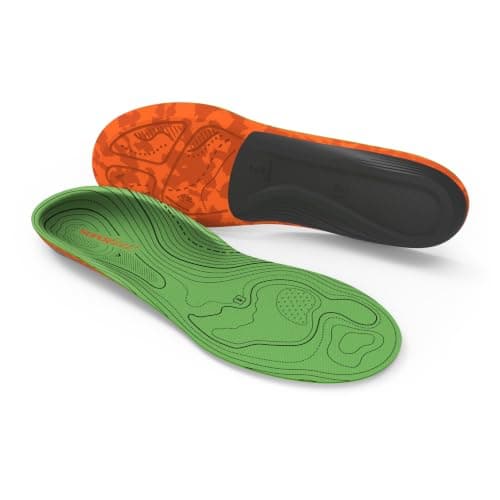 Superfeet Hike Support Miles in hunting boots | Not published | 8.1 | $59.95Amazon |
#ad Prices come from Amazon and change. How this site is funded. Scores are our published editorial rubric — see our methodology.
Everything about elk boots is different from stand-hunting boots, and the gram rating is the least important spec. You will walk between five and fifteen miles a day on steep, broken ground, carrying a pack that gets much heavier if you are successful. What that needs is support, and support comes from the midsole.
The picks
Mountain boots with real shanks, plus the uninsulated options for early archery and the insole that completes them.
#1 · Steep country with a heavy pack
#ad How we are funded · Price as of October 6, 2026
Kenetrek Mountain Extreme 400
KenetrekA full-shank mountain boot with only 400g of insulation, and that pairing is deliberate: in steep country you generate your own heat and need support, not loft.
| Insulation | 400g Thinsulate |
|---|---|
| Shaft height | 10 in |
| Upper | 2.8mm full-grain leather |
| Midsole | Full-length nylon shank |
| Waterproofing | Windtex membrane (manufacturer) |
Specifications per Kenetrek published specifications.
What it does well
- The stiff shank is what stops your feet dying on a sidehill under 60 pounds
- One-piece leather upper with minimal seams - the fewest failure points here
- Resoleable, which matters at this price
Where it falls short
- The most expensive boot in this registry by a wide margin
- A serious break-in. Buyers who skip it report exactly the blisters you would expect
- Overkill, and genuinely uncomfortable, for stand hunting
Our rubric
- Warmth
- 6.8
- Waterproofing
- 8.8
- Fit
- 9.0
- Durability
- 9.8
- Value
- 6.6
#2 · Mountain hunters who want a narrower last
#ad How we are funded · Price as of October 6, 2026
Crispi Hunter GTX
CrispiCrispi's reputation rests on last shape and ankle flex rather than raw stiffness, and the Hunter GTX is the model most mountain hunters start with.
| Insulation | Not published by manufacturer |
|---|---|
| Shaft height | Not published by manufacturer |
| Upper | Leather |
| Waterproofing | Gore-Tex (manufacturer) |
| Fit | Lace-up, European last |
What it does well
- Fits narrow and medium feet better than most American hunting lasts
- Ankle support without the plank-stiff feel of a full mountaineering boot
Where it falls short
- Sizing is European and runs differently from US boots - order carefully
- Limited Amazon availability and sizes; insulation is not published per listing
Our rubric
- Warmth
- 5.0
- Waterproofing
- 8.8
- Fit
- 9.4
- Durability
- 9.2
- Value
- 6.6
#3 · All-day walking in the cold
Danner Pronghorn 800g
Danner800g in Danner's Pronghorn platform, which is built around a supportive midsole rather than a soft one. The boot to buy if your hunt is measured in miles.
| Insulation | 800g |
|---|---|
| Shaft height | Not published by manufacturer |
| Upper | Leather and nylon |
| Waterproofing | Gore-Tex (manufacturer) |
| Outsole | Danner Pronghorn |
Specifications per Danner published specifications.
What it does well
- One of the few insulated boots that genuinely supports a loaded pack
- Gore-Tex plus a recraftable platform - this is a multi-season purchase
- 800g walks far better than 1,000g or more
Where it falls short
- Expensive, and the wide sizes are the ones that go out of stock
- Needs a real break-in period; do not buy it the week before a hunt
Our rubric
- Warmth
- 8.0
- Waterproofing
- 8.8
- Fit
- 9.4
- Durability
- 9.4
- Value
- 7.8
#4 · Early-season mountain hunts
#ad How we are funded · Price as of October 6, 2026
Kenetrek Hardscrabble Hiker
KenetrekThe uninsulated Kenetrek. Same build philosophy as the Mountain Extreme without the insulation, for September elk when the problem is miles and not cold.
| Insulation | None (uninsulated) |
|---|---|
| Shaft height | 7 in |
| Upper | Full-grain leather |
| Midsole | Nylon shank |
| Waterproofing | Windtex membrane (manufacturer) |
Specifications per Kenetrek published specifications.
What it does well
- Supports a loaded pack without cooking your feet in warm weather
- Resoleable and built to be kept
Where it falls short
- Expensive for an uninsulated boot
- Still needs real break-in time
Our rubric
- Warmth
- 3.2
- Waterproofing
- 8.6
- Fit
- 9.0
- Durability
- 9.6
- Value
- 6.8
#5 · Wide-ish feet that need a hiker
#ad How we are funded · Price as of October 6, 2026
Lowa Renegade EVO GTX Mid
LowaThe most-sold hiking boot in its class for a reason: a forgiving last, a genuine Gore-Tex membrane, and almost no break-in.
| Insulation | None (uninsulated) |
|---|---|
| Shaft height | Mid |
| Upper | Nubuck leather |
| Waterproofing | Gore-Tex (manufacturer) |
| Widths | Standard and wide offered |
What it does well
- Available in a true wide, which rules most hunting boots out of contention
- Comfortable immediately
Where it falls short
- Uninsulated and mid-height - a three-season scouting boot only
- Nubuck needs treating to survive wet brush
Our rubric
- Warmth
- 3.2
- Waterproofing
- 8.6
- Fit
- 9.6
- Durability
- 8.6
- Value
- 7.8
#6 · Miles in hunting boots
#ad How we are funded · Price as of October 6, 2026
Superfeet Hike Support
SuperfeetThe hiking-specific Superfeet: a little more forefoot cushioning than the all-purpose version, aimed at long days under a pack.
| Type | Structured support insole |
|---|---|
| Arch profile | Medium to high |
| Cushioning | Forefoot foam |
| Trimmable | Yes |
| Stated life | 12 months of regular use (manufacturer) |
What it does well
- Support plus some cushion, which is the right balance for mountain hunting
- Clearly better than the die-cut foam insole almost every boot ships with
Where it falls short
- Not a warmth upgrade
- Costs a meaningful fraction of a budget boot's price
Our rubric
- Effectiveness
- 8.4
- Ease of use
- 8.6
- Durability
- 7.8
- Value
- 7.6
Why 400g is the right spec, not 1,000g
Look at what Kenetrek puts in the Mountain Extreme: 400g of insulation in a $500 boot built for October elk country. That is not cost-cutting. In steep terrain you generate enormous amounts of heat, and heavier insulation produces sweat that soaks the boot and makes you cold at the top. Archery season in September often calls for no insulation at all.
| Season | Insulation | Boot type |
|---|---|---|
| Archery, September | None | Uninsulated mountain boot or stiff hiker |
| Early rifle, October | 200-400g | Insulated mountain boot |
| Late rifle, November snow | 400g, maybe 600g | Insulated mountain boot plus a heavier sock |
| Sitting in a blind in the cold | Not an elk problem - see the cold hub | A different boot entirely |
The spec that actually matters: the shank
A full-length nylon or steel shank resists the boot flexing under load. On a sidehill with 60 pounds on your back, that is what stops your foot collapsing sideways and your arch giving out by mile eight. Press your thumb hard into the arch of the sole: a mountain boot barely yields, a hiking boot flexes noticeably, a trail runner folds.
That stiffness has a cost, which is break-in: four to eight weeks, and nothing accelerates it safely. Buy elk boots in July: how long to break in boots.
What to look for, in order
- A full-length shank. Non-negotiable if you carry meat.
- A last that matches your foot. Crispi runs narrow, Kenetrek standard-to-wide, Lowa offers a true wide. This matters more than brand loyalty: boots for wide feet.
- Height around 8 to 10 inches with real ankle support. Higher is not better - it restricts flex on steep ground.
- Resoleability, at this price. A $500 boot you resole twice is cheaper per season than three $300 boots.
- Modest insulation, 0 to 400g depending on the season.
Sock and insole are part of the system
A mountain boot's hard midsole transmits more to your foot than a soft boot does, which is why a structured insole and a real cushioned wool sock are not accessories here - they are part of making the boot work. Budget for both: the insole picks and merino socks.
The honest cheaper option
If you are hunting elk once and cannot justify a $500 boot, a stiff hiking boot in a true wide - the Lowa Renegade - plus a structured insole will get you through a week in moderate terrain. What it will not do is carry a loaded pack down a sidehill comfortably, and that is precisely when a cheap boot costs you. Hunting boots against hiking boots.
Frequently asked questions
What are the best boots for elk hunting?
How much insulation do I need for elk hunting?
Do I need stiff boots for elk hunting?
When should I buy elk hunting boots?
Can I use hiking boots for elk hunting?
Sources
Read next
Boot Fit & Sizing
Best mountain hunting boots
The one category where price tracks capability. What a $500 boot does structurally that a $200 boot cannot.
Boot Fit & Sizing
How long does it take to break in hunting boots?
Honest ranges by construction, why shanked boots take six weeks, and how to tell break-in from a bad fit.
Boot Fit & Sizing
Best hunting boot insoles
The cheapest real upgrade in hunting footwear, as long as you buy for the right job of the three.
Boot Fit & Sizing
Hunting boots or hiking boots
In mild weather on open ground a hiker is often the better hunting boot. Exactly where that stops being true.
Cold Weather Boots
400 gram insulated hunting boots
400g is the walking hunter's rating, not the budget option - including in $500 mountain boots. Where it works and where it stops.