Boot Fit & Sizing
How long does it take to break in hunting boots?
Anywhere from zero to eight weeks, and the deciding factor is construction rather than price. Here are honest ranges and the point at which a boot is not breaking in - it just does not fit.
Belt & Bike earns a commission when you buy through our links, at no extra cost to you. Prices come from Amazon and change; the date beside every price is when we last verified it. Full disclosure.
Quick picks
| # | Product | Upper | Score | Price |
|---|---|---|---|---|
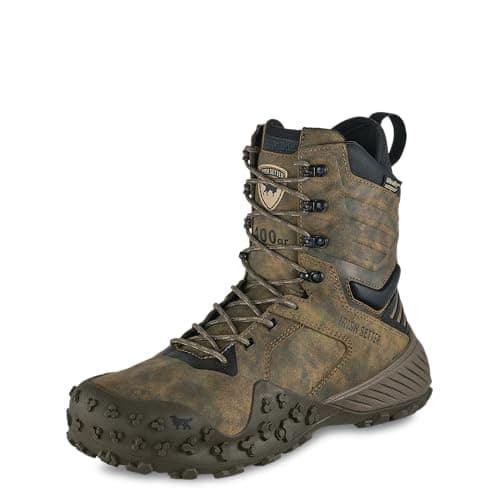
| Rank 1 | Irish Setter VaprTrek 8-inch, 400g Light miles in cool weather | Leather and nylon | 7.9 | $219.95Amazon |
| Rank 2 | 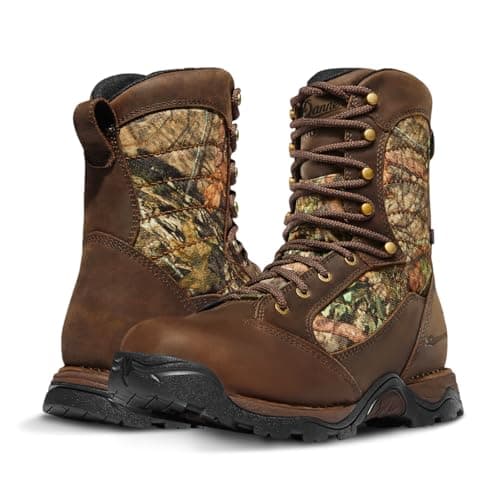 Danner Pronghorn 800g All-day walking in the cold | Leather and nylon | 8.7 | $244.67Amazon |
| Rank 3 | 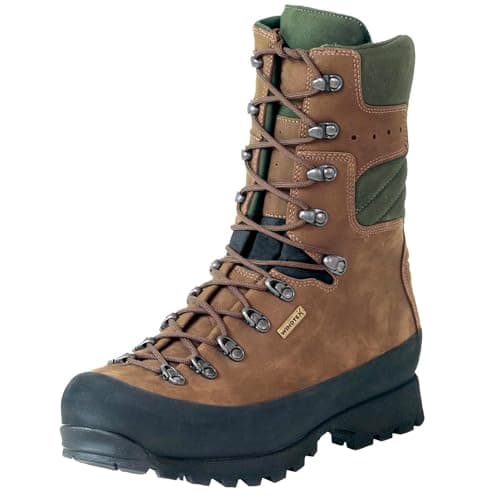 Kenetrek Mountain Extreme 400 Steep country with a heavy pack | 2.8mm full-grain leather | 8.2 | $539.95Amazon |
| Rank 4 | 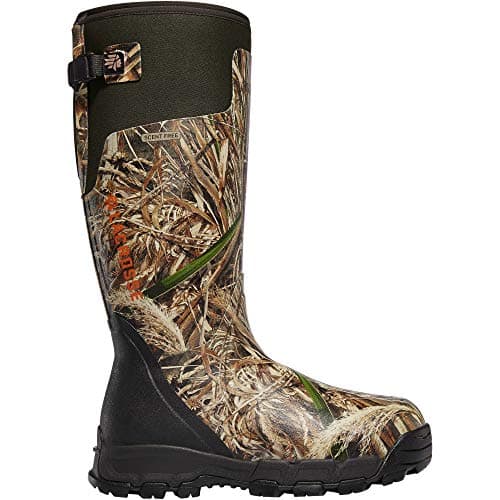 LaCrosse Alphaburly Pro 18-inch, 800g One boot for most of the season | Vulcanized rubber over neoprene | 8.8 | $199.98Amazon |
#ad Prices come from Amazon and change. How this site is funded. Scores are our published editorial rubric — see our methodology.
The honest answer depends almost entirely on how the boot is built, and barely at all on what it cost. A $500 mountain boot takes six weeks; a $130 nylon-and-leather boot takes three outings. Both of those are normal.
| Boot type | Break-in | What is actually softening |
|---|---|---|
| Rubber or neoprene pull-on | None | Nothing - it is already flexible |
| Light leather and nylon, 8 in | 2 to 5 outings | The ankle collar and the toe flex point |
| Full-grain leather hunting boot, 9-12 in | 2 to 4 weeks | The whole upper, plus the midsole bedding in |
| Heavily insulated leather boot | 3 to 5 weeks | As above, plus the insulation compressing to your foot |
| 17-inch snake boot | 2 to 4 weeks | The guard panel softening across the instep |
| Stiff mountain boot, full shank | 4 to 8 weeks | The midsole, which is the slowest part of any boot |
| Goodyear-welted heavy leather | 4 to 8 weeks | Heavy leather and a thick welted midsole |
Why mountain boots take longest
It is the midsole, not the leather. A mountain boot has a full-length nylon or steel shank whose whole purpose is to resist flexing - that is what stops your foot collapsing on a sidehill under a loaded pack. A shank that stiff takes weeks of repeated loading to bed into a shape that matches your gait, and nothing accelerates it safely. Kenetrek and similar makers say so in their own fit guidance.
What actually softens, and what never will
- Softens: the ankle collar, the toe flex point, the tongue, the leather over the instep, and the midsole over much longer.
- Conforms: the insulation and footbed, which compress into a shape matching your foot. This is why a boot feels roomier after a month.
- Does not change: the length, the width at the ball, and the volume of the last. A narrow boot stays narrow.
- Should not change: a snake boot's protective panel, which softens somewhat across the instep and should not be deliberately deformed.
Boots at each end of the timeline
A quick-breaking light boot, two mid-range leathers, and the pull-on that needs nothing.
#1 · Light miles in cool weather
#ad How we are funded · Price as of October 6, 2026
Irish Setter VaprTrek 8-inch, 400g
Irish SetterA deliberately light 8-inch boot with just 400g of insulation - the right spec for an early-season walk-in where the problem is weight and sweat, not cold.
| Insulation | 400g |
|---|---|
| Shaft height | 8 in |
| Upper | Leather and nylon |
| Waterproofing | UltraDry membrane (manufacturer) |
| Fit | Lace-up |
Specifications per Irish Setter published specifications.
What it does well
- Genuinely light for an insulated boot, which is the whole point of the model
- Breaks in faster than a full-leather 12-inch boot
Where it falls short
- 400g and an 8-inch shaft is not a cold-sit boot - read the spec and believe it
- Nylon panels wear faster than full leather in heavy brush
Our rubric
- Warmth
- 6.2
- Waterproofing
- 7.8
- Fit
- 9.0
- Durability
- 8.0
- Value
- 8.6
#2 · All-day walking in the cold
Danner Pronghorn 800g
Danner800g in Danner's Pronghorn platform, which is built around a supportive midsole rather than a soft one. The boot to buy if your hunt is measured in miles.
| Insulation | 800g |
|---|---|
| Shaft height | Not published by manufacturer |
| Upper | Leather and nylon |
| Waterproofing | Gore-Tex (manufacturer) |
| Outsole | Danner Pronghorn |
Specifications per Danner published specifications.
What it does well
- One of the few insulated boots that genuinely supports a loaded pack
- Gore-Tex plus a recraftable platform - this is a multi-season purchase
- 800g walks far better than 1,000g or more
Where it falls short
- Expensive, and the wide sizes are the ones that go out of stock
- Needs a real break-in period; do not buy it the week before a hunt
Our rubric
- Warmth
- 8.0
- Waterproofing
- 8.8
- Fit
- 9.4
- Durability
- 9.4
- Value
- 7.8
#3 · Steep country with a heavy pack
#ad How we are funded · Price as of October 6, 2026
Kenetrek Mountain Extreme 400
KenetrekA full-shank mountain boot with only 400g of insulation, and that pairing is deliberate: in steep country you generate your own heat and need support, not loft.
| Insulation | 400g Thinsulate |
|---|---|
| Shaft height | 10 in |
| Upper | 2.8mm full-grain leather |
| Midsole | Full-length nylon shank |
| Waterproofing | Windtex membrane (manufacturer) |
Specifications per Kenetrek published specifications.
What it does well
- The stiff shank is what stops your feet dying on a sidehill under 60 pounds
- One-piece leather upper with minimal seams - the fewest failure points here
- Resoleable, which matters at this price
Where it falls short
- The most expensive boot in this registry by a wide margin
- A serious break-in. Buyers who skip it report exactly the blisters you would expect
- Overkill, and genuinely uncomfortable, for stand hunting
Our rubric
- Warmth
- 6.8
- Waterproofing
- 8.8
- Fit
- 9.0
- Durability
- 9.8
- Value
- 6.6
#4 · One boot for most of the season
#ad How we are funded · Price as of October 6, 2026
LaCrosse Alphaburly Pro 18-inch, 800g
LaCrosseThe same boot as the 1,600g with half the insulation, and for most hunters in most of the country it is the smarter buy: warm enough sitting down to about freezing, survivable walking in.
| Insulation | 800g |
|---|---|
| Shaft height | 18 in |
| Upper | Vulcanized rubber over neoprene |
| Calf fit | Adjustable back gusset |
| Liner | Removable EVA footbed |
Specifications per LaCrosse Footwear published specifications.
What it does well
- The widest usable temperature window of any boot here - roughly 20F sitting to 50F walking
- Same gusset, same rubber, same scent profile as the 1,600g version
- If you are buying one rubber boot and do not know your conditions, this is the one
Where it falls short
- Not enough boot for an all-day December sit in the north
- Still heavy for covering ground
Our rubric
- Warmth
- 8.2
- Waterproofing
- 9.4
- Fit
- 8.4
- Durability
- 9.0
- Value
- 9.0
How to tell break-in from a bad fit
| Symptom | Break-in, or bad fit? |
|---|---|
| Stiff ankle, no pain | Break-in. Keep going |
| Pressure across the instep that eases over an hour | Break-in |
| Heel lift that does not improve with heel-lock lacing | Bad fit - the boot is too long or too roomy |
| Pain at the little toe or the ball of the foot | Bad fit - it is a width problem, and width does not change |
| Toes touching the end | Bad fit - too short. Return it |
| Numbness or tingling | Too tight. Stop wearing them and reassess |
Plan backwards from the hunt
- Mountain hunt in September? Buy boots in July. Eight weeks is not an exaggeration for a shanked boot.
- Deer season opener in November? Buy in late September for a leather boot.
- Spring turkey in April? A snake boot needs two to four weeks, and it is often bought too late.
- Any hunt, any boot: the first indoor hour is your size check. Do it with time to return them.
Frequently asked questions
How long does it take to break in hunting boots?
Why do mountain boots take so long to break in?
Do hunting boots get more comfortable over time?
How do I know if my boots will never fit?
Sources
Read next
Boot Fit & Sizing
How to break in hunting boots
Four stages over two to four weeks, in order - plus the five break-in shortcuts that damage boots.
Boot Fit & Sizing
Hunting boot sizing guide
The sizing adjustment table, the five fit checks, and the two measurements shoe size tells you nothing about.
Boot Fit & Sizing
Best mountain hunting boots
The one category where price tracks capability. What a $500 boot does structurally that a $200 boot cannot.
Boot Fit & Sizing
How to stop hunting boots from squeaking
Four sources, one diagnosis routine, and fixes that are mostly free - plus the remedies to keep away from a hunting boot.
Boot Fit & Sizing
Hunting boot insoles: what they fix and what they do not
Support, volume and warmth are three different jobs - and a support insole adds no warmth at all.