Rubber Boots
Rubber or leather hunting boots
The decision that eliminates half the market in one step. Rubber wins on water and scent, leather wins on walking and lifespan, and most serious hunters end up owning both.
Belt & Bike earns a commission when you buy through our links, at no extra cost to you. Prices come from Amazon and change; the date beside every price is when we last verified it. Full disclosure.
Quick picks
| # | Product | Upper | Score | Price |
|---|---|---|---|---|
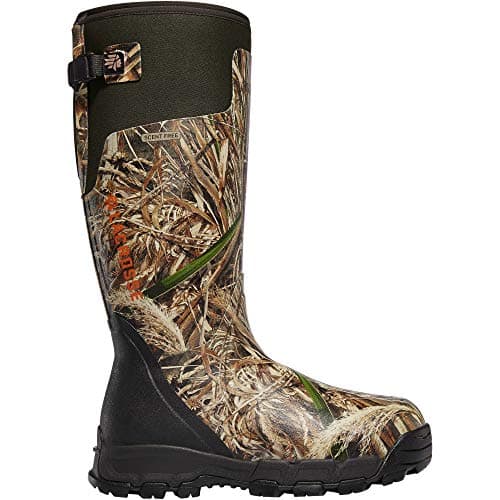
| Rank 1 | LaCrosse Alphaburly Pro 18-inch, 800g One boot for most of the season | Vulcanized rubber over neoprene | 8.8 | $199.98Amazon |
| Rank 2 | 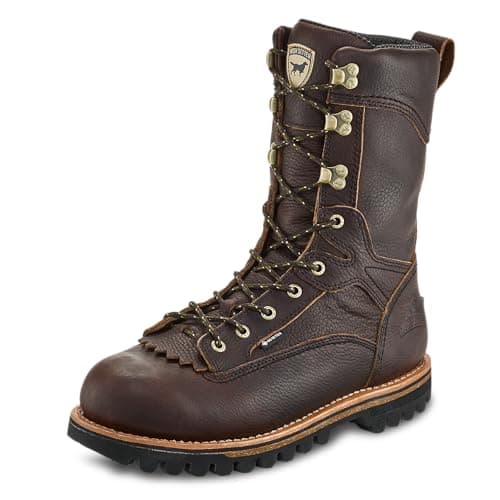 Irish Setter Elk Tracker 12-inch, 1,000g Cold-weather hunts that involve walking | Full-grain leather | 8.6 | $279.95Amazon |
| Rank 3 | 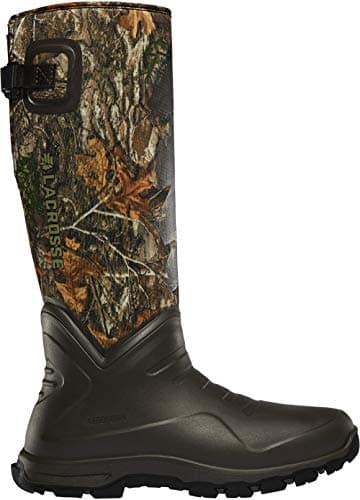 LaCrosse AeroHead Sport 16-inch, 7mm Marsh walking where flex matters | Polyurethane over neoprene | 8.4 | $194.99Amazon |
| Rank 4 | 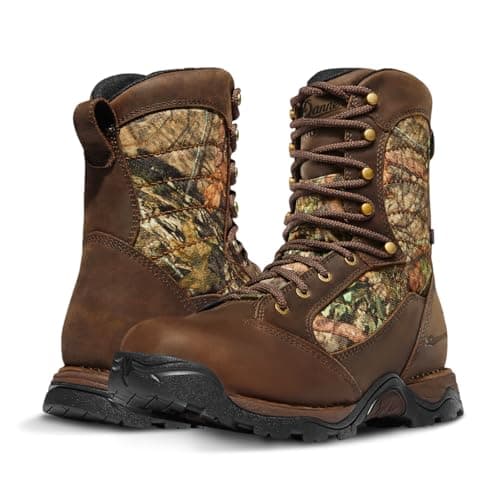 Danner Pronghorn 800g All-day walking in the cold | Leather and nylon | 8.7 | $244.67Amazon |
| Rank 5 | 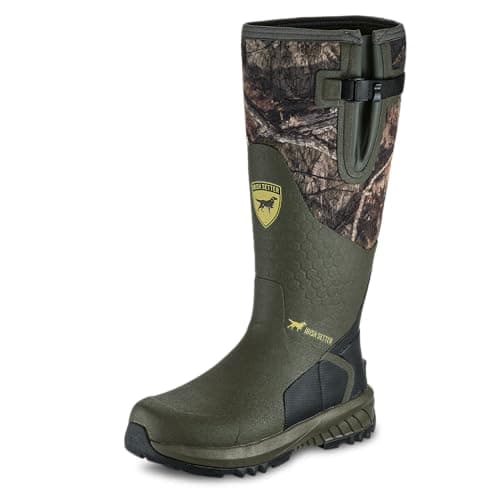 Irish Setter MudTrek 17-inch A full-fit rubber boot that walks | Rubber over neoprene | 8.3 | $199.95Amazon |
#ad Prices come from Amazon and change. How this site is funded. Scores are our published editorial rubric — see our methodology.
Pick rubber if there is standing water on your route in or scent control matters. Pick leather if you cover ground. That is nearly the whole decision, and everything below is the detail behind it.
| Rubber / neoprene | Leather with a membrane | |
|---|---|---|
| Waterproof | Permanently, to the boot's height | Until the membrane wets out or a seam fails |
| Water depth | 16-18 in available | The lace line, usually 8-10 in |
| Breathability | None | Real, and it matters on a walk-in |
| Walks | Poorly - no way to tension it | Properly - laces to your foot |
| Ankle support | Minimal | Real, and more in a taller boot |
| Scent | Absorbs little | Absorbs what you walk through |
| Maintenance | Rinse and dry | Clean, condition, re-proof |
| Repairable | No | Often resoleable |
| Quiet | Quiet | Quiet |
| On and off | Seconds | Lacing, twice a day |
| Lifespan | Years, then cracks at the flex point | Many years with care; resole and keep going |
Pick rubber if...
- There is standing water deeper than 10 inches anywhere on your route. A membrane boot floods above its height and then holds the water in.
- You sit still more than you walk. The breathability you give up only matters when you are generating sweat.
- Scent control is a priority, which for stand hunting deer it reasonably is.
- You want zero maintenance. No conditioning, no re-proofing, nothing to reapply.
- You need to get the boot on and off fast and often.
Pick leather if...
- You walk more than a half mile each way, or still-hunt. Laces are the whole reason leather walks better.
- You hunt steep or uneven ground, where ankle support stops being a luxury.
- You climb - a pull-on heel-slips on climbing sticks.
- You want a boot you can keep. A good leather boot can be resoled and reconditioned for a decade.
- You hunt in warm weather, where a non-breathing boot is genuinely unpleasant.
One of each, priced
Three rubber options and two leather, so you can see the price overlap directly.
#1 · One boot for most of the season
#ad How we are funded · Price as of October 6, 2026
LaCrosse Alphaburly Pro 18-inch, 800g
LaCrosseThe same boot as the 1,600g with half the insulation, and for most hunters in most of the country it is the smarter buy: warm enough sitting down to about freezing, survivable walking in.
| Insulation | 800g |
|---|---|
| Shaft height | 18 in |
| Upper | Vulcanized rubber over neoprene |
| Calf fit | Adjustable back gusset |
| Liner | Removable EVA footbed |
Specifications per LaCrosse Footwear published specifications.
What it does well
- The widest usable temperature window of any boot here - roughly 20F sitting to 50F walking
- Same gusset, same rubber, same scent profile as the 1,600g version
- If you are buying one rubber boot and do not know your conditions, this is the one
Where it falls short
- Not enough boot for an all-day December sit in the north
- Still heavy for covering ground
Our rubric
- Warmth
- 8.2
- Waterproofing
- 9.4
- Fit
- 8.4
- Durability
- 9.0
- Value
- 9.0
#2 · Cold-weather hunts that involve walking
#ad How we are funded · Price as of October 6, 2026
Irish Setter Elk Tracker 12-inch, 1,000g
Irish Setter1,000g of insulation in a 12-inch lace-up leather boot: the combination that lets you cover ground in the cold without the sweat-then-freeze cycle a rubber pull-on forces.
| Insulation | 1,000g |
|---|---|
| Shaft height | 12 in |
| Upper | Full-grain leather |
| Waterproofing | UltraDry membrane (manufacturer) |
| Fit | Lace-up |
Specifications per Irish Setter published specifications.
What it does well
- Laces mean you can actually tension the boot to your foot, which is why it walks better than any pull-on
- 1,000g is the sweet spot for a boot you walk in and then sit in
- Leather takes a real conditioning treatment and lasts seasons longer than neoprene
Where it falls short
- Leather is not scent-free the way rubber is, and it absorbs whatever you walk through
- Needs breaking in, and the 12-inch shaft takes the longest to soften
- Water depth is limited to the top of the laces, so not a marsh boot
Our rubric
- Warmth
- 8.8
- Waterproofing
- 7.8
- Fit
- 9.2
- Durability
- 9.2
- Value
- 8.2
#3 · Marsh walking where flex matters
#ad How we are funded · Price as of October 6, 2026
LaCrosse AeroHead Sport 16-inch, 7mm
LaCrossePolyurethane over 7mm neoprene instead of rubber over neoprene: lighter, more flexible, and noticeably easier to walk a long way in than an Alphaburly.
| Insulation | 7.0mm neoprene |
|---|---|
| Shaft height | 16 in |
| Upper | Polyurethane over neoprene |
| Liner | Neoprene |
| Fit | Pull-on, non-adjustable |
Specifications per LaCrosse Footwear published specifications.
What it does well
- The polyurethane shell resists abrasion better than it has any right to at this weight
- 7mm neoprene is warm for its bulk, so the boot is slimmer than an equivalent-warmth rubber boot
- Flexes at the ankle, which is why marsh and flooded-timber hunters pick it over a stiff pull-on
Where it falls short
- No calf adjustment at all - if you have a heavy calf, measure first
- Neoprene warmth is hard to compare with a gram rating, so you cannot cross-shop it on a spec sheet
Our rubric
- Warmth
- 8.0
- Waterproofing
- 9.2
- Fit
- 7.6
- Durability
- 8.6
- Value
- 8.4
#4 · All-day walking in the cold
Danner Pronghorn 800g
Danner800g in Danner's Pronghorn platform, which is built around a supportive midsole rather than a soft one. The boot to buy if your hunt is measured in miles.
| Insulation | 800g |
|---|---|
| Shaft height | Not published by manufacturer |
| Upper | Leather and nylon |
| Waterproofing | Gore-Tex (manufacturer) |
| Outsole | Danner Pronghorn |
Specifications per Danner published specifications.
What it does well
- One of the few insulated boots that genuinely supports a loaded pack
- Gore-Tex plus a recraftable platform - this is a multi-season purchase
- 800g walks far better than 1,000g or more
Where it falls short
- Expensive, and the wide sizes are the ones that go out of stock
- Needs a real break-in period; do not buy it the week before a hunt
Our rubric
- Warmth
- 8.0
- Waterproofing
- 8.8
- Fit
- 9.4
- Durability
- 9.4
- Value
- 7.8
#5 · A full-fit rubber boot that walks
#ad How we are funded · Price as of October 6, 2026
Irish Setter MudTrek 17-inch
Irish SetterIrish Setter's rubber boot, built on a full-fit last rather than the loose tube most pull-ons use - which is why it walks better than its height suggests.
| Insulation | Not published by manufacturer |
|---|---|
| Shaft height | 17 in |
| Upper | Rubber over neoprene |
| Fit | Full fit, pull-on |
| Widths | Standard and wide offered |
Specifications per Irish Setter published specifications.
What it does well
- A wide option, which almost no knee-high rubber boot offers
- The full-fit last means less heel slip, so fewer blisters on a long walk-in
Where it falls short
- Insulation varies by listing; check before buying for cold
- Tighter fit over a very heavy sock than a gusseted boot
Our rubric
- Warmth
- 6.8
- Waterproofing
- 9.0
- Fit
- 8.8
- Durability
- 8.4
- Value
- 8.6
The thing both sides get wrong about warmth
Neither material is warm. Insulation is warm, and both constructions can carry it. Rubber conducts heat away faster and holds moisture, so it needs roughly one tier more insulation for the same conditions - which is why 1,600g exists in rubber and barely exists in leather. The gram chart covers the numbers.
The maintenance difference is bigger than it looks
A leather boot requires a routine: clean the mud off, let it dry slowly, re-proof with the right product for the upper, repeat. Skip it and the membrane wets out and the leather cracks. A rubber boot requires a rinse and a dry interior. Over five seasons that is a real difference in both time and money, and it is the reason a lot of hunters who *could* use leather choose rubber anyway. How to waterproof hunting boots is the leather routine in full.
The two-boot answer, which is what most people land on
An uninsulated or 800g rubber knee boot for wet ground and stand hunting, plus a 400g to 1,000g leather lace-up for walking hunts. Together they often cost less than one premium boot, and neither one is a compromise. If you can only own one and your ground is mixed, 800g rubber covers more of a season badly than leather covers it well - which is a genuine argument for starting with rubber.
Frequently asked questions
Are rubber or leather hunting boots better?
Do leather hunting boots keep water out?
Are rubber boots warmer than leather boots?
Why do deer hunters wear rubber boots?
How long do leather hunting boots last compared with rubber?
Sources
Read next
Rubber Boots
The best rubber hunting boots
Six rubber boots ranked on height, calf fit, insulation and how each one eventually fails.
Cold Weather Boots
The best insulated hunting boots, by what you are doing in them
Five insulated boots from 400g to 1,600g, each matched to a temperature AND an activity level rather than ranked on warmth alone.
Rubber Boots
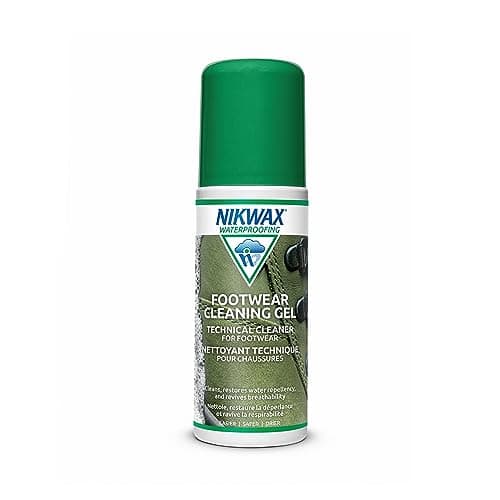
How to waterproof hunting boots
Wax, spray or nothing - matched to full-grain, nubuck, synthetic and rubber, in the right order.
Rubber Boots
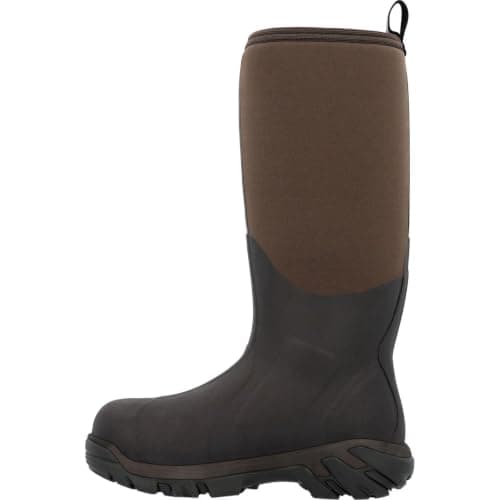
Neoprene or rubber: what the two constructions actually do
Every tall boot is both materials. What differs is the ratio, the rating system, and how it eventually fails.
Boot Fit & Sizing
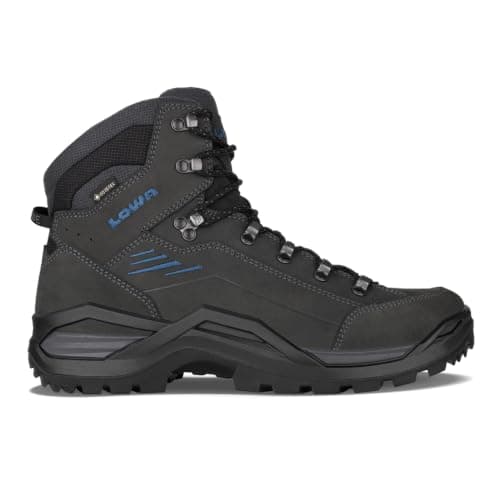
Hunting boots or hiking boots
In mild weather on open ground a hiker is often the better hunting boot. Exactly where that stops being true.