Rubber Boots
Neoprene or rubber: what the two constructions actually do
Almost every tall hunting boot is both - rubber outside, neoprene inside. What differs is how much neoprene, and whether the maker rates it in millimeters or grams.
Belt & Bike earns a commission when you buy through our links, at no extra cost to you. Prices come from Amazon and change; the date beside every price is when we last verified it. Full disclosure.
Quick picks
| # | Product | Insulation | Score | Price |
|---|---|---|---|---|
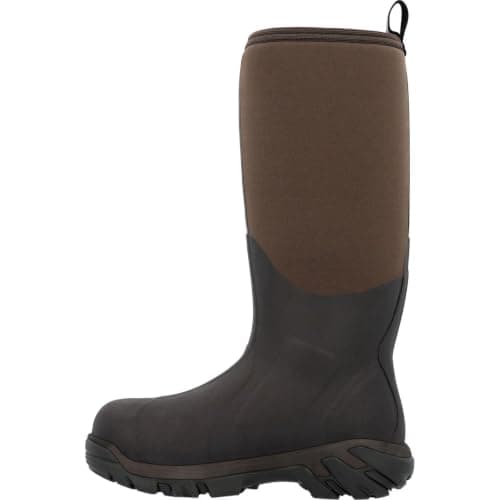
| Rank 1 | Muck Arctic Pro The coldest static sits | 8mm neoprene plus fleece | 8.6 | $131.25Amazon |
| Rank 2 | 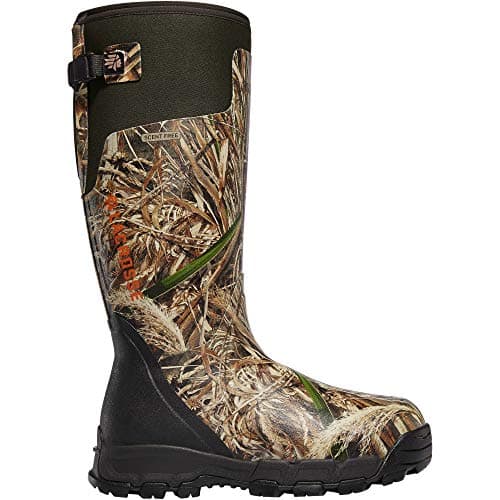 LaCrosse Alphaburly Pro 18-inch, 800g One boot for most of the season | 800g | 8.8 | $199.98Amazon |
| Rank 3 | 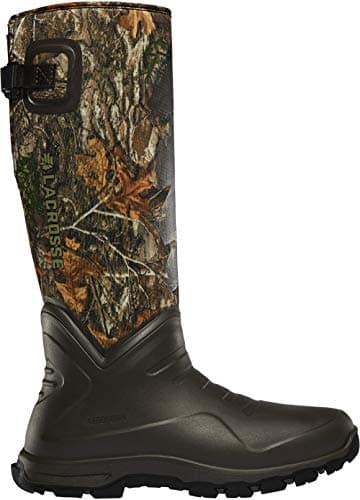 LaCrosse AeroHead Sport 16-inch, 7mm Marsh walking where flex matters | 7.0mm neoprene | 8.4 | $194.99Amazon |
| Rank 4 | 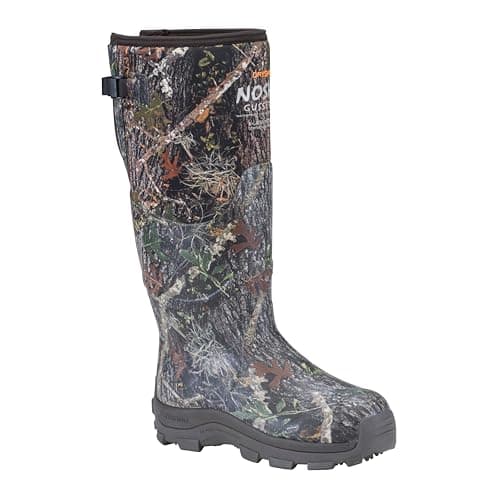 Dryshod NoSho Gusset XT Extreme cold in a gusseted pull-on | 7mm DENSOPRENE foam | 8.6 | $219.95Amazon |
| Rank 5 | 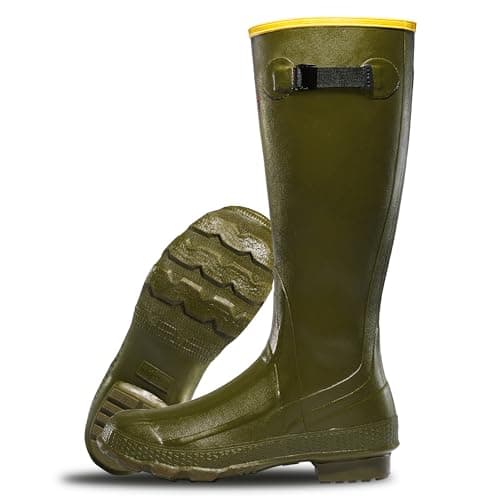 LaCrosse Grange 18-inch Uninsulated knee-high water work | None (uninsulated) | 8.0 | $99.95Amazon |
#ad Prices come from Amazon and change. How this site is funded. Scores are our published editorial rubric — see our methodology.
This comparison is usually posed wrongly. Almost every tall hunting boot is both: a neoprene bootie for insulation and stretch, with a vulcanized rubber shell over it for abrasion and waterproofing. The real questions are how thick the neoprene is, how much rubber covers it, and which number the maker chooses to publish.
| Thick neoprene, light rubber | Thin neoprene, heavy rubber | All rubber, separate insulation | |
|---|---|---|---|
| Typical of | Muck, Dryshod | LaCrosse Alphaburly | LaCrosse Grange |
| Rated in | Millimeters, plus a static temperature range | Grams of Thinsulate | Uninsulated |
| Flex | Most - neoprene stretches | Moderate | Least |
| Abrasion resistance | Least - neoprene scuffs and splits | Most | Most |
| Warmth per bulk | High | High | None - it is your sock |
| Usual failure | Split at the ankle crease | Rubber cracking after years | Cracking after many years |
| Calf fit | Stretch topline | Adjustable gusset on better models | Fixed tube |
Why you cannot convert millimeters to grams
Because no manufacturer publishes a conversion, and the two measure different things: grams are the weight of insulation per square meter, millimeters are the thickness of a foam bootie. A 7mm neoprene boot and a 1,600g Thinsulate boot can be similarly warm, or not, depending on construction. Anyone giving you an exchange rate invented it.
The useful workaround: use the published static temperature range where a maker gives one. Muck rates the Arctic Pro to -60F for static use and Dryshod rates the NoSho Gusset XT to -50F. Those are each maker's statement about their own boot, which is the honest basis for comparison. More on reading the two systems.
The three constructions, priced
A thick-neoprene boot, a gram-rated rubber boot, a flexible polyurethane hybrid, and the uninsulated option.
#1 · The coldest static sits
Muck Arctic Pro
Muck8mm neoprene plus a fleece lining, rated by Muck to -60F for static use. If your problem is a long December sit and nothing else, this is the category answer.
| Insulation | 8mm neoprene plus fleece |
|---|---|
| Temperature rating | -60F to 30F (manufacturer, static use) |
| Upper | Rubber over 8mm neoprene |
| Fit | Pull-on, stretch-fit topline |
| Reinforcement | Double rubber at heel and toe |
Specifications per Muck Boot Company published specifications.
What it does well
- The published rating is for static use, which is exactly how a stand hunter uses a boot
- Reinforced heel and toe survive brush and truck beds
Where it falls short
- Hopeless for walking - you will overheat in a quarter mile
- Tall, heavy and slow to dry once the fleece gets damp
Our rubric
- Warmth
- 9.8
- Waterproofing
- 9.0
- Fit
- 7.8
- Durability
- 8.6
- Value
- 8.0
#2 · One boot for most of the season
#ad How we are funded · Price as of October 6, 2026
LaCrosse Alphaburly Pro 18-inch, 800g
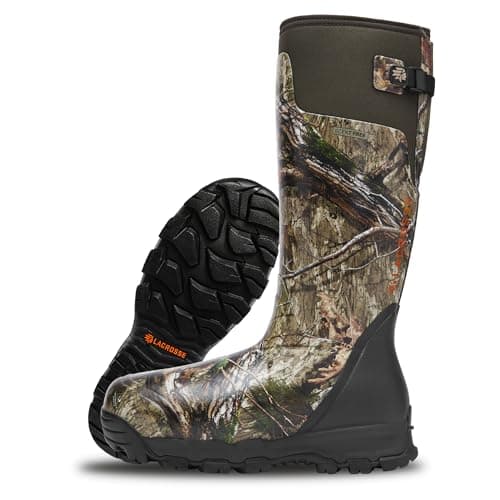
LaCrosseThe same boot as the 1,600g with half the insulation, and for most hunters in most of the country it is the smarter buy: warm enough sitting down to about freezing, survivable walking in.
| Insulation | 800g |
|---|---|
| Shaft height | 18 in |
| Upper | Vulcanized rubber over neoprene |
| Calf fit | Adjustable back gusset |
| Liner | Removable EVA footbed |
Specifications per LaCrosse Footwear published specifications.
What it does well
- The widest usable temperature window of any boot here - roughly 20F sitting to 50F walking
- Same gusset, same rubber, same scent profile as the 1,600g version
- If you are buying one rubber boot and do not know your conditions, this is the one
Where it falls short
- Not enough boot for an all-day December sit in the north
- Still heavy for covering ground
Our rubric
- Warmth
- 8.2
- Waterproofing
- 9.4
- Fit
- 8.4
- Durability
- 9.0
- Value
- 9.0
#3 · Marsh walking where flex matters
#ad How we are funded · Price as of October 6, 2026
LaCrosse AeroHead Sport 16-inch, 7mm
LaCrossePolyurethane over 7mm neoprene instead of rubber over neoprene: lighter, more flexible, and noticeably easier to walk a long way in than an Alphaburly.
| Insulation | 7.0mm neoprene |
|---|---|
| Shaft height | 16 in |
| Upper | Polyurethane over neoprene |
| Liner | Neoprene |
| Fit | Pull-on, non-adjustable |
Specifications per LaCrosse Footwear published specifications.
What it does well
- The polyurethane shell resists abrasion better than it has any right to at this weight
- 7mm neoprene is warm for its bulk, so the boot is slimmer than an equivalent-warmth rubber boot
- Flexes at the ankle, which is why marsh and flooded-timber hunters pick it over a stiff pull-on
Where it falls short
- No calf adjustment at all - if you have a heavy calf, measure first
- Neoprene warmth is hard to compare with a gram rating, so you cannot cross-shop it on a spec sheet
Our rubric
- Warmth
- 8.0
- Waterproofing
- 9.2
- Fit
- 7.6
- Durability
- 8.6
- Value
- 8.4
#4 · Extreme cold in a gusseted pull-on
#ad How we are funded · Price as of October 6, 2026
Dryshod NoSho Gusset XT
DryshodDryshod's cold-conditions boot with an adjustable gusset - the rare combination of serious neoprene warmth and a calf you can actually fit.
| Insulation | 7mm DENSOPRENE foam |
|---|---|
| Temperature rating | -50F to 40F (manufacturer) |
| Shaft height | Not published by manufacturer |
| Calf fit | Adjustable gusset |
| Liner | Moisture-wicking airmesh |
What it does well
- Gusset plus 7mm foam is the combination most warm pull-ons lack
- Published static temperature range, which makes it cross-shoppable
Where it falls short
- Expensive for a neoprene boot
- Like all heavily-insulated pull-ons, hopeless for walking in
Our rubric
- Warmth
- 9.4
- Waterproofing
- 9.0
- Fit
- 8.6
- Durability
- 8.4
- Value
- 7.6
#5 · Uninsulated knee-high water work
#ad How we are funded · Price as of October 6, 2026
LaCrosse Grange 18-inch
LaCrosseAn uninsulated ZXT rubber knee boot that has been in the catalog for decades. Buy it for water, not for warmth, and put the warmth in your sock.
| Insulation | None (uninsulated) |
|---|---|
| Shaft height | 18 in |
| Upper | ZXT rubber |
| Liner | Unlined |
| Fit | Pull-on |
Specifications per LaCrosse Footwear published specifications.
What it does well
- Cheap, nearly indestructible, and the pattern has barely changed because it did not need to
- Uninsulated means you control warmth with socks instead of being locked into one temperature
- A sane early-season and chore boot that happens to be scent-free
Where it falls short
- Cold on its own below about 45F - this is a feature, not a flaw, but buyers get it wrong
- Plain rubber is stiffer across the instep than a neoprene boot
Our rubric
- Warmth
- 4.0
- Waterproofing
- 9.4
- Fit
- 7.8
- Durability
- 9.4
- Value
- 9.4
Flex versus abrasion, which is the real tradeoff
More neoprene and less rubber gives you a boot that moves with your ankle - genuinely better for wading through timber or walking a long way. Less neoprene and more rubber gives you a boot that survives rock, stubble and truck beds. This is why marsh hunters and brush hunters often prefer different boots even at the same warmth: one needs flex, the other needs armor.
The polyurethane option
LaCrosse's AeroHead line uses polyurethane rather than vulcanized rubber over the neoprene. It is lighter and more flexible than rubber for the same abrasion resistance, and it is the reason that boot walks better than an Alphaburly. The compromise is that it is harder to repair and comes without a calf gusset.
How each one dies
- Neoprene-heavy boots split at the ankle crease, where the material flexes most. Usually after a few hard seasons, and it is not repairable.
- Rubber-heavy boots crack along the flex point across the instep, typically after many years, often accelerated by UV exposure and fuel fumes in storage.
- Budget boots of either kind delaminate where the two materials bond. This is the failure buyer reviews describe most often in the cheapest listings.
- Nothing here is resoleable. When a rubber boot fails, it is finished - which is the strongest argument for leather if you plan to keep a boot for a decade.
Frequently asked questions
Is neoprene or rubber better for hunting boots?
How many mm of neoprene do I need?
Is 5mm neoprene the same as 800 gram insulation?
Why did my neoprene boots split?
Sources
Read next
Rubber Boots
Best insulated rubber hunting boots
Gram-rated and neoprene-rated boots side by side, and how to compare two spec systems nobody bridges.
Rubber Boots
Rubber or leather hunting boots
Water and scent against walking and lifespan - the decision that cuts the market in half in one step.
Rubber Boots
Muck or LaCrosse: the two rubber-boot specialists compared
Calf fit, rating systems, outsoles and abrasion - four real differences between the two rubber specialists.
Cold Weather Boots
Boot insulation grams by temperature
The full gram-by-gram table with separate temperature ranges for sitting still and walking - the column other charts leave out.
Dryers & Boot Care
Hunting boot care and off-season storage
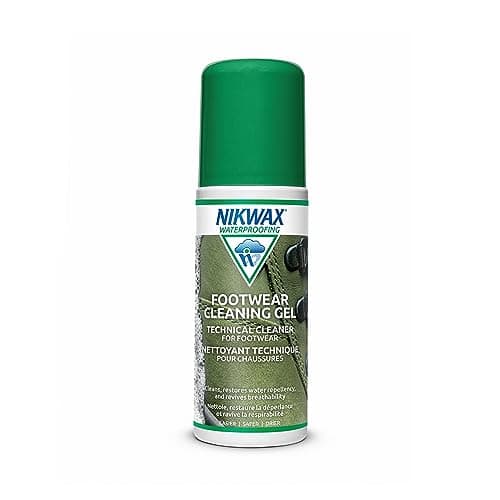
Most boots die in storage, not in the field. UV, fuel fumes and damp do more damage than a season of hunting.