Cold Weather Boots
Why your feet get cold on the stand
Four mechanisms, in the order they actually cause problems. Three of them are free to fix, and none of them is solved by buying a warmer boot.
Belt & Bike earns a commission when you buy through our links, at no extra cost to you. Prices come from Amazon and change; the date beside every price is when we last verified it. Full disclosure.
Quick picks
| # | Product | Type | Score | Price |
|---|---|---|---|---|
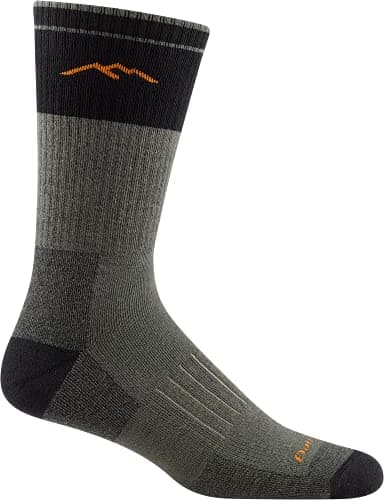
| Rank 1 | Darn Tough Hunter Boot Sock, heavyweight The default serious hunting sock | Not published | 9.0 | $31.95Amazon |
| Rank 2 | 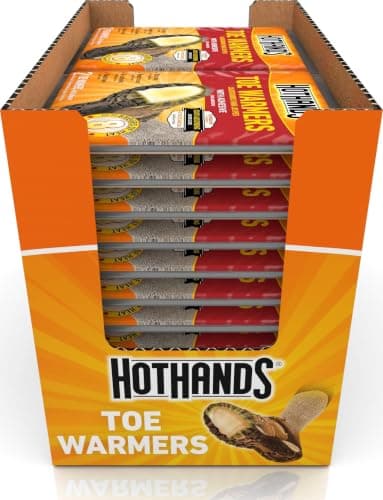 HotHands Toe Warmers, 40 pair The cheapest fix for cold toes | Air-activated, single use | 8.4 | $29.99Amazon |
| Rank 3 | 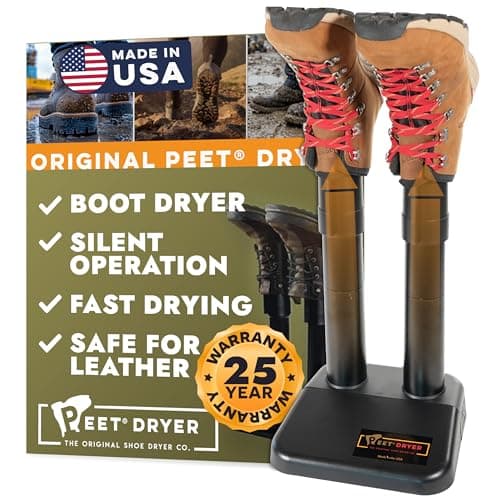 PEET Original 2-shoe dryer Silent overnight drying | Convection, fanless | 8.3 | $49.99Amazon |
#ad Prices come from Amazon and change. How this site is funded. Scores are our published editorial rubric — see our methodology.
You climbed down at nine because you could not feel your toes, and the obvious conclusion is that the boot was not warm enough. Usually it was. Four mechanisms make feet cold on a stand, and insufficient insulation is the least common of them. Work through them in this order before you spend money.
1. Moisture, which is most of it
A wet foot loses heat dramatically faster than a dry one - water conducts heat roughly twenty-five times better than still air, which is why every piece of cold-weather clothing is really a device for keeping air dry and trapped. Inside a waterproof boot, the sweat you generated walking in has nowhere to go.
So the sequence is: brisk walk in, feet sweat, you sit down, body stops producing heat, and now you are sitting in a damp boot for three hours. The boot's rating is irrelevant to this failure. The fixes are free: walk in slower than feels natural, walk in with the boot loose, carry your heavy socks and change into them once you are settled, and dry the boot properly between hunts.
2. Compression, which is the sneakiest
Insulation works by holding still air. Lace a boot tight, or wear a sock thicker than the boot was sized for, and you squeeze that air out - so a 1,000g boot laced tight over a heavyweight sock may perform like a 400g boot. Worse, the pressure restricts blood flow, and blood is what delivers heat to your toes in the first place.
The test takes five seconds: sitting in the boot, can you wiggle all your toes freely? If not, the boot is cold whatever its rating says. Size for the sock you actually wear.
3. Conduction through the sole
Almost nobody accounts for this. Standing on a frozen aluminum platform, your boot sole is in continuous contact with a material that conducts heat away far better than air does - and boot insulation is concentrated in the upper, not the footbed. A $20 piece of closed-cell foam or a square of carpet on the platform breaks the path, and in our view it is the highest-return free fix in late-season hunting.
4. Circulation, which gear can only partly address
Some people have feet that go cold in conditions that do not bother anyone else, and no amount of insulation fixes a circulation problem - insulation only slows the loss of heat your blood delivers. If that is you, the honest answer is heated insoles, which add heat rather than retaining it.
It is also worth knowing that persistent, dramatic cold-and-color-change in the extremities has medical causes - Raynaud's phenomenon being the common one - and is worth mentioning to a doctor rather than solving with gear. We are not qualified to diagnose anything; the Mayo Clinic's page is linked below.
The diagnostic, in order
- Were your socks damp when you got cold? Moisture. Change socks at the stand, slow the walk in, dry the boots between hunts.
- Can you wiggle your toes freely in the boot? If not, compression. Loosen the laces, use a thinner sock, or size up.
- Were your feet on metal or a hard platform? Conduction. Stand on foam.
- None of the above, and everyone else is comfortable? Circulation. Powered heat, and a word with a doctor.
- Still cold, dry, loose, insulated from the platform? Now the boot is genuinely under-specified. Check the gram chart.
The three things we would buy first
Before a new boot: a real wool sock, a box of toe warmers, and a dryer. All three address the causes above rather than the symptom.
#1 · The default serious hunting sock
#ad How we are funded · Price as of October 6, 2026
Darn Tough Hunter Boot Sock, heavyweight
Darn ToughMerino with a full cushion, knit in Vermont, guaranteed for life. The sock we would buy first, and the cheapest real upgrade to a cold boot.
| Material | Merino wool blend |
|---|---|
| Weight | Heavyweight, full cushion |
| Height | Boot height |
| Warranty | Unconditional lifetime guarantee (manufacturer) |
| Made in | Vermont, USA (manufacturer) |
Specifications per Darn Tough Vermont published specifications.
What it does well
- The lifetime guarantee is honored, which changes the cost-per-season arithmetic completely
- Fine-gauge merino cushions without the bulk that makes a boot tight
- Wool keeps insulating when damp, which is the whole reason not to wear cotton
Where it falls short
- Three times the price of a drugstore wool-blend sock
- Full cushion needs boot room. If you are already snug, size the boot up before buying the sock
Our rubric
- Warmth
- 9.0
- Moisture handling
- 9.0
- Durability
- 9.8
- Fit
- 9.0
- Value
- 8.0
#2 · The cheapest fix for cold toes
HotHands Toe Warmers, 40 pair
HotHandsAdhesive air-activated warmers that stick to the top of your sock. The highest-value item in this registry, and the one most hunters try last instead of first.
| Type | Air-activated, single use |
|---|---|
| Stated duration | Up to 8 hours (manufacturer) |
| Placement | Adhesive, on top of the sock over the toes |
| Count | 40 pair |
| Reusable | No |
What it does well
- Costs less per hunt than a cup of coffee and solves the problem for most people
- Goes on top of the sock, where it warms the toes without crushing the air gap underneath
- No battery, nothing to charge, nothing to fail in the cold
Where it falls short
- Needs oxygen. Jammed inside a tight boot it will underperform or go out - the most common complaint, and it is a placement error
- Single use, so you carry a box all season
- Will not rescue a boot that is too tight or already wet
Our rubric
- Effectiveness
- 8.6
- Ease of use
- 9.0
- Durability
- 6.0
- Value
- 9.8
#3 · Silent overnight drying
#ad How we are funded · Price as of October 6, 2026
PEET Original 2-shoe dryer
PEETNo fan, no noise: convection alone, running all night on about as much power as a nightlight. The default answer for a boot you take off at dark.
| Type | Convection, fanless |
|---|---|
| Capacity | 1 pair |
| Stated dry time | Overnight, 4 to 8 hours (manufacturer) |
| Power draw | Low-wattage, always-on design (manufacturer) |
| Noise | Silent |
Specifications per PEET Dryer published specifications.
What it does well
- Completely silent, which matters because it lives in a mudroom or a closet
- No moving parts to fail - the reason these last decades
- Gentle heat will not cook a membrane, a glue line or a leather upper
Where it falls short
- Slow. If you need boots dry in two hours, this is the wrong machine
- One pair only, so a family needs several
- No deodorizing function beyond simply drying
Our rubric
- Drying power
- 7.4
- Capacity
- 6.0
- Quiet
- 10.0
- Build
- 9.6
- Value
- 8.6
Frequently asked questions
Why do my feet get so cold hunting?
How do I stop my feet from sweating on the walk in?
Does standing on a platform make your feet colder?
Will tighter boots keep my feet warmer?
Why are my feet cold even in expensive boots?
Sources
Read next
Cold Weather Boots
How to keep your feet warm hunting
Nine steps from the truck to the stand, plus our honest order for spending money - the boot is fourth.
Cold Weather Boots
Boot insulation grams by temperature
The full gram-by-gram table with separate temperature ranges for sitting still and walking - the column other charts leave out.
Cold Weather Boots
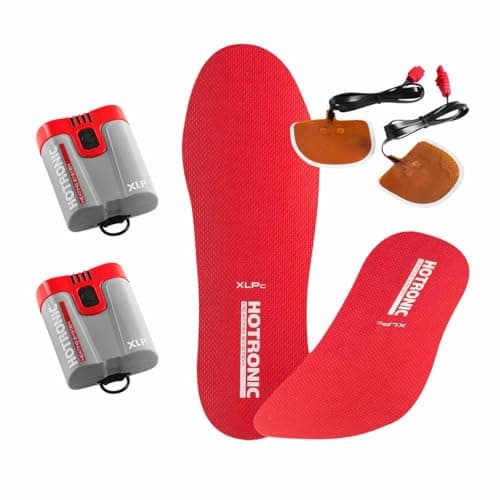
Best heated insoles for hunting boots
Powered footbeds and chemical warmers compared, plus the placement mistake that makes toe warmers underperform.
Boot Fit & Sizing
What size boot to buy over thick socks
Half a size for heavy wool, a full size with a liner - and why a tight boot is a cold boot.
Dryers & Boot Care
How to dry hunting boots
The method, the safe fast version, and the five heat sources that ruin boots. Water does not kill footwear - heat does.
Hunting Socks
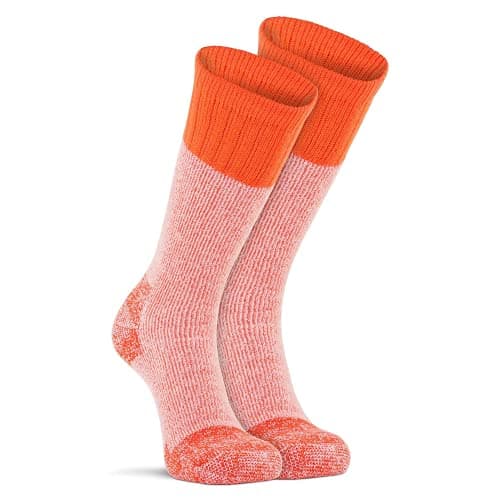
Sock layering for hunting: the stand swap
The most effective cold-feet technique there is, for the price of one extra pair of socks. The whole routine.