Hunting Socks
Sock layering for hunting: the stand swap
The most effective cold-feet technique there is, it costs one extra pair of socks, and almost nobody does it. Here is the whole routine.
Belt & Bike earns a commission when you buy through our links, at no extra cost to you. Prices come from Amazon and change; the date beside every price is when we last verified it. Full disclosure.
Quick picks
| # | Product | Weight | Score | Price |
|---|---|---|---|---|
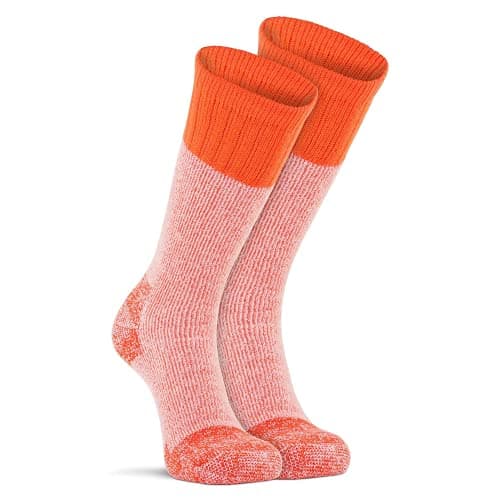
| Rank 1 | Fox River Wick Dry Outlander Sweaty feet in mild weather | Heavyweight mid-calf | 8.4 | $15.00Amazon |
| Rank 2 | 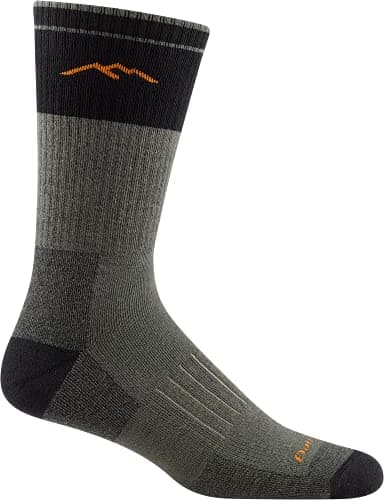 Darn Tough Hunter Boot Sock, heavyweight The default serious hunting sock | Heavyweight, full cushion | 9.0 | $31.95Amazon |
| Rank 3 | 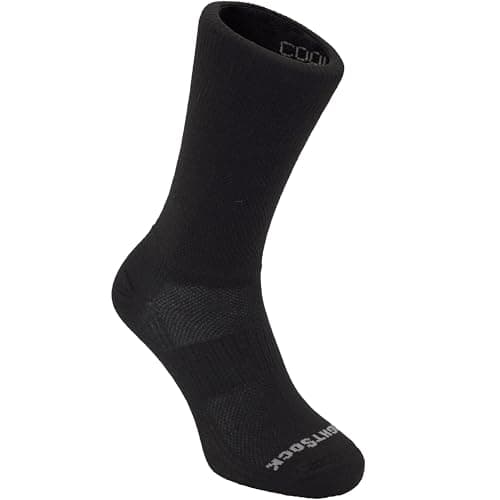 Wrightsock CoolMesh II double-layer People who blister no matter what | Light | 8.1 | $21.00Amazon |
| Rank 4 | 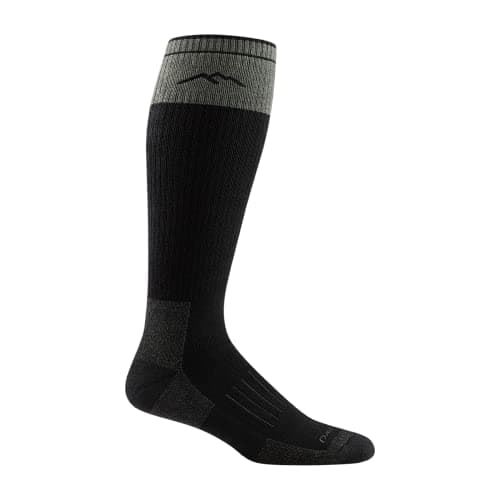 Darn Tough Hunting Hojo Over-the-Calf Knee boots and tall rubber | Cushion | 8.9 | $34.47Amazon |
#ad Prices come from Amazon and change. How this site is funded. Scores are our published editorial rubric — see our methodology.
If you take one thing from this entire site, take this. Walk in wearing a lighter pair of socks, change into dry heavyweight socks once you are settled at the stand, and put the damp pair inside your jacket. It costs the price of one extra pair of socks and it outperforms a boot upgrade.
Why it works
Because the usual cause of cold feet is not insufficient insulation - it is the sweat you generated walking in, sitting in a boot that cannot breathe. A damp foot loses heat far faster than a dry one. Swap the sock and you have removed the cause rather than compensating for it: why your feet get cold on stand.
The routine, step by step
- At home: pack a dry heavyweight pair in a zip bag. Put your walking pair on. Boots on last, right before you leave - standing around indoors in insulated boots starts you damp.
- On the walk in: go slower than feels natural. Leave the boot's topline or top laces loose so moisture can escape while you are producing heat.
- At the stand, before you settle: get safely attached first. Then, while you are still warm, take one boot off at a time and change into the dry pair.
- The damp pair: into a chest pocket or inside your jacket against your body. Body heat will dry them, and they become your spare for the walk out.
- Then settle in. Put something insulating between your boots and the platform, and add a toe warmer on top of the sock before your feet get cold.
The two-pair setup
A wicking pair for the walk, a heavyweight pair for the sit, plus a blister-resistant alternative and an over-the-calf option for tall boots.
#1 · Sweaty feet in mild weather
#ad How we are funded · Price as of October 6, 2026
Fox River Wick Dry Outlander
Fox RiverA wicking-first sock rather than a warmth-first one. The right answer when your problem is a damp boot after the walk in, not the temperature.
| Material | Wool and synthetic blend with wicking liner |
|---|---|
| Weight | Heavyweight mid-calf |
| Height | Mid calf |
| Construction | Two-layer wicking system (manufacturer) |
| Made in | USA (manufacturer) |
What it does well
- Moves sweat better than pure merino, which is what a hard walk-in actually needs
- Cheap enough to carry a spare pair in the pack
Where it falls short
- Less warm than a full merino sock of the same thickness
- Synthetic content holds odor longer than wool
Our rubric
- Warmth
- 7.4
- Moisture handling
- 9.2
- Durability
- 7.8
- Fit
- 8.2
- Value
- 9.2
#2 · The default serious hunting sock
#ad How we are funded · Price as of October 6, 2026
Darn Tough Hunter Boot Sock, heavyweight
Darn ToughMerino with a full cushion, knit in Vermont, guaranteed for life. The sock we would buy first, and the cheapest real upgrade to a cold boot.
| Material | Merino wool blend |
|---|---|
| Weight | Heavyweight, full cushion |
| Height | Boot height |
| Warranty | Unconditional lifetime guarantee (manufacturer) |
| Made in | Vermont, USA (manufacturer) |
Specifications per Darn Tough Vermont published specifications.
What it does well
- The lifetime guarantee is honored, which changes the cost-per-season arithmetic completely
- Fine-gauge merino cushions without the bulk that makes a boot tight
- Wool keeps insulating when damp, which is the whole reason not to wear cotton
Where it falls short
- Three times the price of a drugstore wool-blend sock
- Full cushion needs boot room. If you are already snug, size the boot up before buying the sock
Our rubric
- Warmth
- 9.0
- Moisture handling
- 9.0
- Durability
- 9.8
- Fit
- 9.0
- Value
- 8.0
#3 · People who blister no matter what
#ad How we are funded · Price as of October 6, 2026
Wrightsock CoolMesh II double-layer
WrightsockTwo layers that slide against each other, so friction happens between the sock layers instead of against your skin. The most effective anti-blister item here.
| Material | Synthetic, double layer |
|---|---|
| Weight | Light |
| Height | Crew |
| Construction | Two bonded layers (manufacturer) |
| Warranty | Blister-free guarantee (manufacturer) |
What it does well
- The double-layer mechanism genuinely works, and it is different from simply adding padding
- Can be worn as a liner under a wool sock in cold weather
Where it falls short
- Synthetic, so it is cold when damp compared with wool
- Two layers take up boot volume - account for it when sizing
Our rubric
- Warmth
- 5.6
- Moisture handling
- 9.2
- Durability
- 8.4
- Fit
- 9.0
- Value
- 8.4
#4 · Knee boots and tall rubber
#ad How we are funded · Price as of October 6, 2026
Darn Tough Hunting Hojo Over-the-Calf
Darn ToughThe over-the-calf version. In a knee-high rubber boot this is the difference between a sock that stays up and a bunched heel by mid-morning.
| Material | Merino wool blend |
|---|---|
| Weight | Cushion |
| Height | Over the calf |
| Warranty | Unconditional lifetime guarantee (manufacturer) |
| Made in | Vermont, USA (manufacturer) |
Specifications per Darn Tough Vermont published specifications.
What it does well
- Over-the-calf height is the right pairing for an 18-inch pull-on
- Same lifetime guarantee and merino quality as the boot-height version
Where it falls short
- Over-the-calf socks are warm by design - too warm for an early-season walk
- Premium price
Our rubric
- Warmth
- 9.2
- Moisture handling
- 8.8
- Durability
- 9.8
- Fit
- 9.0
- Value
- 7.8
Which socks for which half
| Walk-in pair | Sit pair | |
|---|---|---|
| Weight | Light to midweight | Heavyweight or max cushion |
| Fiber | Wicking synthetic, or midweight merino | Merino, or alpaca |
| Height | Whatever is comfortable | Over the calf in a tall boot |
| Cost priority | Cheap - it gets damp | Spend here |
| Why | Move moisture, accept it gets wet | Maximum dry insulation for the static hours |
Liner plus sock, which is the other kind of layering
Worth distinguishing: a thin liner under one sock is a layering system for blisters and a little extra warmth. Two thick socks is not layering, it is compression - it fills the space the boot's insulation needs and restricts circulation. Sock liners covers the first; sizing over thick socks covers why the second fails.
Doing it in a knee boot
Harder, and still worth it. An 18-inch pull-on is awkward to get on and off in a stand, so the practical version is to change socks on dry ground before the final approach rather than in the stand itself. In waders, change before you wade - once you are in the water the option is gone: duck hunting warmth.
What this routine will not fix
- A boot that is too tight. Compression beats any sock strategy: sizing.
- A boot that started damp. Dry it between hunts: boot dryers.
- Standing on frozen metal. Put something insulating underfoot.
- A circulation problem. If everyone else is comfortable and you are not, heated insoles are the next step.
Frequently asked questions
Should you change socks while hunting?
How do you layer socks for hunting?
Where do you put wet socks after changing?
Can you wear a liner and a heavy sock together?
Sources
Read next
Cold Weather Boots
How to keep your feet warm hunting
Nine steps from the truck to the stand, plus our honest order for spending money - the boot is fourth.
Hunting Socks
Best hunting socks for cold feet
The warmest socks we would recommend - plus the caveat that makes half of all thick-sock purchases backfire.
Hunting Socks
Best sock liners for hunting
Warmth with almost no bulk, and the most effective anti-blister measure there is. Two designs, two problems.
Cold Weather Boots
Why your feet get cold on the stand
Four mechanisms, in the order they actually cause problems - and insufficient insulation is the least common of them.
Boot Fit & Sizing
What size boot to buy over thick socks
Half a size for heavy wool, a full size with a liner - and why a tight boot is a cold boot.