Rubber Boots
Rubber hunting boots for wide calves
Shoe size barely changes a knee boot's calf opening. Measure the calf, then buy a boot with a real adjustment - there are only a few.
Belt & Bike earns a commission when you buy through our links, at no extra cost to you. Prices come from Amazon and change; the date beside every price is when we last verified it. Full disclosure.
Quick picks
| # | Product | Calf fit | Score | Price |
|---|---|---|---|---|
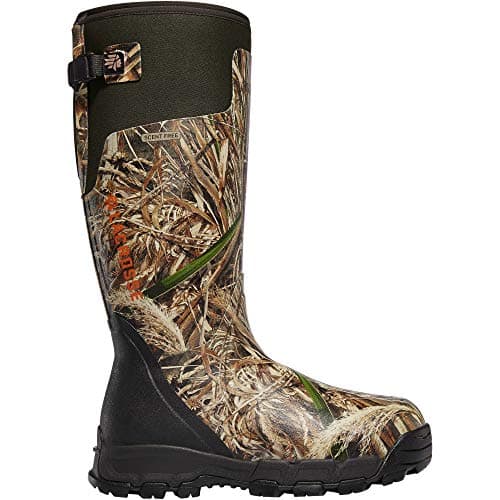
| Rank 1 | LaCrosse Alphaburly Pro 18-inch, 800g One boot for most of the season | Adjustable back gusset | 8.8 | $199.98Amazon |
| Rank 2 | 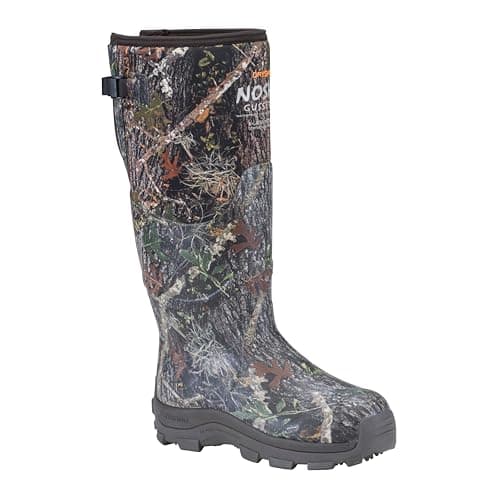 Dryshod NoSho Gusset XT Extreme cold in a gusseted pull-on | Adjustable gusset | 8.6 | $219.95Amazon |
| Rank 3 | 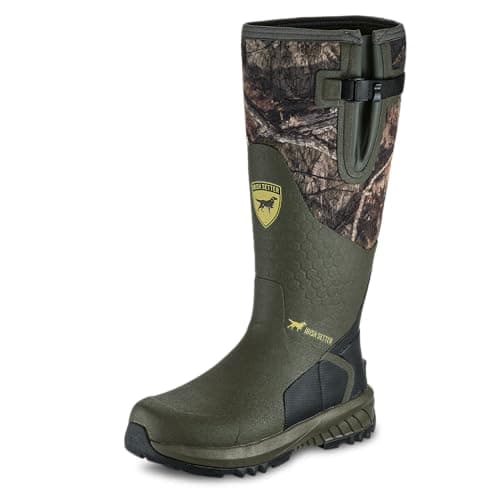 Irish Setter MudTrek 17-inch A full-fit rubber boot that walks | Not published | 8.3 | $199.95Amazon |
| Rank 4 | 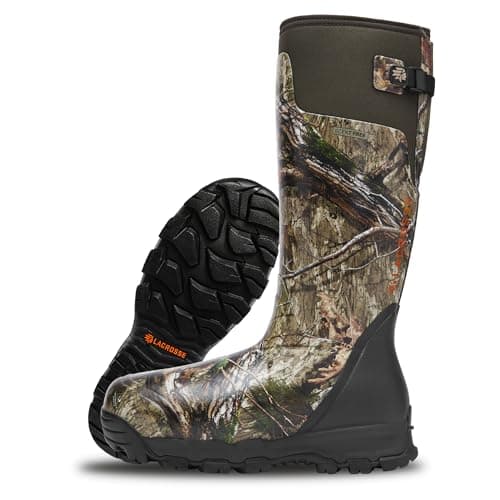 LaCrosse Alphaburly Pro 18-inch, 1,600g Sitting still in genuine cold | Adjustable back gusset | 9.0 | $199.98Amazon |
| Rank 5 | 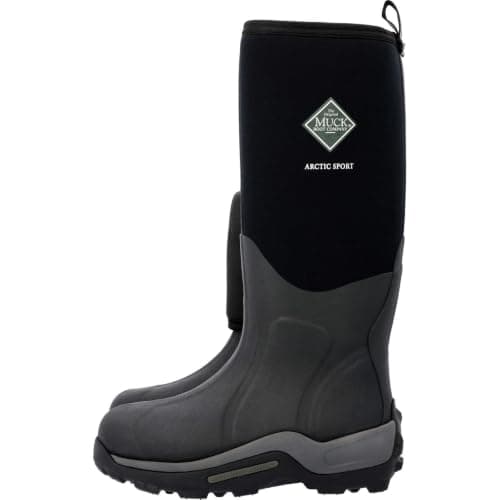 Muck Arctic Sport Tall Chores and cold mud, not just hunting | Not published | 8.7 | $131.25Amazon |
#ad Prices come from Amazon and change. How this site is funded. Scores are our published editorial rubric — see our methodology.
Here is the thing nobody tells you at the counter: going up a shoe size does almost nothing to a knee boot's calf opening. The shaft is molded, and its circumference changes by a fraction of an inch between sizes. If a 16-inch boot will not go over your calf in a size 10, it will not in a size 12 either - you will just have a boot that is too long.
Measure first, it takes a minute
- Sit down and put on the heaviest sock you will hunt in. This is the measurement that matters, not your bare calf.
- Find the widest point of your calf, usually a few inches below the knee.
- Wrap a soft tape snug but not tight and read the number.
- Measure both legs. They are often different, and the bigger one decides.
| Calf measurement | What to look for |
|---|---|
| Under 15 in | Most knee boots fit. A gusset still helps stop rotation |
| 15 to 17 in | Check the specific boot - many will be snug over a heavy sock |
| 17 to 19 in | Buy a boot with an adjustable gusset. This is the line |
| Over 19 in | Gusseted boots only, and consider a 16-inch rather than 18-inch shaft |
Boots that actually adjust
Gusseted boots, a full-fit boot offered in wide, and the stretch-topline alternative.
#1 · One boot for most of the season
#ad How we are funded · Price as of October 6, 2026
LaCrosse Alphaburly Pro 18-inch, 800g
LaCrosseThe same boot as the 1,600g with half the insulation, and for most hunters in most of the country it is the smarter buy: warm enough sitting down to about freezing, survivable walking in.
| Insulation | 800g |
|---|---|
| Shaft height | 18 in |
| Upper | Vulcanized rubber over neoprene |
| Calf fit | Adjustable back gusset |
| Liner | Removable EVA footbed |
Specifications per LaCrosse Footwear published specifications.
What it does well
- The widest usable temperature window of any boot here - roughly 20F sitting to 50F walking
- Same gusset, same rubber, same scent profile as the 1,600g version
- If you are buying one rubber boot and do not know your conditions, this is the one
Where it falls short
- Not enough boot for an all-day December sit in the north
- Still heavy for covering ground
Our rubric
- Warmth
- 8.2
- Waterproofing
- 9.4
- Fit
- 8.4
- Durability
- 9.0
- Value
- 9.0
#2 · Extreme cold in a gusseted pull-on
#ad How we are funded · Price as of October 6, 2026
Dryshod NoSho Gusset XT
DryshodDryshod's cold-conditions boot with an adjustable gusset - the rare combination of serious neoprene warmth and a calf you can actually fit.
| Insulation | 7mm DENSOPRENE foam |
|---|---|
| Temperature rating | -50F to 40F (manufacturer) |
| Shaft height | Not published by manufacturer |
| Calf fit | Adjustable gusset |
| Liner | Moisture-wicking airmesh |
What it does well
- Gusset plus 7mm foam is the combination most warm pull-ons lack
- Published static temperature range, which makes it cross-shoppable
Where it falls short
- Expensive for a neoprene boot
- Like all heavily-insulated pull-ons, hopeless for walking in
Our rubric
- Warmth
- 9.4
- Waterproofing
- 9.0
- Fit
- 8.6
- Durability
- 8.4
- Value
- 7.6
#3 · A full-fit rubber boot that walks
#ad How we are funded · Price as of October 6, 2026
Irish Setter MudTrek 17-inch
Irish SetterIrish Setter's rubber boot, built on a full-fit last rather than the loose tube most pull-ons use - which is why it walks better than its height suggests.
| Insulation | Not published by manufacturer |
|---|---|
| Shaft height | 17 in |
| Upper | Rubber over neoprene |
| Fit | Full fit, pull-on |
| Widths | Standard and wide offered |
Specifications per Irish Setter published specifications.
What it does well
- A wide option, which almost no knee-high rubber boot offers
- The full-fit last means less heel slip, so fewer blisters on a long walk-in
Where it falls short
- Insulation varies by listing; check before buying for cold
- Tighter fit over a very heavy sock than a gusseted boot
Our rubric
- Warmth
- 6.8
- Waterproofing
- 9.0
- Fit
- 8.8
- Durability
- 8.4
- Value
- 8.6
#4 · Sitting still in genuine cold
LaCrosse Alphaburly Pro 18-inch, 1,600g
LaCrosseThe default answer for a stand hunter below 20F: 1,600g of insulation in a scent-free rubber boot with an adjustable calf gusset, so it fits over a heavy sock and a thick calf.
| Insulation | 1,600g |
|---|---|
| Shaft height | 18 in |
| Upper | Vulcanized rubber over neoprene |
| Calf fit | Adjustable back gusset |
| Liner | Removable EVA footbed |
Specifications per LaCrosse Footwear published specifications.
What it does well
- The most insulation you can sensibly buy in a rubber boot, and rubber is the one upper that does not wet out
- The adjustable gusset is the reason this boot fits calves that defeat every other 18-inch pull-on
- Rubber is inherently scent-free, which matters more to deer hunters than most boot copy admits
Where it falls short
- Far too much boot for walking in. If you have a half-mile hike you will sweat, and then you will be cold anyway
- Heavy, and the weight is at the end of your leg where you notice it most
- No ankle support worth the name compared with a lace-up leather boot
Our rubric
- Warmth
- 9.6
- Waterproofing
- 9.4
- Fit
- 8.2
- Durability
- 9.0
- Value
- 8.6
#5 · Chores and cold mud, not just hunting
Muck Arctic Sport Tall
MuckThe Arctic Pro's working cousin: 5mm neoprene, a more aggressive outsole and a price that makes sense if the boot also has to feed animals and clear snow.
| Insulation | 5mm neoprene plus fleece |
|---|---|
| Temperature rating | -40F to 40F (manufacturer, static use) |
| Upper | Rubber over 5mm neoprene |
| Fit | Pull-on, stretch-fit topline |
| Outsole | High-traction lug |
Specifications per Muck Boot Company published specifications.
What it does well
- One boot for the stand and the barn, which is how most people actually live
- The lug outsole clears mud better than the hunting-pattern Woody
Where it falls short
- Black and solid colors only - no camo if that matters to you
- Not scent-controlled in any specific way beyond being rubber
Our rubric
- Warmth
- 8.8
- Waterproofing
- 9.0
- Fit
- 8.2
- Durability
- 8.8
- Value
- 8.8
The three approaches, honestly ranked
1. An adjustable back gusset - the only real fix
A panel at the back of the shaft with a buckle or strap, so the circumference genuinely changes. LaCrosse's Alphaburly Pro and Dryshod's NoSho Gusset XT are the two we would point anyone at. It also solves the opposite problem: cinched down on a slim calf, the boot stops rotating and rubbing.
2. A stretch-fit topline - helps, does not adjust
Most Muck boots use a stretchy cuff that seals around whatever is inside it. Comfortable, fast, and it accommodates more than a plain tube - but it has a limit, and buyers with calves over about 17 inches regularly report they simply cannot get them on over a wool sock. Muck against LaCrosse covers the difference.
3. A wide shoe size, which helps the foot and not the calf
Irish Setter's MudTrek is offered in a wide, which is rare and genuinely useful for a wide foot. It does not meaningfully change the calf opening. If both your foot and your calf are wide, you want the wide size *and* a gusset, and that combination barely exists - in which case prioritize the gusset and size the boot generously.
Tricks that help a tight boot go on
- Talc or cornstarch dusted inside the shaft. The standard waterfowl trick, and it works.
- A thinner sock for putting the boot on, then a sock change once you are at the stand. Awkward, and better than not getting the boot on.
- Boot bags with a zip-down shaft make the shaft easier to step into.
- Warm the boot before putting it on. Cold rubber and neoprene are noticeably stiffer; a boot stored in a cold truck fights you hardest.
If no knee boot fits
Two honest alternatives. A 16-inch boot instead of 18 - two inches less shaft is a meaningfully wider opening at the top and still covers most mud and mid-calf water. Or hip waders or chest waders, which have no calf constraint at all and are the right answer if your water is deep anyway.
Frequently asked questions
What rubber boots fit wide calves?
Does going up a boot size help with wide calves?
How do I measure my calf for hunting boots?
What if no knee high boots fit my calves?
Sources
Read next
Rubber Boots
Best knee-high rubber hunting boots
Sixteen to eighteen inches of coverage, and the calf measurement that decides which of them you can get on.
Boot Fit & Sizing
Best hunting boots for big calves
Laces adjust, pull-ons do not. Gussets, side zips and the measurement that routes the whole decision.
Rubber Boots
Muck or LaCrosse: the two rubber-boot specialists compared
Calf fit, rating systems, outsoles and abrasion - four real differences between the two rubber specialists.
Boot Fit & Sizing
Hunting boot sizing guide
The sizing adjustment table, the five fit checks, and the two measurements shoe size tells you nothing about.
Rubber Boots
The best rubber hunting boots
Six rubber boots ranked on height, calf fit, insulation and how each one eventually fails.