Boot Fit & Sizing
BOA or laces on hunting boots
A dial you turn with gloves on against a system you can fix with a bootlace. Both have a real case, and the deciding factor is what happens when it fails.
Belt & Bike earns a commission when you buy through our links, at no extra cost to you. Prices come from Amazon and change; the date beside every price is when we last verified it. Full disclosure.
Quick picks
| # | Product | Fit | Score | Price |
|---|---|---|---|---|
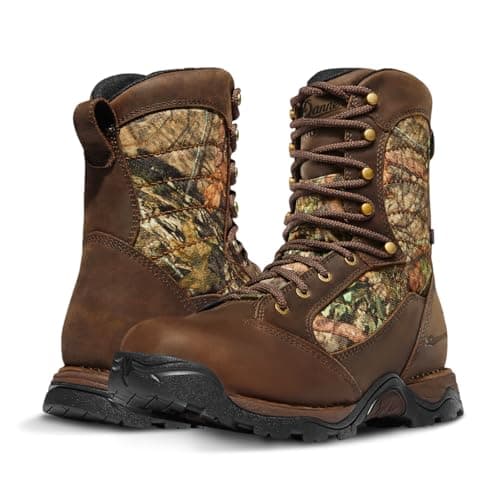
| Rank 1 | Danner Pronghorn 800g All-day walking in the cold | Not published | 8.7 | $244.67Amazon |
| Rank 2 | 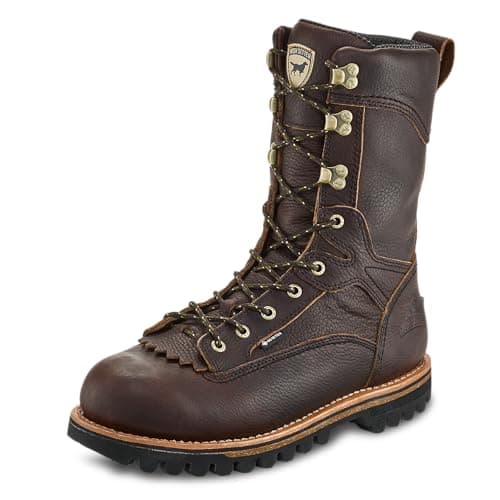 Irish Setter Elk Tracker 12-inch, 1,000g Cold-weather hunts that involve walking | Lace-up | 8.6 | $279.95Amazon |
| Rank 3 | 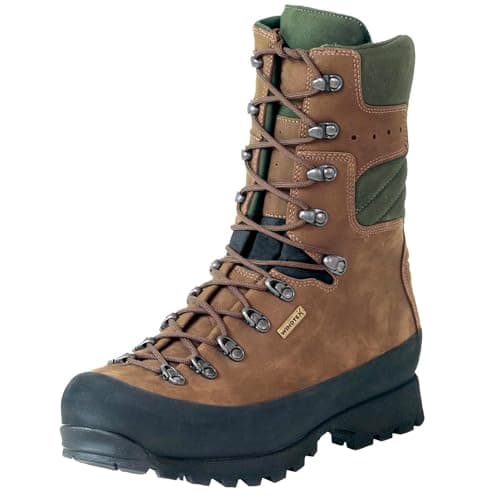 Kenetrek Mountain Extreme 400 Steep country with a heavy pack | Not published | 8.2 | $539.95Amazon |
| Rank 4 | 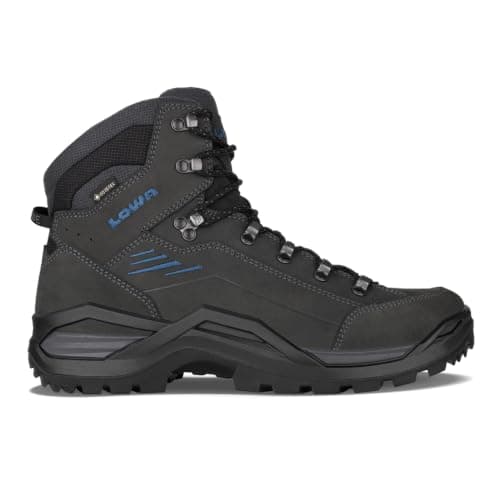 Lowa Renegade EVO GTX Mid Wide-ish feet that need a hiker | Not published | 7.6 | $279.95Amazon |
#ad Prices come from Amazon and change. How this site is funded. Scores are our published editorial rubric — see our methodology.
The BOA system is a dial connected to a steel lace that runs through guides on the boot. You turn the dial to tighten, pull it to release. It appears on a growing number of hunting boots, and the arguments for and against are both better than the marketing on either side.
| BOA dial | Traditional laces | |
|---|---|---|
| Speed | Seconds, one hand | Slower, two hands |
| With gloves on | Easy - the main advantage | Awkward |
| Pressure distribution | Even along the lace path | Zone by zone - you choose where |
| Relieving one pressure point | Hard - it is one continuous system | Easy - skip an eyelet |
| Heel-lock lacing | Not possible | Yes, and it is the fix for heel slip |
| Field repair | Needs the maker's replacement kit | Any bootlace, or paracord |
| Cold and ice | Dials can freeze or clog with mud | Laces freeze stiff but still work |
| Cost to replace | A kit, and sometimes a return to the maker | A dollar |
The case for BOA
- Speed with gloves on. Tightening a boot at 5am in the cold with gloved hands is genuinely easier with a dial, and if you take boots on and off during a hunt it adds up.
- Even tension along the lace path, which some people find more comfortable than the zone-by-zone pressure of laces.
- Micro-adjustment while wearing it. You can nudge a dial a click tighter without stopping to untie anything - useful on a long descent.
- Nothing to catch. No lace ends to snag in brush or get stepped on.
The case for laces
- You can relieve one specific pressure point. Skipping an eyelet over a sore instep is the single most useful fit adjustment there is, and a dial cannot do it: break-in.
- Heel-lock lacing. The standard fix for heel slip requires discrete eyelets, and heel slip is the commonest fit complaint there is.
- Field repair with anything. A broken lace is fixed with a spare lace, paracord or a strap. A failed dial usually ends the day in that boot.
- Mud and ice. A dial with a packed mechanism is a problem; a frozen lace is an inconvenience.
Which failure mode matters more to you
That is the actual decision. A lace fails cheaply and predictably. A dial fails rarely and expensively. For a day hunt near a truck, the dial's convenience probably wins. For a week in the backcountry where a failed boot means walking out, a repairable closure is worth more than the convenience.
Lace-up boots across the range
The lace-up boots we recommend elsewhere on the site, priced live. We will add BOA models when there is a good one we can link.
#1 · All-day walking in the cold
Danner Pronghorn 800g
Danner800g in Danner's Pronghorn platform, which is built around a supportive midsole rather than a soft one. The boot to buy if your hunt is measured in miles.
| Insulation | 800g |
|---|---|
| Shaft height | Not published by manufacturer |
| Upper | Leather and nylon |
| Waterproofing | Gore-Tex (manufacturer) |
| Outsole | Danner Pronghorn |
Specifications per Danner published specifications.
What it does well
- One of the few insulated boots that genuinely supports a loaded pack
- Gore-Tex plus a recraftable platform - this is a multi-season purchase
- 800g walks far better than 1,000g or more
Where it falls short
- Expensive, and the wide sizes are the ones that go out of stock
- Needs a real break-in period; do not buy it the week before a hunt
Our rubric
- Warmth
- 8.0
- Waterproofing
- 8.8
- Fit
- 9.4
- Durability
- 9.4
- Value
- 7.8
#2 · Cold-weather hunts that involve walking
#ad How we are funded · Price as of October 6, 2026
Irish Setter Elk Tracker 12-inch, 1,000g
Irish Setter1,000g of insulation in a 12-inch lace-up leather boot: the combination that lets you cover ground in the cold without the sweat-then-freeze cycle a rubber pull-on forces.
| Insulation | 1,000g |
|---|---|
| Shaft height | 12 in |
| Upper | Full-grain leather |
| Waterproofing | UltraDry membrane (manufacturer) |
| Fit | Lace-up |
Specifications per Irish Setter published specifications.
What it does well
- Laces mean you can actually tension the boot to your foot, which is why it walks better than any pull-on
- 1,000g is the sweet spot for a boot you walk in and then sit in
- Leather takes a real conditioning treatment and lasts seasons longer than neoprene
Where it falls short
- Leather is not scent-free the way rubber is, and it absorbs whatever you walk through
- Needs breaking in, and the 12-inch shaft takes the longest to soften
- Water depth is limited to the top of the laces, so not a marsh boot
Our rubric
- Warmth
- 8.8
- Waterproofing
- 7.8
- Fit
- 9.2
- Durability
- 9.2
- Value
- 8.2
#3 · Steep country with a heavy pack
#ad How we are funded · Price as of October 6, 2026
Kenetrek Mountain Extreme 400
KenetrekA full-shank mountain boot with only 400g of insulation, and that pairing is deliberate: in steep country you generate your own heat and need support, not loft.
| Insulation | 400g Thinsulate |
|---|---|
| Shaft height | 10 in |
| Upper | 2.8mm full-grain leather |
| Midsole | Full-length nylon shank |
| Waterproofing | Windtex membrane (manufacturer) |
Specifications per Kenetrek published specifications.
What it does well
- The stiff shank is what stops your feet dying on a sidehill under 60 pounds
- One-piece leather upper with minimal seams - the fewest failure points here
- Resoleable, which matters at this price
Where it falls short
- The most expensive boot in this registry by a wide margin
- A serious break-in. Buyers who skip it report exactly the blisters you would expect
- Overkill, and genuinely uncomfortable, for stand hunting
Our rubric
- Warmth
- 6.8
- Waterproofing
- 8.8
- Fit
- 9.0
- Durability
- 9.8
- Value
- 6.6
#4 · Wide-ish feet that need a hiker
#ad How we are funded · Price as of October 6, 2026
Lowa Renegade EVO GTX Mid
LowaThe most-sold hiking boot in its class for a reason: a forgiving last, a genuine Gore-Tex membrane, and almost no break-in.
| Insulation | None (uninsulated) |
|---|---|
| Shaft height | Mid |
| Upper | Nubuck leather |
| Waterproofing | Gore-Tex (manufacturer) |
| Widths | Standard and wide offered |
What it does well
- Available in a true wide, which rules most hunting boots out of contention
- Comfortable immediately
Where it falls short
- Uninsulated and mid-height - a three-season scouting boot only
- Nubuck needs treating to survive wet brush
Our rubric
- Warmth
- 3.2
- Waterproofing
- 8.6
- Fit
- 9.6
- Durability
- 8.6
- Value
- 7.8
A note on what is actually available
BOA appears far more often in snow sports and cycling than in hunting footwear, and the hunting models that use it come and go. Most of the boots we recommend across this site are lace-ups, which reflects what is on the market rather than a verdict against the dial.
If you own BOA boots
- Keep the mechanism clean. Rinse mud out of the dial after wet hunts rather than letting it dry in.
- Carry the maker's spare kit on any multi-day hunt. It is small and it is the only field repair available.
- Learn the emergency release before you need it in the dark.
- Do not force a clogged dial. That is how the internal lace strips.
Frequently asked questions
Is BOA better than laces on hunting boots?
Do BOA dials break?
Can you heel-lock a BOA boot?
Does BOA work in cold and mud?
Sources
Read next
Boot Fit & Sizing
Hunting boot sizing guide
The sizing adjustment table, the five fit checks, and the two measurements shoe size tells you nothing about.
Boot Fit & Sizing
How to break in hunting boots
Four stages over two to four weeks, in order - plus the five break-in shortcuts that damage boots.
Boot Fit & Sizing
Hunting boot insoles: what they fix and what they do not
Support, volume and warmth are three different jobs - and a support insole adds no warmth at all.
Boot Fit & Sizing
Best mountain hunting boots
The one category where price tracks capability. What a $500 boot does structurally that a $200 boot cannot.
Boot Fit & Sizing
Hunting boots or hiking boots
In mild weather on open ground a hiker is often the better hunting boot. Exactly where that stops being true.