Boot Fit & Sizing
Hunting boots at Walmart
The big-box boot aisle is not a trap. It is a specific trade: low price and instant availability, in exchange for the three pieces of information you need to buy correctly.
Bog & Briar earns a commission when you buy through our links, at no extra cost to you. Prices come from Amazon and change; the date beside every price is when we last verified it. Full disclosure.
Top pick
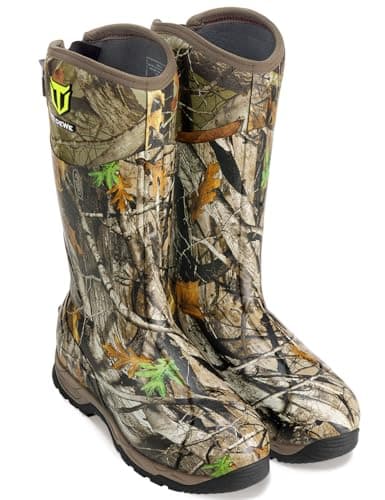
TIDEWE 800g insulated rubber boot
Insulated rubber on a tight budget
800g of insulation in a knee-high rubber boot for roughly half what the name brands charge. The tradeoff is longevity, not warmth.
#ad How we are funded · Price as of November 19, 2026
Quick picks
| # | Product | Insulation | Score | Price |
|---|---|---|---|---|
| Rank 1 | TIDEWE 800g insulated rubber boot Insulated rubber on a tight budget | 800g | 9.2/10 | $116.99Amazon |
| Rank 2 | 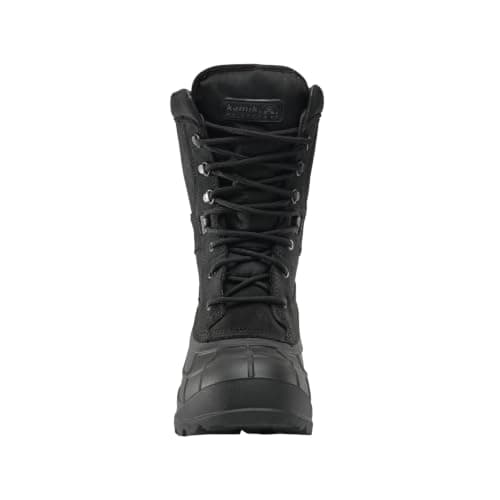 Kamik Nation Plus Cheap warmth with a removable liner | 8mm removable liner | 9.3/10 | $99.99Amazon |
| Rank 3 | 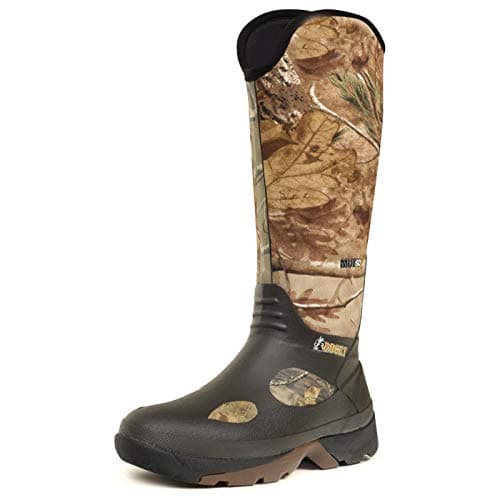 Rocky Mudsox 16-inch A plain, tough rubber boot | Neoprene (thickness not published) | 9.3/10 | $113.00Amazon |
#ad Prices come from Amazon and change. How this site is funded. Scores are our published editorial rubric — see our methodology.
You can absolutely buy a usable hunting boot at Walmart, and for a stand hunter on a budget it may be the right call - but you should expect to lose three things: a published insulation figure, a width option, and a usable shaft-height spec. Those three are what let you match a boot to a temperature and a leg, and the big-box aisle usually publishes none of them. This page is about how to buy well anyway, and what the comparable money gets you if you order instead.
We do not track any retailer's shelf inventory and will not pretend to. What is in your local store this week is a question only your store can answer. What does not change is the shape of the trade, and that is worth understanding before you drive over.
What the big-box channel is good at
- Today. Season opens Saturday, your boots leaked last year, and nothing else solves that problem at 6 p.m. on a Thursday.
- Trying them on. Being able to put both feet in a boot and stand up is genuinely valuable, and no online listing substitutes for it.
- Price floor. The bottom of this market is cheaper than the bottom of the online market, because the house brands exist nowhere else.
- Returns without shipping. You can walk a bad boot back in and get your money back.
What it is bad at, and why it matters
- Published insulation. Many value boots list no gram figure, or list it only on the box. Without it you cannot buy for a temperature, and insulation grams are the single most useful spec in cold-weather footwear - see the insulation chart.
- Widths. The value end of the market is standard width only. If your foot is wide, the aisle cannot help you, and forcing it causes the forefoot pressure described in boots for wide feet.
- Shaft height. On a pull-on, height determines whether water comes over the top. Value listings rarely state it.
- Size depth. The sizes that sell out first are the sizes most people wear, and the aisle in October is whatever is left.
- Any kind of spec continuity. House-brand models change year to year, so a boot you liked may not exist next season.
How to judge a boot in the aisle, with no spec sheet
Five checks you can run with the boot in your hands, in about two minutes. They substitute for most of the information the listing is not giving you.
- Press the bond line at the toe. Where the outsole meets the upper, look for a clean, continuous bond. Gaps or glue squeeze-out at the forefoot flex is where cheap boots fail first.
- Flex the forefoot by hand. It should bend at the ball of the foot, not in the middle of the arch. A boot that folds at the arch has no midsole and will be punishing to walk in.
- Twist the boot. Some torsional resistance is good. A boot you can wring out like a towel will not support you on uneven ground.
- Look inside for a liner seam. A bagged waterproof liner should be smooth. Lumpy seams at the heel are a blister waiting to happen.
- Measure the shaft with your hand. Four fingers is roughly three inches. Count up the shaft and you will know whether it clears the water you stand in.
What the same money buys online
Three boots in the big-box price range that publish their specs - the comparison to run before you commit.
#1 · Insulated rubber on a tight budget
#ad How we are funded · Price as of November 19, 2026
TIDEWE 800g insulated rubber boot
TIDEWE800g of insulation in a knee-high rubber boot for roughly half what the name brands charge. The tradeoff is longevity, not warmth.
| Insulation | 800g |
|---|---|
| Shaft height | Not published by manufacturer |
| Upper | Rubber over neoprene |
| Liner | Insulated |
| Fit | Pull-on |
What it does well
- The cheapest honest 800g knee boot on the market
- For an occasional hunter who needs water and warmth once a year, the value case is real
Good to know
- Buyers consistently report the rubber-to-neoprene bond is where these fail
Our rubric — each criterion 0-10
- Warmth
- 8.0
- Waterproofing
- 8.4
- Fit
- 7.0
- Durability
- 6.2
- Value
- 9.4
#2 · Cheap warmth with a removable liner
#ad How we are funded · Price as of November 19, 2026
Kamik Nation Plus
KamikA rubber-bottom, nylon-top pac boot with a removable 8mm liner. The liner is the point: you can dry it overnight, which no sealed boot lets you do.
| Insulation | 8mm removable liner |
|---|---|
| Temperature rating | -40F (manufacturer) |
| Shaft height | Not published by manufacturer |
| Upper | Rubber bottom, nylon shell |
| Liner | Removable |
What it does well
- A removable liner dries in a night; a sealed boot does not
- The cheapest published -40F rating you will find
- Nylon shell is light for the warmth
Good to know
- A snow boot, not a hunting boot - loose fit, no ankle support, noisy nylon
Our rubric — each criterion 0-10
- Warmth
- 9.0
- Waterproofing
- 7.2
- Fit
- 7.0
- Durability
- 7.6
- Value
- 9.4
#3 · A plain, tough rubber boot
#ad How we are funded · Price as of November 19, 2026
Rocky Mudsox 16-inch
RockyRocky's no-frills neoprene-and-rubber pull-on. Nothing clever, nothing to break, and it costs what a rubber boot ought to cost.
| Insulation | Neoprene (thickness not published) |
|---|---|
| Shaft height | 16 in |
| Upper | Rubber over neoprene |
| Fit | Pull-on |
| Outsole | Lug |
Specifications per Rocky Boots published specifications.
What it does well
- Simple and hard to kill
- Cheaper than the equivalent Muck or LaCrosse
Good to know
- Neoprene thickness is not published, so warmth is a guess until you wear it
Our rubric — each criterion 0-10
- Warmth
- 6.4
- Waterproofing
- 8.8
- Fit
- 7.6
- Durability
- 8.2
- Value
- 9.0
The honest comparison
The three picks above sit at or near big-box money, and the difference is information rather than quality: each one publishes the figures the aisle does not.
| Typical big-box value boot | The picks above | |
|---|---|---|
| Published insulation | Often none | Stated in grams or mm |
| Published shaft height | Rarely | Stated on two of three |
| Width options | Standard only | Standard only - same limit |
| Try before you buy | Yes | No - returns instead |
| Available tonight | Yes | No |
| Spec continuity next year | No | Yes - these are catalog models |
So the decision rule is simple. If you need boots this week, buy in the aisle and use the five checks above. If you have a week, order a boot with published specs, because knowing the insulation figure is what lets you buy the right boot once instead of the wrong boot twice. The price-bracket breakdown is in best value hunting boots.
Returns are the thing to protect
Whichever channel you use, the return path is the most valuable feature of the purchase, because boot fit cannot be assessed in a store in two minutes. Keep the box, keep the receipt, and do your real fit test at home: wear the boots indoors on carpet for an hour in the evening, over the sock you will hunt in. Carpet does not mark a sole, so the boots stay returnable. Federal consumer guidance is clear that return rights are set by the retailer's own stated policy rather than by law for ordinary purchases, so read it before you buy rather than after.
If you only remember one thing
An unlabeled boot is not necessarily a bad boot - it is an unknown boot. For a hunter who walks 200 yards to a ladder stand, unknown is survivable. For a hunter sitting still at 15F, or walking three miles under a pack, it is not, and that is the line to decide which side of this page you are on. The wider channel question - farm stores, specialist retailers, ordering direct - is covered in where to buy hunting boots.
Our recommendation
If you only take one thing from this page, take this one.
Our pick
TIDEWE 800g insulated rubber boot
Insulated rubber on a tight budget
#ad How we are funded · Price as of November 19, 2026
Runner-up
Kamik Nation Plus
Cheap warmth with a removable liner
#ad How we are funded · Price as of November 19, 2026
Frequently asked questions
Are Walmart hunting boots any good?
How do I judge a hunting boot with no published insulation figure?
Is it better to buy hunting boots in store or online?
What insulation do I need if the box does not say?
Sources
Read next
Boot Fit & Sizing
Best hunting boots under $100
Under a hundred dollars you pick an architecture, not a grade. Eight boots with published figures, grouped by what each one is genuinely bad at.
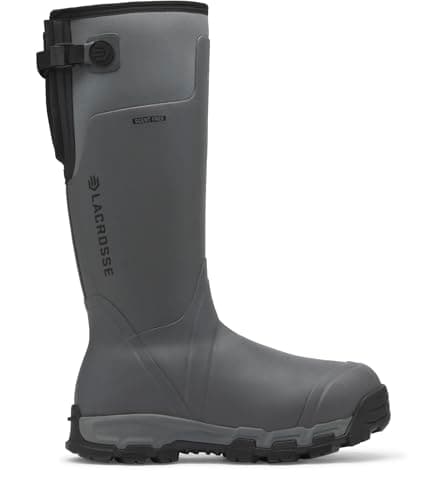
Boot Fit & Sizing
Where to buy hunting boots
Five channels, and the one you want depends on how unusual your feet are rather than on price. Plus the five-step home fitting that makes online safe.
Boot Fit & Sizing
Best value hunting boots
Value by price bracket, with what each saving actually costs you in the field. Six picks plus the $60 of sock and insole that beats a boot upgrade.
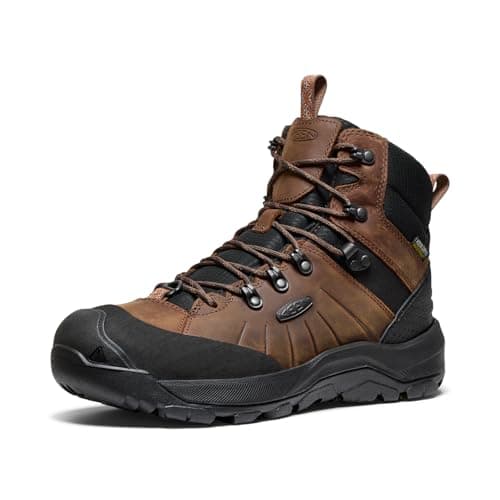
Boot Fit & Sizing
Hunting boot sizing guide
The sizing adjustment table, the five fit checks, and the two measurements shoe size tells you nothing about.
Cold Weather Boots
Boot insulation grams by temperature
The full gram-by-gram table with separate temperature ranges for sitting still and walking - the column other charts leave out.