Boot Fit & Sizing
Hunting boots or shoes?
Shoes are lighter and cooler and plenty of hunting gets done in them. The three things that force a boot are load, water and what is on the ground.
Bog & Briar earns a commission when you buy through our links, at no extra cost to you. Prices come from Amazon and change; the date beside every price is when we last verified it. Full disclosure.
Top pick
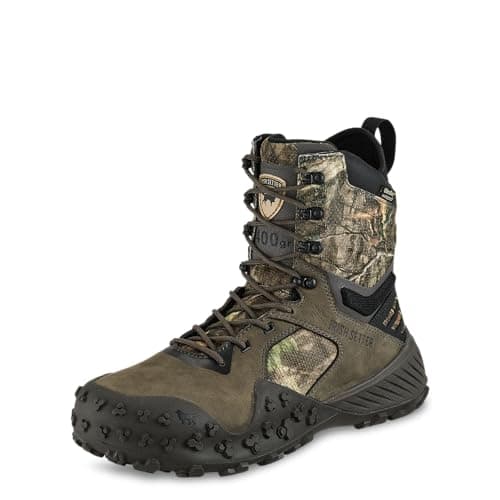
Irish Setter VaprTrek 8-inch, 400g
Light miles in cool weather
A deliberately light 8-inch boot with just 400g of insulation - the right spec for an early-season walk-in where the problem is weight and sweat, not cold.
#ad How we are funded · Price as of November 19, 2026
Quick picks
| # | Product | Shaft height | Score | Price |
|---|---|---|---|---|
| Rank 1 | Irish Setter VaprTrek 8-inch, 400g Light miles in cool weather | 8 in | 9.3/10 | $199.95Amazon |
| Rank 2 | 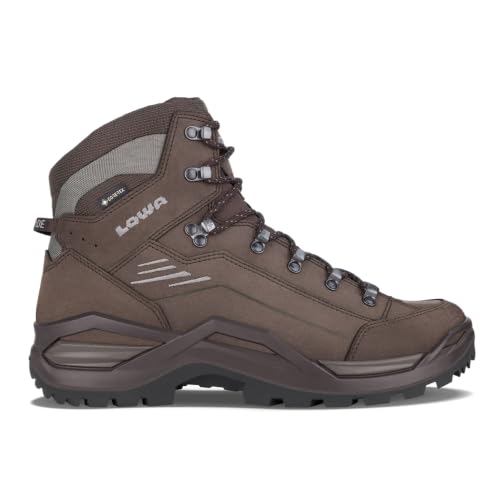 Lowa Renegade EVO GTX Mid Wide-ish feet that need a hiker | Mid | 9.1/10 | $279.95Amazon |
| Rank 3 | 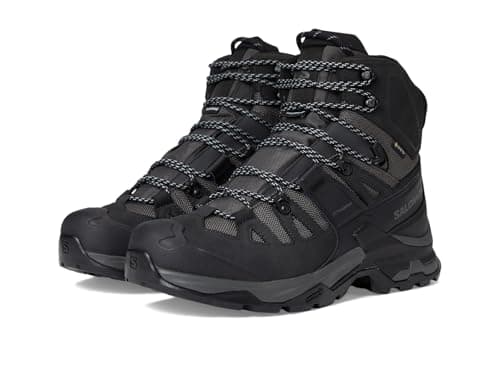 Salomon Quest 4 GTX Scouting miles in comfort | Not published | 9.0/10 | $219.90Amazon |
| Rank 4 | 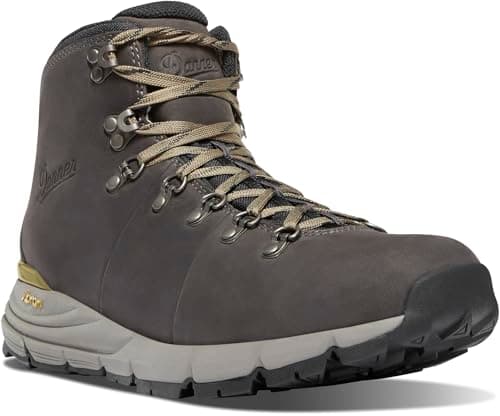 Danner Mountain 600 Leaf GTX Scouting and warm-weather miles | Not published | 9.1/10 | $233.81Amazon |
#ad Prices come from Amazon and change. How this site is funded. Scores are our published editorial rubric — see our methodology.
Wear shoes when you are carrying nothing, on dry ground, in country with no venomous snakes and no thorn brush - and a boot the moment any one of those changes. The decision is not about toughness. A low-cut trail shoe is lighter, cooler and faster, and for scouting, dove fields, mild upland and most public-land walking it is genuinely enough. What a boot buys you is a stiffer platform under load, a shaft that keeps water and debris out, and coverage over the part of your leg that brush and snakes reach.
The reason this gets argued about is that "ankle support" is the usual justification and it is the weakest one. A mid-height boot restricts ankle roll somewhat; it does not prevent a sprain, and a strong ankle in a shoe is more stable than a weak ankle in a boot. The arguments that actually hold up are load, water and exposure.
The three things that force a boot
Load
A pack over about 35 lb changes the mechanics of every step. The force goes through a smaller area of your foot for longer, and a soft, flexible shoe midsole lets your arch collapse into it mile after mile. This is why mountain hunters wear stiff-shanked boots and why the same people wear trail runners to scout the same country in July. The stiffness is the point, not the height - see best mountain hunting boots.
Water and debris
A shoe has a collar at roughly ankle height, which is below every puddle, dew line, snow crust and seed head you will walk through. The boot's shaft is doing a mechanical job here that no membrane in a shoe can substitute for: it keeps the water from going in over the top. Grass seeds and burrs in a sock are the version of this that ruins a hunt without anyone calling it a failure.
What is on the ground
In country with venomous snakes, a shoe leaves the lower leg and ankle entirely exposed - which is precisely where outdoor-safety guidance puts the risk. In thorn brush, mesquite or catclaw, an ankle-height upper is shredded in a season. Both are coverage problems, and coverage is a height spec. If snakes are your reason, the answer is not a taller hunting boot but a purpose-built one: best snake boots for hunting.
| Hunt | Shoes are fine | Boots are better | Why |
|---|---|---|---|
| Summer scouting, dry trails | Yes | - | No load, no water, speed matters |
| Dove fields | Yes | - | Short walks, warm weather |
| Early upland on dry ground | Yes | Marginal | Burrs and seed heads are the deciding factor |
| Whitetail from a stand | - | Yes | Scent, wet entry routes, standing still |
| Elk or mule deer with a pack | - | Yes | Load and side-hill stability |
| Marsh, flooded timber, snow | - | Yes | Water over the collar ends the argument |
| Snake country | - | Yes | Coverage over the lower leg and ankle |
| Packing out meat | - | Yes | The heaviest load you will ever carry |
If the answer is boots, start here
A light 8-inch boot, a forgiving mid, the most comfortable long-mileage option, and the uninsulated hunting-pattern hiker.
#1 · Light miles in cool weather
#ad How we are funded · Price as of November 19, 2026
Irish Setter VaprTrek 8-inch, 400g
Irish SetterA deliberately light 8-inch boot with just 400g of insulation - the right spec for an early-season walk-in where the problem is weight and sweat, not cold.
| Insulation | 400g |
|---|---|
| Shaft height | 8 in |
| Upper | Leather and nylon |
| Waterproofing | UltraDry membrane (manufacturer) |
| Fit | Lace-up |
Specifications per Irish Setter published specifications.
What it does well
- Genuinely light for an insulated boot, which is the whole point of the model
- Breaks in faster than a full-leather 12-inch boot
Good to know
- 400g and an 8-inch shaft is not a cold-sit boot - read the spec and believe it
Our rubric — each criterion 0-10
- Warmth
- 6.2
- Waterproofing
- 7.8
- Fit
- 9.0
- Durability
- 8.0
- Value
- 8.6
#2 · Wide-ish feet that need a hiker
#ad How we are funded · Price as of November 19, 2026
Lowa Renegade EVO GTX Mid
LowaThe most-sold hiking boot in its class for a reason: a forgiving last, a genuine Gore-Tex membrane, and almost no break-in.
| Insulation | None (uninsulated) |
|---|---|
| Shaft height | Mid |
| Upper | Nubuck leather |
| Waterproofing | Gore-Tex (manufacturer) |
| Widths | Standard and wide offered |
What it does well
- Available in a true wide, which rules most hunting boots out of contention
- Comfortable immediately
Good to know
- Uninsulated and mid-height - a three-season scouting boot only
Our rubric — each criterion 0-10
- Warmth
- 3.2
- Waterproofing
- 8.6
- Fit
- 9.6
- Durability
- 8.6
- Value
- 7.8
#3 · Scouting miles in comfort
#ad How we are funded · Price as of November 19, 2026
Salomon Quest 4 GTX
SalomonA backpacking boot, not a hunting boot - and the most comfortable way to put twelve miles on your feet in warm weather that this list contains.
| Insulation | None (uninsulated) |
|---|---|
| Shaft height | Not published by manufacturer |
| Upper | Leather and textile |
| Waterproofing | Gore-Tex (manufacturer) |
| Chassis | Advanced Chassis (manufacturer) |
What it does well
- Essentially no break-in
- Carries a pack far better than its weight suggests
Good to know
- Textile upper is the wrong thing to drag through briar
Our rubric — each criterion 0-10
- Warmth
- 3.0
- Waterproofing
- 8.6
- Fit
- 9.6
- Durability
- 7.8
- Value
- 8.2
#4 · Scouting and warm-weather miles
$249.95 6% off
#ad How we are funded · Price as of November 19, 2026
Danner Mountain 600 Leaf GTX
DannerNot a hunting boot in the insulated sense - an uninsulated Gore-Tex hiker that happens to be the right tool for August scouting and September archery.
| Insulation | None (uninsulated) |
|---|---|
| Shaft height | Not published by manufacturer |
| Upper | Suede leather |
| Waterproofing | Gore-Tex (manufacturer) |
| Outsole | Vibram SPE/Megagrip |
Specifications per Danner published specifications.
What it does well
- Comfortable out of the box in a way no insulated hunting boot is
- Vibram Megagrip is the best wet-rock outsole in this list
Good to know
- Zero insulation - this is the wrong boot the moment it gets cold
Our rubric — each criterion 0-10
- Warmth
- 3.0
- Waterproofing
- 8.6
- Fit
- 9.4
- Durability
- 8.4
- Value
- 8.4
The honest case for shoes
Weight on your feet costs several times more energy than the same weight on your back, which is why ultralight backpackers abandoned boots years ago. On a long, dry, unloaded walk a trail shoe is simply faster and less tiring, and it is cooler, which matters in September more than most hunters admit. A lot of "my boots killed me" is really "I wore a 1,000g insulated boot to scout in August".
- Scouting is not hunting. Scout in shoes and hunt in boots; they are different activities with different footwear.
- Blisters come from moisture and motion, not from low-cut uppers. A wicking sock does more than a taller boot - see why cotton socks fail.
- A mid-height boot is the compromise most hunters actually want. An 8 to 9-inch lace-up gets you the shaft without the weight of a 12-inch one.
- Two pairs beat one compromise. A shoe for miles and a boot for the hunt costs less than one boot that fails at both.
Where hiking boots fit into this
Three of the four picks on this page are hiking boots rather than hunting boots, which is deliberate: an uninsulated hiker is the right tool for most warm-weather hunting, and the hunting-specific features you give up are camo and scent control. Whether that trade works for your hunt is the subject of hunting boots or hiking boots, and the warm-weather picks are in best hunting boots for hot weather.
The short answer
- No pack, dry ground, no snakes, no thorns: shoes.
- Pack over about `35 lb`: boots, and stiff ones.
- Water, snow or heavy dew: boots, and tall enough to clear it.
- Snakes or thorn brush: boots, and specifically tall ones.
- Sitting still in the cold: boots, insulated - a shoe has nowhere to put loft.
- Unsure: a mid-height uninsulated boot covers more cases than either extreme.
Our recommendation
If you only take one thing from this page, take this one.
Our pick
Irish Setter VaprTrek 8-inch, 400g
Light miles in cool weather
#ad How we are funded · Price as of November 19, 2026
Runner-up
Lowa Renegade EVO GTX Mid
Wide-ish feet that need a hiker
#ad How we are funded · Price as of November 19, 2026
Frequently asked questions
Can you hunt in shoes instead of boots?
Do hunting boots prevent ankle sprains?
Are hiking shoes good enough for hunting?
What height hunting boot should I buy?
Is it worth owning both hunting shoes and boots?
Sources
Read next
Boot Fit & Sizing
Hunting boots or hiking boots
In mild weather on open ground a hiker is often the better hunting boot. Exactly where that stops being true.
Boot Fit & Sizing
Best hunting boots for hot weather
Almost every boot on the hunting wall is insulated, which is the wrong spec in heat. Six uninsulated picks for scouting, archery and Southern seasons.
Boot Fit & Sizing
Best hunting boots for hiking
If you walk more than you sit, most of the hunting aisle is wrong for you. What works, and when to buy a hiker.
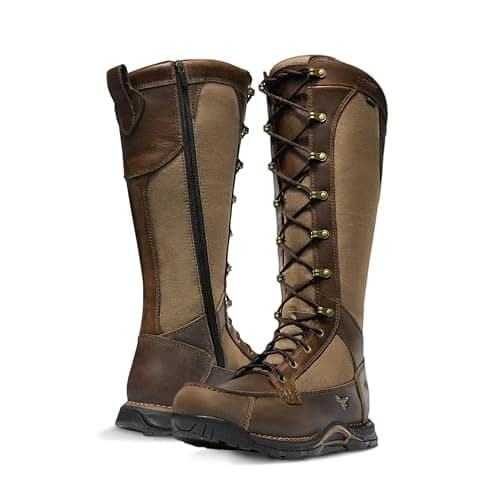
Snake Boots
The best snake boots for hunting
Six boots ranked on coverage and whether you will still be wearing them in August - which is what actually protects you.