Cold Weather Boots
Best insulated hunting boots under $200
Two hundred dollars buys a real insulation figure from a real maker. What it does not buy is Gore-Tex on most boots, a resole path on any of them, or a width run - so here is which compromise to take.
Bog & Briar earns a commission when you buy through our links, at no extra cost to you. Prices come from Amazon and change; the date beside every price is when we last verified it. Full disclosure.
Best insulated under $200
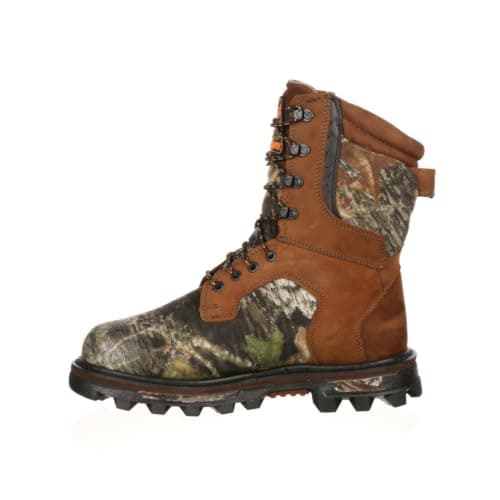
Rocky BearClaw 3D 1,000g
Cold-weather value in leather
1,000g of Thinsulate behind a Gore-Tex membrane at a price well under the premium leather boots. The compromise is weight, not warmth.
#ad How we are funded · Price as of November 20, 2026
Quick picks
| # | Product | Insulation | Score | Price |
|---|---|---|---|---|
| Rank 1 | Rocky BearClaw 3D 1,000g Cold-weather value in leather | 1,000g Thinsulate | 9.6/10 | $174.99Amazon |
| Rank 2 | 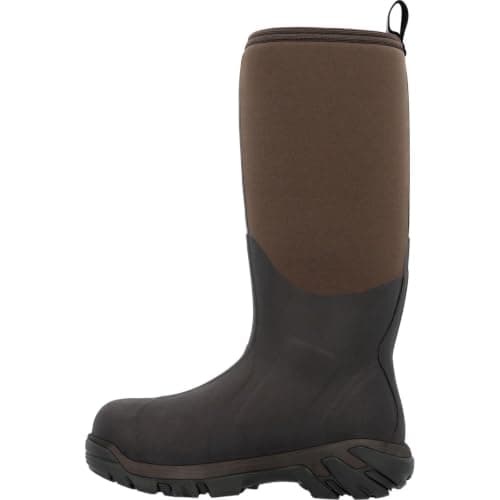 Muck Arctic Pro The coldest static sits | 8mm neoprene plus fleece | 9.6/10 | $131.51Amazon |
| Rank 3 | 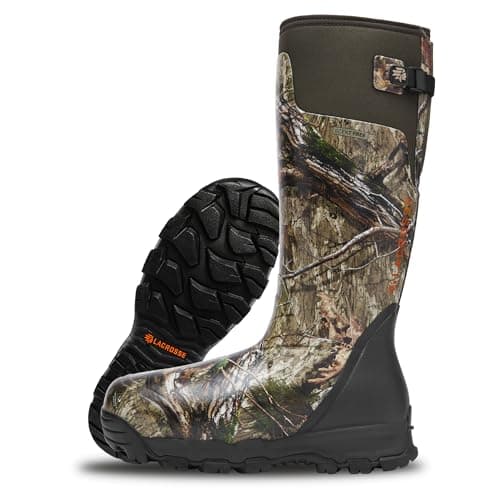 LaCrosse Alphaburly Pro 18-inch, 1,600g Sitting still in genuine cold | 1,600g | 9.8/10 | $199.98Amazon |
| Rank 4 | 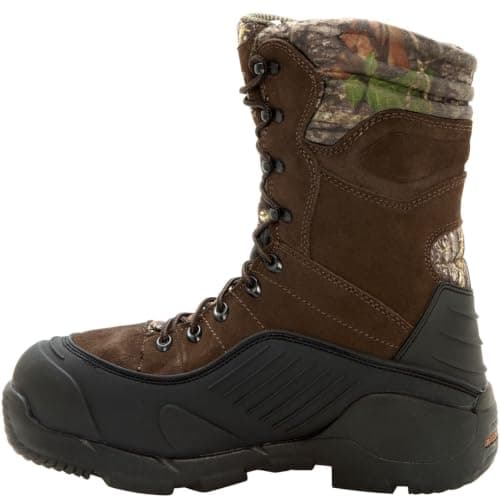 Rocky Blizzard Stalker 1,200g 1,200g for a hundred and change | 1,200g | 9.5/10 | $119.66Amazon |
| Rank 5 | 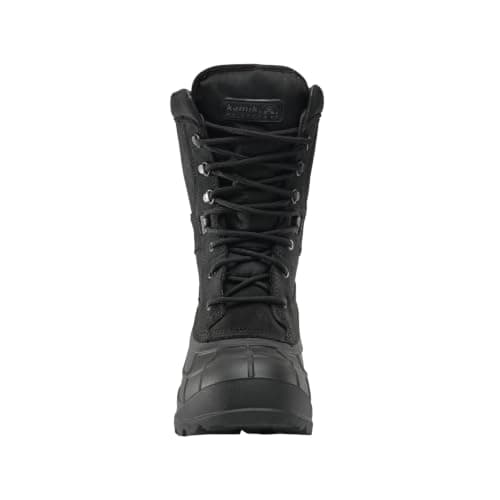 Kamik Nation Plus Cheap warmth with a removable liner | 8mm removable liner | 9.3/10 | $99.99Amazon |
| Rank 6 | 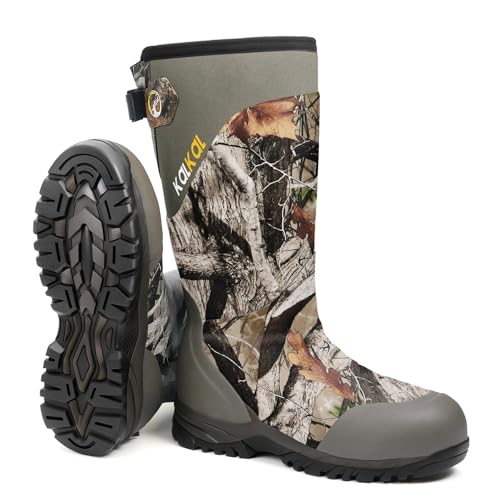 Kalkal 800g insulated rubber boot 800g and a calf strap under $100 | 800g cold-resistant insulation (manufacturer) | 9.3/10 | $93.99Amazon |
| Rank 7 | 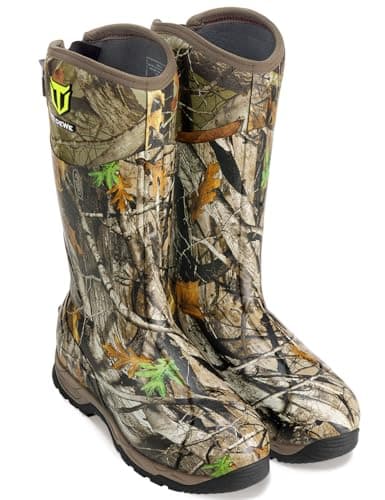 TIDEWE 800g insulated rubber boot Insulated rubber on a tight budget | 800g | 9.2/10 | $109.99Amazon |
| Rank 8 | 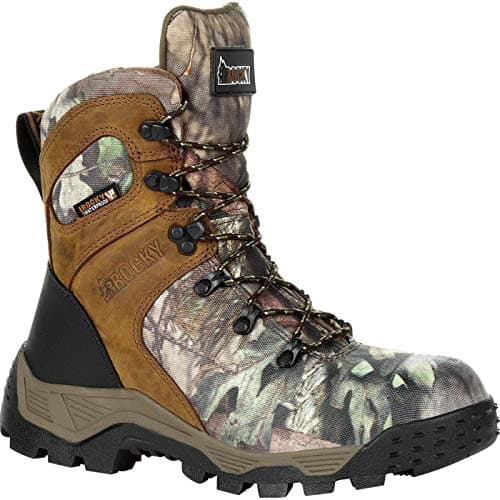 Rocky Sport Pro 7-inch, women's 800g An insulated women's boot at a sane price | 800g 3M Thinsulate Ultra | 9.5/10 | $96.21Amazon |
#ad Prices come from Amazon and change. How this site is funded. Scores are our published editorial rubric — see our methodology.
The best insulated hunting boot under two hundred dollars is the Rocky BearClaw 3D, and the reason is one word on the listing: Gore-Tex. 1,000g of Thinsulate behind a named third-party membrane, in a 9-inch full-grain leather boot, is the only combination in this bracket that does not ask you to trust a house membrane. Everything else here is cheaper, warmer, or taller - and compromises somewhere the BearClaw does not.
That said, the premise of this page matters more than its winner. At two hundred dollars the insulated-boot shelf is unusually good, because insulation is cheap to add and expensive to omit. You can buy a published 1,200g figure here. You can buy 1,600g here. You can buy a boot Muck rates to -60F for static use here. What the ceiling costs you is everything AROUND the insulation: the membrane, the construction, the width run and the resole path. Knowing which of those you can live without is the whole decision.
The picks
Eight insulated boots that came in under two hundred dollars when this page was published. Every one publishes an insulation figure - no boot gets on this page on a vibe.
#1 · Cold-weather value in leather
#ad How we are funded · Price as of November 20, 2026
Rocky BearClaw 3D 1,000g
Rocky1,000g of Thinsulate behind a Gore-Tex membrane at a price well under the premium leather boots. The compromise is weight, not warmth.
| Insulation | 1,000g Thinsulate |
|---|---|
| Shaft height | 9 in |
| Upper | Full-grain leather and Cordura |
| Waterproofing | Gore-Tex (manufacturer) |
| Outsole | Rocky BearClaw 3D |
Specifications per Rocky Boots published specifications.
What it does well
- The cheapest way to get 1,000g and Gore-Tex in the same boot
- The outsole has an unusually deep, self-cleaning lug for a leather boot
Good to know
- Heavy for its height
Our rubric — each criterion 0-10
- Warmth
- 8.6
- Waterproofing
- 8.6
- Fit
- 7.8
- Durability
- 8.6
- Value
- 9.2
#2 · The coldest static sits
$185.00 29% off
#ad How we are funded · Price as of November 20, 2026
Muck Arctic Pro
Muck8mm neoprene plus a fleece lining, rated by Muck to -60F for static use. If your problem is a long December sit and nothing else, this is the category answer.
| Insulation | 8mm neoprene plus fleece |
|---|---|
| Temperature rating | -60F to 30F (manufacturer, static use) |
| Upper | Rubber over 8mm neoprene |
| Fit | Pull-on, stretch-fit topline |
| Reinforcement | Double rubber at heel and toe |
Specifications per Muck Boot Company published specifications.
What it does well
- The published rating is for static use, which is exactly how a stand hunter uses a boot
- Reinforced heel and toe survive brush and truck beds
Good to know
- Hopeless for walking - you will overheat in a quarter mile
Our rubric — each criterion 0-10
- Warmth
- 9.8
- Waterproofing
- 9.0
- Fit
- 7.8
- Durability
- 8.6
- Value
- 8.0
#3 · Sitting still in genuine cold
$239.95 17% off
#ad How we are funded · Price as of November 20, 2026
LaCrosse Alphaburly Pro 18-inch, 1,600g
LaCrosseThe default answer for a stand hunter below 20F: 1,600g of insulation in a scent-free rubber boot with an adjustable calf gusset, so it fits over a heavy sock and a thick calf.
| Insulation | 1,600g |
|---|---|
| Shaft height | 18 in |
| Upper | Vulcanized rubber over neoprene |
| Calf fit | Adjustable back gusset |
| Liner | Removable EVA footbed |
Specifications per LaCrosse Footwear published specifications.
What it does well
- The most insulation you can sensibly buy in a rubber boot, and rubber is the one upper that does not wet out
- The adjustable gusset is the reason this boot fits calves that defeat every other 18-inch pull-on
- Rubber is inherently scent-free, which matters more to deer hunters than most boot copy admits
Good to know
- Far too much boot for walking in. If you have a half-mile hike you will sweat, and then you will be cold anyway
Our rubric — each criterion 0-10
- Warmth
- 9.6
- Waterproofing
- 9.4
- Fit
- 8.2
- Durability
- 9.0
- Value
- 8.6
#4 · 1,200g for a hundred and change
$149.99 20% off
#ad How we are funded · Price as of November 20, 2026
Rocky Blizzard Stalker 1,200g
RockyThe cheapest way to get a real published 1,200g figure from a maker that publishes figures. It is a heavy, plain boot built for standing in cold mud, and at this price that is exactly the right ambition.
| Insulation | 1,200g |
|---|---|
| Shaft height | Not published by manufacturer |
| Upper | Leather and nylon, Mossy Oak Break-Up |
| Waterproofing | Rocky waterproof construction (manufacturer) |
| Fit | Lace-up |
Specifications per Rocky Boots published specifications.
What it does well
- Roughly a third of the price of the Danner for the same published rating
- Sold in camo and in plain brown, so it works as a chore boot the rest of the year
- The most consistently in-stock boot in this tier
Good to know
- Rocky does not publish a shaft height for this model, so coverage is unknown until it arrives
Our rubric — each criterion 0-10
- Warmth
- 9.0
- Waterproofing
- 8.2
- Fit
- 7.6
- Durability
- 7.8
- Value
- 9.4
#5 · Cheap warmth with a removable liner
#ad How we are funded · Price as of November 20, 2026
Kamik Nation Plus
KamikA rubber-bottom, nylon-top pac boot with a removable 8mm liner. The liner is the point: you can dry it overnight, which no sealed boot lets you do.
| Insulation | 8mm removable liner |
|---|---|
| Temperature rating | -40F (manufacturer) |
| Shaft height | Not published by manufacturer |
| Upper | Rubber bottom, nylon shell |
| Liner | Removable |
What it does well
- A removable liner dries in a night; a sealed boot does not
- The cheapest published -40F rating you will find
- Nylon shell is light for the warmth
Good to know
- A snow boot, not a hunting boot - loose fit, no ankle support, noisy nylon
Our rubric — each criterion 0-10
- Warmth
- 9.0
- Waterproofing
- 7.2
- Fit
- 7.0
- Durability
- 7.6
- Value
- 9.4
#6 · 800g and a calf strap under $100
$119.99 22% off
#ad How we are funded · Price as of November 20, 2026
Kalkal 800g insulated rubber boot
KalkalThe TIDEWE's closest rival: 800g of insulation over a 7mm neoprene body, plus the rear adjustable buckle the TIDEWE does not have. Kalkal's temperature claim is the part to ignore.
| Insulation | 800g cold-resistant insulation (manufacturer) |
|---|---|
| Shaft height | Not published by manufacturer |
| Upper | 100% rubber over 7mm neoprene with a fleece lining |
| Midsole | Wave-contoured EVA |
| Calf fit | Neoprene collar with a rear adjustable buckle strap |
| Temperature claim | -55F to 40F (manufacturer) |
Specifications per Kalkal published specifications.
What it does well
- 7mm of neoprene is a full millimeter more than most boots in this price bracket publish, and neoprene is where a cold rubber boot gets its warmth
- A rear buckle strap at this price, which is the single feature that makes a pull-on fit a narrow calf
- Kalkal publishes gram and neoprene figures at all, which much of the sub-$100 shelf does not
Good to know
- The -55F claim is a marketing figure with no test standard behind it. Treat this as a boot for a cold sit, not for Arctic cold
Our rubric — each criterion 0-10
- Warmth
- 8.4
- Waterproofing
- 8.4
- Fit
- 7.4
- Durability
- 6.4
- Value
- 9.2
#7 · Insulated rubber on a tight budget
#ad How we are funded · Price as of November 20, 2026
TIDEWE 800g insulated rubber boot
TIDEWE800g of insulation in a knee-high rubber boot for roughly half what the name brands charge. The tradeoff is longevity, not warmth.
| Insulation | 800g |
|---|---|
| Shaft height | Not published by manufacturer |
| Upper | Rubber over neoprene |
| Liner | Insulated |
| Fit | Pull-on |
What it does well
- The cheapest honest 800g knee boot on the market
- For an occasional hunter who needs water and warmth once a year, the value case is real
Good to know
- Buyers consistently report the rubber-to-neoprene bond is where these fail
Our rubric — each criterion 0-10
- Warmth
- 8.0
- Waterproofing
- 8.4
- Fit
- 7.0
- Durability
- 6.2
- Value
- 9.4
#8 · An insulated women's boot at a sane price
#ad How we are funded · Price as of November 20, 2026
Rocky Sport Pro 7-inch, women's 800g
RockyA 7-inch women's lace-up with a published 800g Thinsulate figure, which is unusual at this price and makes it the one women's boot here you can line up against the gram chart.
| Insulation | 800g 3M Thinsulate Ultra |
|---|---|
| Shaft height | 7 in |
| Upper | Full-grain leather and 900-denier nylon |
| Waterproofing | Rocky waterproof construction (manufacturer) |
| Last | Women's |
Specifications per Rocky Boots published specifications.
What it does well
- Publishes a gram rating, so you can size insulation against the temperature chart instead of guessing
- Light cement construction - it walks far better than its warmth suggests
- The cheapest women's boot here with a real insulation figure behind it
Good to know
- Seven inches of shaft is low coverage in brush, briar or shallow water
Our rubric — each criterion 0-10
- Warmth
- 8.0
- Waterproofing
- 8.2
- Fit
- 8.8
- Durability
- 7.6
- Value
- 9.2
How we picked
- A published insulation figure, full stop. Every boot here states grams, a neoprene thickness or a liner construction. Insulated boots at this price are the easiest category in the store to fake, and a maker that will not print a figure is selling you the word *insulated* rather than the thing. Two boots we would otherwise have listed are absent for exactly this reason.
- Under two hundred dollars at publication, with the live price on the card. Two picks here sit within a couple of dollars of the ceiling and will cross it when the discount ends. They are flagged below, and the price you see on the card is the price today, not the price when this was written.
- A maker you can hold to the figure. Rocky, LaCrosse, Muck and Kamik all publish specification pages you can check. The two Amazon-native brands here are included on their figures and marked as the shorter-life options they are.
- Routed by how still you sit, not by price order. A 1,600g boot is not better than an 800g boot; it is for a different hunt. The ladder below matches rating to sit, and the gram-to-temperature chart is the long version.
- Honest cons on every pick, including the winner. Each card names where the money came out. The BearClaw runs narrow. The Muck cannot walk. The TIDEWE fails at the neoprene bond. None of that is hidden in a footnote.
- A budget pick named outright. The Kalkal 800g rubber boot is the cheapest thing here we would hunt in, and it is called out below with its marketing temperature claim explicitly discounted.
What the $200 ceiling actually costs you
This is the same table we would build at four hundred dollars, and the pattern is what tells you where to spend. The insulation column is strong all the way down. The membrane and construction columns are where the bracket shows:
| Boot | Published insulation | Membrane | Calf or width adjustment |
|---|---|---|---|
| Rocky BearClaw 3D 1,000g | 1,000g Thinsulate | Gore-Tex (manufacturer) | Runs narrow - no width run |
| Muck Arctic Pro | 8mm neoprene plus fleece | None needed - sealed rubber | Stretch-fit topline, no adjustment |
| LaCrosse Alphaburly Pro 1,600g | 1,600g | None needed - sealed rubber | Adjustable back gusset |
| Rocky Blizzard Stalker 1,200g | 1,200g | Rocky house construction (manufacturer) | Lace-up, no width run |
| Kamik Nation Plus | 8mm removable liner | Rubber bottom, nylon shell | Loose fit by design |
| Kalkal 800g insulated rubber | 800g over 7mm neoprene (manufacturer) | None needed - sealed rubber | Rear adjustable buckle strap |
| TIDEWE 800g insulated rubber | 800g | None needed - sealed rubber | None |
| Rocky Sport Pro 7-inch women's | 800g 3M Thinsulate Ultra | Rocky house construction (manufacturer) | Women's last, no width run |
The useful reading of that table is that rubber dodges the bracket's biggest weakness entirely. A house membrane is a boot's third-year failure point, and sealed rubber has no membrane to fail - which is why four of the eight picks here are rubber or neoprene rather than leather. If your hunt tolerates a pull-on, your two hundred dollars goes further in rubber than in leather. Rubber against leather is the full argument.
Match the rating to your sit, not to the forecast
If this is you, buy this
- Walking in, then a few hours on stand, 25-40FRocky BearClaw 3D - 1,000g and the only Gore-Tex here See the picks
- A long December sit and nothing elseMuck Arctic Pro - rated to -60F by Muck for static use See the picks
- Cold sits in standing water, or a calf that defeats pull-onsLaCrosse Alphaburly Pro 1,600g, if it is still under the line See the picks
- Cold mud, standing still, cheapest real 1,200gRocky Blizzard Stalker See the picks
- You cannot dry a boot overnight and need toKamik Nation Plus - the only removable liner in the bracket See the picks
- One boot, smallest sensible budget, wet and coldKalkal 800g - the budget pick See the picks
- Women's sizing with a figure you can checkRocky Sport Pro 7-inch, women's 800g See the picks
The leather lace-ups: BearClaw and Blizzard Stalker
These two are the reason to shop leather in this bracket at all, and they are a straight trade. The BearClaw 3D is the cheapest way to get 1,000g and Gore-Tex in the same boot, with an unusually deep self-cleaning lug for a leather boot and a published 9 in shaft. Its honest weakness is width: buyers consistently report it runs narrow through the forefoot, and it is heavy for its height. On a broad foot, that is disqualifying - best hunting boots for wide feet is the page to read first.
The Blizzard Stalker goes the other way: roughly a third of what the Danner equivalent costs for the same published 1,200g, sold in camo and in plain brown so it doubles as a chore boot, and the most consistently in-stock boot in its tier. The costs are real - Rocky publishes no shaft height for it, it is heavy and stiff, and the house membrane rather than Gore-Tex is the difference you feel in year three rather than year one. Buy it to stand in cold mud, not to cover ground.
The rubber and neoprene picks, which is where this bracket is strong
The Muck Arctic Pro is the warmest thing here by a distance - 8mm of neoprene plus a fleece lining, which Muck rates to -60F to 30F for static use, and that qualifier is the whole point: it is exactly how a stand hunter uses a boot. Reinforced rubber at heel and toe survives brush and truck beds. It is also hopeless for walking - a quarter mile and you overheat - and tall, heavy and slow to dry once the fleece is damp.
The LaCrosse Alphaburly Pro at 1,600g is the most insulation available in a rubber boot at any price, and the adjustable back gusset is why it fits calves that defeat every other 18-inch pull-on. It sits within a couple of dollars of the ceiling, so treat its place on this page as conditional on the live price. Same caveat as the Muck on walking: this is a sitting boot, and the weight is at the end of your leg where you notice it.
The two value rubber boots split on one feature. The Kalkal publishes 800g over a 7mm neoprene body - a full millimeter more neoprene than most boots near this price print - and has a rear adjustable buckle strap, which is the single feature that makes a pull-on fit a narrow calf. Its -55F temperature claim is a marketing figure with no standard behind it and should be ignored; it is also an Amazon-native brand with no dealer network and no resole path. The TIDEWE is cheaper still and the honest summary is longevity, not warmth: buyers report the rubber-to-neoprene bond is where these fail, there is no calf adjustment, and you should expect a few seasons rather than a decade.
The one removable liner under $200
The Kamik Nation Plus is here for a reason no gram figure captures. It is a rubber-bottom, nylon-top pac boot with a removable 8mm liner, and the liner is the product: you can pull it out and dry it overnight, which no sealed boot on this page lets you do. A liner still damp from yesterday starts you cold whatever the rating says, and that failure mode is the commonest one in the whole bracket.
Be clear about what it is not. It is a snow boot that hunters use, not a hunting boot: loose fit, no ankle support worth the name, and a noisy nylon shell that will cost you a stalk. The seam where rubber meets nylon is the water limit, so it is not a marsh boot. For truck-to-blind in genuine cold with no way to dry gear, it is nevertheless the smartest two hundred dollars here - and extreme cold hunting boots explains why a removable liner usually beats a bigger number.
Women's sizing in this bracket
The Rocky Sport Pro 7-inch women's is the cheapest women's boot here with a real insulation figure behind it - 800g of 3M Thinsulate Ultra on a women's last, in full-grain leather and 900-denier nylon. That combination is unusual at this price: most women's hunting boots under two hundred dollars either publish no figure at all or are a men's boot in a smaller size.
Two honest limits. Seven inches of shaft is low coverage in brush, briar or shallow water, and the cement construction cannot be resoled, so this is a replace-it boot rather than a recraft-it one. Camo colorways come and go and the size run is incomplete. Best hunting boots for women covers the category without a price cap.
Buying this bracket without getting burned
- Check the live price before you treat this as a sub-$200 list. Two picks here are within a couple of dollars of the ceiling. Insulated boots discount hard in November and bounce back in January, so the card is authoritative and this paragraph is not.
- Pick the rating for how still you sit. The most expensive mistake in this bracket is buying 1,600g for a hunt that walks - you will sweat, the liner will soak, and you will be colder than an 800g boot would have left you. The warmest hunting boots explains the walking penalty in detail.
- Spend the saving on socks and a dryer, not on grams. A merino sock and an overnight dryer fix more cold-feet problems than one insulation tier does, and together they cost a fraction of the gap between these boots - best merino wool hunting socks and best boot dryers.
- Size over the sock you will actually hunt in. A boot sized for a thin sock has no air left to trap once you put a heavy one in it, and compressed insulation is cold insulation. What size boot over thick socks has the method.
- Treat the leather before the first hunt. A house membrane has less margin than Gore-Tex, so the leather's own water resistance matters more here. How to waterproof hunting boots takes twenty minutes.
Our recommendation
If you only take one thing from this page, take this one.
Our pick
Rocky BearClaw 3D 1,000g
Cold-weather value in leather
#ad How we are funded · Price as of November 20, 2026
Runner-up
Muck Arctic Pro
The coldest static sits
#ad How we are funded · Price as of November 20, 2026
Frequently asked questions
Can you get a genuinely warm hunting boot for under $200?
What is the best insulated hunting boot under $200?
Are insulated rubber boots better value than leather under $200?
Why does the insulation figure matter more than the temperature rating?
Is a 1,600 gram boot under $200 a bargain?
What is the cheapest insulated hunting boot worth buying?
Sources
- Rocky Boots - published insulation guide and specifications
- LaCrosse Footwear - published specifications
- Muck Boot Company - published specifications
- Kamik - published specifications
- Kalkal - published specifications
- 3M Thinsulate - published insulation construction and weights
- Manufacturer figures as published on the Amazon product listing
Read next
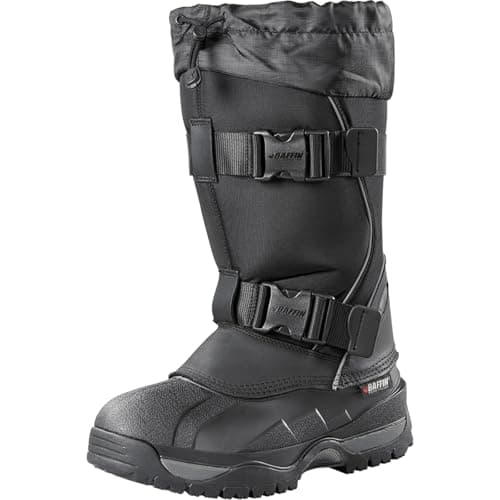
Cold Weather Boots
The warmest hunting boots
The warmest boot in this category is a pac boot you cannot walk in. The warmest boot in each of the four architectures, the figures you are not allowed to compare, and the point where warmth stops being worth it.
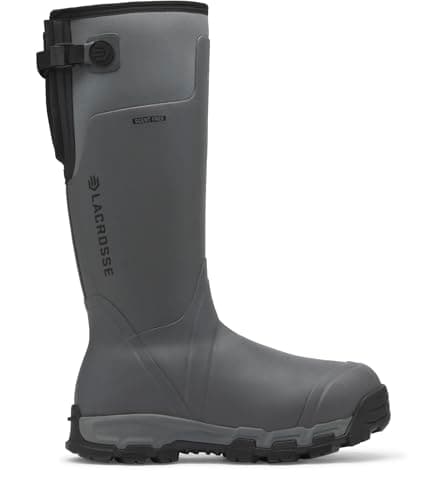
Cold Weather Boots
The best insulated hunting boots, by what you are doing in them
Five insulated boots from 400g to 1,600g, each matched to a temperature AND an activity level rather than ranked on warmth alone.
Boot Fit & Sizing
Best value hunting boots
Value by price bracket, with what each saving actually costs you in the field. Six picks plus the $60 of sock and insole that beats a boot upgrade.
Boot Fit & Sizing
Best hunting boots under $100
Under a hundred dollars you pick an architecture, not a grade. Eight boots with published figures, grouped by what each one is genuinely bad at.
Brands: want your product tested? For Brands.