Boot Fit & Sizing
Best boots for bow hunting
A bow hunter has to get inside forty yards. That makes quiet, scent and stillness the specs that matter, not insulation grams.
Bog & Briar earns a commission when you buy through our links, at no extra cost to you. Prices come from Amazon and change; the date beside every price is when we last verified it. Full disclosure.
Best for bow hunting
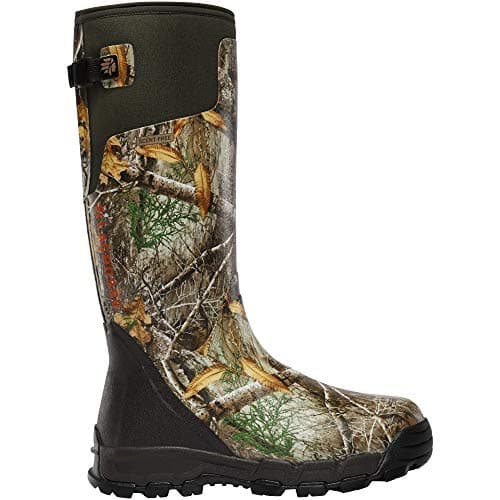
LaCrosse Alphaburly Pro 18-inch, 400g
Early season and warm-weather water
400g is an early-season spec and the boot is honest about it. Buy this if your problem is wet ground in September, not cold feet in December.
#ad How we are funded · Price as of November 19, 2026
Quick picks
| # | Product | Insulation | Score | Price |
|---|---|---|---|---|
| Rank 1 | LaCrosse Alphaburly Pro 18-inch, 400g Early season and warm-weather water | 400g | 9.5/10 | $178.35Amazon |
| Rank 2 | 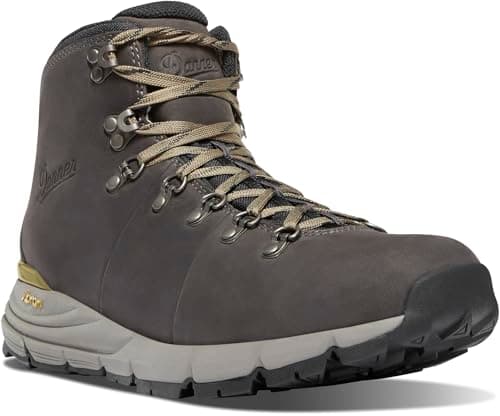 Danner Mountain 600 Leaf GTX Scouting and warm-weather miles | None (uninsulated) | 9.1/10 | $233.81Amazon |
| Rank 3 | 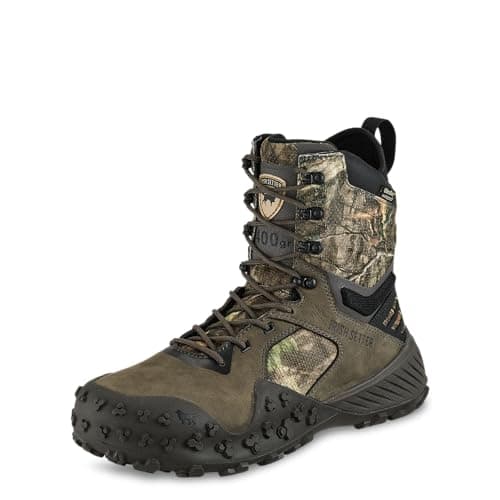 Irish Setter VaprTrek 8-inch, 400g Light miles in cool weather | 400g | 9.3/10 | $199.95Amazon |
| Rank 4 | 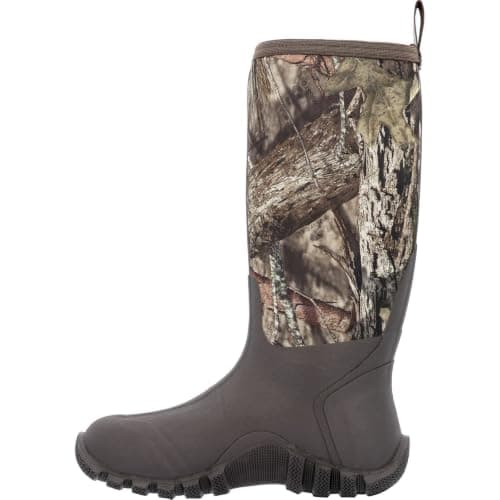 Muck Fieldblazer Classic A cheap tall neoprene boot | 4mm neoprene | 9.3/10 | $104.99Amazon |
| Rank 5 | 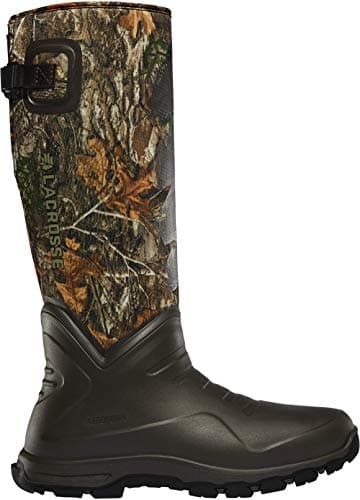 LaCrosse AeroHead Sport 16-inch, 7mm Marsh walking where flex matters | 7.0mm neoprene | 9.5/10 | $214.98Amazon |
| Rank 6 | 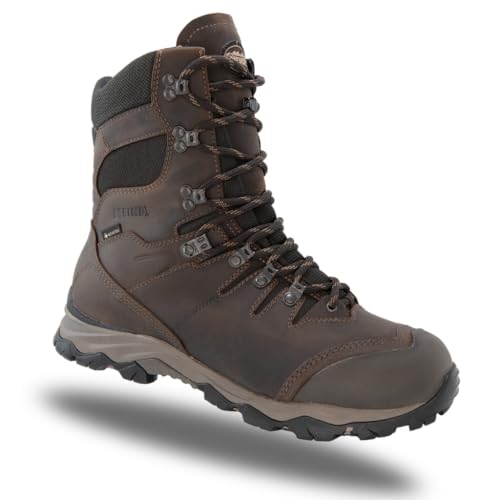 Meindl EuroLight Hunter 300 Covering ground in cool weather | 300g Gore-Tex Airfiber (manufacturer) | 9.3/10 | $403.95Amazon |
#ad Prices come from Amazon and change. How this site is funded. Scores are our published editorial rubric — see our methodology.
For most bow hunting, buy the LaCrosse Alphaburly Pro in `400g`: an `18-inch` scent-free rubber pull-on with an adjustable calf gusset, insulated lightly enough for an October evening sit. Rubber is the right upper for archery because it holds and releases far less human scent than leather or fabric, and the tall shaft keeps your scent off the brush you walk through. If your archery is spot-and-stalk or western and measured in miles rather than sits, buy the Danner Mountain 600 instead - uninsulated, light, and quiet on dry ground.
Bow season is the hardest footwear problem in hunting because it asks for two opposite things at once. It happens in warm weather, so the boot must not be insulated. It involves sitting still at close range, so the boot must not be cold. And it demands you get within bow range of an animal that will leave on a cracked stick or a scent trail, so the boot must be quiet and clean.
The four specs that matter for archery
- Scent. A rubber or neoprene upper holds and releases much less human scent than leather or Cordura. This is the main reason whitetail bow hunters wear knee boots in 60F weather.
- Shaft height for scent, not water. Walking through waist-high cover in 8-inch boots wipes your scent onto every stem you pass. A 16 to 18-inch boot moves that contact line above most of it.
- Low insulation. 400g is the archery ceiling for anything involving a walk-in. Above that you arrive soaked and then sit still.
- Quiet. A stiff nylon panel scuffing against itself is audible at 20 yards. Soft rubber, neoprene and suede are quieter than hard synthetics and hard leather.
The picks
Three rubber and neoprene pull-ons for whitetail sits, and three light uninsulated boots for stalking and western archery.
#1 · Early season and warm-weather water
#ad How we are funded · Price as of November 19, 2026
LaCrosse Alphaburly Pro 18-inch, 400g
LaCrosse400g is an early-season spec and the boot is honest about it. Buy this if your problem is wet ground in September, not cold feet in December.
| Insulation | 400g |
|---|---|
| Shaft height | 18 in |
| Upper | Vulcanized rubber over neoprene |
| Calf fit | Adjustable back gusset |
| Liner | Removable EVA footbed |
Specifications per LaCrosse Footwear published specifications.
What it does well
- Walkable in a way the 1,600g version is not
- Still knee-high waterproof, so flooded timber and beaver sloughs are no problem
- Usually the cheapest Alphaburly, and the gusset is unchanged
Good to know
- You will be cold sitting still below about 40F
Our rubric — each criterion 0-10
- Warmth
- 6.0
- Waterproofing
- 9.4
- Fit
- 8.6
- Durability
- 9.0
- Value
- 9.2
#2 · Scouting and warm-weather miles
$249.95 6% off
#ad How we are funded · Price as of November 19, 2026
Danner Mountain 600 Leaf GTX
DannerNot a hunting boot in the insulated sense - an uninsulated Gore-Tex hiker that happens to be the right tool for August scouting and September archery.
| Insulation | None (uninsulated) |
|---|---|
| Shaft height | Not published by manufacturer |
| Upper | Suede leather |
| Waterproofing | Gore-Tex (manufacturer) |
| Outsole | Vibram SPE/Megagrip |
Specifications per Danner published specifications.
What it does well
- Comfortable out of the box in a way no insulated hunting boot is
- Vibram Megagrip is the best wet-rock outsole in this list
Good to know
- Zero insulation - this is the wrong boot the moment it gets cold
Our rubric — each criterion 0-10
- Warmth
- 3.0
- Waterproofing
- 8.6
- Fit
- 9.4
- Durability
- 8.4
- Value
- 8.4
#3 · Light miles in cool weather
#ad How we are funded · Price as of November 19, 2026
Irish Setter VaprTrek 8-inch, 400g
Irish SetterA deliberately light 8-inch boot with just 400g of insulation - the right spec for an early-season walk-in where the problem is weight and sweat, not cold.
| Insulation | 400g |
|---|---|
| Shaft height | 8 in |
| Upper | Leather and nylon |
| Waterproofing | UltraDry membrane (manufacturer) |
| Fit | Lace-up |
Specifications per Irish Setter published specifications.
What it does well
- Genuinely light for an insulated boot, which is the whole point of the model
- Breaks in faster than a full-leather 12-inch boot
Good to know
- 400g and an 8-inch shaft is not a cold-sit boot - read the spec and believe it
Our rubric — each criterion 0-10
- Warmth
- 6.2
- Waterproofing
- 7.8
- Fit
- 9.0
- Durability
- 8.0
- Value
- 8.6
#4 · A cheap tall neoprene boot
$140.00 25% off
#ad How we are funded · Price as of November 19, 2026
Muck Fieldblazer Classic
MuckThe entry point to tall Muck boots. Thinner neoprene and a simpler build, which is fine if your problem is water and mild cold rather than a static December sit.
| Insulation | 4mm neoprene |
|---|---|
| Shaft height | Not published by manufacturer |
| Upper | Rubber over 4mm neoprene |
| Fit | Pull-on, stretch-fit topline |
| Liner | Jersey |
Specifications per Muck Boot Company published specifications.
What it does well
- Tall waterproof coverage at a price that competes with uninsulated rubber
- Light enough to walk in for a tall boot
Good to know
- 4mm is a cool-weather spec, not a cold-weather one
Our rubric — each criterion 0-10
- Warmth
- 6.4
- Waterproofing
- 8.8
- Fit
- 8.2
- Durability
- 7.6
- Value
- 9.0
#5 · Marsh walking where flex matters
#ad How we are funded · Price as of November 19, 2026
LaCrosse AeroHead Sport 16-inch, 7mm
LaCrossePolyurethane over 7mm neoprene instead of rubber over neoprene: lighter, more flexible, and noticeably easier to walk a long way in than an Alphaburly.
| Insulation | 7.0mm neoprene |
|---|---|
| Shaft height | 16 in |
| Upper | Polyurethane over neoprene |
| Liner | Jersey (manufacturer) |
| Fit | Pull-on, non-adjustable |
Specifications per LaCrosse Footwear published specifications.
What it does well
- The polyurethane shell resists abrasion better than it has any right to at this weight
- 7mm neoprene is warm for its bulk, so the boot is slimmer than an equivalent-warmth rubber boot
- Flexes at the ankle, which is why marsh and flooded-timber hunters pick it over a stiff pull-on
Good to know
- The gusset accommodates a range of calf sizes but does not adjust the way the Alphaburly's does - measure first if your calf is heavy
Our rubric — each criterion 0-10
- Warmth
- 8.0
- Waterproofing
- 9.2
- Fit
- 7.6
- Durability
- 8.6
- Value
- 8.4
#6 · Covering ground in cool weather
#ad How we are funded · Price as of November 19, 2026
Meindl EuroLight Hunter 300
MeindlThe lightest insulated boot Meindl lists at 3.4 lb per pair, with 300g of Gore-Tex Airfiber instead of loft. The one to buy if you walk far more than you sit.
| Insulation | 300g Gore-Tex Airfiber (manufacturer) |
|---|---|
| Height | 9 in |
| Weight | 3.4 lb per pair |
| Upper | Waxed full-grain nubuck |
| Waterproofing | Gore-Tex lined (manufacturer) |
| Outsole | Meindl Duo-DUR III |
| Venting | Flex-Zone |
Specifications per Meindl USA published specifications.
What it does well
- 3.4 lb per pair is light for a leather hunting boot with any insulation at all
- Airfiber is a thinner insulation than loose loft, so the boot stays flexible instead of turning into a cast
- Meindl publishes this one as made in Italy and states the Flex-Zone venting - a rare bit of specificity in the category
Good to know
- 300g is a walking figure, not a sitting figure. Buy it to move in, not to sit still below freezing
Our rubric — each criterion 0-10
- Warmth
- 6.4
- Waterproofing
- 9.0
- Fit
- 9.0
- Durability
- 8.8
- Value
- 6.2
Two kinds of bow hunting, two different boots
| Whitetail from a stand or blind | Spot and stalk, western archery | |
|---|---|---|
| Distance walked | Under a mile, usually | Five to fifteen miles a day |
| Scent matters | Enormously | Less - thermals and distance dominate |
| Upper | Rubber or neoprene | Leather or leather and textile |
| Height | 16 to 18 in | 8 to 9 in |
| Insulation | 400g or 4mm neoprene | None |
| Weight | Not critical | The deciding spec |
| Example here | Alphaburly Pro 400g | Mountain 600 or EuroLight 300 |
Scent control from the ground up
Rubber is not magic and it does not beat the wind. What it does is reduce one controllable input: your boots are the only part of your kit that touches the ground on your entry route, and a porous upper picks up and sheds human scent along the whole walk. A knee-high rubber boot you only wear from the truck into the woods, stored in a tote rather than the floor of the cab, is about as far as a boot can take you.
The honest limits, and the things that help more, are laid out in scent-free rubber boots. The summary: wind direction beats every product decision, and a clean boot beats a sprayed one.
Quiet is a construction question
No maker publishes a noise figure, so this is a judgment rather than a measurement - but the pattern is consistent. Soft uppers are quiet: vulcanized rubber, neoprene, suede and brushed nubuck. Hard uppers are not: glossy full-grain leather, stiff 1000D nylon panels and plastic heel counters all scuff and click. The same goes for hardware - speed hooks and metal eyelets catch brush where a fully closed lace system does not.
- Quietest uppers here: Alphaburly Pro (rubber), Fieldblazer (4mm neoprene), AeroHead Sport (polyurethane over 7mm neoprene), Mountain 600 (suede).
- Loudest: anything with large hard-nylon panels - which is most insulated lace-ups.
- Quiet on the ground is separate from quiet on your feet. A soft, flexible sole lets you feel a stick before you break it; a stiff mountain shank does not.
Fit matters more in archery than anywhere else
You will stand up, draw, and hold a position in a boot that has been still for two hours. A boot that is loose at the heel shifts audibly when you shift your weight; a boot that is tight makes a cold, numb foot that will not hold a stance. Target a locked heel and a thumb's width at the toe, in the sock you will hunt in - the method is in the hunting boot sizing guide, and the pull-on-specific version is in how should rubber boots fit.
What we would buy
- One archery boot for whitetail: LaCrosse Alphaburly Pro 400g, 18 in, adjustable gusset.
- Spot and stalk, or western archery: Danner Mountain 600 Leaf GTX, uninsulated, suede.
- Warm early-season walk-ins: Irish Setter VaprTrek 400g, 8 in, UltraDry membrane.
- Cheapest quiet tall boot: Muck Fieldblazer Classic, 4mm neoprene.
- Marsh and flooded-field archery: LaCrosse AeroHead Sport, 16 in, 7mm neoprene.
- Lightest insulated option for cool stalking: Meindl EuroLight Hunter 300, 3.4 lb per pair.
Our recommendation
If you only take one thing from this page, take this one.
Our pick
LaCrosse Alphaburly Pro 18-inch, 400g
Early season and warm-weather water
#ad How we are funded · Price as of November 19, 2026
Runner-up
Danner Mountain 600 Leaf GTX
Scouting and warm-weather miles
#ad How we are funded · Price as of November 19, 2026
Frequently asked questions
What are the best boots for bow hunting?
Why do bow hunters wear rubber boots in warm weather?
How many grams of insulation for bow hunting?
Do quiet boots actually matter for archery?
Should bow hunting boots be tall or short?
Sources
Read next
Rubber Boots
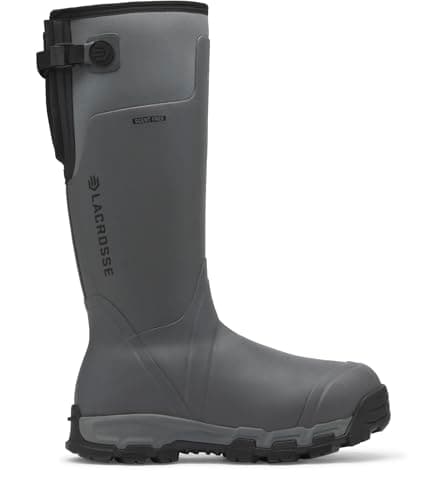
Scent-free rubber boots: what helps and what is marketing
Rubber absorbs less odor than leather - and the rest of scent control is storage and handling, which is free.
Boot Fit & Sizing
Best hunting boots for hot weather
Almost every boot on the hunting wall is insulated, which is the wrong spec in heat. Six uninsulated picks for scouting, archery and Southern seasons.
Rubber Boots
Best rubber boots for deer hunting
Scent control, silence and a long motionless sit - what deer hunting asks of a rubber boot, and which ones deliver.
Cold Weather Boots
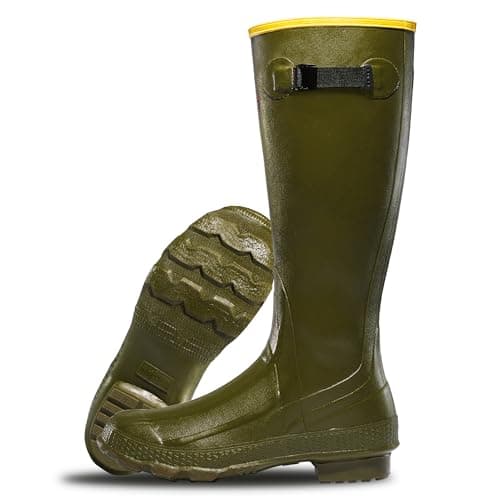
Insulated or uninsulated hunting boots: pick by activity, not temperature
An uninsulated boot plus the right sock beats an insulated boot you sweat into. Where the line actually falls.
Brands: want your product tested? For Brands.