Rubber Boots
How should rubber hunting boots fit?
Yes, a pull-on is meant to be looser than a lace-up. The mistake is letting the slack sit in the heel instead of around the calf.
Bog & Briar earns a commission when you buy through our links, at no extra cost to you. Prices come from Amazon and change; the date beside every price is when we last verified it. Full disclosure.
Top pick
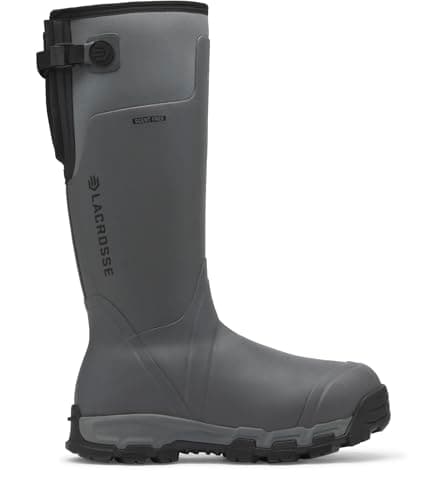
LaCrosse Alphaburly Pro 18-inch, 800g
One boot for most of the season
The same boot as the 1,600g with half the insulation, and for most hunters in most of the country it is the smarter buy: warm enough sitting down to about freezing, survivable walking in.
#ad How we are funded · Price as of November 19, 2026
Quick picks
| # | Product | Type | Score | Price |
|---|---|---|---|---|
| Rank 1 | LaCrosse Alphaburly Pro 18-inch, 800g One boot for most of the season | Not published | 9.7/10 | $209.95Amazon |
| Rank 2 | 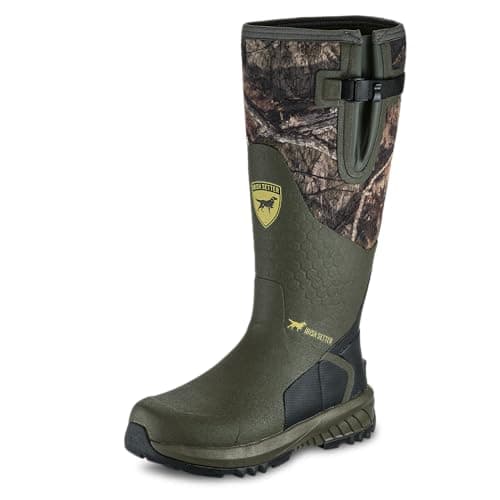 Irish Setter MudTrek 17-inch A full-fit rubber boot that walks | Not published | 9.5/10 | $199.95Amazon |
| Rank 3 | 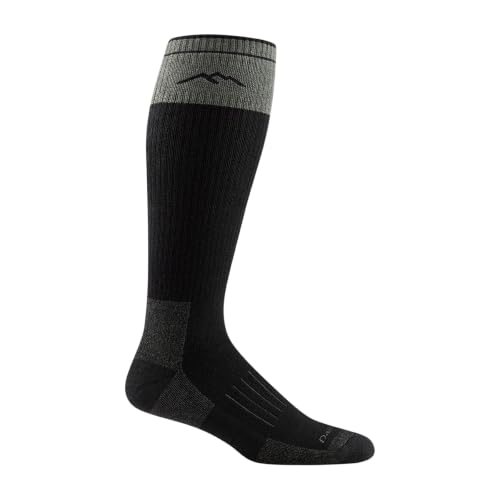 Darn Tough Hunting Hojo Over-the-Calf Knee boots and tall rubber | Not published | 9.8/10 | $34.70Amazon |
| Rank 4 | 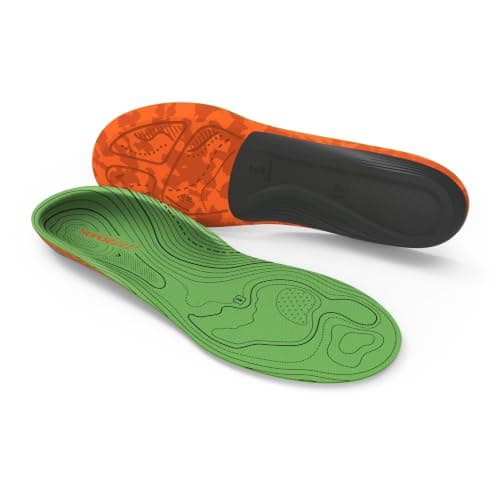 Superfeet Hike Support Miles in hunting boots | Structured support insole | 9.4/10 | $44.86Amazon |
#ad Prices come from Amazon and change. How this site is funded. Scores are our published editorial rubric — see our methodology.
A rubber hunting boot should be snug at the heel, roomy at the toes and adjustable at the calf - and loose everywhere else is fine. That is the opposite of a lace-up, where you tension the whole boot onto the foot. A pull-on has no laces, so the only thing holding your heel down is the shape of the heel cup and the friction of your sock. If your heel lifts when you walk, the boot is too big no matter how the toes feel.
The usual question behind this search is whether a rubber boot that feels loose is wrong, and the answer is: loose in the shaft is correct, loose in the heel is not. Those are two different fit zones that a pull-on resolves separately, and most of the frustration with rubber boots comes from confusing them.
The four fit zones, and what each should feel like
| Zone | Correct feel | What it means if it is wrong |
|---|---|---|
| Heel | Locked - under a quarter inch of lift | Lift means blisters and a boot a size too big |
| Instep | Light contact, no pressure | Pressure means the volume is too low for your foot |
| Toe box | A thumb's width ahead of the longest toe | Tight toes go cold first, always |
| Shaft and calf | Loose enough to pull on over a thick sock | Tight calf cuts circulation and will not seal |
Why heel lift is the spec that matters
A lace-up boot solves heel hold with lacing pressure over the instep. A pull-on has to do it with geometry: a heel cup that matches your heel and a topline that grips the calf. When it does not, your heel slides up and down a quarter inch or more with every step, your sock moves with it, and the friction produces exactly the blister pattern people blame on "cheap boots".
- Test it on a slope, not a flat floor. Walk up a stair or a ramp - a flat shop floor hides heel lift completely.
- Test it in the sock you will hunt in. A thin sock in the shop and a heavyweight merino in the field is a different boot.
- If the heel lifts and the toes are right, add volume, not length. A supportive insole fills the boot from underneath and pulls the heel down into the cup.
- If the heel lifts and the toes are already tight, size DOWN. Rubber pull-ons are commonly sized generously, and some run a half size large.
- Do not solve heel lift with two pairs of socks. It works for one hunt and gives you a compressed, colder boot every hunt after.
What fixes a rubber boot that does not fit
An adjustable-gusset boot, a full-fit last, the sock that stops a knee boot bunching, and the insole that takes up volume.
#1 · One boot for most of the season
#ad How we are funded · Price as of November 19, 2026
LaCrosse Alphaburly Pro 18-inch, 800g
LaCrosseThe same boot as the 1,600g with half the insulation, and for most hunters in most of the country it is the smarter buy: warm enough sitting down to about freezing, survivable walking in.
| Insulation | 800g |
|---|---|
| Shaft height | 18 in |
| Upper | Vulcanized rubber over neoprene |
| Calf fit | Adjustable back gusset |
| Liner | Removable EVA footbed |
Specifications per LaCrosse Footwear published specifications.
What it does well
- The widest usable temperature window of any boot here - roughly 20F sitting to 50F walking
- Same gusset, same rubber, same scent profile as the 1,600g version
- If you are buying one rubber boot and do not know your conditions, this is the one
Good to know
- Not enough boot for an all-day December sit in the north
Our rubric — each criterion 0-10
- Warmth
- 8.2
- Waterproofing
- 9.4
- Fit
- 8.4
- Durability
- 9.0
- Value
- 9.0
#2 · A full-fit rubber boot that walks
#ad How we are funded · Price as of November 19, 2026
Irish Setter MudTrek 17-inch
Irish SetterIrish Setter's rubber boot, built on a full-fit last rather than the loose tube most pull-ons use - which is why it walks better than its height suggests.
| Insulation | Not published by manufacturer |
|---|---|
| Shaft height | 17 in |
| Upper | Rubber over neoprene |
| Fit | Full fit, pull-on |
| Widths | Standard and wide offered |
Specifications per Irish Setter published specifications.
What it does well
- A wide option, which almost no knee-high rubber boot offers
- The full-fit last means less heel slip, so fewer blisters on a long walk-in
Good to know
- Insulation varies by listing; check before buying for cold
Our rubric — each criterion 0-10
- Warmth
- 6.8
- Waterproofing
- 9.0
- Fit
- 8.8
- Durability
- 8.4
- Value
- 8.6
#3 · Knee boots and tall rubber
#ad How we are funded · Price as of November 19, 2026
Darn Tough Hunting Hojo Over-the-Calf
Darn ToughThe over-the-calf version. In a knee-high rubber boot this is the difference between a sock that stays up and a bunched heel by mid-morning.
| Material | Merino wool blend |
|---|---|
| Weight | Cushion |
| Height | Over the calf |
| Warranty | Unconditional lifetime guarantee (manufacturer) |
| Made in | Vermont, USA (manufacturer) |
Specifications per Darn Tough Vermont published specifications.
What it does well
- Over-the-calf height is the right pairing for an 18-inch pull-on
- Same lifetime guarantee and merino quality as the boot-height version
Good to know
- Over-the-calf socks are warm by design - too warm for an early-season walk
Our rubric — each criterion 0-10
- Warmth
- 9.2
- Moisture handling
- 8.8
- Durability
- 9.8
- Fit
- 9.0
- Value
- 7.8
#4 · Miles in hunting boots
$59.95 25% off
#ad How we are funded · Price as of November 19, 2026
Superfeet Hike Support
SuperfeetThe hiking-specific Superfeet: a little more forefoot cushioning than the all-purpose version, aimed at long days under a pack.
| Type | Structured support insole |
|---|---|
| Arch profile | Medium to high |
| Cushioning | Forefoot foam |
| Trimmable | Yes |
| Stated life | 12 months of regular use (manufacturer) |
What it does well
- Support plus some cushion, which is the right balance for mountain hunting
- Clearly better than the die-cut foam insole almost every boot ships with
Good to know
- Not a warmth upgrade
Our rubric — each criterion 0-10
- Effectiveness
- 8.4
- Ease of use
- 8.6
- Durability
- 7.8
- Value
- 7.6
The calf is the measurement people skip
A 17 or 18-inch pull-on has to clear your calf twice: once going on and once coming off, usually in mud, usually in a hurry. Makers solve it three ways. LaCrosse puts an adjustable back gusset on the Alphaburly Pro, which is the most useful version because it tightens as well as loosens. Muck uses a stretch-fit topline that accommodates but does not adjust. Irish Setter builds the MudTrek on a full-fit last so the whole boot is shaped like a leg rather than a tube.
If your calves are large, measure them at the widest point over your hunting clothes before you order, and read rubber hunting boots for wide calves - a boot you cannot get on is the only fit failure with no workaround.
Sizing against a lace-up
Most rubber pull-ons are offered in whole sizes only, which means half-size feet have a decision to make. Our working rule, and it is a rule of thumb rather than a manufacturer statement:
- Half-size foot, thin sock: size down and add a thicker sock.
- Half-size foot, heavyweight sock already: size up and add a supportive insole to take back the volume.
- Between brands: treat a Muck as truer to size and an Alphaburly as slightly generous, then confirm against the maker's own chart.
- Over a heavyweight sock in a lace-up: the adjustment is different - see what size boot over thick socks.
Breaking in a rubber boot - there is nothing to break in
Rubber and neoprene do not mold to your foot the way leather does. What a pull-on does over the first few wears is soften at the flex point and let the footbed take an impression, and that is the whole process. If the boot hurts out of the box it will keep hurting, which is the opposite of a leather lace-up - see how long to break in hunting boots for the leather timeline, and treat a rubber boot as a fit decision you make on day one.
The short version
- Heel: locked, under a quarter inch of lift on a slope.
- Toes: a thumb's width of clearance, in your hunting sock.
- Instep: contact without pressure.
- Calf: loose, and adjustable if the boot offers it.
- If it is loose at the heel: insole first, then size down.
- If it is tight anywhere: send it back - rubber will not stretch to fit you.
Our recommendation
If you only take one thing from this page, take this one.
Our pick
LaCrosse Alphaburly Pro 18-inch, 800g
One boot for most of the season
#ad How we are funded · Price as of November 19, 2026
Runner-up
Irish Setter MudTrek 17-inch
A full-fit rubber boot that walks
#ad How we are funded · Price as of November 19, 2026
Frequently asked questions
Are rubber boots supposed to be loose?
How much room should you have in rubber hunting boots?
Should I size up or down in rubber hunting boots?
Why do my heels lift in rubber boots?
Do rubber hunting boots need breaking in?
Sources
Read next
Boot Fit & Sizing
Hunting boot sizing guide
The sizing adjustment table, the five fit checks, and the two measurements shoe size tells you nothing about.
Rubber Boots
Rubber hunting boots for wide calves
Shoe size barely changes a knee boot's calf opening. Measure, then buy one of the few boots that genuinely adjusts.
Boot Fit & Sizing
What size boot to buy over thick socks
Half a size for heavy wool, a full size with a liner - and why a tight boot is a cold boot.
Rubber Boots
The best rubber hunting boots
Six rubber boots ranked on height, calf fit, insulation and how each one eventually fails.