Boot Fit & Sizing
Best hunting boots for beginners
Your first pair of hunting boots should be cheap on purpose. You do not yet know what your hunt demands, and the market is very happy to sell you the wrong answer at a premium price.
Bog & Briar earns a commission when you buy through our links, at no extra cost to you. Prices come from Amazon and change; the date beside every price is when we last verified it. Full disclosure.
Best first pair
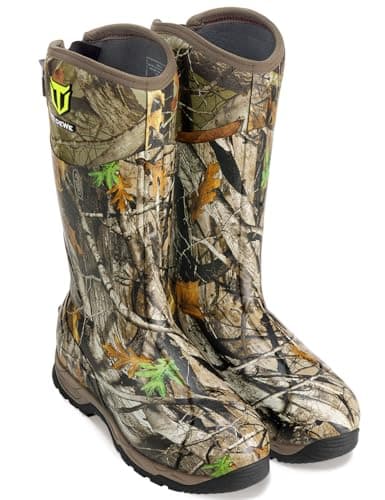
TIDEWE 800g insulated rubber boot
Insulated rubber on a tight budget
800g of insulation in a knee-high rubber boot for roughly half what the name brands charge. The tradeoff is longevity, not warmth.
#ad How we are funded · Price as of November 19, 2026
Quick picks
| # | Product | Insulation | Score | Price |
|---|---|---|---|---|
| Rank 1 | TIDEWE 800g insulated rubber boot Insulated rubber on a tight budget | 800g | 9.2/10 | $116.99Amazon |
| Rank 2 | 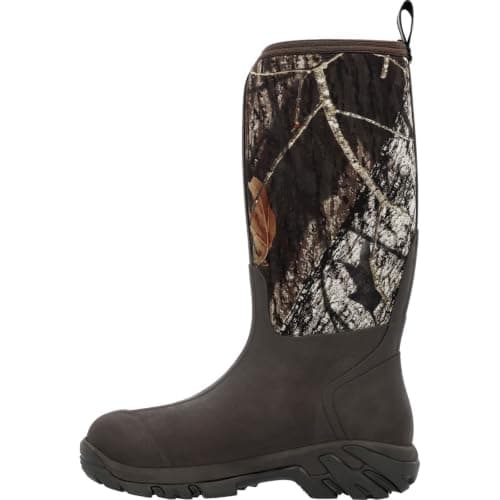 Muck Woody Sport Tall Mid-season walking and sitting | 5mm neoprene | 9.5/10 | $119.99Amazon |
| Rank 3 | 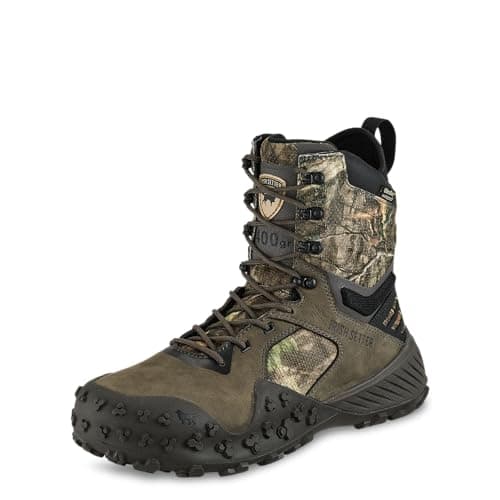 Irish Setter VaprTrek 8-inch, 400g Light miles in cool weather | 400g | 9.3/10 | $199.95Amazon |
| Rank 4 | 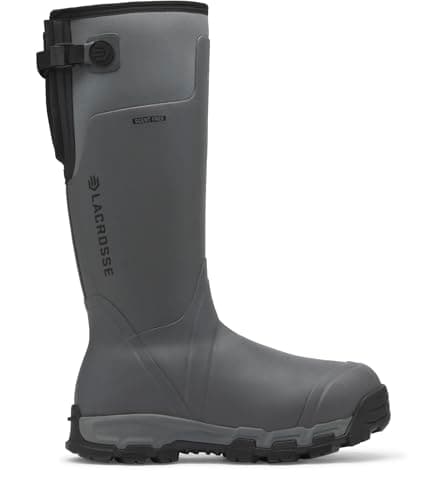 LaCrosse Alphaburly Pro 18-inch, 800g One boot for most of the season | 800g | 9.7/10 | $209.95Amazon |
| Rank 5 | 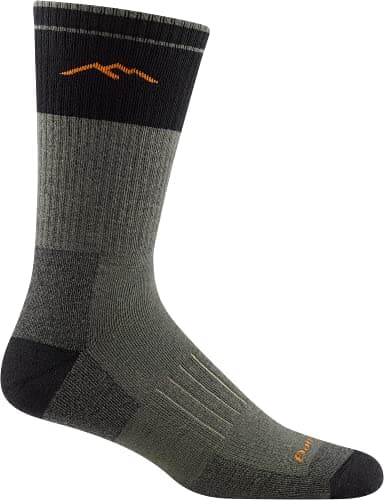 Darn Tough Hunter Boot Sock, heavyweight The default serious hunting sock | Not published | 9.8/10 | $31.95Amazon |
| Rank 6 | 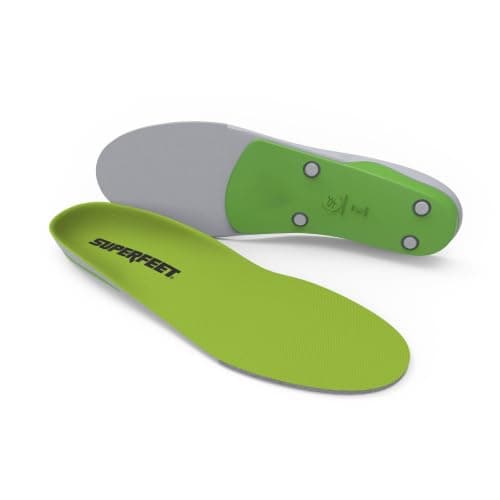 Superfeet All-Purpose High Arch High arches and heel pain | Not published | 9.4/10 | $44.86Amazon |
#ad Prices come from Amazon and change. How this site is funded. Scores are our published editorial rubric — see our methodology.
If this is your first pair of hunting boots, buy an `800g` insulated rubber pull-on for under `$100` - the TIDEWE is the one we would start with - and spend the rest on a merino sock. It is waterproof, it needs no break-in, it costs little enough that being wrong is cheap, and after one season you will know exactly which direction to spend in. The expensive leather mountain boot that the internet recommends is the correct answer for a hunter you are not yet.
The beginner's mistake in this category is not buying cheap. It is buying for the coldest hour of the worst day you can imagine, and then wearing that boot on every ordinary morning in between. A 1,600g boot bought for one December sit will make your feet cold in October, because you will sweat in it on the walk and sit in a wet liner afterwards.
How we picked for a first pair
- Cheap enough that being wrong does not hurt. A first boot is a diagnostic tool.
- No break-in required, or very little. Blisters in week one end more hunting careers than cold does.
- Waterproof without a membrane to fail. Rubber and neoprene are waterproof by material.
- Published specs only. Every figure below is the manufacturer's, labeled as such - see our methodology.
- One upgrade path. Each pick below tells you what to buy next if it turns out to be wrong.
The picks
Two rubber pull-ons, a light lace-up, the one upgrade worth making early, and the sock and insole that matter more than any of them.
#1 · Insulated rubber on a tight budget
#ad How we are funded · Price as of November 19, 2026
TIDEWE 800g insulated rubber boot
TIDEWE800g of insulation in a knee-high rubber boot for roughly half what the name brands charge. The tradeoff is longevity, not warmth.
| Insulation | 800g |
|---|---|
| Shaft height | Not published by manufacturer |
| Upper | Rubber over neoprene |
| Liner | Insulated |
| Fit | Pull-on |
What it does well
- The cheapest honest 800g knee boot on the market
- For an occasional hunter who needs water and warmth once a year, the value case is real
Good to know
- Buyers consistently report the rubber-to-neoprene bond is where these fail
Our rubric — each criterion 0-10
- Warmth
- 8.0
- Waterproofing
- 8.4
- Fit
- 7.0
- Durability
- 6.2
- Value
- 9.4
#2 · Mid-season walking and sitting
#ad How we are funded · Price as of November 19, 2026
Muck Woody Sport Tall
MuckThe mid-weight Woody: enough neoprene for a cold morning, flexible enough that you can still walk to the stand without soaking the liner in sweat.
| Insulation | 5mm neoprene |
|---|---|
| Shaft height | Not published by manufacturer |
| Upper | Rubber over 5mm neoprene |
| Fit | Pull-on, stretch-fit topline |
| Liner | Fleece |
Specifications per Muck Boot Company published specifications.
What it does well
- The most walkable tall rubber boot in the Muck hunting line
- Stretch topline makes it easy to pull on over a heavy sock
Good to know
- 5mm is a mid-season spec; a December sit will find its limit
Our rubric — each criterion 0-10
- Warmth
- 7.6
- Waterproofing
- 9.0
- Fit
- 8.6
- Durability
- 8.0
- Value
- 8.6
#3 · Light miles in cool weather
#ad How we are funded · Price as of November 19, 2026
Irish Setter VaprTrek 8-inch, 400g
Irish SetterA deliberately light 8-inch boot with just 400g of insulation - the right spec for an early-season walk-in where the problem is weight and sweat, not cold.
| Insulation | 400g |
|---|---|
| Shaft height | 8 in |
| Upper | Leather and nylon |
| Waterproofing | UltraDry membrane (manufacturer) |
| Fit | Lace-up |
Specifications per Irish Setter published specifications.
What it does well
- Genuinely light for an insulated boot, which is the whole point of the model
- Breaks in faster than a full-leather 12-inch boot
Good to know
- 400g and an 8-inch shaft is not a cold-sit boot - read the spec and believe it
Our rubric — each criterion 0-10
- Warmth
- 6.2
- Waterproofing
- 7.8
- Fit
- 9.0
- Durability
- 8.0
- Value
- 8.6
#4 · One boot for most of the season
#ad How we are funded · Price as of November 19, 2026
LaCrosse Alphaburly Pro 18-inch, 800g
LaCrosseThe same boot as the 1,600g with half the insulation, and for most hunters in most of the country it is the smarter buy: warm enough sitting down to about freezing, survivable walking in.
| Insulation | 800g |
|---|---|
| Shaft height | 18 in |
| Upper | Vulcanized rubber over neoprene |
| Calf fit | Adjustable back gusset |
| Liner | Removable EVA footbed |
Specifications per LaCrosse Footwear published specifications.
What it does well
- The widest usable temperature window of any boot here - roughly 20F sitting to 50F walking
- Same gusset, same rubber, same scent profile as the 1,600g version
- If you are buying one rubber boot and do not know your conditions, this is the one
Good to know
- Not enough boot for an all-day December sit in the north
Our rubric — each criterion 0-10
- Warmth
- 8.2
- Waterproofing
- 9.4
- Fit
- 8.4
- Durability
- 9.0
- Value
- 9.0
#5 · The default serious hunting sock
#ad How we are funded · Price as of November 19, 2026
Darn Tough Hunter Boot Sock, heavyweight
Darn ToughMerino with a full cushion, knit in Vermont, guaranteed for life. The sock we would buy first, and the cheapest real upgrade to a cold boot.
| Material | Merino wool blend |
|---|---|
| Weight | Heavyweight, full cushion |
| Height | Boot height |
| Warranty | Unconditional lifetime guarantee (manufacturer) |
| Made in | Vermont, USA (manufacturer) |
Specifications per Darn Tough Vermont published specifications.
What it does well
- The lifetime guarantee is honored, which changes the cost-per-season arithmetic completely
- Fine-gauge merino cushions without the bulk that makes a boot tight
- Wool keeps insulating when damp, which is the whole reason not to wear cotton
Good to know
- Three times the price of a drugstore wool-blend sock
Our rubric — each criterion 0-10
- Warmth
- 9.0
- Moisture handling
- 9.0
- Durability
- 9.8
- Fit
- 9.0
- Value
- 8.0
#6 · High arches and heel pain
$59.95 25% off
#ad How we are funded · Price as of November 19, 2026
Superfeet All-Purpose High Arch
SuperfeetThe classic high-volume support insole. It will not make a boot warmer, and it is the most reliable fix there is for arch and heel pain on long days.
| Type | Structured support insole |
|---|---|
| Arch profile | High |
| Volume | High (fills a roomy boot) |
| Trimmable | Yes |
| Stated life | 12 months of regular use (manufacturer) |
What it does well
- A rigid stabilizer cap under the heel, which is what actually controls heel pain
- Takes up volume, so it also tightens a boot you sized up for socks
Good to know
- Adds no insulation whatsoever - a common and expensive misconception
Our rubric — each criterion 0-10
- Effectiveness
- 8.6
- Ease of use
- 8.6
- Durability
- 8.0
- Value
- 7.6
The three questions that pick your first boot
You do not need to know boots. You need to answer three things about your own hunting, and the answers route you straight to a boot type.
Answer these three, then buy from the row you land in
- Will your feet be in water or mud?Yes - buy rubber or neoprene, nothing else See the picks
- Do you walk more than half a mile?Yes - buy a lace-up with 400g or less See the picks
- Will you sit still for hours below freezing?Yes - buy 1,000g or more, or neoprene See the picks
- Snakes on your ground?Buy a snake boot or gaiters, not a hunting boot See the picks
- None of the above, or unsure800g rubber pull-on, under $100 See the picks
Why beginners should start with rubber
It is not only the price. A rubber pull-on has four properties that a first-time buyer benefits from more than an experienced one does:
- No break-in. You can buy it on Friday and hunt in it on Saturday without consequences. A leather lace-up cannot promise that - see how to break in hunting boots.
- Sizing is forgiving. A pull-on is roomy by design, so being half a size off is survivable rather than painful.
- Waterproof by material, not by membrane. There is no laminate to delaminate and no seam to leak.
- Scent-free. Rubber does not hold human scent the way leather and fabric do, which matters if you are learning to hunt whitetails. More in scent-free rubber boots.
The trade is real and you should know it going in: a pull-on gives you very little ankle support and a poor heel hold. If your ground is steep, or if you discover you like walking, that is the signal to move to a lace-up.
Buy the sock before you buy the second boot
Beginners routinely spend $250 on a warmer boot to fix a problem a $25 sock would have solved. Cotton socks hold sweat against the skin, and wet skin loses heat fast - this is the single most common cause of cold feet in otherwise adequate boots, and it is why cotton socks fail. A heavyweight merino sock moves that moisture out of the boot.
Sizing your first pair, in five minutes
- Measure both feet in the afternoon - feet swell through the day and a morning measurement will give you a boot that is tight by 3 p.m.
- Wear the sock you will hunt in, not a dress sock. A heavyweight merino changes the fit by close to a half size.
- Leave about a thumb's width in front of your longest toe. On descents your foot slides forward, and a toe against the end of the boot is a black toenail by lunch.
- Stand up and kick back into the heel, then lace. If the heel lifts more than a little when you walk, the boot is too roomy at the back - fix it with a heel-lock lacing pattern and an insole before you size down.
- Buy where you can return them, and test indoors on carpet for an hour before wearing them outside.
The full method, including the thick-sock arithmetic and what to do if your feet are different sizes, is in the hunting boot sizing guide.
What to buy second
After one season you will know which of the three questions above is your real constraint, and the upgrade is obvious: a 400g lace-up if you walked more than you expected, a tall neoprene pull-on if you sat and still got cold, or a snake boot if your ground turned out to have snakes on it. The first boot paid for itself by telling you which one.
Our recommendation
If you only take one thing from this page, take this one.
Our pick
TIDEWE 800g insulated rubber boot
Insulated rubber on a tight budget
#ad How we are funded · Price as of November 19, 2026
Runner-up
Muck Woody Sport Tall
Mid-season walking and sitting
#ad How we are funded · Price as of November 19, 2026
Frequently asked questions
What hunting boots should a beginner buy?
How much should a beginner spend on hunting boots?
Do beginners need insulated hunting boots?
Can I just use hiking boots for hunting?
How long do hunting boots take to break in?
Sources
Read next
Boot Fit & Sizing
Best value hunting boots
Value by price bracket, with what each saving actually costs you in the field. Six picks plus the $60 of sock and insole that beats a boot upgrade.
Cold Weather Boots
Best hunting boots for men
One boot for the whole season, routed by whether you walk or sit rather than by insulation grams. Seven picks, four boot types, live prices.
Boot Fit & Sizing
Hunting boot sizing guide
The sizing adjustment table, the five fit checks, and the two measurements shoe size tells you nothing about.
Boot Fit & Sizing
Where to buy hunting boots
Five channels, and the one you want depends on how unusual your feet are rather than on price. Plus the five-step home fitting that makes online safe.
Brands: want your product tested? For Brands.