Boot Fit & Sizing
Best hunting boots for flat feet
No boot maker publishes an arch specification, so the honest answer is a boot with real structure underfoot plus an insole chosen for your arch. Here is how to pick both.
Bog & Briar earns a commission when you buy through our links, at no extra cost to you. Prices come from Amazon and change; the date beside every price is when we last verified it. Full disclosure.
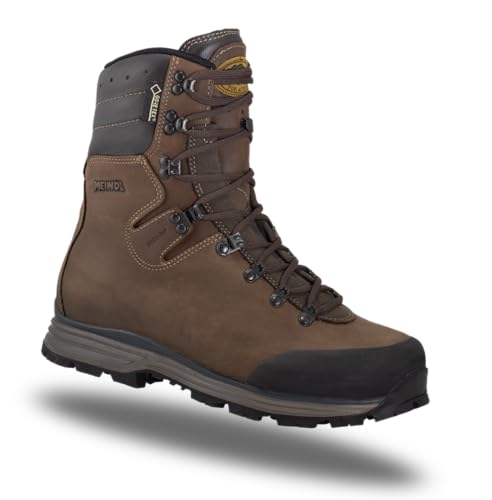
Best for flat feet
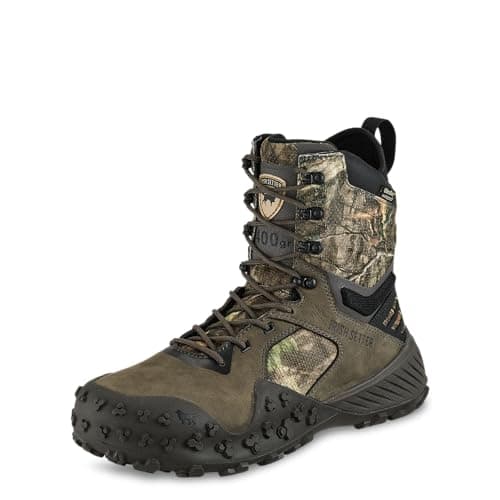
Meindl Comfort-Fit Hunter 400
Cold mountain hunts on a wide foot
The only boot in this registry that pairs a genuinely wide toe box with 400g of PrimaLoft Gold and a Gore-Tex liner. If your feet are broad and your hunt is cold and steep, this is the Meindl to buy.
#ad How we are funded · Price as of November 19, 2026
Quick picks
| # | Product | Widths | Score | Price |
|---|---|---|---|---|
| Rank 1 | Meindl Comfort-Fit Hunter 400 Cold mountain hunts on a wide foot | Not published | 9.5/10 | $436.95Amazon |
| Rank 2 | 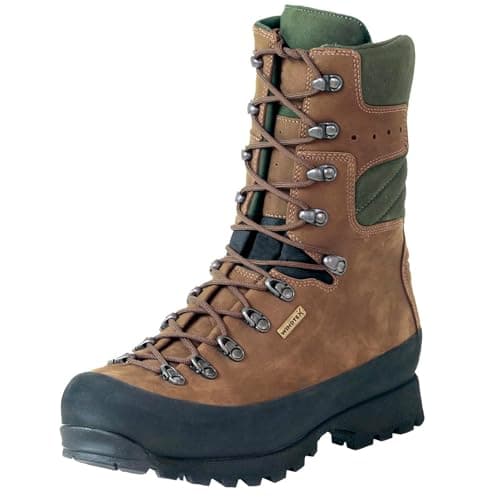 Kenetrek Mountain Extreme 400 Steep country with a heavy pack | Not published | 9.4/10 | $404.96Amazon |
| Rank 3 | 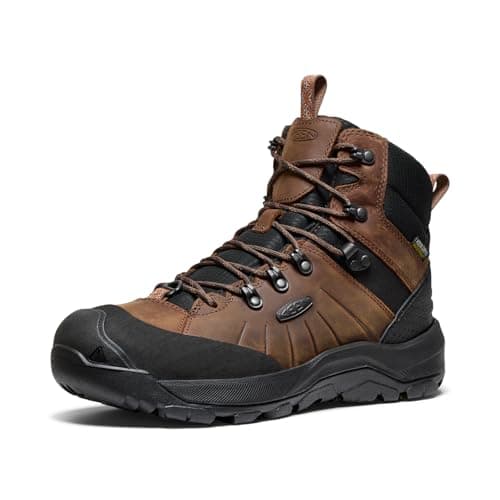 KEEN Revel 4 Mid Polar Wide feet in cold weather | Not published | 9.6/10 | $200.00Amazon |
| Rank 4 | 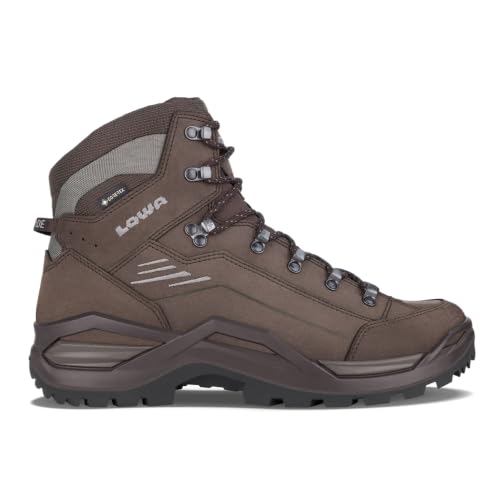 Lowa Renegade EVO GTX Mid Wide-ish feet that need a hiker | Standard and wide offered | 9.1/10 | $279.95Amazon |
| Rank 5 | 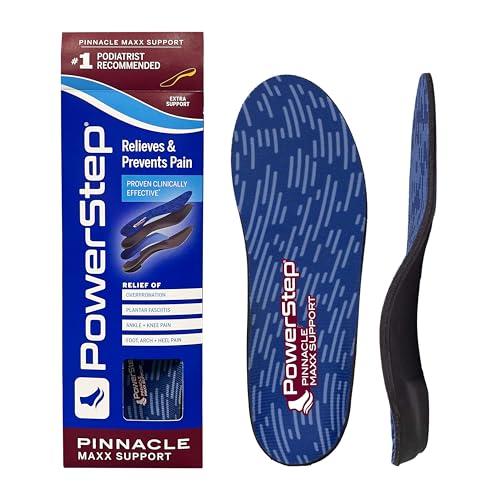 PowerStep Pinnacle Maxx Flat feet and overpronation | Not published | 9.4/10 | $54.95Amazon |
| Rank 6 | 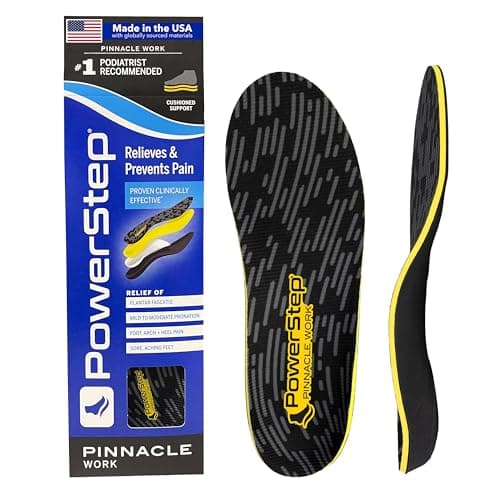 PowerStep Pinnacle Work Support shaped for a boot, not a sneaker | Not published | 9.5/10 | $44.99Amazon |
#ad Prices come from Amazon and change. How this site is funded. Scores are our published editorial rubric — see our methodology.
Start with the thing nobody selling boots will tell you: no hunting boot manufacturer publishes an arch-support specification. Not one. There is no number, no standard and no test, which means every "best boots for flat feet" list you have read was ranking boots on a property the makers do not measure. What makers *do* publish is the thing that actually matters for a collapsed arch, and it is the midsole.
What a flat foot actually needs from a boot
A flat or fallen arch is a structural problem, not a cushioning one. The arch collapses inward under load, the foot rolls in with it, and the plantar fascia - the band of tissue running from heel to toes - takes the strain. The American Academy of Orthopaedic Surgeons describes adult flatfoot as exactly that: a loss of the arch under weight-bearing, often with the heel drifting outward. Soft boots make it worse, because a soft midsole lets the collapse happen and then absorbs the complaint.
- A stiff midsole or shank. This is the single most important property and it is published. A full-length nylon shank resists the twisting that a collapsing arch produces; a soft hiker midsole does not. If a maker publishes a shank, that is the boot to shortlist.
- A firm, deep heel counter. The rigid cup around the heel is what stops the heel drifting outward. You can test it in thirty seconds: squeeze the back of the boot. If it folds easily, the boot has no heel control.
- Room for an insole. A support insole takes real volume. A boot that fits perfectly with its stock footbed will be too tight with an orthotic in it, and a tight boot is a cold boot.
- Width, usually. Flat feet are frequently wide feet, because a collapsed arch spreads the forefoot. If that is you, read hunting boots for wide feet alongside this page.
- A removable stock footbed. Pull the original insole out before the orthotic goes in. Stacking them is the most common mistake here and it ruins the fit.
The picks
Four boots with published structure underfoot, plus the two insoles that do the arch work the boots cannot claim.
#1 · Cold mountain hunts on a wide foot
#ad How we are funded · Price as of November 19, 2026
Meindl Comfort-Fit Hunter 400
MeindlThe only boot in this registry that pairs a genuinely wide toe box with 400g of PrimaLoft Gold and a Gore-Tex liner. If your feet are broad and your hunt is cold and steep, this is the Meindl to buy.
| Insulation | 400g PrimaLoft Gold (manufacturer) |
|---|---|
| Height | 9.25 in |
| Weight | 4.125 lb per pair |
| Upper | Nubuck leather |
| Waterproofing | Gore-Tex lined (manufacturer) |
| Outsole | Vibram Multigrip 6.0 |
| Footbed | Cork, Comfort Fit last |
Specifications per Meindl USA published specifications.
What it does well
- A published wide toe box on a mountain-capable boot, which is a combination almost nobody else builds
- 400g of PrimaLoft Gold is the right amount for a hunt that mixes climbing with sitting - enough to stop, not enough to cook you walking
- Cork footbeds and a published Vibram Multigrip 6.0 outsole, and Meindl states the boot is made in Germany
Good to know
- Meindl's own guidance is that sizing runs big and you should order a half size down, so buying this blind is a real risk
Our rubric — each criterion 0-10
- Warmth
- 7.6
- Waterproofing
- 9.2
- Fit
- 9.4
- Durability
- 9.4
- Value
- 6.0
#2 · Steep country with a heavy pack
$539.95 25% off
#ad How we are funded · Price as of November 19, 2026
Kenetrek Mountain Extreme 400
KenetrekA full-shank mountain boot with only 400g of insulation, and that pairing is deliberate: in steep country you generate your own heat and need support, not loft.
| Insulation | 400g Thinsulate |
|---|---|
| Shaft height | 10 in |
| Upper | 2.8mm full-grain leather |
| Midsole | Full-length nylon shank |
| Waterproofing | Windtex membrane (manufacturer) |
Specifications per Kenetrek published specifications.
What it does well
- The stiff shank is what stops your feet dying on a sidehill under 60 pounds
- One-piece leather upper with minimal seams - the fewest failure points here
- Resoleable, which matters at this price
Good to know
- The most expensive boot in this registry by a wide margin
Our rubric — each criterion 0-10
- Warmth
- 6.8
- Waterproofing
- 8.8
- Fit
- 9.0
- Durability
- 9.8
- Value
- 6.6
#3 · Wide feet in cold weather
#ad How we are funded · Price as of November 19, 2026
KEEN Revel 4 Mid Polar
KEENKEEN's last is the widest in this registry, and the Polar version adds real insulation - the combination that solves a wide-footed cold-weather problem.
| Insulation | KEEN.WARM insulation (manufacturer) |
|---|---|
| Temperature rating | -25F (manufacturer) |
| Shaft height | Mid |
| Upper | Leather and textile |
| Waterproofing | KEEN.DRY membrane (manufacturer) |
What it does well
- A genuinely roomy toe box without going up a size
- Published temperature rating, which most boots do not give you
Good to know
- A winter boot rather than a hunting boot - the styling says so
Our rubric — each criterion 0-10
- Warmth
- 8.4
- Waterproofing
- 8.2
- Fit
- 9.4
- Durability
- 8.0
- Value
- 8.4
#4 · Wide-ish feet that need a hiker
#ad How we are funded · Price as of November 19, 2026
Lowa Renegade EVO GTX Mid
LowaThe most-sold hiking boot in its class for a reason: a forgiving last, a genuine Gore-Tex membrane, and almost no break-in.
| Insulation | None (uninsulated) |
|---|---|
| Shaft height | Mid |
| Upper | Nubuck leather |
| Waterproofing | Gore-Tex (manufacturer) |
| Widths | Standard and wide offered |
What it does well
- Available in a true wide, which rules most hunting boots out of contention
- Comfortable immediately
Good to know
- Uninsulated and mid-height - a three-season scouting boot only
Our rubric — each criterion 0-10
- Warmth
- 3.2
- Waterproofing
- 8.6
- Fit
- 9.6
- Durability
- 8.6
- Value
- 7.8
#5 · Flat feet and overpronation
#ad How we are funded · Price as of November 19, 2026
PowerStep Pinnacle Maxx
PowerStepThe one insole here that PowerStep markets specifically for flat feet and overpronation, with an angled heel that tilts the foot back toward neutral rather than just padding under it.
| Type | Structured orthotic insole |
|---|---|
| Marketed for | Flat feet, overpronation |
| Heel | Firm, angled (varus) heel cradle |
| Build | Heavy duty, full length |
| Made in | USA (manufacturer) |
Specifications per PowerStep published product information.
What it does well
- An angled heel rather than a flat one, which is the feature that addresses pronation rather than masking it
- Full-length and firm enough to survive a season inside a hunting boot
- PowerStep states the flat-foot and overpronation use case on the product itself, so you are not inferring it
Good to know
- Takes up real volume - in a boot that already fits snugly over a wool sock it will make things worse
Our rubric — each criterion 0-10
- Effectiveness
- 8.8
- Ease of use
- 8.0
- Durability
- 8.2
- Value
- 7.8
#6 · Support shaped for a boot, not a sneaker
#ad How we are funded · Price as of November 19, 2026
PowerStep Pinnacle Work
PowerStepThe boot-shaped Pinnacle: the same arch support in a narrower, deeper profile meant for work and hunting boots rather than running shoes. Cheaper than the Maxx and easier to fit.
| Type | Structured orthotic insole |
|---|---|
| Marketed for | Work boots, plantar fasciitis, pronation |
| Profile | Boot-shaped, deeper heel cup |
| Build | Full length |
| Made in | USA (manufacturer) |
Specifications per PowerStep published product information.
What it does well
- Cut for a boot last rather than a shoe last, so it sits flat instead of curling at the edges
- Noticeably cheaper than the Maxx and than the Superfeet options
- Less volume than the Maxx, so it fits a boot you already sized for socks
Good to know
- Less correction than the Maxx - for a genuinely collapsed arch it may not be enough
Our rubric — each criterion 0-10
- Effectiveness
- 8.2
- Ease of use
- 8.6
- Durability
- 7.6
- Value
- 8.6
The boots, and the honest reason each is here
| Boot | The structural feature | Width options | Best for |
|---|---|---|---|
| Meindl Comfort-Fit Hunter 400 | Cork footbed, Comfort Fit last, Vibram Multigrip | Wide toe box (published) | A broad flat foot on a cold, steep hunt |
| Kenetrek Mountain Extreme 400 | Full-length nylon shank | Standard | The most support money can buy, under a pack |
| KEEN Revel 4 Mid Polar | Roomy last, insulated | Widest last in this registry | A spread forefoot in cold weather |
| Lowa Renegade EVO GTX Mid | Forgiving last, minimal break-in | Standard and wide offered | Scouting and warm-weather miles |
The Kenetrek is the outlier and deserves its explanation. It is the most expensive boot in this registry by a wide margin and it is uncomfortable for stand hunting, which we say on every page it appears on. It is here for one reason: a full-length nylon shank is the only published feature in hunting footwear that directly resists arch collapse under load. If your flat feet hurt when you carry weight in steep country, this is the boot that addresses the cause rather than padding the symptom.
What about a plain insulated stand boot?
If your hunting is sitting rather than walking, the arch question largely goes away - a collapsed arch hurts under load, and a stand hunter is not loading it. In that case buy for warmth from the insulated boot roundup and put a supportive insole in it for the walk to and from the truck. The boots on this page are chosen for people who cover ground.
The insoles are not optional, and they are not the same insole
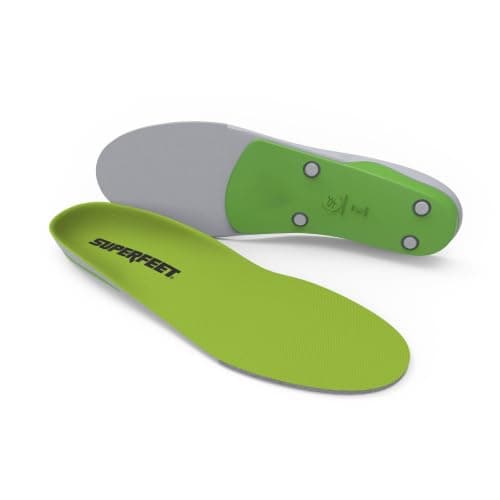
This is where most flat-foot advice goes wrong. People buy "the good insole" without checking which arch it is shaped for, and a high-arch insole in a flat foot is uncomfortable from the first mile. Superfeet publishes arch profiles on every model and sells high, medium and low versions of the same insole; PowerStep sells a model specifically marketed for flat feet and overpronation. Read the profile, not the brand.
| If your foot is | What to look for | In this registry |
|---|---|---|
| Flat, rolls inward under load | An angled heel cradle and firm support, not cushion | PowerStep Pinnacle Maxx |
| Flat, but the boot already fits snugly | The same support in a lower-volume, boot-shaped cut | PowerStep Pinnacle Work |
| High-arched with heel pain | A high-profile, high-volume structured insole | Superfeet All-Purpose High Arch |
| Normal arch, long days under a pack | Support plus some forefoot cushion | Superfeet Hike Support |
The full comparison of support insoles, heated insoles and the stock footbeds they replace is in the best hunting boot insoles, and the mechanics of why a die-cut foam footbed does nothing are in the boot insoles guide.
Plantar fasciitis is a related problem with a different timeline
Flat feet and plantar fasciitis travel together often enough that the searches overlap, but they are not the same thing. A flat foot is a shape. Plantar fasciitis is an inflammation of the tissue that shape overloads, and it is characteristically worst in the first steps of the morning. The relevance to boots is that the fix is support plus a heel cup, in that order, and that a boot which is merely soft gives you neither.
- A deep heel cup holds the fat pad under the heel where it belongs instead of letting it spread. Both PowerStep models publish one.
- Firm arch support shortens the distance the fascia has to stretch under load. Soft foam does not do this; it compresses.
- A boot with a stiff shank stops the whole foot flexing in the middle, which is where the fascia is anchored.
- No barefoot time on hard ground in camp, which undoes the day's support in an evening.
We are not a medical site and will not pretend otherwise: persistent heel pain is worth a podiatrist, and a custom orthotic beats anything on this page. What a well-chosen boot and a structured insole do is stop a long day in the field from making it worse.
How to buy this combination without a second return
- Choose the boot for structure and width first. Shank, heel counter, width. Ignore the arch language in the listing - it is marketing, not specification.
- Buy the insole at the same time, so you can fit the boot with the insole in it from day one.
- Pull the stock footbed out before you try the boot on. Leaving it in is the single most common fit error with orthotics.
- Size over the sock you will actually hunt in. What size boot to buy over thick socks has the adjustment table.
- Walk it in before the season. A firm orthotic takes a week or two to feel normal, and a stiff-shanked boot takes longer - how long to break in boots sets expectations honestly.
What we are not claiming
This site reads published specifications and applies one rubric, and says so on the methodology page. What is defensible is this: a published full-length shank, a published wide last and a published angled heel cradle are real features that address a real mechanism, and they are the only honest basis anyone has for a page with this title.
Our recommendation
If you only take one thing from this page, take this one.
Our pick
Meindl Comfort-Fit Hunter 400
Cold mountain hunts on a wide foot
#ad How we are funded · Price as of November 19, 2026
Runner-up
Kenetrek Mountain Extreme 400
Steep country with a heavy pack
#ad How we are funded · Price as of November 19, 2026
Frequently asked questions
What hunting boots are best for flat feet?
Do I need special insoles for flat feet in hunting boots?
Are hunting boots bad for plantar fasciitis?
Should I size up for flat feet?
Are flat feet the same as wide feet?
Sources
Read next
Boot Fit & Sizing
Best hunting boots for wide feet
Width and length are independent, and sizing up fixes neither. The boots that come in a genuine wide.
Boot Fit & Sizing
Best hunting boot insoles
The cheapest real upgrade in hunting footwear, as long as you buy for the right job of the three.
Boot Fit & Sizing
Hunting boot insoles: what they fix and what they do not
Support, volume and warmth are three different jobs - and a support insole adds no warmth at all.
Boot Fit & Sizing
What size boot to buy over thick socks
Half a size for heavy wool, a full size with a liner - and why a tight boot is a cold boot.
Boot Fit & Sizing
How long does it take to break in hunting boots?
Honest ranges by construction, why shanked boots take six weeks, and how to tell break-in from a bad fit.
Boot Fit & Sizing
Best mountain hunting boots
The one category where price tracks capability. What a $500 boot does structurally that a $200 boot cannot.
Brands: want your product tested? For Brands.