Cold Weather Boots
Hunting foot warmers: which type to buy
Three different products answer this query, they cost between a few dollars and a few hundred, and the cheap one works for most people if it is placed correctly.
Bog & Briar earns a commission when you buy through our links, at no extra cost to you. Prices come from Amazon and change; the date beside every price is when we last verified it. Full disclosure.
Top pick
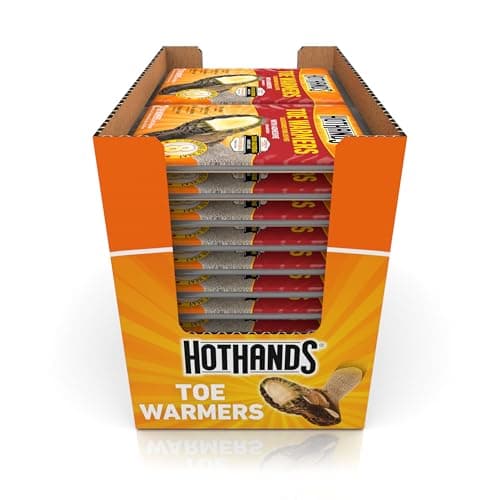
HotHands Toe Warmers, 40 pair
The cheapest fix for cold toes
Adhesive air-activated warmers that stick to the top of your sock. The highest-value item in this registry, and the one most hunters try last instead of first.
#ad How we are funded · Price as of November 19, 2026
Quick picks
| # | Product | Type | Score | Price |
|---|---|---|---|---|
| Rank 1 | HotHands Toe Warmers, 40 pair The cheapest fix for cold toes | Air-activated, single use | 9.5/10 | $32.49Amazon |
| Rank 2 | 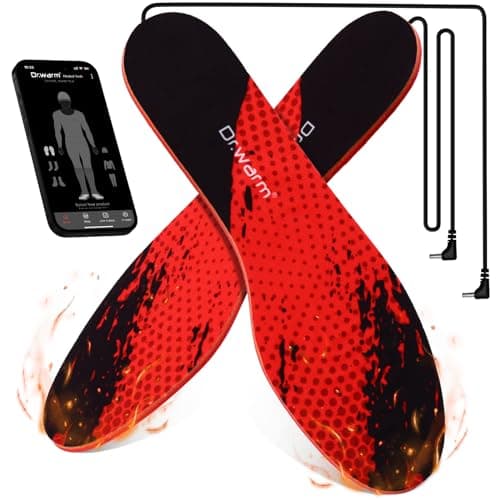 Dr.warm rechargeable heated insoles Remote-controlled heat at a sane price | Rechargeable heated insole | 9.2/10 | $62.99Amazon |
| Rank 3 | 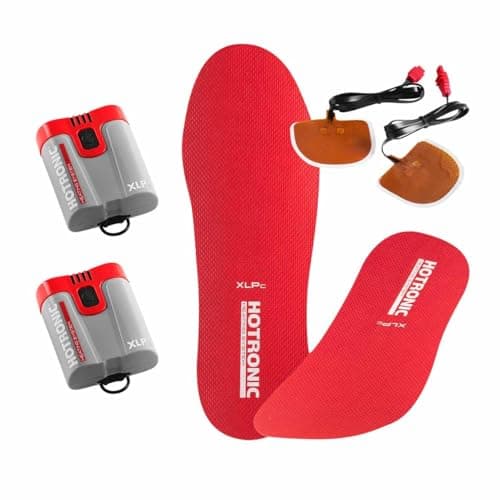 Hotronic FootWarmer XLP 1C Custom Powered warmth that genuinely works | Battery-powered heating element | 9.1/10 | $328.00Amazon |
| Rank 4 | 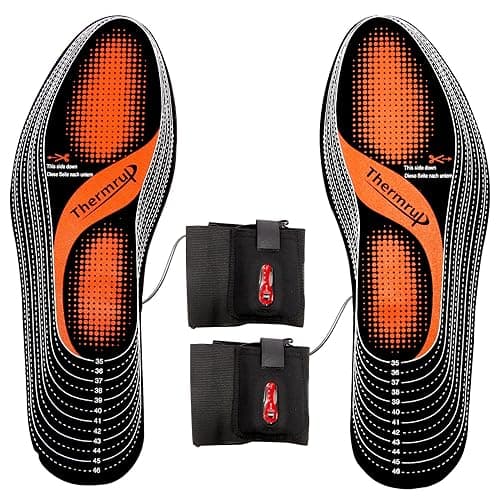 Thermrup electric heated insoles The cheapest powered option | Rechargeable heated insole | 9.0/10 | $69.95Amazon |
#ad Prices come from Amazon and change. How this site is funded. Scores are our published editorial rubric — see our methodology.
Start with adhesive toe warmers stuck to the TOP of your sock, over the toes - not under your foot. HotHands publishes up to eight hours for theirs and a 40-pair box costs less than a tank of fuel, which makes it the highest-value item in this category by a wide margin. If your feet go numb even in a warm, dry, well-fitted boot, step up to a rechargeable heated insole; and if you sit motionless in genuine cold for whole days, the Hotronic powered footbed is the one the ski industry settled on.
The reason this page exists separately from our heated insoles roundup is that "foot warmer" means three unrelated products and buying the wrong class is the usual mistake. One is a single-use chemical packet, one is a battery insole you charge, and one is a heating element you fit permanently under a footbed. They fail in different ways and suit different hunts.
The three classes, side by side
| Disposable toe warmer | Rechargeable heated insole | Powered footbed | |
|---|---|---|---|
| Example here | HotHands Toe Warmers | Dr.warm / Thermrup | Hotronic FootWarmer XLP |
| Published duration | Up to 8 hours (manufacturer) | Varies by heat level | Varies by heat level |
| Cost per sit | Lowest | Near zero after purchase | Near zero after purchase |
| Up-front cost | Lowest | Mid | Highest |
| Takes up boot volume | Almost none | Yes - a real insole | Minimal - element only |
| Fails by | Running out, or being crushed | Battery life over seasons | Fiddly install, wiring |
| Best for | Almost everyone, most hunts | Feet that run cold in a good boot | All-day motionless cold |
The picks
In the order most hunters should try them: cheapest first, and only move up when the cheap answer has genuinely failed.
#1 · The cheapest fix for cold toes
#ad How we are funded · Price as of November 19, 2026
HotHands Toe Warmers, 40 pair
HotHandsAdhesive air-activated warmers that stick to the top of your sock. The highest-value item in this registry, and the one most hunters try last instead of first.
| Type | Air-activated, single use |
|---|---|
| Stated duration | Up to 8 hours (manufacturer) |
| Placement | Adhesive, on top of the sock over the toes |
| Count | 40 pair |
| Reusable | No |
What it does well
- Costs less per hunt than a cup of coffee and solves the problem for most people
- Goes on top of the sock, where it warms the toes without crushing the air gap underneath
- No battery, nothing to charge, nothing to fail in the cold
Good to know
- Needs oxygen. Jammed inside a tight boot it will underperform or go out - the most common complaint, and it is a placement error
Our rubric — each criterion 0-10
- Effectiveness
- 8.6
- Ease of use
- 9.0
- Durability
- 6.0
- Value
- 9.8
#2 · Remote-controlled heat at a sane price
#ad How we are funded · Price as of November 19, 2026
Dr.warm rechargeable heated insoles
Dr.warmA rechargeable heated insole with remote control at a fraction of Hotronic's price. The heat is real; the open question is how many seasons the batteries last.
| Type | Rechargeable heated insole |
|---|---|
| Control | Remote and app (manufacturer) |
| Stated runtime | Varies by heat level (manufacturer) |
| Trimmable | Yes (manufacturer) |
| Reusable | Yes |
What it does well
- Remote control means adjusting heat without taking a boot off in a stand
- Trimmable, so it fits boots that fixed-size heated footbeds do not
Good to know
- Battery life in genuine cold is the recurring theme in buyer feedback
Our rubric — each criterion 0-10
- Effectiveness
- 8.2
- Ease of use
- 7.6
- Durability
- 6.8
- Value
- 8.0
#3 · Powered warmth that genuinely works
#ad How we are funded · Price as of November 19, 2026
Hotronic FootWarmer XLP 1C Custom
HotronicThe ski industry's standard heated footbed, adopted by stand hunters who have run out of passive options. Expensive, effective, and fiddly.
| Type | Battery-powered heating element |
|---|---|
| Power | Rechargeable pack on the boot cuff |
| Stated runtime | Varies by heat level (manufacturer) |
| Installation | Element fitted under the footbed |
| Reusable | Yes |
What it does well
- Generates heat rather than retaining it, which is the only approach that works on a motionless foot in deep cold
- Multiple heat levels, so you run low on the walk in and high on the sit
- Built to be serviced and kept, unlike disposable warmers
Good to know
- The most expensive way to solve cold feet, by a wide margin
Our rubric — each criterion 0-10
- Effectiveness
- 9.4
- Ease of use
- 6.4
- Durability
- 8.4
- Value
- 5.6
#4 · The cheapest powered option
#ad How we are funded · Price as of November 19, 2026
Thermrup electric heated insoles
ThermrupThe budget entry into heated insoles. Thinner than most, which is the real advantage: a thick heated insole in an already-snug boot makes feet colder.
| Type | Rechargeable heated insole |
|---|---|
| Control | Four heat settings (manufacturer) |
| Stated runtime | Varies by heat level (manufacturer) |
| Thickness | Thin-profile design (manufacturer) |
| Reusable | Yes |
What it does well
- Thin enough not to steal the air gap your sock needs
- The cheapest way to find out whether powered heat solves your problem
Good to know
- Buyers report inconsistent battery life between units
Our rubric — each criterion 0-10
- Effectiveness
- 7.4
- Ease of use
- 7.0
- Durability
- 6.2
- Value
- 8.6
Placement is the whole trick with disposable warmers
Air-activated warmers need oxygen to work and they stop working when they are compressed. Put one under your foot inside the boot and your body weight does both things to it at once: it starves and it flattens, and you get maybe an hour of mild heat out of a packet rated for eight.
- Stick the warmer on the OUTSIDE of your sock, on top of the toes. The adhesive is designed for exactly this.
- Activate it before you put the boot on, and give it a few minutes in open air - they take time to come up to temperature.
- Do not add a second sock over the top of it. Extra compression is the enemy, and the warmer needs the small air gap at the top of the toe box.
- Do not use them in a boot that is already tight. If the toe box is snug, the packet steals the volume your toes need to stay warm.
- Carry spares in an inside pocket, not an outside one - a cold packet is slow to activate.
When to spend on a powered option
A powered insole is the right purchase when you have already fixed the free problems and are still cold. Those problems, in order of how often they are the real cause:
- A damp boot. The most common cause by a distance. Dry the boot every night - see how to dry hunting boots.
- A tight boot. Compression beats insulation. Work through what size boot over thick socks before buying anything electric.
- A cotton sock. Change the sock first; it is the cheapest upgrade in hunting. Best socks for cold feet covers the options.
- A cold platform. Foam on the stand floor fixes conduction that no insole can out-heat.
- Not enough boot. If you are sitting below 10F in a 400g boot, the boot is the problem - see extreme cold hunting boots.
If all five are handled and your toes still go numb, that is the genuine case for powered heat, and it is also the case where the expensive option earns its price. Circulation varies enormously between people and no amount of loft helps a foot that is not getting warm blood delivered to it.
Thickness is the spec nobody checks
A heated insole has to go somewhere, and in a boot that already fits properly there is no spare quarter inch. Thermrup publishes a thin-profile design specifically for this reason, and it is the main argument for the cheapest option over the mid-priced one: a thick heated insole in a snug boot makes feet colder, not warmer. If you intend to run a heated insole all season, buy the boot a half size up for it, or pull the stock footbed out to make room - and check the fit before you commit.
What we would buy
- First purchase, and for most hunters the only one: HotHands Toe Warmers, 40 pair, applied on top of the sock.
- Feet that run cold in a good dry boot: Dr.warm rechargeable heated insoles, remote controlled.
- All-day motionless cold, money no object: Hotronic FootWarmer XLP 1C, element fitted under the footbed.
- Tight boots: Thermrup thin-profile insoles, because the volume cost is the real constraint.
Our recommendation
If you only take one thing from this page, take this one.
Our pick
HotHands Toe Warmers, 40 pair
The cheapest fix for cold toes
#ad How we are funded · Price as of November 19, 2026
Runner-up
Dr.warm rechargeable heated insoles
Remote-controlled heat at a sane price
#ad How we are funded · Price as of November 19, 2026
Frequently asked questions
What is the best foot warmer for hunting?
Where do you put toe warmers in hunting boots?
Are heated insoles worth it for hunting?
How long do disposable toe warmers last?
Will a heated insole make my boots too tight?
Sources
Read next
Cold Weather Boots
Best heated insoles for hunting boots
Powered footbeds and chemical warmers compared, plus the placement mistake that makes toe warmers underperform.
Cold Weather Boots
Putting hand warmers in your boots, properly
Air-activated warmers need oxygen. On top of the sock, over the toes - and toe warmers, not hand warmers.
Cold Weather Boots
The warmest boots for sitting in a tree stand
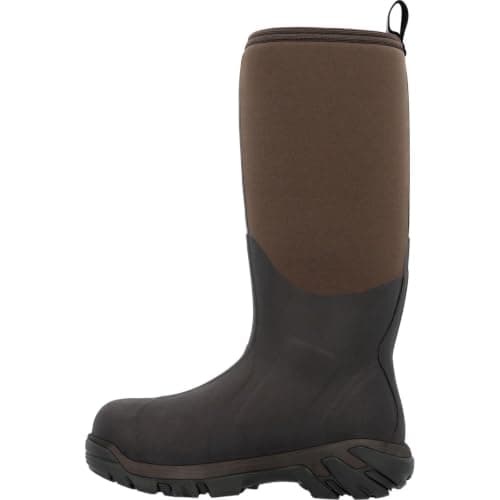
A stand sit is the coldest job a boot gets: no movement, full wind, and a metal platform under your soles. Six picks for four motionless hours.
Hunting Socks
Best hunting socks for cold feet
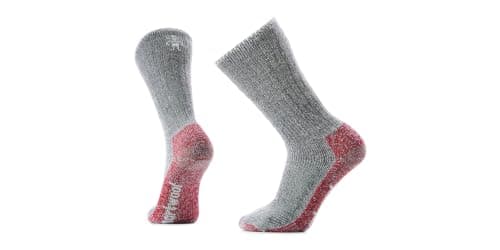
The warmest socks we would recommend - plus the caveat that makes half of all thick-sock purchases backfire.