Rubber Boots
Best waterproof hunting boots
Every hunting boot on the shelf is sold as waterproof. Only some of them are still waterproof in year three, and the difference is construction rather than marketing.
Belt & Bike earns a commission when you buy through our links, at no extra cost to you. Prices come from Amazon and change; the date beside every price is when we last verified it. Full disclosure.
Quick picks
| # | Product | Upper | Score | Price |
|---|---|---|---|---|
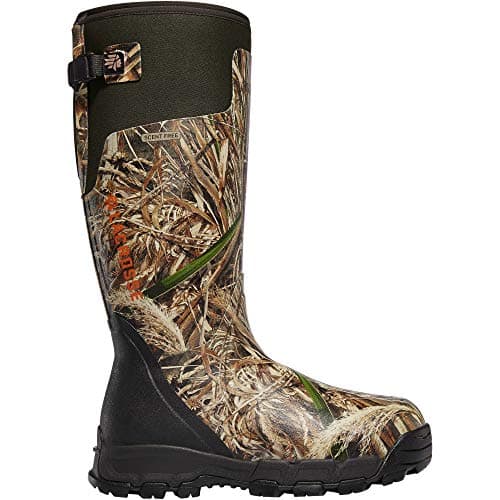
| Rank 1 | LaCrosse Alphaburly Pro 18-inch, 800g One boot for most of the season | Vulcanized rubber over neoprene | 8.8 | $199.98Amazon |
| Rank 2 | 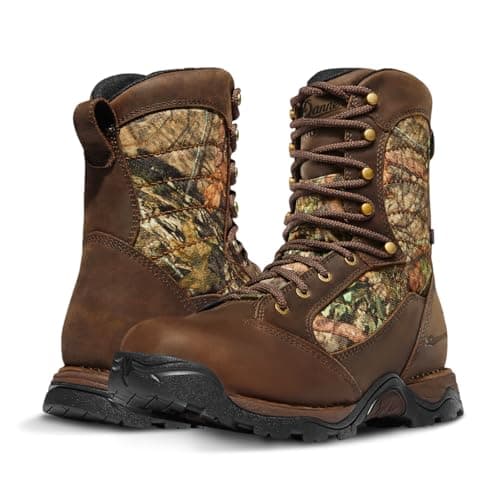 Danner Pronghorn 800g All-day walking in the cold | Leather and nylon | 8.7 | $244.67Amazon |
| Rank 3 | 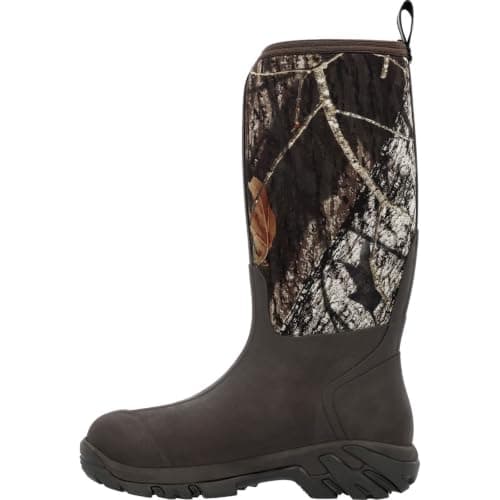 Muck Woody Sport Tall Mid-season walking and sitting | Rubber over 5mm neoprene | 8.4 | $146.25Amazon |
| Rank 4 | 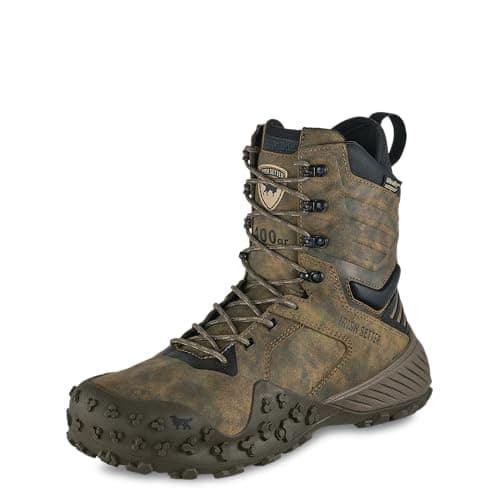 Irish Setter VaprTrek 8-inch, 400g Light miles in cool weather | Leather and nylon | 7.9 | $219.95Amazon |
| Rank 5 | 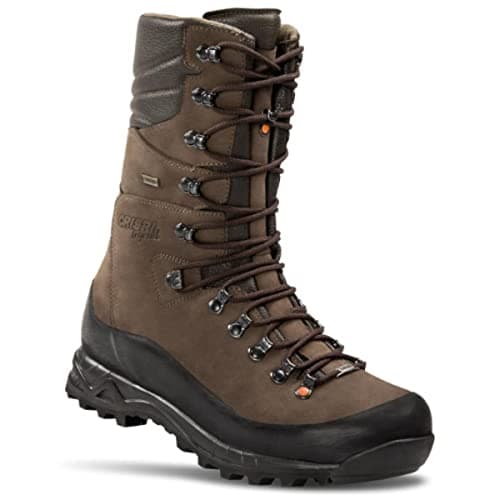 Crispi Hunter GTX Mountain hunters who want a narrower last | Leather | 7.8 | $435.50Amazon |
| Rank 6 | 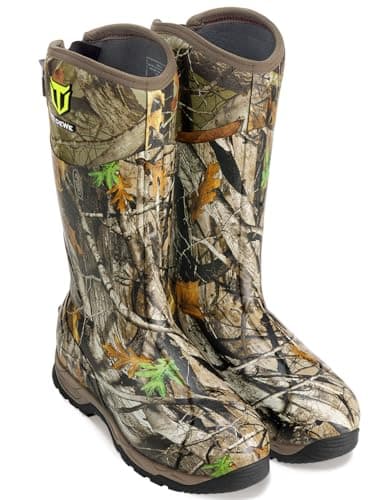 TIDEWE 800g insulated rubber boot Insulated rubber on a tight budget | Rubber over neoprene | 7.8 | $109.99Amazon |
#ad Prices come from Amazon and change. How this site is funded. Scores are our published editorial rubric — see our methodology.
"Waterproof" on a hunting boot box means one of two completely different things, and nobody selling you the boot will draw the distinction. Either the boot is made of a material that water cannot pass through at all - rubber - or it has a waterproof membrane sandwiched inside an upper that water passes into freely. Both keep your feet dry on day one. Only one of them is still doing it after three seasons of briar, gravel and flex.
That is the whole decision, and it is why this roundup is not sorted by price or brand. It is sorted by how the boot stays dry, and what the failure looks like when it stops. A rubber pull-on fails by splitting, which is obvious and total. A membrane boot fails quietly: the face fabric wets out, the membrane keeps doing its job, and your foot is cold and clammy while the boot is technically not leaking at all. Most people who say their waterproof boots failed are describing the second thing.
How we picked
These are the five questions we put to each boot, in this order. A boot that fails the first one does not get rescued by the other four.
- Does it stay waterproof, or does it start waterproof? Rubber and neoprene cannot wet out. A membrane in a leather-and-nylon upper will, and the boot will feel like it leaked.
- How deep is the water you are actually standing in? Six inches of flooded field is an 8-inch boot problem. Eighteen inches of flooded timber is a knee-boot problem that no lace-up solves at any price.
- How far do you walk in it? A rubber pull-on has no meaningful ankle support and cannot be tensioned to your foot. Past about a mile with a pack, that stops being a nitpick.
- Can it be re-proofed or recrafted? A membrane boot's outer can be re-treated, and a Goodyear-welted or stitchdown boot can be resoled. A molded rubber boot can be neither - when it splits, it is finished.
- Does the published spec match the hunt? We quote manufacturer figures, we never measure anything ourselves, and we say which is which on every card.
The picks
Ranked by how reliably each boot stays dry for the hunt it is built for - rubber first for standing water, membrane leather for miles.
#1 · One boot for most of the season
#ad How we are funded · Price as of October 9, 2026
LaCrosse Alphaburly Pro 18-inch, 800g
LaCrosseThe same boot as the 1,600g with half the insulation, and for most hunters in most of the country it is the smarter buy: warm enough sitting down to about freezing, survivable walking in.
| Insulation | 800g |
|---|---|
| Shaft height | 18 in |
| Upper | Vulcanized rubber over neoprene |
| Calf fit | Adjustable back gusset |
| Liner | Removable EVA footbed |
Specifications per LaCrosse Footwear published specifications.
What it does well
- The widest usable temperature window of any boot here - roughly 20F sitting to 50F walking
- Same gusset, same rubber, same scent profile as the 1,600g version
- If you are buying one rubber boot and do not know your conditions, this is the one
Where it falls short
- Not enough boot for an all-day December sit in the north
- Still heavy for covering ground
Our rubric
- Warmth
- 8.2
- Waterproofing
- 9.4
- Fit
- 8.4
- Durability
- 9.0
- Value
- 9.0
#2 · All-day walking in the cold
Danner Pronghorn 800g
Danner800g in Danner's Pronghorn platform, which is built around a supportive midsole rather than a soft one. The boot to buy if your hunt is measured in miles.
| Insulation | 800g |
|---|---|
| Shaft height | Not published by manufacturer |
| Upper | Leather and nylon |
| Waterproofing | Gore-Tex (manufacturer) |
| Outsole | Danner Pronghorn |
Specifications per Danner published specifications.
What it does well
- One of the few insulated boots that genuinely supports a loaded pack
- Gore-Tex plus a recraftable platform - this is a multi-season purchase
- 800g walks far better than 1,000g or more
Where it falls short
- Expensive, and the wide sizes are the ones that go out of stock
- Needs a real break-in period; do not buy it the week before a hunt
Our rubric
- Warmth
- 8.0
- Waterproofing
- 8.8
- Fit
- 9.4
- Durability
- 9.4
- Value
- 7.8
#3 · Mid-season walking and sitting
#ad How we are funded · Price as of October 9, 2026
Muck Woody Sport Tall
MuckThe mid-weight Woody: enough neoprene for a cold morning, flexible enough that you can still walk to the stand without soaking the liner in sweat.
| Insulation | 5mm neoprene |
|---|---|
| Shaft height | Not published by manufacturer |
| Upper | Rubber over 5mm neoprene |
| Fit | Pull-on, stretch-fit topline |
| Liner | Fleece |
Specifications per Muck Boot Company published specifications.
What it does well
- The most walkable tall rubber boot in the Muck hunting line
- Stretch topline makes it easy to pull on over a heavy sock
Where it falls short
- 5mm is a mid-season spec; a December sit will find its limit
- Neoprene uppers scuff and eventually split at the flex point
Our rubric
- Warmth
- 7.6
- Waterproofing
- 9.0
- Fit
- 8.6
- Durability
- 8.0
- Value
- 8.6
#4 · Light miles in cool weather
#ad How we are funded · Price as of October 9, 2026
Irish Setter VaprTrek 8-inch, 400g
Irish SetterA deliberately light 8-inch boot with just 400g of insulation - the right spec for an early-season walk-in where the problem is weight and sweat, not cold.
| Insulation | 400g |
|---|---|
| Shaft height | 8 in |
| Upper | Leather and nylon |
| Waterproofing | UltraDry membrane (manufacturer) |
| Fit | Lace-up |
Specifications per Irish Setter published specifications.
What it does well
- Genuinely light for an insulated boot, which is the whole point of the model
- Breaks in faster than a full-leather 12-inch boot
Where it falls short
- 400g and an 8-inch shaft is not a cold-sit boot - read the spec and believe it
- Nylon panels wear faster than full leather in heavy brush
Our rubric
- Warmth
- 6.2
- Waterproofing
- 7.8
- Fit
- 9.0
- Durability
- 8.0
- Value
- 8.6
#5 · Mountain hunters who want a narrower last
#ad How we are funded · Price as of October 9, 2026
Crispi Hunter GTX
CrispiCrispi's reputation rests on last shape and ankle flex rather than raw stiffness, and the Hunter GTX is the model most mountain hunters start with.
| Insulation | Not published by manufacturer |
|---|---|
| Shaft height | Not published by manufacturer |
| Upper | Leather |
| Waterproofing | Gore-Tex (manufacturer) |
| Fit | Lace-up, European last |
What it does well
- Fits narrow and medium feet better than most American hunting lasts
- Ankle support without the plank-stiff feel of a full mountaineering boot
Where it falls short
- Sizing is European and runs differently from US boots - order carefully
- Limited Amazon availability and sizes; insulation is not published per listing
Our rubric
- Warmth
- 5.0
- Waterproofing
- 8.8
- Fit
- 9.4
- Durability
- 9.2
- Value
- 6.6
#6 · Insulated rubber on a tight budget
#ad How we are funded · Price as of October 9, 2026
TIDEWE 800g insulated rubber boot
TIDEWE800g of insulation in a knee-high rubber boot for roughly half what the name brands charge. The tradeoff is longevity, not warmth.
| Insulation | 800g |
|---|---|
| Shaft height | Not published by manufacturer |
| Upper | Rubber over neoprene |
| Liner | Insulated |
| Fit | Pull-on |
What it does well
- The cheapest honest 800g knee boot on the market
- For an occasional hunter who needs water and warmth once a year, the value case is real
Where it falls short
- Buyers consistently report the rubber-to-neoprene bond is where these fail
- No calf adjustment and sizing runs inconsistent
- You should expect a few seasons, not a decade
Our rubric
- Warmth
- 8.0
- Waterproofing
- 8.4
- Fit
- 7.0
- Durability
- 6.2
- Value
- 9.4
Rubber against a membrane, decided properly
This is the fork in the road. Read the row that matches your hunting and buy from that column - there is no boot that wins both.
| Your situation | Buy | Why |
|---|---|---|
| Standing in water above the ankle | Rubber pull-on | A membrane boot's shaft is not sealed above the laces; depth is a height problem, not a membrane problem |
| Walking miles, wet brush and dew | Membrane leather lace-up | Laces hold your heel; the membrane handles spray and wet vegetation |
| Mud, chores and short walks | Rubber or neoprene pull-on | Nothing to re-proof, hoses clean, and you will actually wear it |
| Mountain sidehills in rain | Membrane leather, stiff midsole | You need edging and ankle support more than you need depth |
| Scent control matters most | Rubber | Rubber is inherently low-odor; this is the one place the marketing is right |
Height is part of waterproofing, and it is the part people get wrong
A fully waterproof boot that is 8 inches tall is waterproof to 8 inches. That sounds obvious written down, and it is still the most common reason a hunter believes a boot leaked: water came in over the top. If the water where you hunt is routinely above your ankle, the honest answer is a knee-high rubber boot, and no membrane boot at any price substitutes for it. We break the heights down in the knee-high roundup.
The flip side matters too. An 18-inch pull-on worn for a hunt that never gets wetter than dew is a boot you will sweat in, and sweat is the same wet foot by a different route. The LaCrosse Alphaburly Pro at 800g is here because it is the widest-window version of that boot: enough insulation for a cold sit, survivable on a walk in. The 1,600g version is a better boot for a December sit and a worse boot for everything else.
What actually makes a waterproof boot leak
In rough order of how often we see each one blamed, versus how often it is actually the cause:
- Water over the top. Not a leak. A height problem.
- Sweat. Also not a leak. A boot that is too warm for the effort, or a cotton sock. Why cotton socks fail.
- The outer wetting out. The membrane still works; the saturated face fabric kills the boot's warmth and the boot feels soaked from the inside. This is what re-proofing fixes: how to waterproof hunting boots.
- A split at the flex point. Real, terminal, and specific to rubber and neoprene uppers. Usually three to six seasons on a cheap boot, longer on a vulcanized one.
- A punctured membrane. Genuine failure, usually from a thorn or a nail through the upper, and generally not worth repairing.
- A failed seam tape. Rare on a reputable boot and a legitimate warranty claim when it happens.
The maintenance that decides whether year three is dry
A membrane boot is a system: the membrane keeps water out, and the durable water repellent on the outside keeps the upper from soaking up water and going cold. The DWR wears off in a season of hard use, and almost nobody replaces it. Treat full-grain leather with a wax or cream, treat nylon panels with a spray repellent, and do it before the season rather than after the first wet morning. The products and the order to use them are in the waterproofing guide.
Rubber boots need almost none of this, which is a real advantage and the reason they outlast their price. What they do need is to be dried inside - a rubber boot cannot breathe, so a day's sweat stays in the liner until you force it out. That is a boot dryer job, and skipping it is how a rubber boot starts to smell and how its liner starts to pack out.
Insulation and waterproofing are separate purchases
They get sold together, so buyers treat them as one spec. They are not. A boot can be fully waterproof and have zero insulation, which is exactly the right spec for an early-season wet morning in 60F. Buying 1,000g because you also wanted waterproof is how you end up sweating in October. Pick the waterproofing from the water and the insulation from the temperature and the effort - the gram figures are laid out in the insulation chart.
Route yourself by the water, then layer insulation on top
- Dew and wet brush, warmUninsulated membrane boot, 8 in. Re-proof it yearly See the picks
- Mud and puddles, coolMid-height rubber or neoprene pull-on See the picks
- Standing water to mid-calf16 to 18 in rubber knee boot See the picks
- Flooded timber, coldInsulated knee boot, 800g and up - or waders See the picks
- Miles, rain, sidehillMembrane leather lace-up with a supportive midsole See the picks
On Gore-Tex specifically
Gore-Tex is a licensed laminate with a published performance standard behind it, which is why Danner and Crispi charge for it and why we note it on the cards. It is not magic and it is not the reason a boot is good. An in-house membrane such as Irish Setter's UltraDry keeps water out perfectly well; what you buy with the licensed laminate is consistency and a warranty position. If two boots fit differently, buy the one that fits - the membrane difference is smaller than the fit difference every single time.
Why the budget pick is here, with caveats
The TIDEWE 800g knee boot is in this list because the alternative for a lot of people is no waterproof boot at all, and an occasional hunter who needs water and warmth two weekends a year is served honestly by it. The tradeoff is longevity, not waterproofing - buyers consistently report the rubber-to-neoprene bond as the failure point, and you should plan on a few seasons rather than a decade. If you hunt wet ground every week, the Alphaburly costs more once instead of less three times.
What we left out
- Waders. If your water is consistently above the knee, waders are the right tool and a knee boot is a compromise. Not a defeat - different equipment.
- Water-resistant boots. A treated upper with no membrane and no rubber. Fine for dew, not for anything we would call waterproof.
- Snake boots. Most are waterproof, but you buy them for coverage. They get their own treatment: the best snake boots.
- Pac boots. A waterproof shell with a removable liner, for sitting still in deep cold rather than for water: pac boots or insulated rubber.
Frequently asked questions
What are the best waterproof hunting boots?
Are rubber boots more waterproof than Gore-Tex?
Why do my waterproof hunting boots feel wet inside?
How long do waterproof hunting boots stay waterproof?
Do I need insulation in a waterproof boot?
Sources
Read next
Rubber Boots
The best rubber hunting boots
Six rubber boots ranked on height, calf fit, insulation and how each one eventually fails.
Rubber Boots
How to waterproof hunting boots
Wax, spray or nothing - matched to full-grain, nubuck, synthetic and rubber, in the right order.
Rubber Boots
Rubber or leather hunting boots
Water and scent against walking and lifespan - the decision that cuts the market in half in one step.
Rubber Boots
Best knee-high rubber hunting boots
Sixteen to eighteen inches of coverage, and the calf measurement that decides which of them you can get on.
Cold Weather Boots
Boot insulation grams by temperature
The full gram-by-gram table with separate temperature ranges for sitting still and walking - the column other charts leave out.
Boot Fit & Sizing
Best hunting boots for women
Most women's hunting boots are men's boots in smaller numbers. What is built on a real women's last, routed by hunt type.