Boot Fit & Sizing
Best lightweight hunting boots
Weight at the end of your leg costs more than weight on your back. Here is what the makers actually publish, which boots print a real figure, and the trade you make when you buy light.
Bog & Briar earns a commission when you buy through our links, at no extra cost to you. Prices come from Amazon and change; the date beside every price is when we last verified it. Full disclosure.
Best lightweight boots
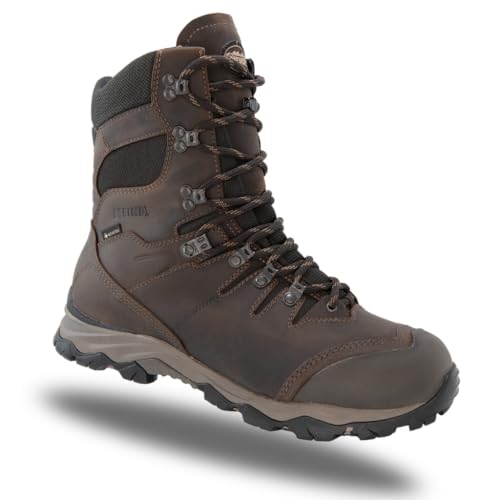
Meindl EuroLight Hunter 300
Covering ground in cool weather
The lightest insulated boot Meindl lists at 3.4 lb per pair, with 300g of Gore-Tex Airfiber instead of loft. The one to buy if you walk far more than you sit.
#ad How we are funded · Price as of November 19, 2026
Quick picks
| # | Product | Weight | Score | Price |
|---|---|---|---|---|
| Rank 1 | Meindl EuroLight Hunter 300 Covering ground in cool weather | 3.4 lb per pair | 9.3/10 | $403.95Amazon |
| Rank 2 | Meindl EuroLight Hunter, uninsulated The cheapest way into the brand | Not published | 8.8/10 | $380.95Amazon |
| Rank 3 | 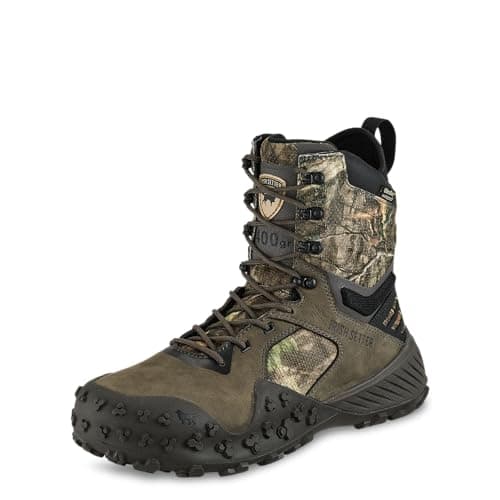 Irish Setter VaprTrek 8-inch, 400g Light miles in cool weather | Not published | 9.3/10 | $199.95Amazon |
| Rank 4 | 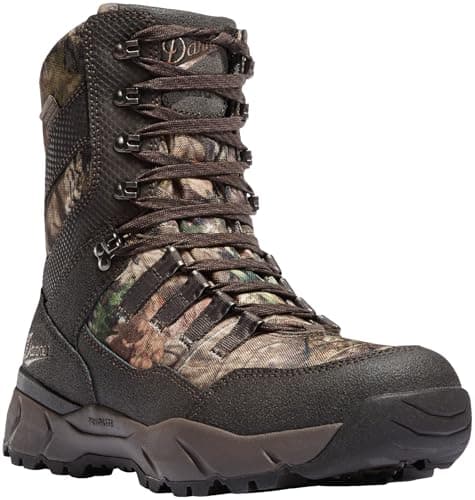 Danner Vital 8-inch, 400g A cheaper Danner for early season | Not published | 9.3/10 | $219.95Amazon |
| Rank 5 | 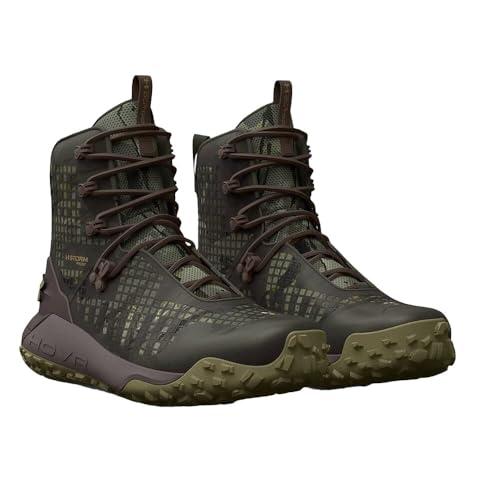 Under Armour Whitetail HOVR Dawn 2.0 Under Armour's only real hunting boot | Not published | 9.1/10 | $142.99Amazon |
| Rank 6 | 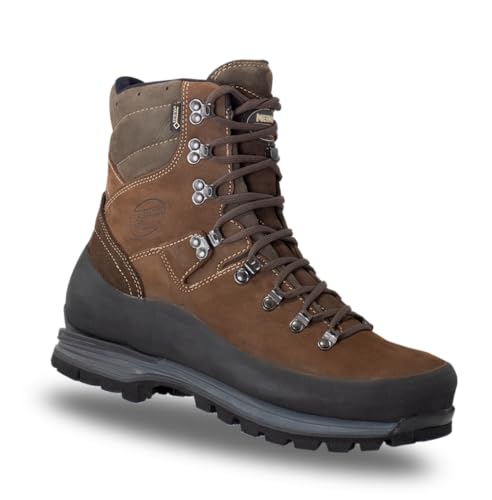 Meindl MFS-Vakuum Hunter A custom-ish fit without insulation | 3.87 lb per pair | 9.0/10 | $448.95Amazon |
| Rank 7 | 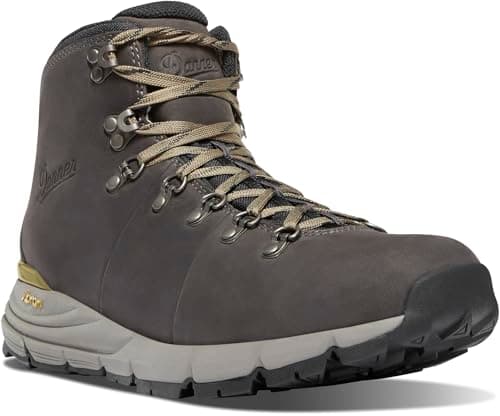 Danner Mountain 600 Leaf GTX Scouting and warm-weather miles | Not published | 9.1/10 | $233.81Amazon |
#ad Prices come from Amazon and change. How this site is funded. Scores are our published editorial rubric — see our methodology.
Start with the number almost nobody prints: Meindl publishes a per-pair weight for its hunting boots, and most of its competitors do not. That single fact decides how this page is ordered. Where a maker states a figure we rank on the figure; where no figure exists we say so rather than guessing, because a boot that *feels* light in a shop and a boot that *is* light are different claims and only one of them is checkable.
The reason to care is mechanical rather than aesthetic. Weight carried at the end of a swinging limb costs far more energy than the same weight carried on your back, which is why a half-pound per boot is noticeable by mid-afternoon and a full pound is noticeable by lunch. If your hunt is a walk - spot-and-stalk, public-land miles, scouting in August - the boot's weight is the spec that compounds.
The trap is that light and warm are opposites, and the hunting aisle sells both at once. Insulation is bulk. A 1,200g boot cannot be light, and a boot that is genuinely light is telling you, truthfully, that it has little or no insulation in it. That is fine if you are moving. It is a cold, miserable mistake if you are sitting.
The picks
Ordered by published per-pair weight where the maker states one, then by how little boot is in the way. Every figure below is the manufacturer's own.
#1 · Covering ground in cool weather
#ad How we are funded · Price as of November 19, 2026
Meindl EuroLight Hunter 300
MeindlThe lightest insulated boot Meindl lists at 3.4 lb per pair, with 300g of Gore-Tex Airfiber instead of loft. The one to buy if you walk far more than you sit.
| Insulation | 300g Gore-Tex Airfiber (manufacturer) |
|---|---|
| Height | 9 in |
| Weight | 3.4 lb per pair |
| Upper | Waxed full-grain nubuck |
| Waterproofing | Gore-Tex lined (manufacturer) |
| Outsole | Meindl Duo-DUR III |
| Venting | Flex-Zone |
Specifications per Meindl USA published specifications.
What it does well
- 3.4 lb per pair is light for a leather hunting boot with any insulation at all
- Airfiber is a thinner insulation than loose loft, so the boot stays flexible instead of turning into a cast
- Meindl publishes this one as made in Italy and states the Flex-Zone venting - a rare bit of specificity in the category
Good to know
- 300g is a walking figure, not a sitting figure. Buy it to move in, not to sit still below freezing
Our rubric — each criterion 0-10
- Warmth
- 6.4
- Waterproofing
- 9.0
- Fit
- 9.0
- Durability
- 8.8
- Value
- 6.2
#2 · The cheapest way into the brand
#ad How we are funded · Price as of November 19, 2026
Meindl EuroLight Hunter, uninsulated
MeindlThe EuroLight platform with the insulation taken out: the lowest-priced Meindl hunting boot listed, and a sensible summer scouting and early-season boot.
| Insulation | None - uninsulated (manufacturer) |
|---|---|
| Height | 9 in |
| Weight | Not published by manufacturer |
| Upper | Waxed full-grain nubuck |
| Waterproofing | Gore-Tex lined (manufacturer) |
| Outsole | Meindl Duo-DUR III |
Specifications per Meindl USA published specifications.
What it does well
- The least expensive entry to Meindl's hunting line, on the same EuroLight platform as the 300g
- Uninsulated and on the lighter of Meindl's two lasts, which makes it the one to walk miles in
- Gore-Tex lined, so it is still a wet-weather boot even without insulation
Good to know
- The Amazon listing is sparse and Meindl does not publish a pair weight for this version, so that line stays blank
Our rubric — each criterion 0-10
- Warmth
- 3.0
- Waterproofing
- 8.8
- Fit
- 8.8
- Durability
- 8.6
- Value
- 5.6
#3 · Light miles in cool weather
#ad How we are funded · Price as of November 19, 2026
Irish Setter VaprTrek 8-inch, 400g
Irish SetterA deliberately light 8-inch boot with just 400g of insulation - the right spec for an early-season walk-in where the problem is weight and sweat, not cold.
| Insulation | 400g |
|---|---|
| Shaft height | 8 in |
| Upper | Leather and nylon |
| Waterproofing | UltraDry membrane (manufacturer) |
| Fit | Lace-up |
Specifications per Irish Setter published specifications.
What it does well
- Genuinely light for an insulated boot, which is the whole point of the model
- Breaks in faster than a full-leather 12-inch boot
Good to know
- 400g and an 8-inch shaft is not a cold-sit boot - read the spec and believe it
Our rubric — each criterion 0-10
- Warmth
- 6.2
- Waterproofing
- 7.8
- Fit
- 9.0
- Durability
- 8.0
- Value
- 8.6
#4 · A cheaper Danner for early season
#ad How we are funded · Price as of November 19, 2026
Danner Vital 8-inch, 400g
DannerDanner's value platform: 400g, a lighter build, and a price that does not assume you hunt for a living. Early and mid-season only.
| Insulation | 400g Thinsulate Ultra |
|---|---|
| Shaft height | 8 in |
| Upper | Leather and 900-denier polyester |
| Waterproofing | Danner Dry (manufacturer) |
| Fit | Lace-up |
Specifications per Danner published specifications.
What it does well
- Light, flexible and barely needs breaking in
- The cheapest way into a boot that walks properly
Good to know
- Not recraftable like Danner's stitchdown boots
Our rubric — each criterion 0-10
- Warmth
- 6.2
- Waterproofing
- 8.4
- Fit
- 8.8
- Durability
- 8.0
- Value
- 8.6
#5 · Under Armour's only real hunting boot
$190.00 25% off
#ad How we are funded · Price as of November 19, 2026
Under Armour Whitetail HOVR Dawn 2.0
Under ArmourThe one boot in Under Armour's hunting line that is consistently listed and in stock: a light waterproof camo boot built for covering ground, not for sitting still in the cold.
| Insulation | Not published by manufacturer |
|---|---|
| Shaft height | Not published by manufacturer |
| Upper | Synthetic, UA Forest Camo |
| Waterproofing | Waterproof (manufacturer) |
| Cushioning | UA HOVR foam midsole (manufacturer) |
Specifications per Manufacturer figures as published on the Amazon product listing.
What it does well
- Light and athletic in a way almost no hunting boot is - this is a running-shoe company's take on the category
- Waterproof construction at a price well under the leather mountain boots
- The one UA hunting model with reliable Amazon stock across sizes
Good to know
- No published insulation figure, which means you cannot buy it for a temperature
Our rubric — each criterion 0-10
- Warmth
- 6.0
- Waterproofing
- 8.2
- Fit
- 8.4
- Durability
- 7.0
- Value
- 8.0
#6 · A custom-ish fit without insulation
#ad How we are funded · Price as of November 19, 2026
Meindl MFS-Vakuum Hunter
MeindlUninsulated, Gore-Tex lined, and built around foam panels that mold to your foot. A warm-weather and shoulder-season boot bought for the fit, not the warmth.
| Insulation | None - uninsulated (manufacturer) |
|---|---|
| Height | 9 in |
| Weight | 3.87 lb per pair |
| Upper | Nubuck leather with MFS Vakuum foam panels |
| Waterproofing | Gore-Tex lined (manufacturer) |
| Outsole | Vibram Alpin over a polyurethane midsole |
| Crampons | Accepts soft crampons (manufacturer) |
Specifications per Meindl USA published specifications.
What it does well
- The MFS Vakuum foam panels are the closest thing to a molded fit you can buy off a shelf
- A published Vibram Alpin outsole and a polyurethane midsole, and Meindl states it will take soft crampons
- Uninsulated means it is usable across spring, summer scouting and early fall rather than six weeks of the year
Good to know
- No insulation at all, so it cannot be matched to a cold-weather temperature - see our insulation chart before you buy it as a winter boot
Our rubric — each criterion 0-10
- Warmth
- 3.0
- Waterproofing
- 9.0
- Fit
- 9.6
- Durability
- 9.4
- Value
- 5.8
#7 · Scouting and warm-weather miles
$249.95 6% off
#ad How we are funded · Price as of November 19, 2026
Danner Mountain 600 Leaf GTX
DannerNot a hunting boot in the insulated sense - an uninsulated Gore-Tex hiker that happens to be the right tool for August scouting and September archery.
| Insulation | None (uninsulated) |
|---|---|
| Shaft height | Not published by manufacturer |
| Upper | Suede leather |
| Waterproofing | Gore-Tex (manufacturer) |
| Outsole | Vibram SPE/Megagrip |
Specifications per Danner published specifications.
What it does well
- Comfortable out of the box in a way no insulated hunting boot is
- Vibram Megagrip is the best wet-rock outsole in this list
Good to know
- Zero insulation - this is the wrong boot the moment it gets cold
Our rubric — each criterion 0-10
- Warmth
- 3.0
- Waterproofing
- 8.6
- Fit
- 9.4
- Durability
- 8.4
- Value
- 8.4
How we picked
- A published weight, where one exists. Meindl states pair weights; most makers do not. A boot with a real figure outranks a boot with a marketing adjective, and where the figure is missing the table says so instead of carrying an estimate.
- Honest about insulation. A light boot is light because there is less in it. Every pick below either publishes a low gram figure or publishes none at all, and we say which.
- Built to walk. A lace-up that can be tensioned beats a pull-on over distance, because a heel that lifts is a blister at mile four regardless of how little the boot weighs.
- Currently purchasable. Every boot here returned a live, buyable offer when this page was written. A light boot you cannot buy is not a recommendation.
- One honest trade-off per pick. Buying light costs you something every time. Each card says what.
What the makers actually publish
| Boot | Published pair weight | Published insulation | Height |
|---|---|---|---|
| Meindl EuroLight Hunter 300 | 3.4 lb | 300g Gore-Tex Airfiber | 9 in |
| Meindl MFS-Vakuum Hunter | 3.87 lb | None - uninsulated | 9 in |
| Meindl EuroLight Hunter, uninsulated | Not published by manufacturer | None - uninsulated | 9 in |
| Irish Setter VaprTrek 8-inch | Not published by manufacturer | 400g | 8 in |
| Danner Vital 8-inch | Not published by manufacturer | 400g Thinsulate Ultra | 8 in |
| Under Armour Whitetail HOVR Dawn 2.0 | Not published by manufacturer | Not published | Not published by manufacturer |
| Danner Mountain 600 Leaf GTX | Not published by manufacturer | None (uninsulated) | Not published by manufacturer |
Three of the seven publish nothing about weight at all. That is not a reason to skip them - the VaprTrek and the HOVR Dawn are both built on the light end of the category and sold on it - but it does mean the only honest way to compare them to a Meindl is to compare what each maker is willing to state.
A pound off your feet is worth more than a pound off your pack
The rule of thumb that circulates in hiking circles - that weight on the feet costs several times what the same weight costs in a pack - is directional rather than a precise constant, and we are not going to invent a multiplier for it. What is not in dispute is the direction: your foot accelerates and decelerates with every stride, and your pack does not. Mass at the end of that lever is paid for thousands of times a mile.
So the practical question is not "how light can I go" but "how much boot does this hunt actually need". Those are different questions and the second one has a better answer.
Match the boot to the hunt, not to the scale
- Scouting, August, dry groundUninsulated, lowest weight you can buy See the picks
- Spot-and-stalk, cool weather, real miles300-400g, 8 to 9 in, lace-up See the picks
- Mixed - walk in, then sit a few hours800g and accept the weight See the picks
- Sitting still in the coldStop reading this page entirely See the picks
- Mountains, heavy packoutsStiffness beats lightness here See the picks
Why the Meindls lead a page like this
Not because German boots are magic, but because Meindl is the one maker in this category that prints a number you can hold it to. The EuroLight Hunter 300 publishes 3.4 lb per pair with 300g of Gore-Tex Airfiber insulation and a 9 in height, which is an unusual combination: most boots that light carry no insulation at all, and most boots with insulation do not publish a weight.
The MFS-Vakuum Hunter is the heavier of the two at a published 3.87 lb, and it is uninsulated, which looks like a worse deal until you understand what you are paying for - Meindl's vacuum-fitting system is a fit technology rather than a warmth one. If your problem is that boots do not fit your foot, that half pound is the cheapest half pound on this page.
The American lace-ups, and what they trade
The Irish Setter VaprTrek is the boot most hunters actually mean when they say lightweight: 8 in of leather and nylon, 400g of insulation, an UltraDry membrane, and a price that is roughly half the Meindl's. Irish Setter does not publish a pair weight for it, so you are buying the brand's positioning rather than a figure - but the construction is the light-boot recipe, and nylon panels instead of full leather is where the weight goes.
The Danner Vital sits in the same place for similar money with 400g Thinsulate Ultra and a 900-denier polyester upper behind Danner Dry. Danner also publishes no pair weight here. Between the two it is mostly a last question: try both if you can, and if you cannot, buy from whichever brand has fit you before.
The Under Armour Whitetail HOVR Dawn 2.0 is the outlier. UA publishes no insulation figure and no weight, which by this site's standards is two blanks on the spec sheet - and it is still here, because an athletic-footwear company building a waterproof camo boot on a running-shoe midsole produces something genuinely light that needs no break-in. Buy it knowing you are buying the feel and not a specification. The Under Armour brand page is blunter about the gaps.
The uninsulated end
Two picks carry no insulation at all. The Meindl EuroLight Hunter, uninsulated is the same 9 in waxed-nubuck platform as the 300 with the insulation taken out, and Meindl does not publish a weight for this variant - which is mildly irritating given that it publishes one for its siblings. The Danner Mountain 600 Leaf GTX is a Gore-Tex suede hiker on a Vibram SPE/Megagrip outsole that hunters adopt for scouting, and it is the most shoe-like thing on this page.
Both are warm-weather and dry-ground boots. Neither is a cold-sit boot, and neither pretends to be. If you are reading this page in October looking for one boot to do everything, the honest answer is that 800g is the compromise tier and a light boot is not.
What you give up when you buy light
- Warmth, directly and unavoidably. Less material is less insulation. A 300g boot is a moving-hunter's boot; four hours on a stand below freezing will find the limit.
- Protection in brush. A soft nylon-panelled upper is lighter than full leather and gives up abrasion resistance to get there. In briars and rock, that shows up as scuffing first and as a wet foot eventually.
- Support under load. Light boots have less shank. Put a loaded pack on and the boot stops carrying the weight and your arch starts - which is the whole argument for stiffness in mountain boots.
- Resoling, usually. Cemented construction is lighter than a welt and cannot be rebuilt. These are replace-them boots, not recraft-them boots.
Make the boot lighter without buying a lighter boot
Two cheap moves change the number at the end of your leg more than most upgrades do:
- Drop the sock bulk you do not need. A heavy sock in a boot that was sized for a heavy sock is fine; a heavy sock crammed into a boot sized for a thin one compresses the insulation and costs you warmth as well as weight. Sock weight is the short version.
- Dry them properly between hunts. A boot that holds moisture is a heavier boot and a colder one, and the liner is where the water hides - how to dry hunting boots covers doing it without cooking the glue.
How to compare two boots when neither publishes a weight
Most of this category gives you nothing to work with, so here is the order we would check, cheapest signal first:
- Read the upper description. Full-grain leather all the way round is the heavy build. Leather with nylon or polyester panels - the VaprTrek and the Vital both do this - is the light one, and the panel is where the weight came out.
- Read the insulation figure. It is the single biggest variable. A boot that publishes 800g cannot be in the same weight class as one that publishes 300g, whatever either listing says about being lightweight.
- Look at the sole unit. A Vibram mountain outsole with a full-length shank is heavy on purpose, because it is doing load-carrying work. A running-shoe midsole is not.
- Check the height. Every inch of shaft is material. A 9 in boot and a 17 in pull-on are not comparable objects even in the same rubber.
- Weigh the pair yourself when they arrive, on a kitchen scale, before you wear them outside. It takes a minute, it settles the question for good, and it is the one measurement you can make that the maker did not.
That last step is worth the trouble if you are deciding between two pairs you can both return. It is also the only weight figure in this whole category that you will ever be able to verify personally.
Our recommendation
If you only take one thing from this page, take this one.
Our pick
Meindl EuroLight Hunter 300
Covering ground in cool weather
#ad How we are funded · Price as of November 19, 2026
Runner-up
Meindl EuroLight Hunter, uninsulated
The cheapest way into the brand
#ad How we are funded · Price as of November 19, 2026
Frequently asked questions
What is a good weight for a hunting boot?
Are lightweight hunting boots warm enough for late season?
Do lightweight hunting boots need breaking in?
Is a lighter boot less durable?
Sources
Read next
Boot Fit & Sizing
Best hunting boots for hiking
If you walk more than you sit, most of the hunting aisle is wrong for you. What works, and when to buy a hiker.
Boot Fit & Sizing
Best mountain hunting boots
The one category where price tracks capability. What a $500 boot does structurally that a $200 boot cannot.
Cold Weather Boots
400 gram insulated hunting boots
400g is the walking hunter's rating, not the budget option - including in $500 mountain boots. Where it works and where it stops.
Brands
Danner vs Irish Setter
The two brands compared on membranes, insulation range and price across three matched pairs - and the one category where only one of them competes.
Brands: want your product tested? For Brands.