Cold Weather Boots
2000 gram insulated boots: how cold is cold enough
A sitting rating and nothing else. Below roughly 10F a motionless hunter needs this much, and above about 25F it will make you colder than an 800g boot would - here is why, and which boots carry the figure.
Bog & Briar earns a commission when you buy through our links, at no extra cost to you. Prices come from Amazon and change; the date beside every price is when we last verified it. Full disclosure.
Best 2,000g boots
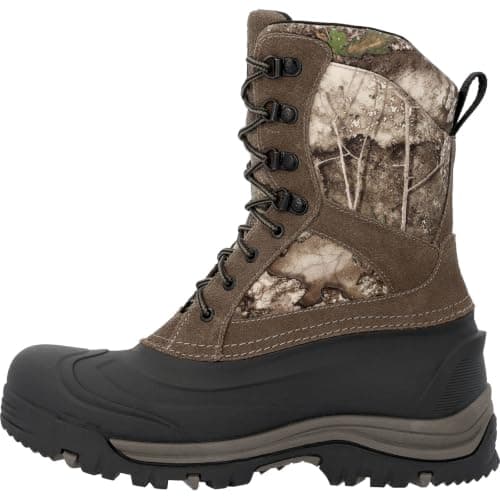
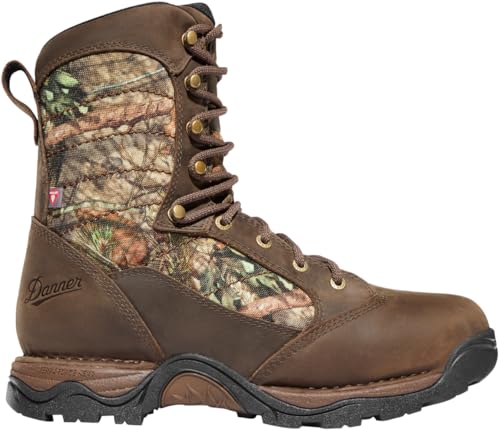
Rocky Jasper Trac 2,000g, men's
The cheapest real 2,000g lace-up
2,000g of insulation for roughly what an 800g boot costs. The catch is the one that applies to the whole tier: this is a sitting boot, and you will sweat the warmth out of it on any walk worth the name.
#ad How we are funded · Price as of November 19, 2026
Quick picks
| # | Product | Insulation | Score | Price |
|---|---|---|---|---|
| Rank 1 | Rocky Jasper Trac 2,000g, men's The cheapest real 2,000g lace-up | 2,000g | 9.5/10 | $93.74Amazon |
| Rank 2 | 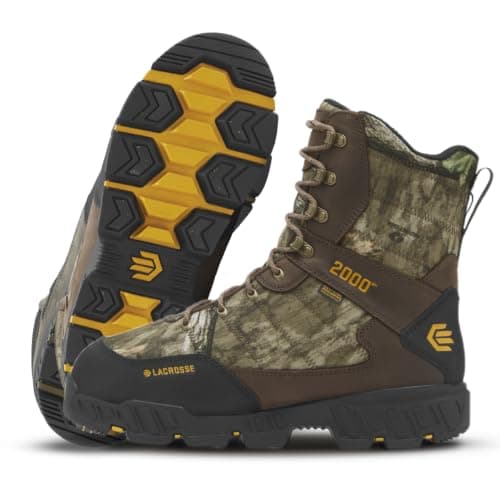 LaCrosse Cold Snap II 9-inch, 2,000g A 2,000g boot from a maker that publishes its specs | 2,000g Thinsulate Ultra | 9.6/10 | $249.95Amazon |
| Rank 3 | 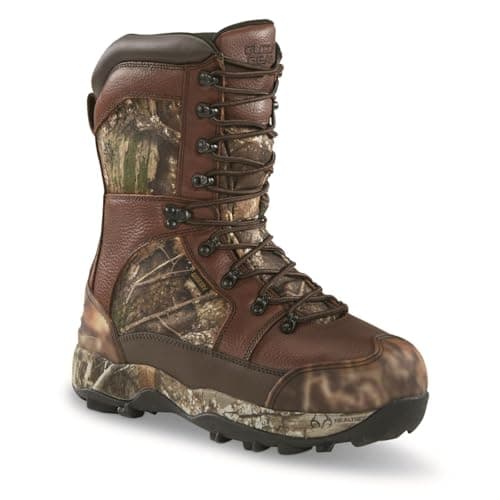 Guide Gear Monolithic Extreme, 2,400g The most published grams per dollar anywhere | 2,400g Thinsulate Ultra | 9.4/10 | $129.95Amazon |
| Rank 4 | 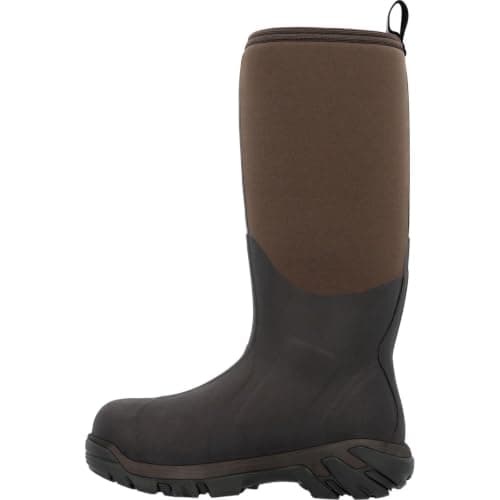 Muck Arctic Pro The coldest static sits | 8mm neoprene plus fleece | 9.6/10 | $130.60Amazon |
| Rank 5 | 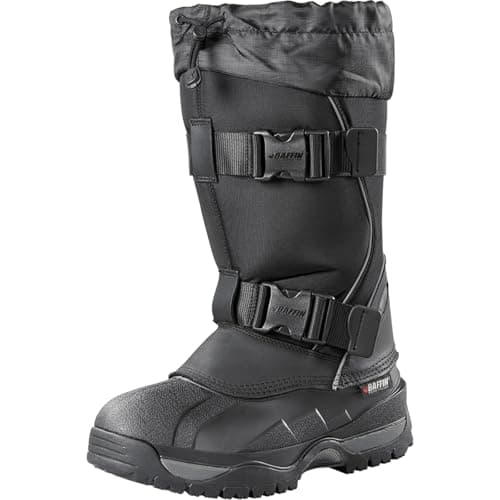 Baffin Impact Standing still in the worst of it | 8-layer removable inner boot | 9.3/10 | $218.36Amazon |
| Rank 6 | 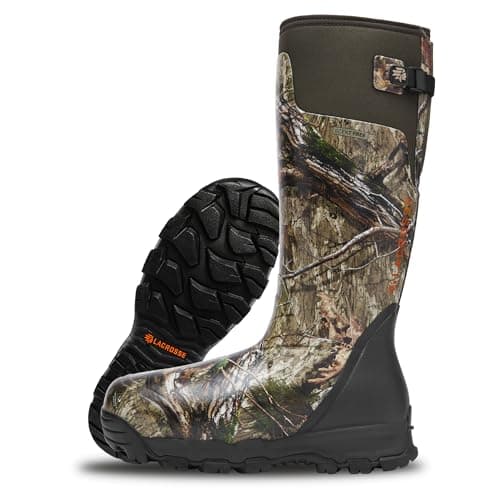 LaCrosse Alphaburly Pro 18-inch, 1,600g Sitting still in genuine cold | 1,600g | 9.8/10 | $199.98Amazon |
#ad Prices come from Amazon and change. How this site is funded. Scores are our published editorial rubric — see our methodology.
The honest answer first: 2,000g is a static rating that works from roughly minus 10F to about 15F for a hunter who does not move, and is actively counterproductive above about 25F. No boot maker publishes a temperature for it. Rocky, which sells a 2,000g boot, stops its own published insulation guide at 1,400g - the company does not issue guidance for the rating it is selling. That gap is the most useful fact on this page.
| Condition | 2,000g verdict |
|---|---|
| Sitting still, below -10F | Not enough on its own - you want a removable liner |
| Sitting still, -10F to 15F | Correct. This is the only place the tier makes sense |
| Sitting still, 15-25F | Works, but 1,000g to 1,600g does the same job lighter |
| Sitting still, above 25F | Counterproductive - you will sweat sitting down |
| Any walk over a quarter mile | Wrong boot. You will wet the liner from the inside |
| Standing in water or slush | Wrong architecture - you want sealed rubber, not grams |
| A boot for the whole season | No. This is a second pair, bought for December |
The picks
Three boots that carry a published 2,000g figure or better, and three alternatives that solve the same problem a different way - which for most hunters is the better buy.
#1 · The cheapest real 2,000g lace-up
$124.99 25% off
#ad How we are funded · Price as of November 19, 2026
Rocky Jasper Trac 2,000g, men's
Rocky2,000g of insulation for roughly what an 800g boot costs. The catch is the one that applies to the whole tier: this is a sitting boot, and you will sweat the warmth out of it on any walk worth the name.
| Insulation | 2,000g |
|---|---|
| Shaft height | Not published by manufacturer |
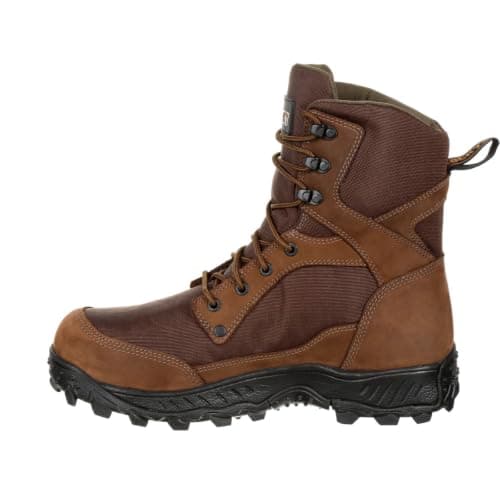
| Upper | Realtree APX camo, synthetic and leather |
| Waterproofing | Rocky waterproof construction (manufacturer) |
| Fit | Lace-up |
Specifications per Rocky Boots published specifications.
What it does well
- More insulation than almost any lace-up hunting boot on the market, at a budget price
- Lace-up, so unlike the rubber pull-ons at this rating it can be tensioned to your foot
- Rocky is an established maker with a published insulation guide, not a seasonal import
Good to know
- Rocky's own insulation guide stops at 1,400g, so the company publishes no guidance for the rating it sells here
Our rubric — each criterion 0-10
- Warmth
- 9.4
- Waterproofing
- 8.0
- Fit
- 7.4
- Durability
- 7.4
- Value
- 9.2
#2 · A 2,000g boot from a maker that publishes its specs
#ad How we are funded · Price as of November 19, 2026
LaCrosse Cold Snap II 9-inch, 2,000g
LaCrosseThe serious version of this tier: 2,000g of Thinsulate Ultra in a 9-inch lace-up with LaCrosse's Dry-Core lining. If you have decided on 2,000g, this is the boot with the most behind it.
| Insulation | 2,000g Thinsulate Ultra |
|---|---|
| Shaft height | 9 in |
| Upper | Leather and textile |
| Waterproofing | Dry-Core waterproof lining (manufacturer) |
| Fit | Lace-up, wide widths listed |
Specifications per LaCrosse Footwear published specifications.
What it does well
- Names the insulation as Thinsulate Ultra and publishes the shaft height - most boots at this rating do neither
- 9 inches is enough coverage for a blind or a stand without the weight of a 12-inch boot
- Wide widths are listed, which matters when you are sizing over a heavy wool sock
Good to know
- Stock is thin - individual sizes read as low as a few pairs, so check before you plan around it
Our rubric — each criterion 0-10
- Warmth
- 9.4
- Waterproofing
- 8.8
- Fit
- 8.2
- Durability
- 8.6
- Value
- 7.6
#3 · The most published grams per dollar anywhere
$159.95 19% off
#ad How we are funded · Price as of November 19, 2026
Guide Gear Monolithic Extreme, 2,400g
Guide Gear2,400g of Thinsulate Ultra for a price that reads like a typo. Guide Gear is Sportsman's Guide's house brand, so you are buying the insulation figure and nothing else - and for a hunter who only sits, that can be the right trade.
| Insulation | 2,400g Thinsulate Ultra |
|---|---|
| Shaft height | Not published by manufacturer |
| Upper | Leather, Realtree APX camo |
| Waterproofing | Waterproof (manufacturer) |
| Fit | Lace-up |
Specifications per Manufacturer figures as published on the Amazon product listing.
What it does well
- Nothing else publishes this much insulation at this price, and the figure names Thinsulate rather than generic fill
- The right boot for the hunter whose only problem is a cold blind and whose budget is the other constraint
- Leather upper rather than the synthetic most boots at this price use
Good to know
- A house brand - no published shaft height, no resole path, and no serviceable history to judge longevity by
Our rubric — each criterion 0-10
- Warmth
- 9.6
- Waterproofing
- 8.0
- Fit
- 7.0
- Durability
- 6.6
- Value
- 9.4
#4 · The coldest static sits
$185.00 29% off
#ad How we are funded · Price as of November 19, 2026
Muck Arctic Pro
Muck8mm neoprene plus a fleece lining, rated by Muck to -60F for static use. If your problem is a long December sit and nothing else, this is the category answer.
| Insulation | 8mm neoprene plus fleece |
|---|---|
| Temperature rating | -60F to 30F (manufacturer, static use) |
| Upper | Rubber over 8mm neoprene |
| Fit | Pull-on, stretch-fit topline |
| Reinforcement | Double rubber at heel and toe |
Specifications per Muck Boot Company published specifications.
What it does well
- The published rating is for static use, which is exactly how a stand hunter uses a boot
- Reinforced heel and toe survive brush and truck beds
Good to know
- Hopeless for walking - you will overheat in a quarter mile
Our rubric — each criterion 0-10
- Warmth
- 9.8
- Waterproofing
- 9.0
- Fit
- 7.8
- Durability
- 8.6
- Value
- 8.0
#5 · Standing still in the worst of it
$285.99 24% off
#ad How we are funded · Price as of November 19, 2026
Baffin Impact
BaffinAn eight-layer removable inner boot rated by Baffin to -76F. This is an ice-fishing and arctic-work boot that stand hunters have quietly adopted.
| Insulation | 8-layer removable inner boot |
|---|---|
| Temperature rating | -76F (manufacturer) |
| Shaft height | Not published by manufacturer |
| Upper | Rubber base, nylon shell |
| Liner | Removable multi-layer |
What it does well
- Warmer than anything else here, by a distance
- The inner boot pulls out to dry, which is the only way to recover from a sweaty walk-in
Good to know
- Enormous, heavy, and you cannot walk any distance in it
Our rubric — each criterion 0-10
- Warmth
- 10.0
- Waterproofing
- 7.6
- Fit
- 6.6
- Durability
- 8.4
- Value
- 7.4
#6 · Sitting still in genuine cold
$239.95 17% off
#ad How we are funded · Price as of November 19, 2026
LaCrosse Alphaburly Pro 18-inch, 1,600g
LaCrosseThe default answer for a stand hunter below 20F: 1,600g of insulation in a scent-free rubber boot with an adjustable calf gusset, so it fits over a heavy sock and a thick calf.
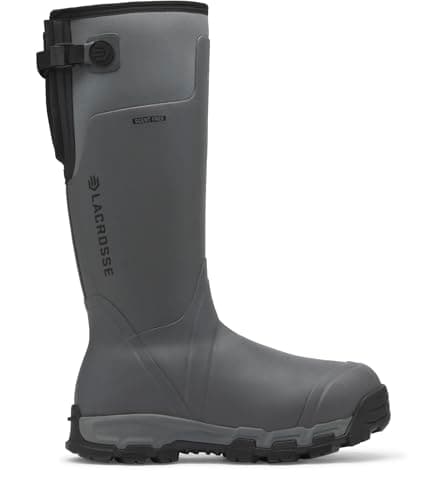
| Insulation | 1,600g |
|---|---|
| Shaft height | 18 in |
| Upper | Vulcanized rubber over neoprene |
| Calf fit | Adjustable back gusset |
| Liner | Removable EVA footbed |
Specifications per LaCrosse Footwear published specifications.
What it does well
- The most insulation you can sensibly buy in a rubber boot, and rubber is the one upper that does not wet out
- The adjustable gusset is the reason this boot fits calves that defeat every other 18-inch pull-on
- Rubber is inherently scent-free, which matters more to deer hunters than most boot copy admits
Good to know
- Far too much boot for walking in. If you have a half-mile hike you will sweat, and then you will be cold anyway
Our rubric — each criterion 0-10
- Warmth
- 9.6
- Waterproofing
- 9.4
- Fit
- 8.2
- Durability
- 9.0
- Value
- 8.6
Why this tier barely exists
Walk the insulated-boot aisle and the numbers stop at 1,000g or 1,200g, with 1,400g and 1,600g in rubber. Above that the market thins to a handful of models, and there is a reason that has nothing to do with manufacturing difficulty: past about 1,600g you are adding bulk faster than warmth, and the hunter who needs more than 1,600g needs a liner they can take out and dry, not another 400g sealed inside the boot.
That is the whole argument of this page. Insulation does not scale the way the number implies - Rocky says plainly that a 400g boot is not twice as warm as a 200g boot - and the thing that defeats a very warm boot is never the rating. It is moisture, because a sealed 2,000g liner that got damp on the walk in cannot be dried in the field and takes days to dry at home.
Below 15F, pick the architecture before the number
- You sit still, your access is short, your ground is dry2,000g lace-up. You are on the right page.
- You sit still and your ground is wet or floodedSealed rubber with neoprene - the Arctic Pro or the Alphaburly 1,600g. See the picks
- You sit still below -10F, or you sweat on the way inA pac boot with a removable liner you can dry overnight. See the picks
- You walk to your stand and then sit1,000g at most, plus a sock change at the stand. See the picks
- You want heat added rather than retainedA heated insole in a boot you already fit. See the picks
2,000g against a removable liner
This is the comparison that decides the purchase, and the grams usually lose. A pac boot's inner boot pulls out, which means a hunter who sweats on the walk in can recover by morning; a sealed boot cannot. Baffin publishes a figure for the Impact that no gram rating approaches, and Kamik sells the same idea at a fraction of the price with an 8mm removable liner.
| 2,000g sealed lace-up | Pac boot, removable liner | |
|---|---|---|
| Warmth sitting still | Very high | Highest available |
| Recovers from a damp walk in | No | Yes, overnight |
| Walks acceptably | Poorly | Badly |
| Laces to the foot | Yes | No - loose fit by design |
| Ankle support | Some | Effectively none |
| Works in standing water | Only to the membrane | Only to the rubber-to-nylon seam |
| Price bracket | Budget to mid | Budget to high |
The full version of that argument, including where rubber fits, is on pac boots against insulated rubber. If you are specifically trying to survive an all-day December sit, the warmest boots for a tree stand ranks the whole field rather than one tier.
What the gram figure does and does not tell you at this rating
A gram rating is a weight of insulation per square meter of material - the same reasoning behind the 1600 gram Thinsulate temperature rating one tier down. At 600g it is a reasonable proxy for warmth because the boots carrying it are built similarly. At 2,000g it is a much weaker proxy, for three reasons:
- The fiber is often unnamed. Two of the boots here say Thinsulate Ultra; the cheapest says only "insulated." Thinsulate, PrimaLoft and generic polyester fill behave differently when compressed and damp - the material comparison is the page for that.
- Bulk eats the air gap. 2,000g in a boot sized for 800g compresses, and compressed insulation traps no still air. This rating needs a boot sized deliberately loose over a heavy sock, which is a sizing decision made before you buy: what size over thick socks.
- Nobody publishes a shaft height on the budget models. Two of the three lace-ups here do not state one, and at this rating coverage matters - snow comes in over the cuff long before it comes through the upper.
The alternative nobody sells you
For a hunter sitting at 10F, the three cheapest improvements are not boots. A dry heavyweight merino sock put on at the stand beats several hundred grams of insulation and costs a fraction of a boot. A foam pad under your feet stops conductive loss into an aluminum platform, which at this temperature is a larger leak than the boot. An adhesive toe warmer on top of the sock - on top, where it can get oxygen, not buried under the arch - adds real heat rather than retaining it.
Those three together will take an honest 1,000g boot into territory a 2,000g boot reaches alone, with none of the walking penalty. Why your feet get cold on stand is the diagnostic page, and hand warmers in boots covers the placement question properly.
Where 2,400g fits
One boot here publishes 2,400g, which is the most insulation listed in any mainstream hunting lace-up. The honest read is that above 2,000g the difference between ratings is swamped by everything else - fit, sock, moisture, how long you sit - and the reason to consider it is price rather than the extra 400g. It is a house-brand boot, with the trade-offs that implies, and we say so on the pick.
Our figures, and what they are not
- Every figure here is the manufacturer's. Every gram figure, temperature rating and membrane name on this page is cited as theirs. Published temperature ratings, where they exist, are static-use figures from the maker. Our methodology states what we do and do not do.
- The temperature bands are ours. They are built from published activity-level guidance plus sock weight, and they move with your circulation, your fit and the wind.
- Rocky's guide stops at 1,400g. Where this page gives a figure above that, it is our judgment and is labeled as such.
Our recommendation
If you only take one thing from this page, take this one.
Our pick
Rocky Jasper Trac 2,000g, men's
The cheapest real 2,000g lace-up
#ad How we are funded · Price as of November 19, 2026
Runner-up
LaCrosse Cold Snap II 9-inch, 2,000g
A 2,000g boot from a maker that publishes its specs
#ad How we are funded · Price as of November 19, 2026
Frequently asked questions
What temperature are 2000 gram insulated boots rated for?
Is 2000 gram insulation too much?
Is 2000g warmer than 1600g?
What is warmer, 2000g Thinsulate or a pac boot with a removable liner?
Are there 2000 gram rubber boots?
Can I wear 2000 gram boots for walking to my stand?
Sources
Read next
Cold Weather Boots
Boot insulation grams by temperature
The full gram-by-gram table with separate temperature ranges for sitting still and walking - the column other charts leave out.
Cold Weather Boots
1600 gram Thinsulate boots: the temperature rating, honestly
The most over-bought rating in hunting footwear - and the only right answer for a motionless sit below 15F.
Cold Weather Boots
600 gram insulated boots: the temperature range, honestly
Roughly 32F to 45F sitting, 20F to 40F walking - and why the tier between 400g and 800g suits the hunter who does both in one morning.
Cold Weather Boots
Pac boots or insulated rubber: the removable liner question
Removable liner or sealed rubber: the real tradeoffs in warmth, drying and water depth, with both options priced.
Cold Weather Boots
The warmest boots for sitting in a tree stand
A stand sit is the coldest job a boot gets: no movement, full wind, and a metal platform under your soles. Six picks for four motionless hours.
Cold Weather Boots
Thinsulate, PrimaLoft and Thermolite: what the material changes
A gram rating is a weight, not a performance figure. What Thinsulate, PrimaLoft, Thermolite and neoprene each are, and which makers tell you.