Cold Weather Boots
Thinsulate, PrimaLoft and Thermolite: what the material changes
A gram rating is a weight, so it tells you how much fiber is in the boot and nothing about which fiber - which is why the [1600 gram Thinsulate temperature rating](/cold-weather-boots/1600-gram-insulated-boots) comes out the same whichever brand of fill a maker names. Here is what each one is, who owns it, what it is actually used for, and why none of them publish a temperature.
Bog & Briar earns a commission when you buy through our links, at no extra cost to you. Prices come from Amazon and change; the date beside every price is when we last verified it. Full disclosure.
Top pick
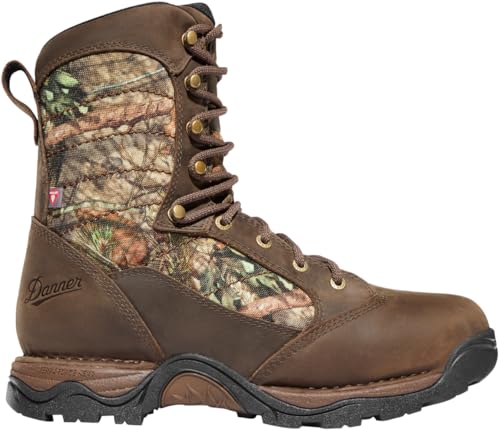
Danner Pronghorn 800g
All-day walking in the cold
800g in Danner's Pronghorn platform, which is built around a supportive midsole rather than a soft one. The boot to buy if your hunt is measured in miles.
#ad How we are funded · Price as of November 19, 2026
Quick picks
| # | Product | Insulation | Score | Price |
|---|---|---|---|---|
| Rank 1 | Danner Pronghorn 800g All-day walking in the cold | 800g | 9.7/10 | $319.95Amazon |
| Rank 2 | 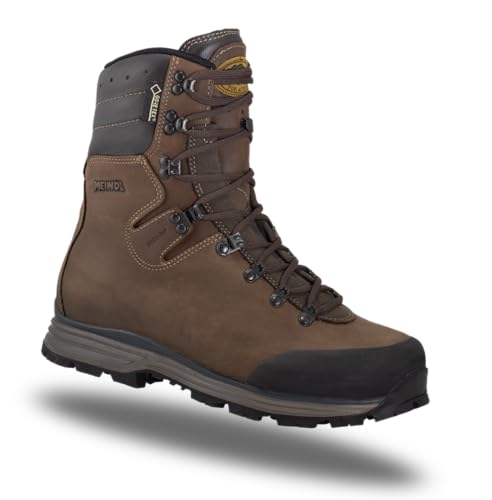 Meindl Comfort-Fit Hunter 400 Cold mountain hunts on a wide foot | 400g PrimaLoft Gold (manufacturer) | 9.5/10 | $436.95Amazon |
| Rank 3 | 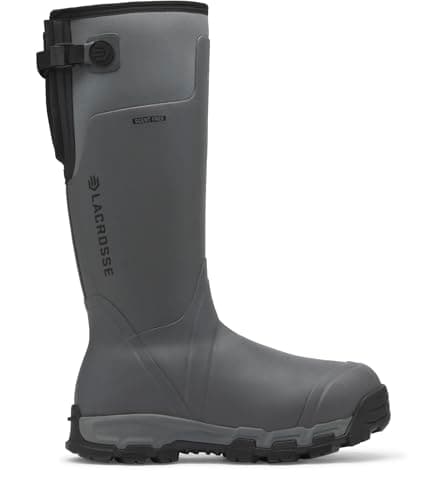 LaCrosse Alphaburly Pro 18-inch, 800g One boot for most of the season | 800g | 9.7/10 | $209.95Amazon |
| Rank 4 | 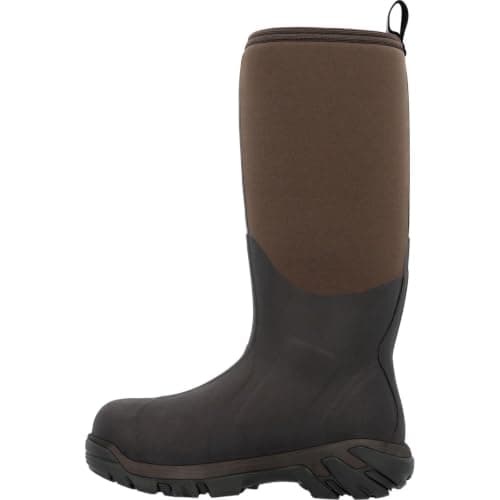 Muck Arctic Pro The coldest static sits | 8mm neoprene plus fleece | 9.6/10 | $130.60Amazon |
| Rank 5 | 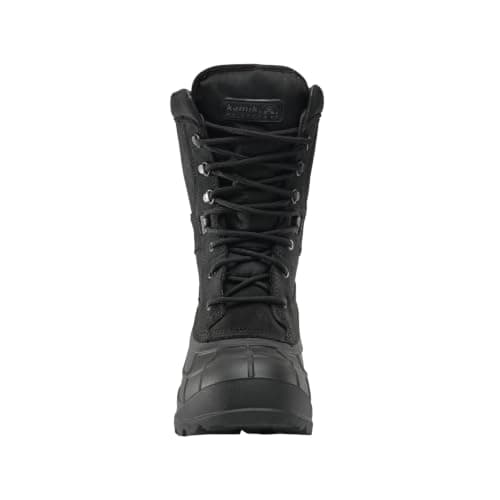 Kamik Nation Plus Cheap warmth with a removable liner | 8mm removable liner | 9.3/10 | $99.99Amazon |
#ad Prices come from Amazon and change. How this site is funded. Scores are our published editorial rubric — see our methodology.
Two boots both say 600g. One names 3M Thinsulate, one says "insulated." They are not the same boot, and the number cannot tell you which is warmer - because a gram rating is a weight of insulation per square meter, not a measure of how well that insulation performs. This page is about the part of the spec that boot listings mostly leave out.
| Insulation | Who owns the brand | What you find it in | Figure the maker publishes |
|---|---|---|---|
| 3M Thinsulate | 3M | The large majority of insulated hunting boots, plus gloves | Gram weight per square meter, named by the boot maker |
| PrimaLoft | PrimaLoft, Inc. | Apparel first; a minority of premium hunting boots | Gram weight, sometimes with the product line named (Gold, Classic, Active) |
| THERMOLITE | The LYCRA Company | Apparel, base layers, socks and budget winter boots | Usually a gram weight on the garment; no footwear temperature rating |
| Neoprene | Generic material, not a brand | Rubber pull-ons and waders | Thickness in millimeters, sometimes a static temperature range |
| Removable liner | Varies by boot maker | Pac boots | Often a temperature rating, for a motionless foot |
One boot per architecture
Not a ranking - five boots that each represent one of the materials above, so you can see what naming the insulation is worth in practice.
#1 · All-day walking in the cold
#ad How we are funded · Price as of November 19, 2026
Danner Pronghorn 800g
Danner800g in Danner's Pronghorn platform, which is built around a supportive midsole rather than a soft one. The boot to buy if your hunt is measured in miles.
| Insulation | 800g |
|---|---|
| Shaft height | Not published by manufacturer |
| Upper | Leather and nylon |
| Waterproofing | Gore-Tex (manufacturer) |
| Outsole | Danner Pronghorn |
Specifications per Danner published specifications.
What it does well
- One of the few insulated boots that genuinely supports a loaded pack
- Gore-Tex plus a recraftable platform - this is a multi-season purchase
- 800g walks far better than 1,000g or more
Good to know
- Expensive, and the wide sizes are the ones that go out of stock
Our rubric — each criterion 0-10
- Warmth
- 8.0
- Waterproofing
- 8.8
- Fit
- 9.4
- Durability
- 9.4
- Value
- 7.8
#2 · Cold mountain hunts on a wide foot
#ad How we are funded · Price as of November 19, 2026
Meindl Comfort-Fit Hunter 400
MeindlThe only boot in this registry that pairs a genuinely wide toe box with 400g of PrimaLoft Gold and a Gore-Tex liner. If your feet are broad and your hunt is cold and steep, this is the Meindl to buy.
| Insulation | 400g PrimaLoft Gold (manufacturer) |
|---|---|
| Height | 9.25 in |
| Weight | 4.125 lb per pair |
| Upper | Nubuck leather |
| Waterproofing | Gore-Tex lined (manufacturer) |
| Outsole | Vibram Multigrip 6.0 |
| Footbed | Cork, Comfort Fit last |
Specifications per Meindl USA published specifications.
What it does well
- A published wide toe box on a mountain-capable boot, which is a combination almost nobody else builds
- 400g of PrimaLoft Gold is the right amount for a hunt that mixes climbing with sitting - enough to stop, not enough to cook you walking
- Cork footbeds and a published Vibram Multigrip 6.0 outsole, and Meindl states the boot is made in Germany
Good to know
- Meindl's own guidance is that sizing runs big and you should order a half size down, so buying this blind is a real risk
Our rubric — each criterion 0-10
- Warmth
- 7.6
- Waterproofing
- 9.2
- Fit
- 9.4
- Durability
- 9.4
- Value
- 6.0
#3 · One boot for most of the season
#ad How we are funded · Price as of November 19, 2026
LaCrosse Alphaburly Pro 18-inch, 800g
LaCrosseThe same boot as the 1,600g with half the insulation, and for most hunters in most of the country it is the smarter buy: warm enough sitting down to about freezing, survivable walking in.
| Insulation | 800g |
|---|---|
| Shaft height | 18 in |
| Upper | Vulcanized rubber over neoprene |
| Calf fit | Adjustable back gusset |
| Liner | Removable EVA footbed |
Specifications per LaCrosse Footwear published specifications.
What it does well
- The widest usable temperature window of any boot here - roughly 20F sitting to 50F walking
- Same gusset, same rubber, same scent profile as the 1,600g version
- If you are buying one rubber boot and do not know your conditions, this is the one
Good to know
- Not enough boot for an all-day December sit in the north
Our rubric — each criterion 0-10
- Warmth
- 8.2
- Waterproofing
- 9.4
- Fit
- 8.4
- Durability
- 9.0
- Value
- 9.0
#4 · The coldest static sits
$185.00 29% off
#ad How we are funded · Price as of November 19, 2026
Muck Arctic Pro
Muck8mm neoprene plus a fleece lining, rated by Muck to -60F for static use. If your problem is a long December sit and nothing else, this is the category answer.
| Insulation | 8mm neoprene plus fleece |
|---|---|
| Temperature rating | -60F to 30F (manufacturer, static use) |
| Upper | Rubber over 8mm neoprene |
| Fit | Pull-on, stretch-fit topline |
| Reinforcement | Double rubber at heel and toe |
Specifications per Muck Boot Company published specifications.
What it does well
- The published rating is for static use, which is exactly how a stand hunter uses a boot
- Reinforced heel and toe survive brush and truck beds
Good to know
- Hopeless for walking - you will overheat in a quarter mile
Our rubric — each criterion 0-10
- Warmth
- 9.8
- Waterproofing
- 9.0
- Fit
- 7.8
- Durability
- 8.6
- Value
- 8.0
#5 · Cheap warmth with a removable liner
#ad How we are funded · Price as of November 19, 2026
Kamik Nation Plus
KamikA rubber-bottom, nylon-top pac boot with a removable 8mm liner. The liner is the point: you can dry it overnight, which no sealed boot lets you do.
| Insulation | 8mm removable liner |
|---|---|
| Temperature rating | -40F (manufacturer) |
| Shaft height | Not published by manufacturer |
| Upper | Rubber bottom, nylon shell |
| Liner | Removable |
What it does well
- A removable liner dries in a night; a sealed boot does not
- The cheapest published -40F rating you will find
- Nylon shell is light for the warmth
Good to know
- A snow boot, not a hunting boot - loose fit, no ankle support, noisy nylon
Our rubric — each criterion 0-10
- Warmth
- 9.0
- Waterproofing
- 7.2
- Fit
- 7.0
- Durability
- 7.6
- Value
- 9.4
3M Thinsulate: the default, and the one that gets named
If a hunting boot publishes a gram figure at all, it is usually Thinsulate. 3M makes the fiber and publishes its construction; the boot maker decides how much goes in and publishes that as the gram rating. Nobody in that chain publishes a temperature. 3M does not, because it does not know what boot its fiber ended up in, and the boot makers decline to because - as Rocky puts it in its own insulation guide - conditions, activity level and sock thickness all change the answer.
Rocky's guide is worth reading for one more line: a 400-gram boot is not twice as warm as a 200-gram one. Insulation does not scale linearly. That is why our gram-tier pages give ranges rather than points, and why the jump from 600g to 800g buys less than the arithmetic suggests.
Thinsulate Ultra, and what the suffix is worth
Several listings say "Thinsulate Ultra" rather than plain Thinsulate. Treat the suffix as a product line rather than a performance grade you can convert into degrees: it tells you 3M's fiber is in there and the maker bothered to name the line, which is itself a mild quality signal. It does not tell you the boot is warmer than an unlabeled boot at the same gram figure.
PrimaLoft: built as a warm-when-wet answer to down
PrimaLoft's own account of its origin is that synthetic insulation came from a need for a "warm-when-wet" alternative to down. That is the claim the brand is built on, and it is the reason it shows up in apparel far more than in boots - a jacket gets wet from the outside, where a boot gets wet from the inside.
In hunting footwear it is a minority material and mostly a premium one. The clearest example on this site is Meindl, which publishes 400g PrimaLoft Gold on one model and 300g Gore-Tex Airfiber on another - naming the material rather than printing a bare number is the useful behavior here, and almost nobody else does it. The Meindl brand page goes through the whole line.
THERMOLITE: real, but almost never a hunting-boot insulation
THERMOLITE is a warming fiber and insulation line owned by The LYCRA Company, which describes it as "an insulation, it's a fiber" and lists insulation types including a blown-in EcoMade insulation, a down alternative called T-Down, and a batting called T3. Its named brand partners are clothing companies - high-visibility workwear, base layers, winter gear, coats, sweaters. The only footwear-adjacent product the brand highlights is a FAR INFRARED fiber it describes as "gentle warmth for feet."
That is the whole picture, and it explains what you find when you shop: search for Thermolite boots and you get budget winter and snow boots, not hunting boots. It is a legitimate insulation that happens to live in socks, base layers and inexpensive cold-weather footwear rather than in the hunting-boot aisle.
So what does "100 gram Thermolite" mean, and what is it rated to?
It means the garment or boot carries 100 grams of THERMOLITE insulation per square meter - and there is no published temperature rating for it, from The LYCRA Company or from anyone else. Our read of 100g as a footwear figure: it is a very light insulation, about a quarter of what the lightest insulated hunting boot carries. Expect it to be useful in the 40s and 50s Fahrenheit while you are moving, and to do very little for a hunter sitting still below about 45F.
If you landed here because a listing said 100g and you are trying to work out whether it is enough for deer season, the short answer is no - it is a mild-weather figure. The gram-to-temperature chart starts at the ratings that are actually built for hunting, and insulated against uninsulated is the better page if your weather is mild enough that 100g sounded plausible.
Neoprene: the architecture that does not use grams
Insulated rubber boots mostly skip the gram figure and publish neoprene thickness in millimeters instead, because the neoprene is the insulation rather than a layer inside the boot. 5mm is a mid-season duck boot, 7mm is cold, 8mm plus fleece is the top of the market. Muck publishes a static-use temperature range for the Arctic Pro on exactly that construction - and note that it is a static rating, which is why it looks so much colder than any gram figure.
You cannot convert millimeters to grams, and anyone who offers you a conversion is guessing. What you can do is compare the two architectures on how they fail, which is what neoprene against rubber and insulated rubber boots are for.
Removable liners: the only kind that recovers
A pac boot's inner boot is usually a multi-layer felt or synthetic liner, and the makers who build them are the only ones who routinely publish a temperature figure. The reason is that they can: the boot is designed around a motionless foot in the cold. Baffin publishes a figure for the Impact, Kamik publishes one for the Nation Plus.
The real advantage is not the number. It is that the liner comes out to dry, which means a hunter who sweats on the walk in starts tomorrow dry. No sealed boot at any gram rating can do that, which is why our 2,000g page ends up recommending a liner over more grams for anyone hunting below about minus 10F.
What to actually look for on a listing
- A named fiber plus a number. "600g Thinsulate Ultra" is a checkable claim. "600g insulation" is weaker. "Warm insulated lining" is nothing at all.
- A published shaft height. It is the figure most budget boots omit, and in snow it decides more than the insulation does.
- A membrane name. Gore-Tex is a different proposition from a house membrane at year five, whatever the insulation says.
- A temperature rating that states static use. If a rubber or pac boot gives you degrees, check whether the maker said "static" - almost all of them did, and it changes what the number means.
- Nothing about the gram number as a temperature. No manufacturer publishes that conversion, so any single figure you see quoted elsewhere is an estimate rather than a published rating.
| If the listing says... | What you know | What you still need to ask |
|---|---|---|
| 600g Thinsulate Ultra | 3M fiber, 600 grams per square meter | Shaft height, membrane, width |
| 400g PrimaLoft Gold | Named line from a maker that documents it | Whether you need the premium price |
| 100g Thermolite | A light apparel-grade figure | Whether this is a hunting boot at all |
| 8mm neoprene, -60F static | Sealed rubber built for sitting | How far you have to walk in it |
| Insulated, waterproof | Nothing checkable | Which fiber, how much, what membrane |
Our figures, and what they are not
- Every brand description here is the company's own. Each one comes from that company's own site and is cited in the sources below - see our methodology.
- The 100g reading is our judgment, labeled as such. No published temperature rating exists for any gram figure of any of these insulations, including this one.
- No conversion between materials is offered. You cannot turn millimeters into grams or either into degrees, and we do not pretend otherwise.
Our recommendation
If you only take one thing from this page, take this one.
Our pick
Danner Pronghorn 800g
All-day walking in the cold
#ad How we are funded · Price as of November 19, 2026
Runner-up
Meindl Comfort-Fit Hunter 400
Cold mountain hunts on a wide foot
#ad How we are funded · Price as of November 19, 2026
Frequently asked questions
Is Thinsulate or PrimaLoft better in a boot?
What temperature is 100 gram Thermolite insulation good for?
Is Thermolite as good as Thinsulate?
Does the gram rating mean the same thing across brands?
Why does no boot company publish a temperature rating for grams?
Can I compare neoprene millimeters to insulation grams?
Sources
- 3M Thinsulate insulation for footwear - product information
- PrimaLoft - synthetic insulation product information
- THERMOLITE (The LYCRA Company) - warming fiber and insulation product information
- Rocky Boots - insulation guide (what the gram rating measures)
- Meindl USA - published hunting boot specifications
- Muck Boot Company - published temperature ratings
Read next
Cold Weather Boots
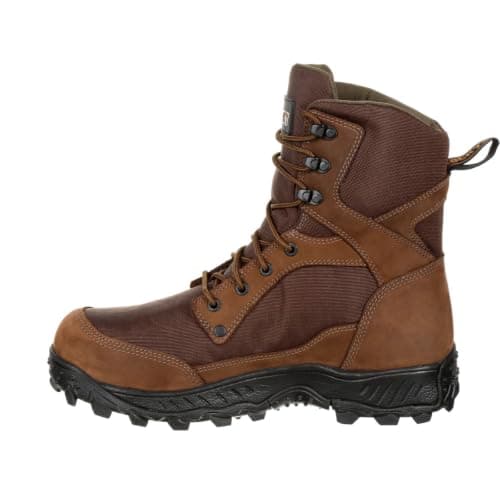
Boot insulation grams by temperature
The full gram-by-gram table with separate temperature ranges for sitting still and walking - the column other charts leave out.
Cold Weather Boots
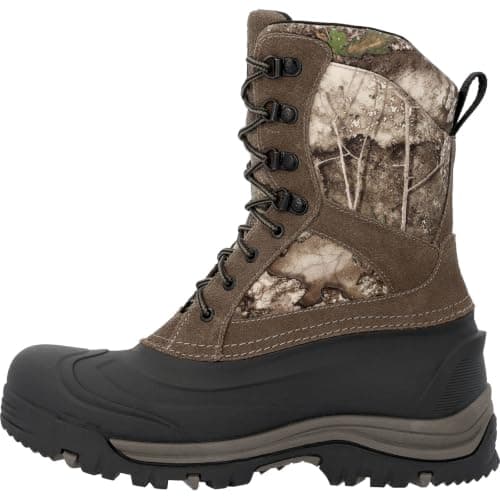
600 gram insulated boots: the temperature range, honestly
Roughly 32F to 45F sitting, 20F to 40F walking - and why the tier between 400g and 800g suits the hunter who does both in one morning.
Cold Weather Boots
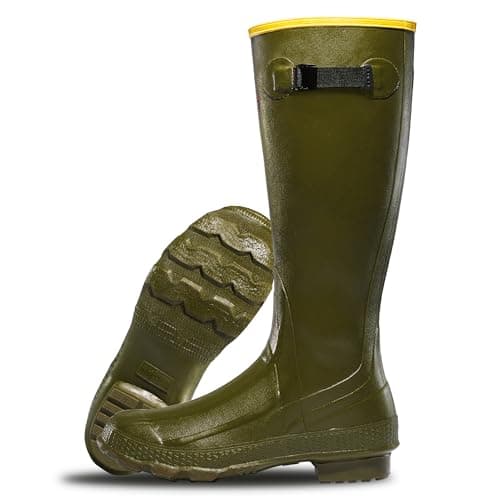
2000 gram insulated boots: how cold is cold enough
A static rating, not a season: roughly -10F to 15F sitting still, and a liability above 25F. Why a removable liner usually beats more grams.
Cold Weather Boots
Insulated or uninsulated hunting boots: pick by activity, not temperature
An uninsulated boot plus the right sock beats an insulated boot you sweat into. Where the line actually falls.
Rubber Boots
Neoprene or rubber: what the two constructions actually do
Every tall boot is both materials. What differs is the ratio, the rating system, and how it eventually fails.
Brands
Meindl hunting boots
A German import that publishes pair weights and shaft heights, builds a genuinely wide last, and tops out at 400g - a walking brand, not a sitting one.