Cold Weather Boots
What insulation weight to look for in western boots for cold weather
The short answer is 200g to 400g, and the longer answer is that most western boots publish nothing, so the sock and the insole end up doing the work.
Bog & Briar earns a commission when you buy through our links, at no extra cost to you. Prices come from Amazon and change; the date beside every price is when we last verified it. Full disclosure.
Top pick
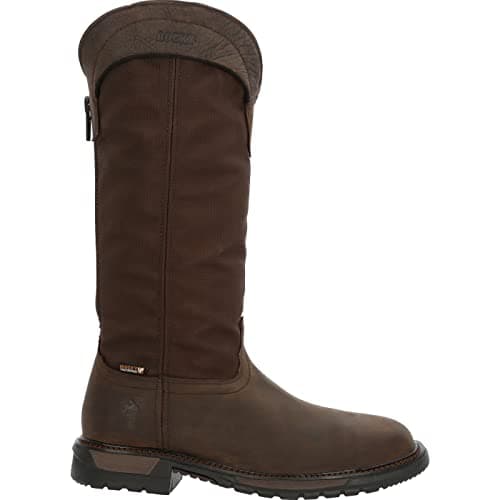
Rocky Original Ride FLX 16-inch Snake Boot
A true western pull-on with snake guard
A square-toe western boot with 16 inches of snake guard and a back zip, which is a combination almost nobody else builds: cowboy boot on the outside, snake boot on the inside.
#ad How we are funded · Price as of November 19, 2026
Quick picks
| # | Product | Type | Score | Price |
|---|---|---|---|---|
| Rank 1 | Rocky Original Ride FLX 16-inch Snake Boot A true western pull-on with snake guard | Not published | 9.6/10 | $199.95Amazon |
| Rank 2 | 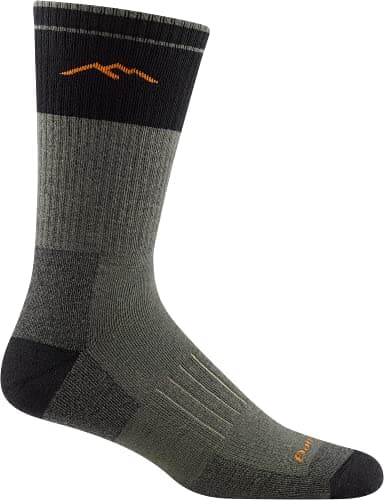 Darn Tough Hunter Boot Sock, heavyweight The default serious hunting sock | Not published | 9.8/10 | $31.95Amazon |
| Rank 3 | 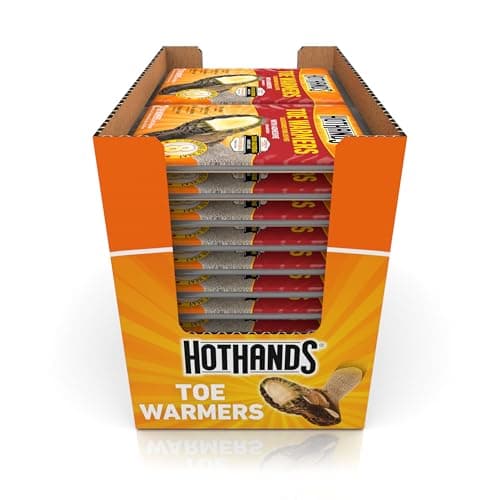 HotHands Toe Warmers, 40 pair The cheapest fix for cold toes | Air-activated, single use | 9.5/10 | $32.49Amazon |
| Rank 4 | 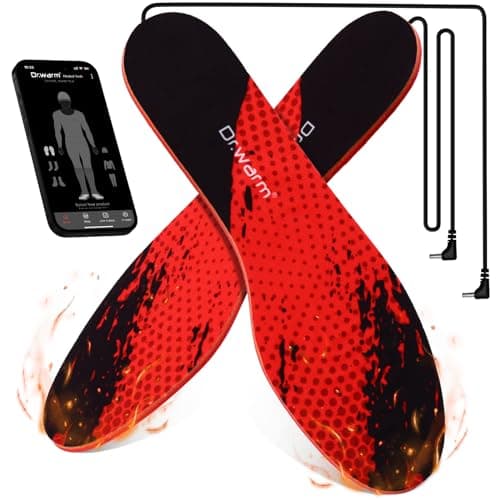 Dr.warm rechargeable heated insoles Remote-controlled heat at a sane price | Rechargeable heated insole | 9.2/10 | $62.99Amazon |
#ad Prices come from Amazon and change. How this site is funded. Scores are our published editorial rubric — see our methodology.
For men's western boots in cold weather, `200g` to `400g` is the range that actually exists, and `400g` is the practical ceiling. The lower of those two has its own page - 200 gram boot insulation - because it is the rating western and work boots ship with most often. A western last is narrow through the waist and low in volume by design, so there is nowhere to put the loft a 1,000g hunting boot carries. The honest consequence: a western boot is a 25F to 40F boot, and below that you get warmth from the sock, the insole and a toe warmer rather than from the boot.
The harder part of this question is that most western boot makers do not publish an insulation weight at all. Hunting-boot brands have trained buyers to shop by grams; western brands mostly describe a boot as "insulated" or "lined" and leave it there. When no figure is published we say so rather than invent one, which is why the spec table on this page has blanks in it.
What the gram figure means, and why 400g is the ceiling here
Insulation weight is grams per square meter of the batting used, not the mass of insulation in the boot. A 400g lining is roughly a quarter-inch of lofted synthetic; 1,000g is closer to a half inch. Half an inch of loft all the way round a foot needs a boot built with the volume to hold it, and that is precisely what a western boot is not - the fitted instep and the narrow waist are the style.
| Published weight | What it feels like | Realistic use in a western boot |
|---|---|---|
| None stated | A lined boot, no loft | Dry cold to about 40F, moving |
| 200g | A thin, even lining | 35F to 45F, walking or riding |
| 400g | Noticeably padded | 20F to 35F, moving; 40F standing |
| 600g and up | Rare in a western last | Usually a work pull-on, not a dress western |
| 1,000g and up | Does not exist here | Buy a hunting boot instead |
What to look for when the box says nothing
- A published lining material. "Thinsulate", "shearling" or a named fleece tells you more than the word "insulated" does, because at least it identifies what is in there.
- A waterproof claim you can read. Cold feet in western boots are usually wet feet. A waterproof full-grain upper with a published membrane claim beats any amount of unstated lining.
- Volume for a real sock. If the boot only fits over a thin dress sock, it cannot be a cold-weather boot - the sock is where most of your usable warmth comes from.
- A rubber or lugged outsole. A leather sole on frozen ground is both cold and dangerous. A rubber outsole breaks the conduction path and holds on ice.
- A shaft you can get a sock into. A 16 to 17-inch western pull-on takes an over-the-calf sock; a 12-inch roper mostly does not.
What we would buy for cold weather in western boots
One western pull-on that publishes its figures, plus the three things that make any western boot warmer than its lining does.
#1 · A true western pull-on with snake guard
#ad How we are funded · Price as of November 19, 2026
Rocky Original Ride FLX 16-inch Snake Boot
RockyA square-toe western boot with 16 inches of snake guard and a back zip, which is a combination almost nobody else builds: cowboy boot on the outside, snake boot on the inside.
| Protection claim | 16 in of snake guard material (manufacturer) |
|---|---|
| Shaft height | 16 in |
| Upper | Waterproof full-grain SPR leather with snake guard |
| Toe | Composite, ASTM F2413 (manufacturer) |
| Closure | Western pull-on with back zip |
Specifications per Rocky Boots published specifications.
What it does well
- The back zip solves the one real problem with a tall western pull-on - getting into it
- Square toe and western heel, so it looks and walks like the boot you already own
- The composite toe is a genuine bonus if you also work in these
Good to know
- A western heel is worse than a lug outsole on wet clay and on a steep sidehill
Our rubric — each criterion 0-10
- Coverage
- 9.0
- Comfort
- 7.8
- Waterproofing
- 8.6
- Durability
- 8.8
- Value
- 8.2
#2 · The default serious hunting sock
#ad How we are funded · Price as of November 19, 2026
Darn Tough Hunter Boot Sock, heavyweight
Darn ToughMerino with a full cushion, knit in Vermont, guaranteed for life. The sock we would buy first, and the cheapest real upgrade to a cold boot.
| Material | Merino wool blend |
|---|---|
| Weight | Heavyweight, full cushion |
| Height | Boot height |
| Warranty | Unconditional lifetime guarantee (manufacturer) |
| Made in | Vermont, USA (manufacturer) |
Specifications per Darn Tough Vermont published specifications.
What it does well
- The lifetime guarantee is honored, which changes the cost-per-season arithmetic completely
- Fine-gauge merino cushions without the bulk that makes a boot tight
- Wool keeps insulating when damp, which is the whole reason not to wear cotton
Good to know
- Three times the price of a drugstore wool-blend sock
Our rubric — each criterion 0-10
- Warmth
- 9.0
- Moisture handling
- 9.0
- Durability
- 9.8
- Fit
- 9.0
- Value
- 8.0
#3 · The cheapest fix for cold toes
#ad How we are funded · Price as of November 19, 2026
HotHands Toe Warmers, 40 pair
HotHandsAdhesive air-activated warmers that stick to the top of your sock. The highest-value item in this registry, and the one most hunters try last instead of first.
| Type | Air-activated, single use |
|---|---|
| Stated duration | Up to 8 hours (manufacturer) |
| Placement | Adhesive, on top of the sock over the toes |
| Count | 40 pair |
| Reusable | No |
What it does well
- Costs less per hunt than a cup of coffee and solves the problem for most people
- Goes on top of the sock, where it warms the toes without crushing the air gap underneath
- No battery, nothing to charge, nothing to fail in the cold
Good to know
- Needs oxygen. Jammed inside a tight boot it will underperform or go out - the most common complaint, and it is a placement error
Our rubric — each criterion 0-10
- Effectiveness
- 8.6
- Ease of use
- 9.0
- Durability
- 6.0
- Value
- 9.8
#4 · Remote-controlled heat at a sane price
#ad How we are funded · Price as of November 19, 2026
Dr.warm rechargeable heated insoles
Dr.warmA rechargeable heated insole with remote control at a fraction of Hotronic's price. The heat is real; the open question is how many seasons the batteries last.
| Type | Rechargeable heated insole |
|---|---|
| Control | Remote and app (manufacturer) |
| Stated runtime | Varies by heat level (manufacturer) |
| Trimmable | Yes (manufacturer) |
| Reusable | Yes |
What it does well
- Remote control means adjusting heat without taking a boot off in a stand
- Trimmable, so it fits boots that fixed-size heated footbeds do not
Good to know
- Battery life in genuine cold is the recurring theme in buyer feedback
Our rubric — each criterion 0-10
- Effectiveness
- 8.2
- Ease of use
- 7.6
- Durability
- 6.8
- Value
- 8.0
The sock does more than the lining in this category
This is the part that surprises people. A heavyweight merino sock in a 200g western boot is warmer than a thin cotton sock in a 400g one, because wool traps still air and moves moisture while cotton holds sweat against the skin and conducts heat away. The mechanism is laid out in why cotton socks fail, and the right weight for a fitted boot is covered in the sock weight guide.
The constraint is volume. A western boot has very little spare room, so going from a thin sock to a heavyweight one can tip the fit from snug to tight - and a tight boot is a cold boot, because compression flattens whatever loft is there and restricts circulation at the same time. If the boot is already close, a midweight merino and a thin liner sock give you most of the benefit with less bulk.
Western boots with snake protection are a separate case
Several of the western pull-ons this site covers carry snake guard rather than insulation, and that material adds no meaningful warmth - it is a puncture barrier, not a thermal layer. The Rocky Original Ride FLX publishes 16 in of snake guard material and a composite ASTM F2413 toe, with no insulation figure stated; the Twisted X 17-inch publishes a waterproof breathable lining and no insulation figure either. Treat them as uninsulated boots for temperature purposes and read best cowboy snake boots for the protection side of the decision.
The cold-weather stack for a western boot
- Boot: 200g to 400g if the figure is published, waterproof full-grain, rubber outsole.
- Sock: heavyweight merino if there is room, midweight plus a liner if there is not.
- Insole: a structured insole to lift the foot off the cold sole, or a heated insole if your feet run cold regardless.
- Warmers: adhesive toe warmers on TOP of the sock, never underfoot.
- At home: dry the boot every night, because a damp lining is colder than a thin one.
If you want the full comparison of the three warming product classes - disposable, powered insole and powered footbed - it is in hunting foot warmers.
Our recommendation
If you only take one thing from this page, take this one.
Our pick
Rocky Original Ride FLX 16-inch Snake Boot
A true western pull-on with snake guard
#ad How we are funded · Price as of November 19, 2026
Runner-up
Darn Tough Hunter Boot Sock, heavyweight
The default serious hunting sock
#ad How we are funded · Price as of November 19, 2026
Frequently asked questions
What is the best insulation weight for men's western boots in cold weather?
Why do western boots not list an insulation weight?
Is 400 gram insulation warm enough for cold weather?
Do snake-guard western boots keep your feet warm?
What sock should I wear with insulated western boots?
Sources
Read next
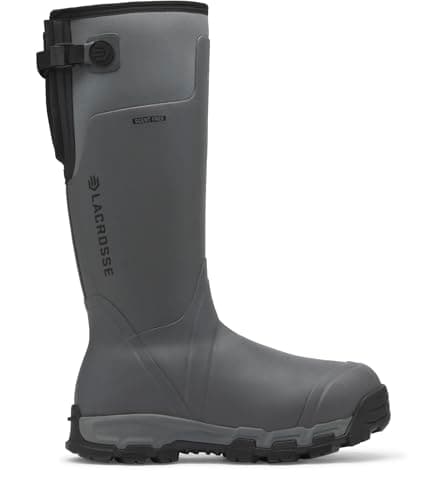
Cold Weather Boots
Boot insulation grams by temperature
The full gram-by-gram table with separate temperature ranges for sitting still and walking - the column other charts leave out.
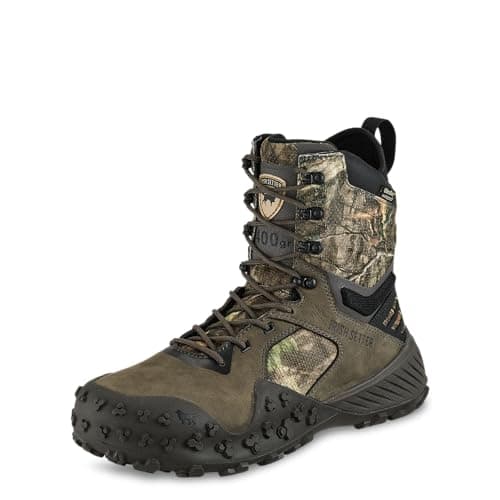
Cold Weather Boots
400 gram insulated hunting boots
400g is the walking hunter's rating, not the budget option - including in $500 mountain boots. Where it works and where it stops.
Snake Boots
Best cowboy snake boots
Western-cut boots with real published snake guard - and an honest account of what the heel costs you underfoot.
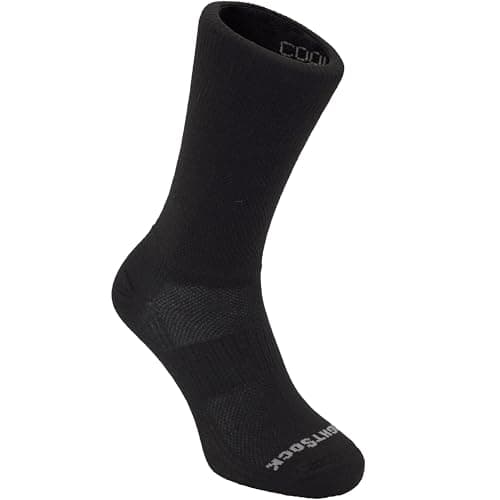
Hunting Socks
Hunting sock weight guide
Five weights, what each is for, which boot it belongs in, and the sizing adjustment it implies.