Cold Weather Boots
200 gram boot insulation: what the lightest tier is actually for
The rating you meet by accident, on a work boot or a western pull-on, and then wonder about. It is a moving-in-cool-weather figure, not a cold-weather one - here is where it works.
Bog & Briar earns a commission when you buy through our links, at no extra cost to you. Prices come from Amazon and change; the date beside every price is when we last verified it. Full disclosure.
Best 200g boots
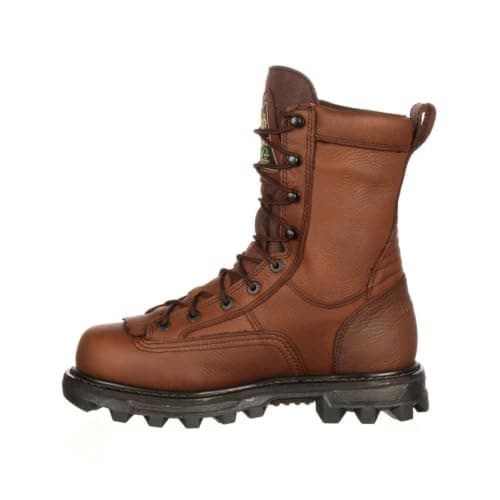
Rocky BearClaw 200g Gore-Tex
Early-season hunting with a real membrane
The BearClaw platform at its lightest rating, with Gore-Tex behind it. This is the 200g boot to buy if the hunt is an actual hunt rather than a job site.
#ad How we are funded · Price as of November 19, 2026
Quick picks
| # | Product | Insulation | Score | Price |
|---|---|---|---|---|
| Rank 1 | Rocky BearClaw 200g Gore-Tex Early-season hunting with a real membrane | 200g | 9.1/10 | $172.49Amazon |
| Rank 2 | 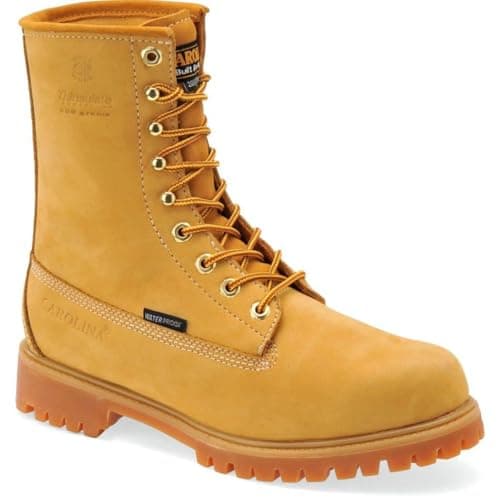 Carolina Journeyman 8-inch, 200g Standing on cold ground all day | 200g | 9.1/10 | $179.99Amazon |
| Rank 3 | 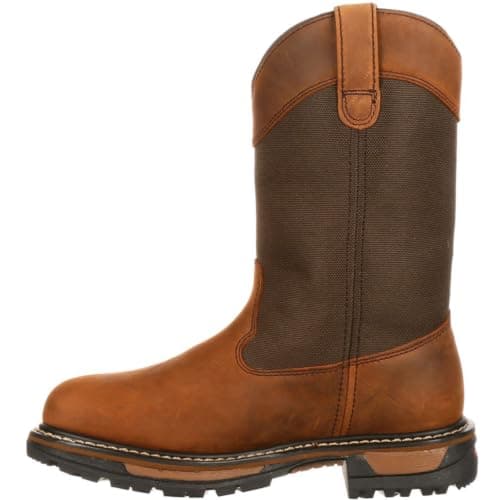 Rocky Original Ride 200g Wellington A western pull-on with a published figure | 200g | 9.0/10 | $144.17Amazon |
| Rank 4 | 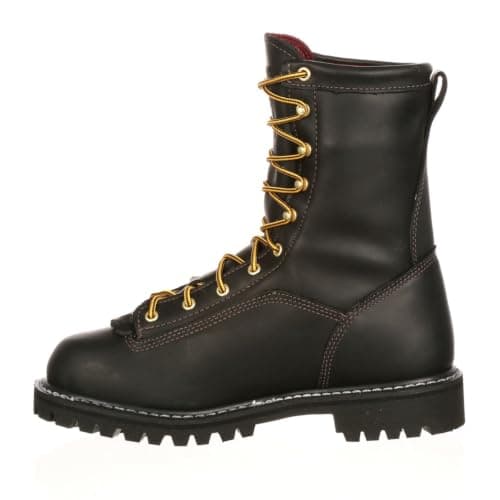 Georgia Boot Lace-to-Toe 200g Gore-Tex A high instep or a foot that is hard to fit | 200g | 9.2/10 | $240.00Amazon |
| Rank 5 | 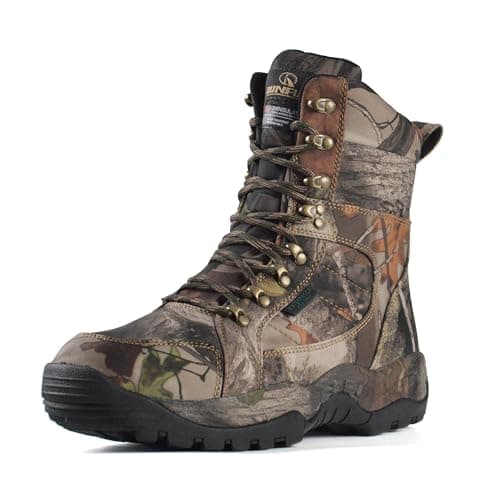 R RUNFUN 8-inch, 200g Thinsulate The cheapest honest version of the rating | 200g Thinsulate | 9.0/10 | $69.98Amazon |
#ad Prices come from Amazon and change. How this site is funded. Scores are our published editorial rubric — see our methodology.
Most people searching this number are not shopping for it. They found 200g printed on a boot they already liked and want to know whether it is enough. Short answer: 200g covers roughly 45F to 55F sitting still and 30F to 50F if you are moving, and it is the lightest rating that is worth paying for at all.
| Condition | 200g verdict |
|---|---|
| Above 55F, any activity | Too warm. Buy uninsulated and spend the money on socks |
| Sitting still, 45-55F | Correct. Early season, a cool morning, a dove field |
| Sitting still, 35-45F | Marginal past about two hours. A heavy sock closes most of the gap |
| Sitting still, below 35F | Not enough. Go to 400g or 600g |
| Walking, 30-50F | Correct, and better than 400g because you will not cook |
| Standing on cold ground all day | Workable, and the reason work boots ship at this rating |
| Riding or driving in the cold | The western pull-on's home ground |
The picks
Five boots that publish a 200g figure, across the three places the rating actually lives: hunting, work and western.
#1 · Early-season hunting with a real membrane
$229.99 25% off
#ad How we are funded · Price as of November 19, 2026
Rocky BearClaw 200g Gore-Tex
RockyThe BearClaw platform at its lightest rating, with Gore-Tex behind it. This is the 200g boot to buy if the hunt is an actual hunt rather than a job site.
| Insulation | 200g |
|---|---|
| Shaft height | Not published by manufacturer |
| Upper | Full-grain leather |
| Waterproofing | Gore-Tex (manufacturer) |
| Outsole | Rocky BearClaw |
Specifications per Rocky Boots published specifications.
What it does well
- Gore-Tex at a rating where most boots ship a house membrane or none at all
- The same chassis Rocky sells at 800g and 1,000g, so the build is a known quantity
- Light enough for September and still enough boot for a frosty October morning
Good to know
- Rocky does not publish a shaft height, so coverage is unknown until it arrives
Our rubric — each criterion 0-10
- Warmth
- 5.2
- Waterproofing
- 8.8
- Fit
- 7.6
- Durability
- 8.6
- Value
- 8.0
#2 · Standing on cold ground all day
#ad How we are funded · Price as of November 19, 2026
Carolina Journeyman 8-inch, 200g
CarolinaA work boot, bought by hunters for the reason work boots get bought: 200g, a waterproof lining and an outsole built for standing on cold wet ground for ten hours.
| Insulation | 200g |
|---|---|
| Shaft height | 8 in |
| Upper | Leather |
| Waterproofing | Waterproof, moisture-releasing lining (manufacturer) |
| Outsole | Oil and slip-resistant lug |
Specifications per Carolina Boots published specifications.
What it does well
- Publishes the shaft height as well as the gram figure, which half this tier does not
- An oil and slip-resistant outsole, which is genuinely useful on a wet boat ramp or a frosty stand ladder
- Built for all-day standing, which is what 200g buyers are usually doing
Good to know
- A work boot in work-boot colors - there is no camo version
Our rubric — each criterion 0-10
- Warmth
- 5.4
- Waterproofing
- 8.2
- Fit
- 7.8
- Durability
- 8.4
- Value
- 8.4
#3 · A western pull-on with a published figure
#ad How we are funded · Price as of November 19, 2026
Rocky Original Ride 200g Wellington
RockyThe western answer at this rating: a pull-on Wellington with 200g behind the leather and an actual number on the listing, which most cowboy boots will not give you.
| Insulation | 200g |
|---|---|
| Shaft height | Not published by manufacturer |
| Upper | Leather, Wellington pull-on |
| Waterproofing | Waterproof (manufacturer) |
| Fit | Pull-on, no laces |
Specifications per Rocky Boots published specifications.
What it does well
- Publishes a gram figure, which almost no insulated western boot does
- Pull-on with no laces to freeze, ice up or pinch across the instep
- Works as a ranch boot and a hunting boot without looking out of place as either
Good to know
- A pull-on cannot be tensioned to your foot, so it heel-slips on a long walk
Our rubric — each criterion 0-10
- Warmth
- 5.0
- Waterproofing
- 8.0
- Fit
- 7.4
- Durability
- 8.2
- Value
- 8.4
#4 · A high instep or a foot that is hard to fit
$260.00 8% off
#ad How we are funded · Price as of November 19, 2026
Georgia Boot Lace-to-Toe 200g Gore-Tex
Georgia BootLace-to-toe means the lacing runs all the way down to the toe box, so the boot opens flat and closes around whatever shape your foot is. For a high instep that is worth more than any amount of insulation.
| Insulation | 200g |
|---|---|
| Shaft height | Not published by manufacturer |
| Upper | Leather, lace-to-toe |
| Waterproofing | Gore-Tex (manufacturer) |
| Fit | Lace-to-toe, adjusts over the full instep |
Specifications per Georgia Boot published specifications.
What it does well
- Lace-to-toe construction adjusts across the whole foot, not just the top third
- Gore-Tex rather than a house membrane
- The easiest boot here to get on and off over a thick sock
Good to know
- Lace-to-toe takes longer to put on, every single time
Our rubric — each criterion 0-10
- Warmth
- 5.4
- Waterproofing
- 8.8
- Fit
- 9.0
- Durability
- 8.4
- Value
- 7.4
#5 · The cheapest honest version of the rating
$79.98 13% off
#ad How we are funded · Price as of November 19, 2026
R RUNFUN 8-inch, 200g Thinsulate
R RUNFUNUnder seventy dollars for a camo 8-inch boot that names Thinsulate and a steel shank. It is a budget boot and reads like one, but the specification it publishes is a real specification.
| Insulation | 200g Thinsulate |
|---|---|
| Shaft height | 8 in |
| Upper | 900D synthetic, camo |
| Waterproofing | Waterproof (manufacturer) |
| Midsole | EVA with steel shank |
Specifications per Manufacturer figures as published on the Amazon product listing.
What it does well
- Names Thinsulate and publishes the shaft height at a third of the price of the brand-name boots here
- A steel shank at this money is unusual and is what stops the boot folding on uneven ground
- Camo, light, and quick-lace - the natural early-season first boot
Good to know
- A synthetic upper, so this is a two or three season boot rather than a decade one
Our rubric — each criterion 0-10
- Warmth
- 5.0
- Waterproofing
- 7.6
- Fit
- 7.8
- Durability
- 6.4
- Value
- 9.6
200g is a crossover rating, and that is the useful thing about it
Walk a hunting aisle and 200g barely exists. Walk a work-boot aisle or a western wall and it is everywhere. That is not an accident: 200g is the amount of insulation you can add to a normal boot without changing the boot. It fits inside a standard last, it adds almost no weight, and it turns a three-season boot into something you can stand on frozen ground in. Hunting brands skip it because 400g photographs better as "early season"; work and western brands use it because their customers are moving.
The practical consequence for a hunter is that the honest shortlist at this rating crosses categories. Two of the five picks here are work boots and one is a western pull-on, and that is a feature of the tier rather than a compromise we made. The same logic drives hunting boots against work boots, and the western side of it is worked through in insulation weight for western boots.
The five picks, side by side
| Boot | Insulation | Shaft | Membrane | Buy it for |
|---|---|---|---|---|
| Rocky BearClaw 200g | 200g | Not published by manufacturer | Gore-Tex | The hunting pick - a real membrane at this rating |
| Carolina Journeyman 8" | 200g | 8 in | Waterproof (unnamed) | Standing on cold wet ground all day |
| Rocky Original Ride Wellington | 200g | Not published by manufacturer | Waterproof (unnamed) | Riding, ranch work, no laces |
| Georgia Boot Lace-to-Toe | 200g | Not published by manufacturer | Gore-Tex | A high instep or a foot that is hard to fit |
| R RUNFUN 8" | 200g Thinsulate | 8 in | Waterproof (unnamed) | The cheapest honest version of the rating |
Note what the membrane column does to the price here. The two Gore-Tex boots cost roughly three times the budget pick for the same published insulation, and in this tier that is money well spent for a different reason than warmth: at 200g you are going to be out in wet, cool, shoulder-season weather, which is precisely the condition a cheap membrane fails in.
Why 200g and not uninsulated
This is the real decision at the bottom of the chart, and it is closer than people expect. An uninsulated boot with a heavyweight merino sock is warmer than a 200g boot with a thin cotton one - the sock is doing more work than the lining in both cases. What 200g buys you is a floor: a thin, even layer that is there on the morning you forgot the good socks, and that does not compress the way a sock does when you lace the boot down.
- Buy uninsulated if your season is genuinely warm, if you cover real distance, or if you already own good wool socks and a dryer. Insulated against uninsulated is the full argument.
- Buy 200g if your mornings are cool and your afternoons are not, if you stand still on cold ground for work as well as hunting, or if you want one boot that covers September through early November.
- Buy 400g the moment sitting still below 40F becomes a regular part of the plan. The 400g page is one step up and is the tier most people actually need.
What the number actually measures
A gram rating is a weight of insulation per square meter of material, not a temperature and not a thickness. Rocky's published insulation guide makes the point that matters most at this end of the chart: a 400-gram boot is not twice as warm as a 200-gram boot. Loft does not scale linearly, and the first 200 grams buys proportionally more than the second 200 does - which is exactly why this tier is better value than its position on the chart suggests.
The full arithmetic for every tier is in the insulation grams to temperature chart. Which fiber the grams describe - Thinsulate, PrimaLoft or something unnamed - is a separate question answered in the insulation material comparison, and at 200g it matters more than usual, because an unnamed 200g lining is a very small claim.
The early-season case, which is where hunters meet this rating
September archery and October dove and upland work are the hunts that suit 200g, and they share a shape: you are moving, the ground is cold and wet before the air is, and the day warms twenty degrees between dawn and noon. A heavy boot in those conditions is actively worse than a light one, because the sweat you generate at 7am is still in the liner at 10am.
That makes 200g the natural companion to a heavy boot rather than a competitor to one. The two-pair answer that most experienced hunters land on is a light boot for the walking half of the season and a heavy one for the sitting half, which costs more than one compromise boot and works considerably better. Early-season rubber boots is the wet-ground version of the same idea, and best boots for bow hunting is the quiet-stalking version.
Which tier you actually want
- Warm early season, and you walkUninsulated, with a merino sock doing the work. See the picks
- Cool mornings, moving, 30-50F200g. This page.
- You walk in cold weather, 25-45F400g, the walking hunter's rating. See the picks
- You walk in, then sit, 25-45F800g, the one-boot answer. See the picks
- You sit still in genuine cold1,200g, and plan not to walk in them. See the picks
Fit matters more at this rating than at any other
A 200g boot has almost no loft to lose, so everything the fit does to your circulation shows up immediately. Two rules carry most of it. First, do not size up for a sock you are not going to wear - a loose boot at this rating heel-slips and blisters, and the insulation is too thin to fill the gap. Second, if you are adding a support insole, add the volume before you choose the size, not after.
The sizing arithmetic is in what size boot to buy over thick socks, and if your feet are broad, hunting boots for wide feet is the page to read before the gram figure matters at all.
What 200g cannot do
- It cannot hold a stand sit below about 35F. Not for long, and not with any sock. That is a 400g to 800g job.
- It cannot replace a waterproof membrane. Cold feet at this rating are almost always wet feet, and the fix is the membrane and the drying routine, not more grams.
- It cannot fix a cold sole. Standing on frozen ground conducts heat out of the foot faster than thin side-wall insulation replaces it. A structured insole that lifts the foot off the footbed helps more than the next tier up would.
Our recommendation
If you only take one thing from this page, take this one.
Our pick
Rocky BearClaw 200g Gore-Tex
Early-season hunting with a real membrane
#ad How we are funded · Price as of November 19, 2026
Runner-up
Carolina Journeyman 8-inch, 200g
Standing on cold ground all day
#ad How we are funded · Price as of November 19, 2026
Frequently asked questions
What temperature is 200 gram insulation good for?
Is 200 gram insulation enough for hunting?
Is 200 gram insulation warmer than no insulation?
Why do work boots use 200 gram insulation?
Is 200g or 400g better for early season?
Sources
Read next
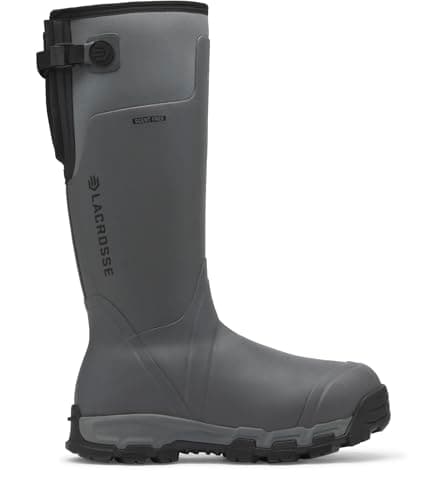
Cold Weather Boots
Boot insulation grams by temperature
The full gram-by-gram table with separate temperature ranges for sitting still and walking - the column other charts leave out.
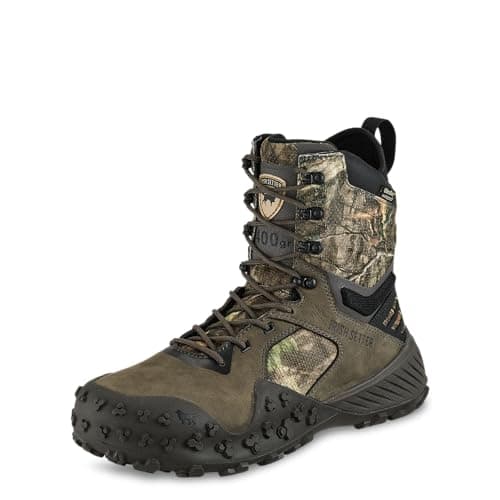
Cold Weather Boots
400 gram insulated hunting boots
400g is the walking hunter's rating, not the budget option - including in $500 mountain boots. Where it works and where it stops.
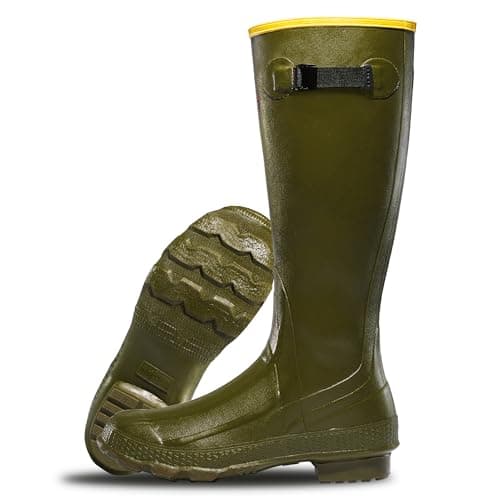
Cold Weather Boots
Insulated or uninsulated hunting boots: pick by activity, not temperature
An uninsulated boot plus the right sock beats an insulated boot you sweat into. Where the line actually falls.
Cold Weather Boots
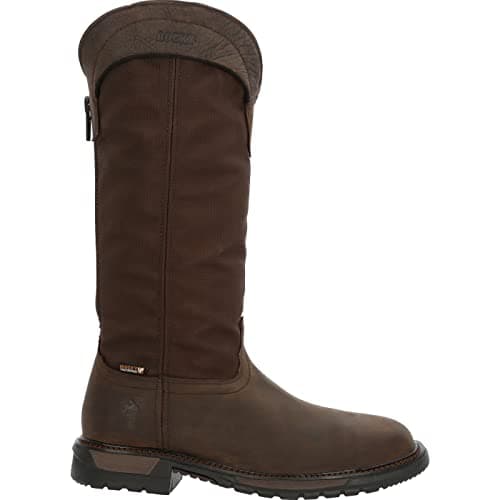
What insulation weight to look for in western boots for cold weather
200g to 400g is the range that exists in a western last, and most makers publish no figure at all. What to look for, and where the warmth really comes from.
Cold Weather Boots
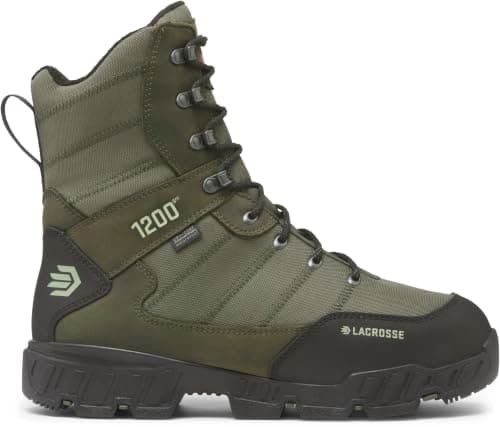
1200 gram insulated boots: the temperature rating, honestly
Roughly 10F to 25F sitting still, and not a walking rating at any temperature. The five boots that publish the figure, and why the walk in is what ruins this tier.
Boot Fit & Sizing
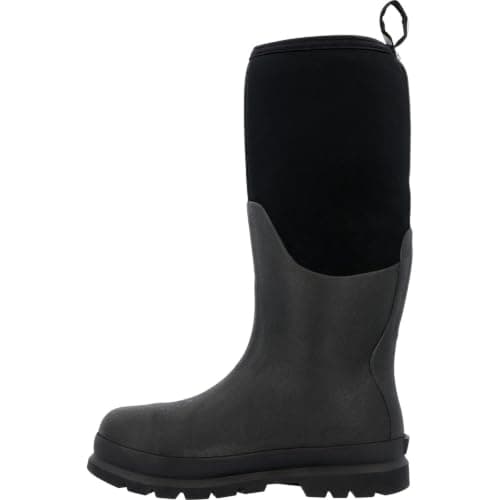
Hunting boots or work boots
Hunting in work boots is fine for a lot of hunting. Steel toes in the cold and jobsite scent are the two real objections.